

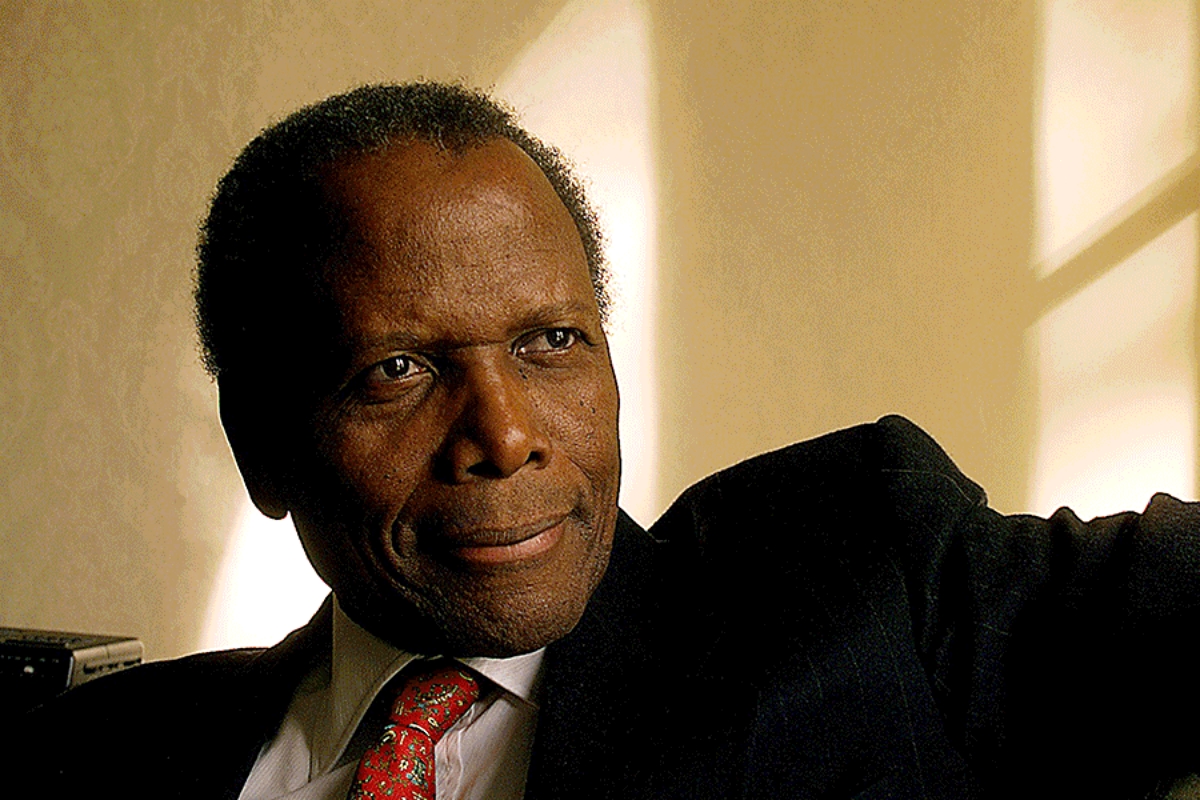


Surprisingly, for an actor whose filmic career intersected with the advocacy of the benefits of racial integration, he acknowledged the cultural advantages of growing up in a proud all-Black society.
As I culled through books to downsize to an affordable apartment, I happened upon an autobiography of Sidney Poitier that has sat on my bookshelf for years! I decided to finally read "The Measure of a Man: A Spiritual Autobiography" to escape the unceasing flow of troubling news emanating from the Trump White House. I hope that sharing some of the details of his amazing life will help others to take a break from the onslaught of daily outrages?
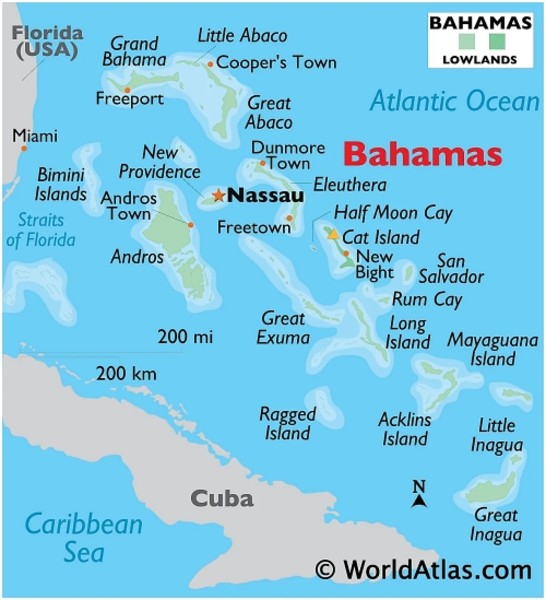
Though born in Miami in February, 1927, Poitier was raised as a West Indian boy in the rural Bahamas. His family ran a tomato farm on Cat Island, one of the satellite islands of the former British colony. He believed his family may have descended from enslaved Africans that fled from the former French colony of San Domingue - what became Haiti after the slave revolution.
That's because his family was the only one with a French surname in the British controlled Bahama islands. Cat Island was isolated and under-populated and the fertile land could serve as a subsistence safe harbor for runaways from nearby slave colonies.
He grew up on Cat Island in the 1920s and 1930s unaware of electricity (they used kerosene lamps), indoor plumbing (either running water or toilets), glass windows, automobiles, radios or movies, among others. The locals relied on a hybrid system of barter and cash for commercial practices. His family operated a tomato farm and sold the produce in the capital of Nassau and in Miami. Poitier came of age in an island bubble with little of the negative influences of the corporate media or commercial temptations.
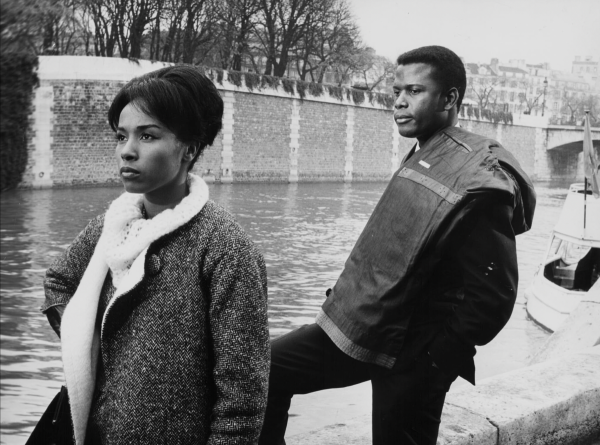 Diahann Carroll and Sydney Portier
Surprisingly, for an actor whose filmic career intersected with the advocacy of the benefits of racial integration, he acknowledged the cultural advantages of growing up in a proud all-Black society. He believed that the supportive village culture provided him with a sense of self-confidence and community values to endure the virulent racism and consumerism he would encounter in Nassau and the U.S.
During the Great Depression, Florida prohibited the importation of tomatoes from the Bahamas and his parent's farm went into decline. That is when he left school and moved to Nassau about age 11 to find work to help the family. One fact that stands out is that Poitier only had the opportunity to complete the 6th grade.
Of course, this level of years of schooling was not so uncommon among Black people in the depression era. What was uncommon is how Poitier would go on to symbolize the well-educated and sophisticated urban professional in films.
In Nassau, he was exposed to the full force of British colonial racism and had to leave for his own well-being. From there, he went to Miami about age 15 to find work only to encounter the mean Jim Crow of Florida. As a teenager, he set off for New York City to find his way and escape the constraints of southern white supremacy.
One of his first films was No Way Out in 1950 about a Black medical doctor dealing with the white power structure in a county hospital and treating a hostile member of a racist gang.
His siblings took his mother to a movie theater in Nassau to see the show. It was the first time she saw her son on the silver screen and may have been her first time in a movie theater. In one scene, Poitier is pistol-whipped by the leader of the gang, the actor Richard Widmark.
Poitier learned that his mother stood up in the middle of the theater and started screaming, "Hit him back, Sidney. You never did nothing to him!" His brothers and sisters had to calm her, saying, "Mama, sit down. He will be okay." It was a lesson in the power of film to affect people emotionally and politically.
His acting career began to gain traction in the period of the civil rights struggles in the 1950s and 1960s. However, the truth be told, in my honest opinion, the films that made him a Hollywood star during that period are difficult to watch with attention today.
He was often cast as the sole Black actor in a sea of white faces with the magical ability to resolve everyone's problems.
He was often cast as the sole Black actor in a sea of white faces with the magical ability to resolve everyone's problems. Of course, the films were period specific and the message was sorely needed back then. But the storylines are arthritic today and fail to pass the test of time; among these is the 1967 drama, "Guess Who's Coming to Dinner" that portrayed Poitier as a doctor in an interracial marriage.
And, as a Black man, the stories with white women had to be thoroughly de-sexualized to find acceptance with audiences. Sometimes it went to the extremes in story telling such as the 1963 "Lilies of the Field" (where he helps a busload of nuns, for goodness sakes - and won the Academy Award for Best Actor!) or the 1965 "Patch of Blue" (where he helps a blind and poor white woman flee an abusive family).
Unlike most A-list stars, however, poor Sidney rarely got to win over the ladies. And, on the rare occasion that he did, the storyline created an unbridgeable distance. An example is the relationship with the reformed high school student played by Judy Geeson in "To Sir with Love." The ending scene has the two dancing at the graduation party and Poiter hops around like a Black man without a hint of rhythm!
There is one movie from the civil rights period that has passed the test of time: the 1967 "In the heat of the night" with a great soundtrack composed by Quincy Jones and theme song by Ray Charles. It is the only film where Poitier retaliates against the small town Mississippi power structure as Philadelphia detective Virgil Tibbs.
And it featured the "slap heard around the world." That is when a white boss man slaps the "uppity Negro" Poitier only to be slapped back - and in front of a stunned white sheriff and Black butler. As a consequence, of course, the film was not well distributed in the South.
My favorite of his movies - and the three I would recommend - are stories where Poitier is placed in settings with other Black actors or involved in a romance with a Black woman. These are not the films that Hollywood valued but they are the ones that helped to validate the experiences of a community.
First, 1961 was a very good year for Poitier. There was Paris Blues starring Sidney as expatriate jazz saxophonist Eddie Cook. He gigs in a Paris cellar club with expatriate trombonist Paul Newman.
They meet two American women on vacation - Diahann Carroll and Joanne Woodward (Newman's real life wife) and a romance develops among them. Filmmaker Martin Ritt portrays the developing romances as having equal value and, to some extent, treats the relationship between Poitier and Carroll as the more precious.
The scenes of Poitier and Carroll (who were romantically involved in real life) against the backdrop of Paris icons is worth the price of admission.
And so is the scene of a jazz "cutting session" with Louis Armstrong with hornment of the Duke Ellington Orchestra. Armstrong plays a famous musician on tour in Paris and decides to invade the club to challenge Poitier and Newman! The scene is a priceless bit of jazz history.
And, that year, Poitier starred in the breakout film, "A Raisin in the Sun." A family drama set in the Chicago South Side with the lovely Ruby Dee, Claudia McNeil, Diana Sands, Ivan Dixon and Lou Gossett. It is hard to keep your eyes off Sidney as he wrestles with the demons of ambition, naivety, racism, and redemption in a kitchen apartment.
Then there is the 1972 western "Buck and Preacher" that Poitier starred in and directed. Set in the early years of emancipation, Poitier plays a former Union Army soldier turned wagonmaster who leads a group of ex-slaves to resettle on land in Kansas. It is an exoduster story with fellow West Indian actor Harry Belafonte. It shows solidarity between the Black freedmen and Native Americans and features music by the bluesmen Sonny Terry and Brownie McGee.
In closing, a final recommendation is the 1974 Uptown Saturday Night, a crime comedy that Poitier starred in and directed. He teams up with Belafonte again and Bill Cosby to retrieve a stolen wallet, which contains a winning lottery ticket. It was the first of a trilogy for the actors and the titles tell the line of trajectory: Uptown Saturday Night, Let's Do It Again (1975), and A Piece of the Action (1977).
On January 6, 2022, Poitier passed away at his home in Beverly Hills, California, at the age of 94. The boy from Cat Island, Bahamas, became a world-renowned actor, film director, activist, and diplomat. In 1964, he was the first Black actor to win the Academy Award.
Sidney Poitier’s legacy endures not through nostalgia, but because he set a standard. His work and life remain lasting examples of dignity and purpose — offering perspective in an otherwise consuming political moment.
