

PAN AFRICAN FILM FESTIVAL 2026: Capsule Reviews

Films span the spectrum from Oscar nominees to hard-to-find gems from Africa, the Caribbean, America and beyond that L.A. viewers are unlikely to be able to see at any other venue.
The 34th Pan African Film & Arts Festival, America’s largest Black-themed filmfest, took place Feb. 16–Feb. 22 in Los Angeles, mainly at the Culver Theater and the Cinemark Crenshaw Baldwin Hills. (The ArtFest took place Feb. 7-16 at Crenshaw Baldwin Hills.) During Black History Month PAFF – which was co-founded by former Black Panther Ayuko Babu – annually screens Black-themed movies ranging from Hollywood studio productions and TV-movies to indies, foreign films, documentaries, low budget productions, animation, shorts, etc. Films span the spectrum from Oscar nominees to hard-to-find gems from Africa, the Caribbean, America and beyond that L.A. viewers are unlikely to be able to see at any other venue.
PAFF SHORTS
Short films can be an art form unto themselves, like short stories vis-à-vis novels, but they can also serve as appetizers for what is intended to be entire movie meals or series, so to speak. Aspiring filmmakers who have good ideas but not the means to produce and shoot feature length productions can make a short as tangible “proof of concept” in order to entice studios and funders to back the creation of a full-length motion picture or a series for broadcast, cable and/or streaming inspired and launched by the short. For instance, Native Hawaiian auteur Alika Tengan’s Molokai Bound, first made as a short in 2019 and screened at venues such as ImagineNATIVE (where it won Best Short) and the Los Angeles Asian Pacific Film Festival, went on to secure funding from Google and Ava DuVernay’s Array to be expanded and released as a 112-minute feature in 2024. Such is the case with:
TIME SETTERS
Compton writer/director Oliver Mack Calhoun’s almost half hour sci fi short brings a Black Lives Matter sensibility to the tried-and-true time travel genre pioneered by artists such as H.G. Wells. In the well-acted, well-directed Time Setters, three contemporary African American activists use their version of Mr. Peabody’s “Wayback Machine” to try and alter the course of history. In this short, which is an excellent pilot and vehicle for a TV series, the righteous trio go back to Mississippi on August 28, 1955, in order to save Civil Rights icon Emmett Till from his grisly fate at the hands of sadistic segregationists.
The time traveling social justice warriors encounter some unexpected plot twists in this engrossing film, which has a terrific premise for a television series. The possibilities are endless – who knows, maybe the promising filmmaker Oliver Mack Calhoun can travel back to South Carolina before 1850 to expunge John C. Calhoun, the U.S. vice president, senator and virulent defender of slavery, from American history and thereby liberate the 75 human beings that racist swine enslaved at the Fort Hill Calhoun plantation. The only issue I had with Time Setters is that the actor who portrayed teenaged Emmett was too young, but this is a mere quibble, and I hope this is coming soon to a TV near you as a series.
CYCLE
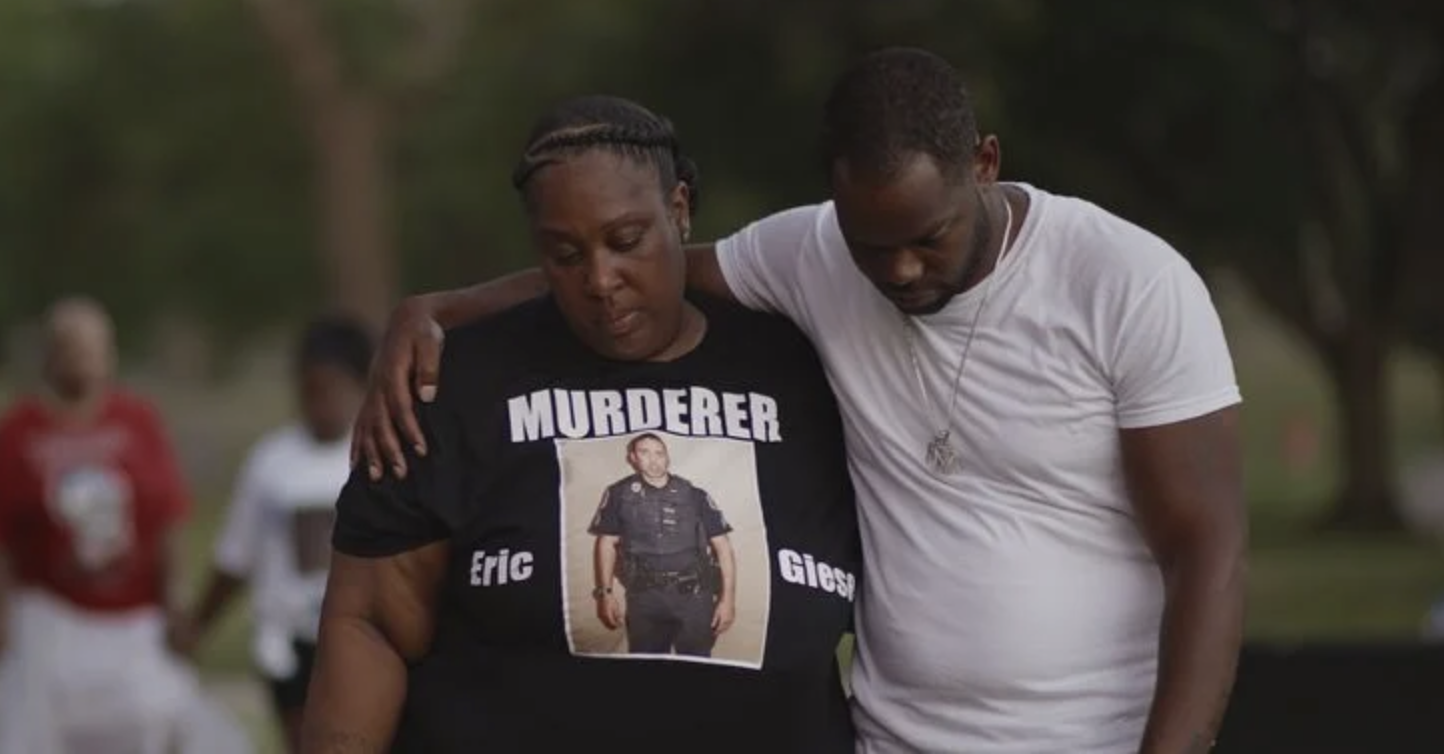
PAFF’s programmers cleverly paired the world premiere of Time Setters with Cycle, to accompany this powerful 98-minute documentary about the Juneteenth 2019 police killing of Ty’rese West in Wisconsin, who was lethally stopped by police for the unspeakable “crime” of not having a light on his bicycle. In this stylish, searing exploration of West’s liquidation co-directed by Laura Dyan Kezman and William Powell (whose uncle is Racine’s police chief!), 18-year-old Ty’rese is likened to another adolescent African American, Emmett Till, who also died way before his time. Inspired by Emmett’s mother Mamie Till-Mobley, West’s mother, Monique, wants the world to bear witness to what befell her son. Making the screening of Cycle all the more poignant, Monique West attended the West Coast Premiere of this film which was nominated for PAFF’s Best 1st Feature Documentary award. (Who knows? Maybe someday the Time Setters will go back to Racine and Mt. Pleasant, Wisconsin in June 2019 to ensure Ty’rese’s bicycle has a headlight?)
117 YEARS OF MOVIE BULLSHIT
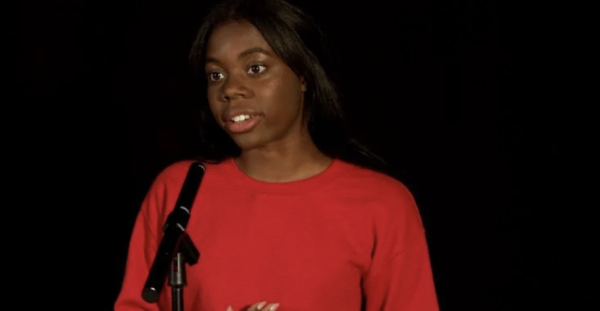
On February 20, PAFF screened “Shorts Series 2” at the Culver Theater and I saw five of the short films screened then, most of which had similar themes. My favorite was director/co-writer/co-producer Candice Vernon’s 117 Years of Movie Bullshit, which wittily debunks celluloid stereotypes. A Caucasoid studio executive traps a contemporary African American actor and actress in the “Cycle of Manipulation,” condemning them to replay caricaturish characters from cinema history. The roles range from servant and buffoon parts to blaxploitation pix to jabs at 1963’s Lillies of the Field with Sidney Poitier, 2001’s Monster’s Ball with Halle Berry, etc. The modern-day Black thespians finally realize that the only way they can escape this trite time loop that perpetually typecasts them is by writing and directing their own films. After all, “self-determination” means that the self – not the other – determines how he or she is perceived.
Made in 2025, Vernon’s surpassingly clever 30 minute short certainly packs a lot in – and begs to be expanded into a feature length motion picture, which this film historian will be the first in line to go see. The only thing I didn’t understand is why the filmmaker referred specifically to “117 Years”? D.W. Griffith’s racist blockbuster The Birth of a Nation premiered in 1915, 110 years before the making of 117 Years of Movie Bullshit. Edwin S. Porter’s silent short Uncle Tom’s Cabin – the first screen version of Harriet Beecher Stowe’s classic novel – was released in 1903, 122 years before Vernon’s 117 Years was made. But this is just another quibble, and I highly recommend Vernon’s cinematic spoof of racist cliches imposed by the dominant majority culture on African Americans in order to otherize Black human beings.
FRAGILE
Writer/director Benjamin Cyrus-Clark’s Fragile also insightfully lampoons celluloid stereotypes. In it, Black siblings who appear to be born in Africa or the Caribbean argue how the brother’s success in the film or TV industry is changing him. Just as the dispute starts to become tedious to watch, Cyrus-Clark pulls a totally unexpected switcheroo that I didn’t see coming. It turns out that the so-called “brother” and “sister” are really thespians, acting out a scene written by a white helmer. The actors question the authenticity of the scene that is being foisted and forced upon them by the Caucasian director. The 12-minute film also deftly goes from black and white to color in this shrewd take on pride and prejudice in motion pictures.
JUST-AS-POETIC
16-year-old writer/director Kalahari Lewis’ Just-As-Poetic also contains the theme of cultural authenticity versus having a false identity thrust upon nonwhites by the dominant majority population. In the story, teenage poet and pupil Justice Hudson (Journey Woods) is in contention for a coveted poetry prize due to a poem she has written about America. But her high school teacher Mr. Wilson (Sean Robert Smith) pressures her to water down her verses so her words aren’t so critical of the USA (like Langston Hughes was in his “Let America Be America Again”). Lewis’ seven-minute short takes some surreal turns as Justice Hudson must decide whether to be true to herself and stick to her guns, or sell her people and vision out in order to win the award in this very well-acted, inspiring film by a grad of Black Girls Film Camp.
MISSING RHYTHMS
Director Regina Hoyles’ Missing Rhythms takes the theme of the dominant majority culture imposing itself on African Americans – a phenomenon that Frantz Fanon dissected and analyzed in his great 1952 book Black Skin, White Masks, which is explored in Rediscovering Fanon – and dramatizes it in the psychological realm. Caucasian doctors inside some sort of mental institution are trying to control the behavior and minds of a number of Black women to ensure that they know their proper place and how to act. The cast includes the stellar actress Inger Tudor (co-star of 2021’s Voodoo Macbeth). Harrowing and gripping, the well-acted 16-minute short has a One Flew Over the Cuckoo’s Nest vibe placed within the prism of racial politics. I’d love to see this thought-provoking short expanded into a full-length drama.
HOMEGOING
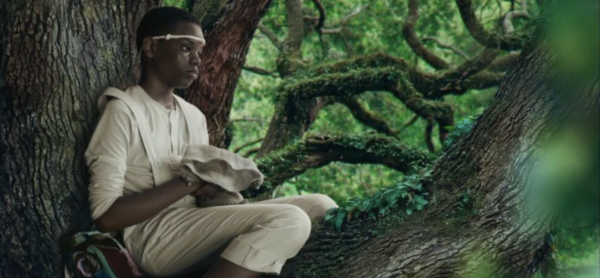
Julie Dash’s HomeGoing dashed my expectations to see an outstanding film by a prominent director. To be fair, this 10-minute short intended to be a cinematic evocation of the nine innocent African Americans slaughtered by a white supremacist madman in 2015 at the Mother Emanuel AME Church in Charleston, does have some exquisite poetic imagery. However, the overall production is wildly overblown. HomeGoing ruins the song “This Little Light of Mine,” by the contrapuntal use of a hard driving repetitive beat against the lilting lyrical lullaby’s melody. Perhaps this counterpoint is intended to symbolize the contrast between the flock and their insane executioner, but it simply had the effect of being extremely irritating and seemed quite pretentious. I happened to photograph State Sen. and Pastor Clementa Pinckney on the floor of South Carolina’s legislature about a week before he was butchered in Mother Emanuel, and I’d hoped for much more from a film about that tragedy.
Julie Dash is a venerable, veteran director who helmed 1991’s groundbreaking Daughters of the Dust about Gullah women at South Carolina’s Sea Islands, and this program also included Dash’s 15-minute, 2023 short Seeking: Mapping Our Gullah Geechee Story, which I really wanted to see. Alas, I was unable to stay due to schedule conflicts
For more info: https://www.paff.org/.
