

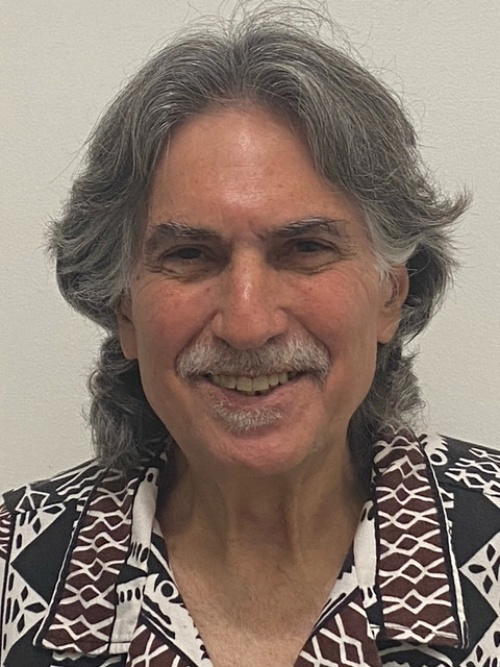

With the exceedingly charming, clever Catane, SEEFest launched with a cinematic enticement to all lovers of arthouse, “foreign” films who prefer a walk on the other side of cinema.
For the South East European Film Festival, the slogan “All out for May Day!” apparently doesn’t mean a general strike or occupying workplaces or taking to the streets, but rather that moviegoers of the world should fill the theaters. And with the exceedingly charming, clever Catane, SEEFest launched with a cinematic enticement to all lovers of arthouse, “foreign” films who prefer a walk on the other side of cinema, beyond popcorn munching multiplex formulaic flicks about superheroes and gunmen.
For 21 years SEEFest has been the main motion picture port for features, documentaries, shorts, animation, etc., from mostly former “Iron Curtain” nations in the movie capital of Los Angeles. More than any other major film fete in America, SEEFest screens moving pictures from the “Other” Europe, telling what could be called the East Side Story.
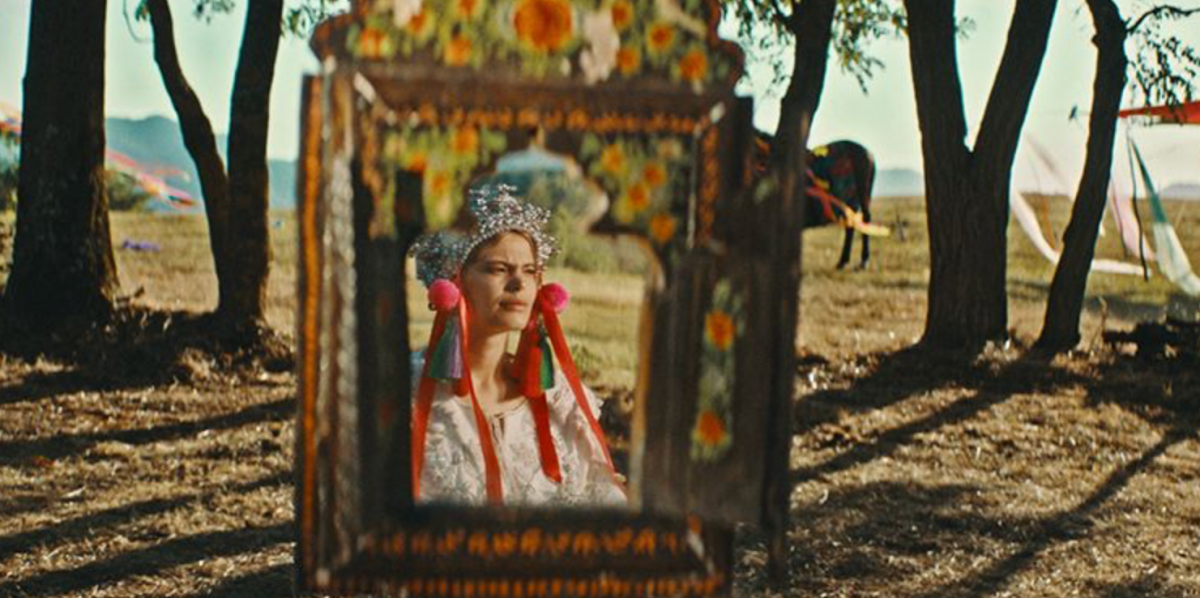
Romanian writer/director Ioana Mischie’s mischievous Catane is a gentle jibe against and parable of bureaucracy guaranteed to make anyone who has ever cooled his/her heels waiting at the DMV or on hold for a human to provide customer service smile knowingly. Without disclosing plot spoilers, the basic storyline is that a government office in Bucharest is notified that all of the villagers of the eponymous Catane, located in the Romanian hinterlands, claim to be disabled. As the film shows, the “backward” village of Catane consists mainly of thatched huts in a remote village largely untouched by the Industrial Revolution. Hence, the hamlet’s inhabitants would all be entitled to financial support from the national government. (Although the film does not specifically say this, Romania is a member state of the European Union, and thus I suspect funding for social services for disabilities would likely be a windfall.)
Therefore, such a claim requires official investigation. As the entire field team for the government’s disability agency is out “on leave,” it falls upon the shoulders of the trio of office workers to make the long trek out to Romania’s boondocks to probe whether or not the contention that all of Catane’s residents are impaired is indeed true. After their onerous odyssey out to the countryside, the city slickers must contend with what Americans might call “hicks,” “hayseeds,” or “hillbillies” to determine whether or not every person living in Catane is accurate.
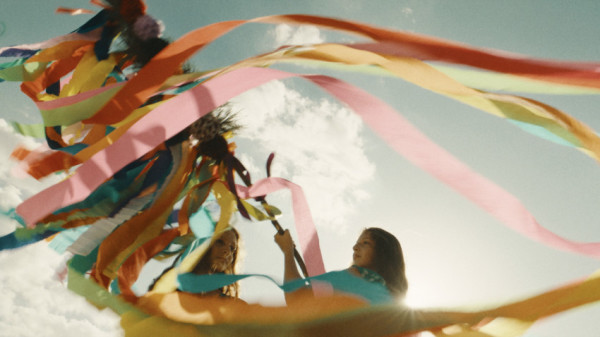
Let’s just say that hilarity ensues along the lines of Philippe de Broca’s 1966 King of Hearts, wherein the inmates take over the asylum.
Mischie’s allegory about bureaucracy unfolds with a sly, wry wit and sensibility reminiscent of the Czech New Wave which, prior to the 1968 Soviet invasion of Czechoslovakia, subtly spoofed Stalinism in films by directors such as Jan Kadar and Ivan Passer. The Czech “Film Miracle” was typified by Milos Forman’s The Fireman’s Ball and Murder Czech Style by Jiri Weiss (my film school mentor at Hunter and Richmond Colleges, as well as Alexander Payne’s movie mentor) typified this cinematic trend that was, alas, snuffed out by the Soviet tanks, along with the “Socialism with a Human Face” movement.
In a Q&A following the screening of Catane at the Fine Arts Theater in Beverly Hills, Mischie acknowledged the Czech influence on her, adding that other film schools such as “Nordic cinema” also impacted this Eastern European auteur who’d studied at USC’s School of Cinematic Arts. In a response to a question from Greek-born producer Jacob Kamhis, she also revealed the rural location where Catane was shot, and it is a place every single moviegoer has heard of: Transylvania.
But while Hollywood acolytes are accustomed to the gloomy, dark, forbidding ambiance of Count Dracula’s castle ensconced in the Carpathian Mountains of Tinseltown’s Transylvania, Mischie shows us another side of Transylvania we Yankee Doodle Dandies are unfamiliar with. Her colorful Carpathia is warm, inviting, alluring, the film’s transgressing Transylvanians charming and droll. Indeed, during the post-film onstage Q&A, SEEFest founder and artistic director Vera Mijojlić commented upon the cinematography lensed by George Dascalescu: “The color palette is beautiful and works well with the tone of the film.”
By presenting another side of Transylvania to us, Mischie is also fulfilling one of SEEFest’s movie missions: To show Americans another side of Eastern Europe, the so-called “Other Europe.” (However, beware: Trump may try to get the FCC or whoever to cancel Catane because it is “Trans”!)
During the Q&A Mischie was joined onstage by Emiliano Mazzenga, who composed the feature’s lovely, lyrical music which scored a nomination for Best Original Score - Independent Film (Foreign Language) from the Hollywood Music in Media Awards. Mischie added that it took more than a decade to get her vision of Catane onto the screen, saying: “It takes a lot of idealism not to let something go… Believe in what your passion is until the very end,” the young woman advised aspiring filmmakers. And to be sure, with the final result, the whimsical Catane has been well worth the wait.
Following the screening, SEEFest’s gala was held at the nearby SLS Hotel, a luxury property in Beverly Hills, where a good time was had by all. As we celebrate May Day, SEEFest’s cinematic slogan could be: “Movie lovers of the world unite! You have nothing to lose but the chains of big studio remakes and sequels, and you have a world of indie films to gain!”
The 21st annual South East European Film Festival is taking place through May 6 at various L.A. venues. For more info about SEEFest see: https://seefilmla.org/.
The fourth book co-authored by Ed Rampell about filmmaking in Hawaii drops in August: https://mutualpublishing.com/product/on-location-in-hawaii/.
