

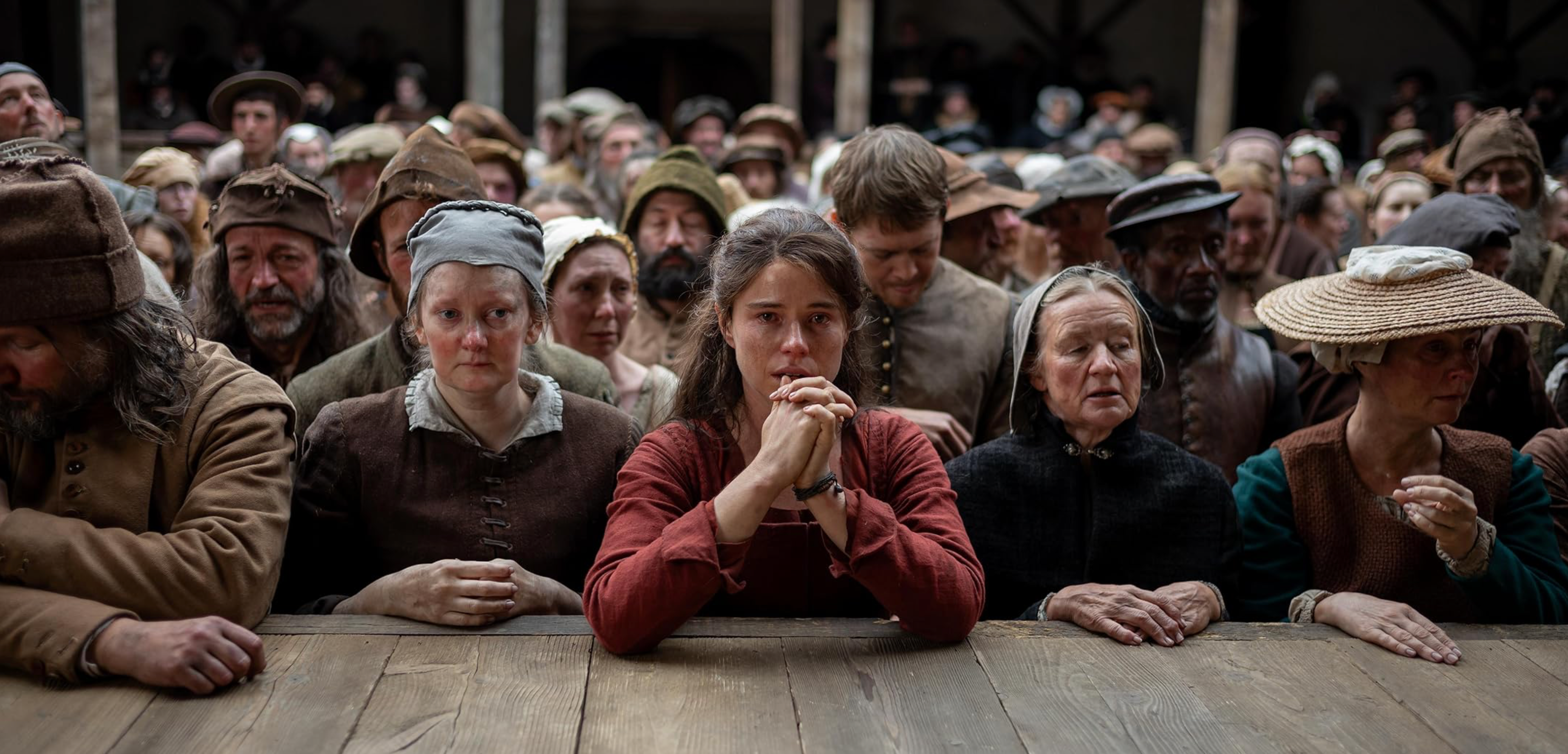

The central difference between Shakespeare’s real-life experience of the death of his son Hamnet and the play “Hamlet” is that in the drama it is not a son who dies but a father—Hamlet’s.
The film Hamnet, now streaming on Peacock, is based on Maggie O'Farrell’s historical-fiction book of 2020, Hamnet: A Novel of the Plague. Before she begins her novel, however, she quotes Steven Greenblatt’s 2004 essay “The Death of Hamnet and the Making of Hamlet” in The New York Review of Books. She is mindful, therefore, of Greenblat’s assertion that the 1596 death of Shakespeare’s son Hamnet influenced the writing of “Hamlet.” Thus, O'Farrell’s book—as well as the film, of which along with director Chloé Zhao, she is the screenplay’s co-author—takes various artistic liberties.
It is true that certain elements of the film actually occurred—Shakespeare did have a son named Hamnet (the spelling then interchangeable with that of Hamlet); he was a twin; he died in 1596 at age 11; for years Shakespeare was in London (about 100 miles from Stratford-upon-Avon, where his family lived), and was so when Hamnet died; and “Hamlet” was written later (probably between 1600 and 1601). But we do not even know for sure whether Hamnet died of the bubonic plague—as O'Farrell’s subtitle implies—but it is possible since there “were at least five major outbreaks of bubonic plague in London during Shakespeare’s lifetime.”
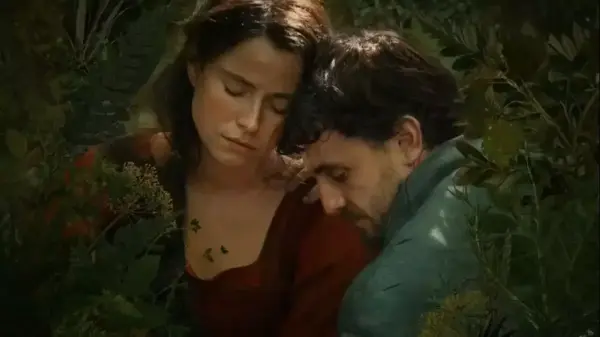
Since there are no definite rules for the writing of historical fiction, the writer of it is free to take liberties not permitted the historian. What we do know is that dealing with the death of a young child can be difficult in any historical period, though perhaps less so in one when young deaths were more common—in the 1590s, about “one out of three children died by the age of ten.”
Not only has Hamnet just recently become available on Peacock, but its lead actress, Jessie Buckley, just won an Oscar at the 98th Academy Awards ceremony for her portrayal of Shakespeare’s wife Agnes (or Anne) Hathaway. I have written of the Irish actress and singer Buckley before, and once again—this time as a loving wife and grieving mother—she is excellent.
From an artistic viewpoint, the central difference between Shakespeare’s real-life experience of the death of his son Hamnet and the play “Hamlet” is that in the drama it is not a son who dies but a father—Hamlet’s. He is murdered by his brother Claudias, who then marries Hamlet’s mother, Gertrude. (In the play, Hamlet’s father appears only as a ghost.)
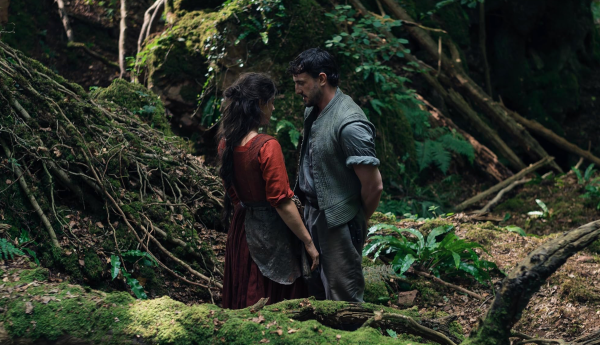
Although William is busy in London writing (and often acting) in his plays, in Hamnet it is wife Agnes who grieves most over the loss of their son. When her husband finally arrives back in Stratford—too late to see Hamnet still alive—Agnes expresses her grief and berates William for being absent: “I would have cut my heart out and given it to him. I would have laid my life down on the ground for him.” After her husband tries to console her and tells her that he knows how she feels, she replies “No, you don’t know. You don’t know. You weren’t here. He was in agony. He cried and he cried and he cried and he cried. And his little body was wracked in pain....He was so scared. And you weren’t here.” (Dialog can be found in the filmscript.)
It isn’t until Agnes comes to London and sees Hamlet performed that she seems to reconcile herself to the death of their son—after the decease of Hamlet at the end of the play, Agnes touches her heart to signal her love for Hamlet/Hamnet and reaches out her hand to that of the prone and dying Hamlet, whose life has been taken by a poisoned spear.Then she imagines son Hamnet walking off the stage, and she smiles and finally laughs as if she finally understands his death.
Besides Buckley, the other actors are also excellent including Paul Mescal as Shakespeare, Jacobi Jupe as Hamnet, and Emily Watson as Shakespeare’s mother, who also voices the important lines: “What is given may be taken away at any time. We must never let our guard down. Never take for granted....that our children’s hearts beat, that they draw breath, that they walk and speak and....smile, argue, play. Never forget for a moment that they may be gone.”
