


About 1 Million Miles Away from Hollywood’s “Sarong Girl” Dorothy Lamour
LOS ANGELES ASIAN PACIFIC FILM FESTIVAL 2026: Film Review, Part I
The 42nd annual Los Angeles Asian Pacific Film Festival took place April 29-May 3 at a variety of LA venues. LAAPFF is arguably America’s main gateway for Asian, Asian American and Pacific Islander productions to gain access to the U.S. movie market and in particular, to LA, the world’s capital of cinema. The yearly filmfest is presented by Visual Communications, an LA-based media organization whose “mission is to develop and support the voices of Asian American & Pacific Islander filmmakers and media artists who empower communities and challenge perspectives. Founded in 1970 with the understanding that media and the arts are powerful forms of storytelling, Visual Communications creates cross cultural connections between peoples and generations.”
As a film historian/critic who has co-authored with Luis Reyes movie/TV history books, including our fourth, On Location in Hawaii, about South Seas Cinema – screen productions by and about the Indigenous peoples of Polynesia, Melanesia and Micronesia and their islands – my focus in covering LAAPFF is on the new works by Pacific Islanders. And this year’s LAAPFF offerings by and about Maoris, Hawaiians, Samoans, etc., revealed that as more and more Natives and other local people make shorts and full-length films about themselves and their Isles, the more mature, complex, nuanced and authentic the South Seas screen image becomes. This year’s themes include complicated subjects such as: mother/daughter conflicts; mental illness; death; infertility; homosexuality; the struggle over Indigenous self-determination in the arts; etc.
Pacific Cinewaves
 Hokia
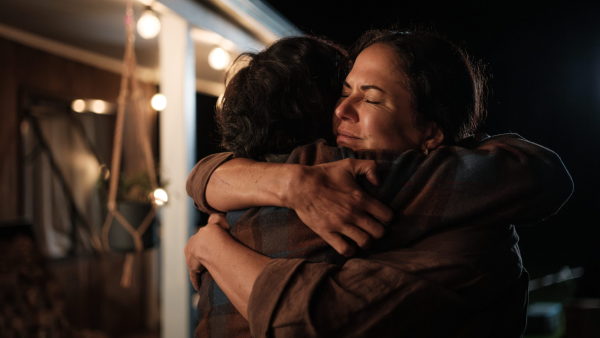
HokiaScreened at the Directors Guild of America’s theater on the Sunset Strip, this is an outstanding 92-minute program of six narrative shorts with the theme of Every Body of Water is a Mirror. But instead of “Haole-wood” holding up that looking glass, these vignettes are told “From the perspectives of women and children across the Pacific Islands,” according to LAAPFF’s program guide. Pacific Cinewaves’ first offering was the 14-ish-minute-long, Aotearoa/New Zealand-shot Hokia, directed by India Fremaux, written by Caitlan Fremaux. Hokia – which translates into English as “Go Back” – centers on cross-generational clashes between Maori moms and their daughters.
In Hokia, a mother and daughter, Mere (Rotorua-born Miriama Smith, co-star with Anne Hathaway in 2001’s missionary-themed The Other Side of Heaven, set in Tonga, shot in the Cook Islands) and Hine (Shianne Herewini-Liddle), take a road trip full of tensions and conflict. It turns out that they are embarking on an odyssey back to Mere’s birthplace, where her own mother is dying. Hine has rarely, if ever, seen her grandmother and it turns out that the trouble between Hine and her own mother can be traced back to the problems between Mere and her mom, as the patterns of familial history repeat themselves. While the subject matter is complicated, Hokia’s direction and Matt Gerrand’s cinematography are pretty straightforward.
 I Am Not Your Dusky Maiden
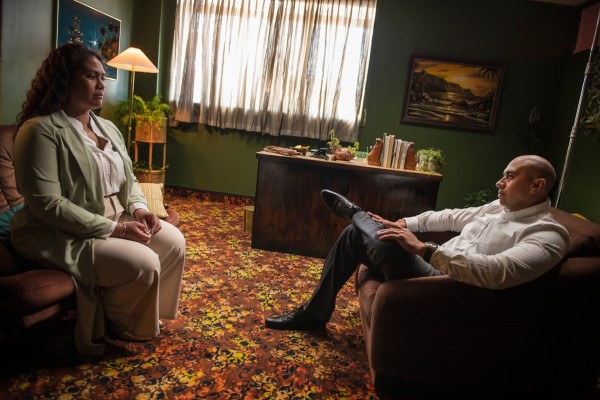
The contents of I Am Not Your Dusky Maiden is even more complex, as it deals with a sort of South Seas Sybil, the title character with 16 split personalities depicted by Sally Field in a harrowing 1976 U.S. TV mini-series. But unlike Sybil, the issues of schizophrenia and dissociative identity disorder take on an ethnic dimension within the colonial context. With the title I Am Not Your Dusky Maiden, director Vea Mafile’o seems to be invoking Haitian helmer Raoul Peck’s 2016 Oscar-nominated documentary I Am Not Your Negro, about novelist and Civil Rights activist James Baldwin. The title also touches upon psychosexual dynamics, in particular how Western males relate to and stereotype Polynesian women, as Hawaiian film historian Matt Locey incisively analyzes in his 2023 White Lens on Brown Skin: The Sexualization of the Polynesian. Mafile’o was reportedly born in Hamilton, NZ, and according to IMDB.com she is Tongan, Maori, English, and Scottish. Nora Aati, the screenwriter of Dusky, seems to be Samoan.
Aati also plays the mentally shapeshifting protagonist, who appears to be in the NZ office of a psychoanalyst or therapist (Michael Koloi), receiving treatment. Or is she? Is she going to have, shall we say, a “psychia-tryst”? (How’s that for wordplay?) This short has twists and turns and hopefully the filmmakers will be able to make a full-length version of this intriguing story about the sexual and racial dialectic of the colonial gender and white supremacist power structure, which can literally drive one crazy. This moody movie is a landmark achievement in the South Seas Cinema film genre. Paging psychiatrist Dr. Frantz Fanon, author of Black Skin, White Masks!
 Socks
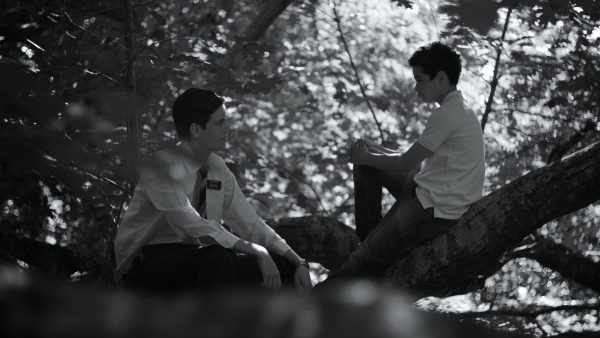
SocksMaori writer/director Todd Karehana’s Socks is about two young male Mormon missionaries (the “elders” are played by Billy Cox and Indy Urban) who visit Pop (Monty Walker), a boy of unspecified Pacific Islander lineage living in a simple village presumably located in NZ, not unlike Whakatane, where Karehana grew up south of Auckland, at the Bay of Plenty. The elders’ visitations are part of the evangelical mission of those ubiquitous white-shirted, tie-wearing, bike riding proselytizers seeing to convert the latter day “heathen,” who descend upon contemporary Oceania like a plague of locusts, spewing their religious mumbo jumbo.
To be fair to Max and Curt, they are not depicted as singing psalms with palms perpetually outstretched, for alms and land, as they try to meet their quota of captivating then capturing souls with illusions of eternal life, et al. While the so-called elders do share passages from their so-called holy books with Pop and his 30-something mother (Katy Thomas), who may be pakeha (Caucasian) or “half-caste,” they also socialize with the son and solo mom. She seems to enjoy the attention paid to her by the younger, handsome men. Minus a regular father figure, Pop forms a bond with one of the missionaries, who eventually announces that he has been reassigned to carry out a mission elsewhere and hence must leave.
The LAAPFF website includes this notice: “Film Content Advisory: Homophobia,” and considering that according to IMDB.com Karehana as of “2021… is developing scripted queer web series Nga Hau E Wha with the support of NZ On Air,” one could interpret Socks as having an LGBTQ slant. Perhaps the 11-ish year-old Pop is attracted to his male missionary friend and thinks he has “socks” appeal? This 15-minute short is co-executive produced by renowned NZ helmer, Jane Campion, that writer/director of 1993’s The Piano and champion of fiercely independent-minded cinema.
 The Arrangements
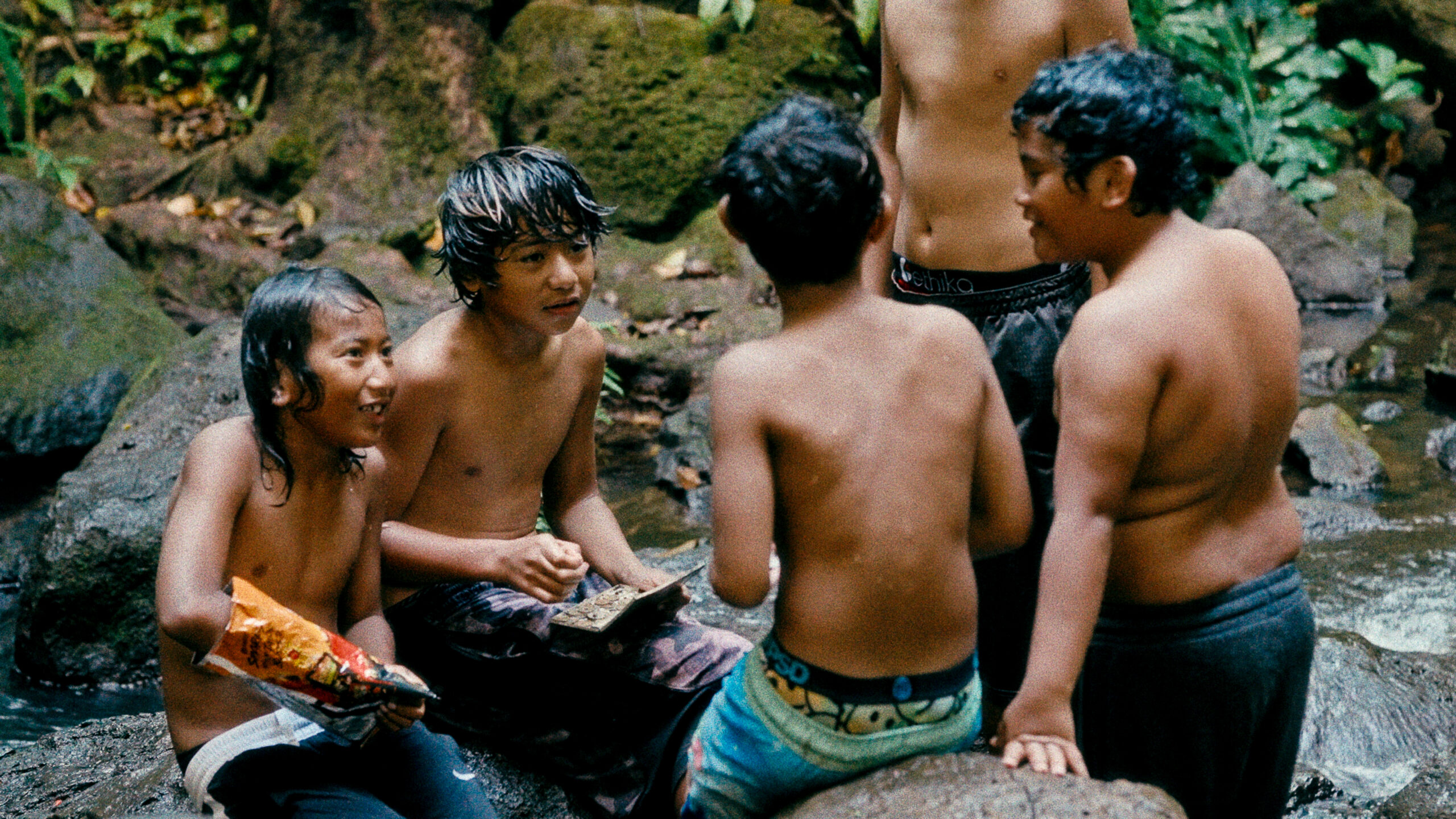
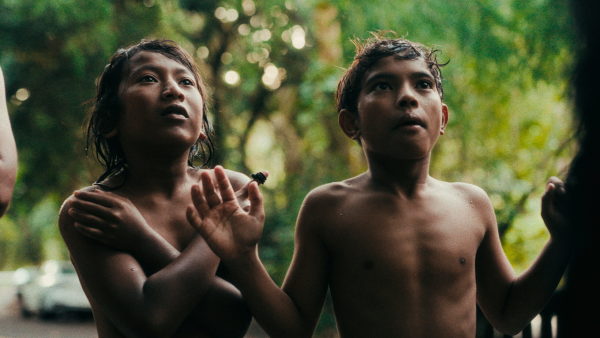
I heartily enjoyed writer/director Sonny Ganaden’s The Arrangements, which features excellent Oahu location shooting at Downtown Honolulu’s Chinatown, a waterfall, and Kam IV housing off of Like Like Highway in Kalihi, home to many transplanted Samoans. However, according to LAAPFF’s program guide the Pacific Islander boys depicted in The Arrangements are supposed to be Micronesian. In any case, these 10-ish year-old boys are “Kolohe” (rascals) as they experience “small kid days,” including the untimely death of one of their gang by suicide.
Ganaden is a Filipino-American former state legislator and attorney who defended Native Hawaiian rights and “used to be a director of a program called KVibe, an after-school intervention program for Pacific Islander young men and boys out of Kalihi Valley,” out of which The Arrangements grew (see: https://hiff.org/conversation-with-sonny-ganaden-director-of-the-arrangements/). His zesty 16-minute romp and directorial debut has a Neo-Realist vibe (the cast is composed of non-actors) and is reminiscent of François Truffaut’s films about childhood, including 1959’s The 400 Blows and 1976 Small Change. The Arrangements is good fun and heartfelt; I sincerely hope the gifted Ganaden will get the opportunity to expand his short into a full-length feature about the adventures of these vivacious local lads.
 The Return
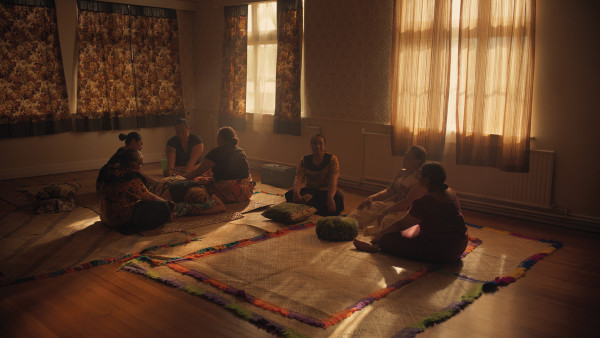
Whereas The Arrangements has a Neo-Realist feel, writer/director/executive producer Marina Alofagia McCartney’s The Return has a decidedly surrealistic, Buñuelian panache. In terms of style and sensibility, like I Am Not Your Dusky Maiden, this 15-minute-short marks another great leap forward in South Seas Cinema. For decades I’ve been contemplating what is a Pacific Islander film aesthetic? Ms. McCartney’s The Return is a cinematic star in the filmic firmament by which Indigenous Oceanic artists can guide their filmmaking odysseys by.
The plot, such as is there is one in this impressive, all-too-brief narrative production, features a young woman of Samoan ancestry named Lupesina (Vaimaila Urale-Baker in what seems to be her movie debut) meeting with rejection because she can’t speak Samoan at a traditional tattooing ceremony (which hasn’t played as significant a role in Pacific pictures since Robert Flaherty’s 1926 Moana of the South Seas, poetically shot on location in Savaii, Western Samoa). As in Hokia, the theme of mother/daughter conflict is prominently depicted in The Return, too.
Many Pacific Islanders are uprooted; there are by far more people of Samoan roots now living in NZ, Hawaii, California, Utah, etc., than residing in their ancestral isles. According to IMDB.com, born and raised in Manukau City, a suburb of South Auckland in NZ, Ms. McCartney, is also mixed race: While her mother is of Samoan lineage, her father is English and her stepmother is a Cook Islander. A former beauty queen and model, Ms. McCartney reigned as “Miss New Zealand.” In The Return she is very powerfully grappling with the concept of being uprooted in the colonial context, using tattooing as a metaphor for traditional culture. Being colonized and missionized causes disassociated personalities en masse, which W.E.B. Du Bois referred to as “double consciousness” and Fanon psychoanalyzed in Black Skin, White Masks. The concept of “returning” has been central to Pasifika arts, at least since the publication of the first Samoan novel, Albert Wendt’s groundbreaking 1973 Sons for the Return Home, which Kiwi director Paul Maunder adapted for the screen in 1979.
Director of Photography Andrew McGeorge also deserves to be singled out for his cinematography that graphically captures the writer/director’s surreal vibe and intent. Like some of the other Pacific Cinewaves offerings, The Return left me yearning to see an expanded full-length version of this short. Marina Alofagia McCartney is definitely an Indigenous Oceanic auteur who cineastes should keep their eyes on. What will she conjure up next?
 What We Carry
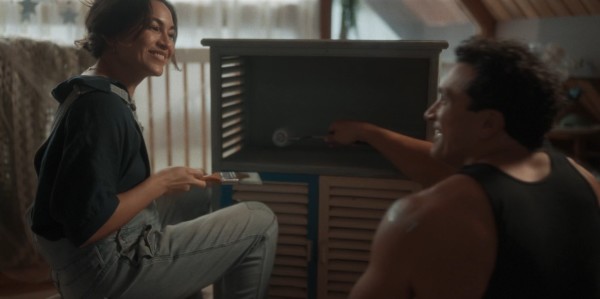
Hawaiian talent Lindsay Watson, who co-starred opposite Jason Scott Lee in 2022’s The Wind & the Reckoning, which previously screened at LAAPF and is featured in our new book On Location in Hawaii, is the writer and director, as well as female lead, in What We Carry. The well-acted, well-directed 15-minute short depicts a husband and wife, Sala (Watson) and Emery Jean (Michael Alisa, a former footballer who seems to be of Samoan heritage), who appear to be an upwardly mobile, loving couple in Oahu. The beautiful young married couple seem to have it all: Except Sala is unable to conceive.
It turns out that in a plot twist I won’t disclose here, there’s also something else amiss in their marriage that comes as a complete surprise to Sala (and to the audience). Well, suffice it to say that that theme has appeared in a million of Antonioni, Fellini, etc., movies, but Lindsay, who is Hawaiian, makes this universal tale also become specifically Polynesian, by adding the concept of “hānai” – adoption of children. Elementary, my dear Watson!
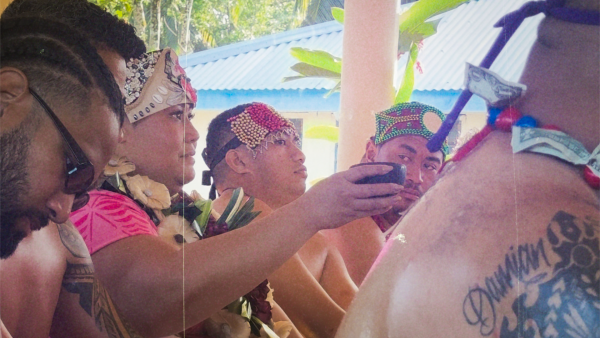 Tuimaseve: A High Chief Story
Although writer/director Benjamin Pola’s Tuimaseve: A High Chief Story was not part of the Pacific Cinewaves program, I’m going to mention it here because this short also deals with Pacific Islanders being displaced and uprooted. The nine-minute film is shot at least in part with cellphones in a straightforward way. It depicts overseas Samoans who must deal with the legacy of chiefly titles their lineage entitles them to. Should they accept becoming a matai (chief)? And if so, what does that entail?
Tuimaseve follows some candidates for chiefdom who return to their ancestral roots at Samoa – despite the fact that they may not know the traditional customs or language of their own people. Tuimaseve was actually part of LAAPFF’s Armed with a Camera Fellowship for emerging media artists. I enjoyed the AWC series which featured five Asian-themed shorts, plus Tuimaseve, the sole Pacific Islander film in this year’s program.
Kudos to the new Pasifika pioneers breaking new ground in South Seas Cinema whose work graced the screen at LAAPFF, with Indigenous and local filmmakers making more authentic, original films about themselves. More and more, Natives are in front of and behind the cameras, telling their own stories in their own styles. Along with support from Pacific Islanders in Communications, the New Zealand Film Commission, Pasifika Entertainment Advancement Komiti, Visual Communications, and LAAPFF, these Oceanic auteurs and artists are dynamically evolving and developing South Seas Cinema into a Tidal Wave of world cinema. MALO LAVA! Can’t wait to see what’s next…
The fourth book co-authored by Ed Rampell with TCM guest host Luis Reyes about filmmaking in Hawaii is co-dedicated to LAAPFF and Pacific Islanders in Communications and includes Hawaiian films screened at the filmfest. The new drops in August: https://mutualpublishing.com/product/on-location-in-hawaii/.
