



What makes TCM Classic Film Festival presentations so precious is that in-the-know filmmakers, celebs and film historians usually introduce and comment upon the screenings, and/or participate in interviews and panel discussions.
TCM CLASSIC FILM FESTIVAL 2026: Cobra Woman
Sprinkled with motion picture pixie dust, the 17th annual TCM Classic Film Festival took place in Hollywood from April 30-May 3. This year, the filmfest’s theme was: “THE WORLD COMES TO HOLLYWOOD.” Moviegoers from England, Hawaii, Oakland, Idaho, Wisconsin, Chicago, France and beyond flocked to the vintage film fete, forming an impromptu “Classic Community” or “Cineaste Nation,” buffs united in their magnificent movie obsession, a shared love of the silver screen. I encountered more out-of-towner passholders than local Angelenos, proving that film festivals can be a big draw luring visitors from afar to destinations. In fact, the crowds were so thick that I was unable to get into several events and screenings, despite my press pass. The first movie I was able to squeak into was at the capacious 516 seat Egyptian Theatre.
Everything You Always Wanted to Know About Maria Montez * But Were Afraid to Ask
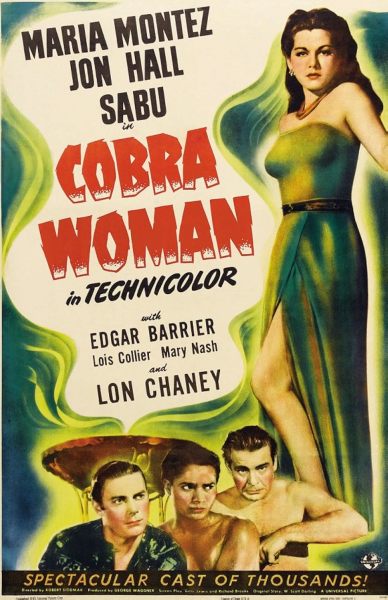
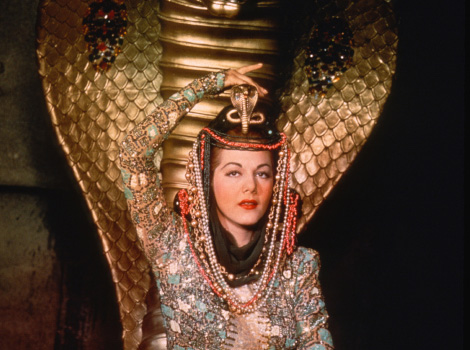
The 1944 cult classic Cobra Woman co-stars Maria Montez, Universal’s “Queen of Technicolor,” with Jon Hall, Sabu and Coco. Directed by Robert Siodmak and co-written by Richard Brooks, this is a very fast-moving potboiler that takes place in fictitious islands that are a cross between Polynesia, Southeast Asia and the Indian Ocean. For instance, there are a black panther (and I don’t mean the Huey Newton kind), cobra and chimpanzee, but none of these creatures are actually found in Polynesia. Cobra Island is ruled by a tyrannical cult that revolves around the title character, a sort of high priestess of serpents, played by Montez (who also portrays her twin sister, separated by birth, who Hall is set to wed). Many of the “classic Kanaka cliches and conventions” of South Seas Cinema ensue, including that surefire device of a volcanic eruption when the gods are displeased, and so on. Lon Chaney Jr. (star of 1941’s The Wolf Man) appears in brownface.
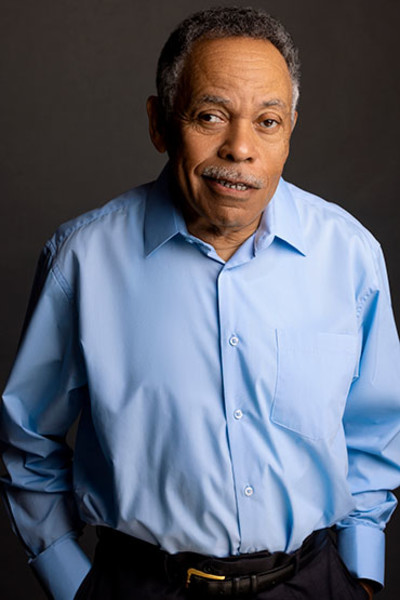
What makes TCM Classic Film Festival presentations so precious is that in-the-know filmmakers, celebs and film historians usually introduce and comment upon the screenings, and/or participate in interviews and panel discussions. Cobra Woman was introduced by a venerable team of moving picture gurus, reviewer extraordinaire Leonard Maltin, a highly respected dean of film historians/critics, who did a Q&A with Luis I. Reyes, America’s foremost historian of Latinos in Hollywood productions, author of Viva Hollywood: The Legacy of Hispanic and Latin Artists in Hollywood and a co-host and guest programmer on Turner Classic Movies, the cable TV channel that spawned the TCM filmfest.
 Luis Montez
Leonard Maltin:But Reyes is also a pioneer in establishing South Seas Cinema as a distinct film genre. In fact, I have the honor of co-writing with Luis four books on the movies/TV shows shot and set in Hawaii and the Pacific Islands, starting with 1995’s Made In Paradise, Hollywood’s Films of Hawaii and the South Seas. Thus, Luis was the perfect person to be interviewed about Cobra Woman, which is set in a sort of ersatz Oceania, and starred (as said, in a double role) Maria Montez, who as Reyes pointed out, was born in the Dominican Republic. Montez appears in the Tinseltown tradition of fobbing off Hispanics as Polynesians, which goes back at least as far as 1928’s White Shadows in the South Seas co-starring Raquel Torres, a stereotypical practice which also included Conchita Montenegro in 1931’s Never the Twain Shall Meet, Dolores Del Rio in 1932’s Bird of Paradise, Movita in 1935’s Mutiny on the Bounty, Lupe Velez in 1941’s Honolulu Lu, Rita Moreno in 1950’s Pagan Love Song, et al.
As far as racially insensitive 1940s’ Hollywood was concerned, if you’ve seen one Islander or dark-skinned person, you’ve seen them all. (Or put a white star such as the “Sarong Girl” Dorothy Lamour in brownface and pass her/him off as a Pacific Islander…) Reyes went on to point out that Montez’s Cobra Woman co-stars also weren’t white. Sabu, who was discovered in India for 1937’s Elephant Boy (which, like White Shadows in the South Seas, was co-directed by ethno-filmmaker Robert Flaherty), was South Asian. However, Jon Hall – who appeared opposite Lamour in movies such as John Ford’s 1937 The Hurricane and was nicknamed the “Sarong Boy” – actually was part-Tahitian, and related to James Norman Hall, co-author of Mutiny on the Bounty, The Hurricane, etc.
This trio of thesps with Third World pedigrees was so popular that Universal cast them together in three movies, including1942’s Arabian Nights (wherein the threesome played Middle Easterners) and 1943’s Pacific-set White Savage (like Cobra Woman, co-written by Richard Brooks). Minus Sabu, Montez and Hall (not to be confused with TV game show host Monty Hall!) also co-starred again as Middle Easterners in 1943’s Ali Baba and the Forty Thieves. According to Reyes, Montez was so beloved by fans that she was Universal’s number three box office attraction after Abbott and Costello and Deanna Durbin.
 Leonard Maltin
It’s copacetic that the day prior to the Cobra Woman screening I attended the panel “Hollywood Emigres and Exiles,” which focused on Europeans in the motion picture industry who fled the Nazis and brought their talents and sensibilities to bear across the sea and a continent, all the way to Tinseltown. One of them was Robert Siodmak, a German Jewish director I knew little about until attending this insightful panel that explained Siodmak became an important Film Noir helmer in America. Although the Technicolor Cobra Woman is not a Noir like, say, Siodmak’s 1946 The Killers, there is an anti-fascist aspect to this 1944 South Seas Cinema flick, which was co-written by Richard Brooks, who was born Reuben Sax, the son of Russian Jewish immigrants. The movie’s dictatorial cobra cult has a Nazi-like vibe and they even give a “Heil Hitler” style salute in one scene that is reminiscent of the rallies in Leni Riefenstahl’s 1935 Triumph of the Will. Although it seems to be purely escapist entertainment, Cobra Woman was actually in line with Hollywood’s anti-fascist agitprop pictures pumped out during World War II.
Reyes said that the gorgeous Maria Montez helped pave the path for future nonwhite stars, such as Zoe Saldana, Best Supporting Actress Oscar winner for 2024’s Emilia Perez, whose mother was, like Montez, Dominican. As sexy as Montez was in her sarong and cobra goddess garb, for me the real scene stealer in Cobra Woman is Coco, the hilarious chimpanzee who inexplicably manages to travel from one island to another to render aide to Sabu, Hall, and Maria as they fight the Hitlerian cobra acolytes. It was all good fun, enlivened and enhanced by in-the-know commentary by Leonard Maltin and Luis Reyes – and the zany antics of lovable Coco the kooky chimp.
For more info see here. To be continued…
The fourth book co-authored by Ed Rampell and TCM guest host Luis Reyes about filmmaking in Hawaii drops in August.
