

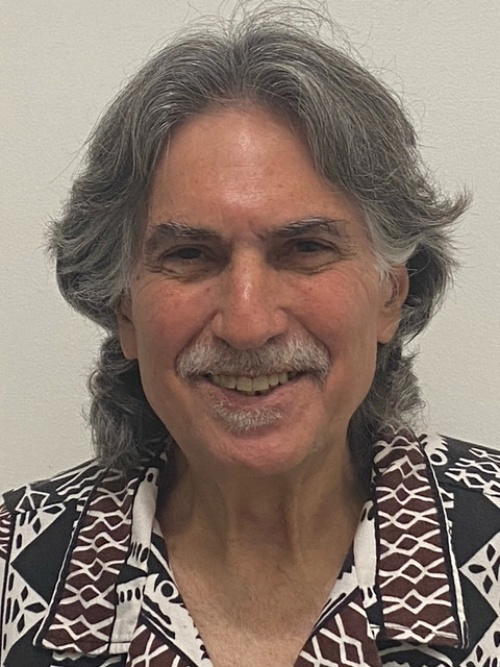

I encountered more out-of-towner passholders than local Angelenos, proving that film festivals can be a big draw luring visitors from afar to destinations.
TCM CLASSIC FILM FESTIVAL 2026
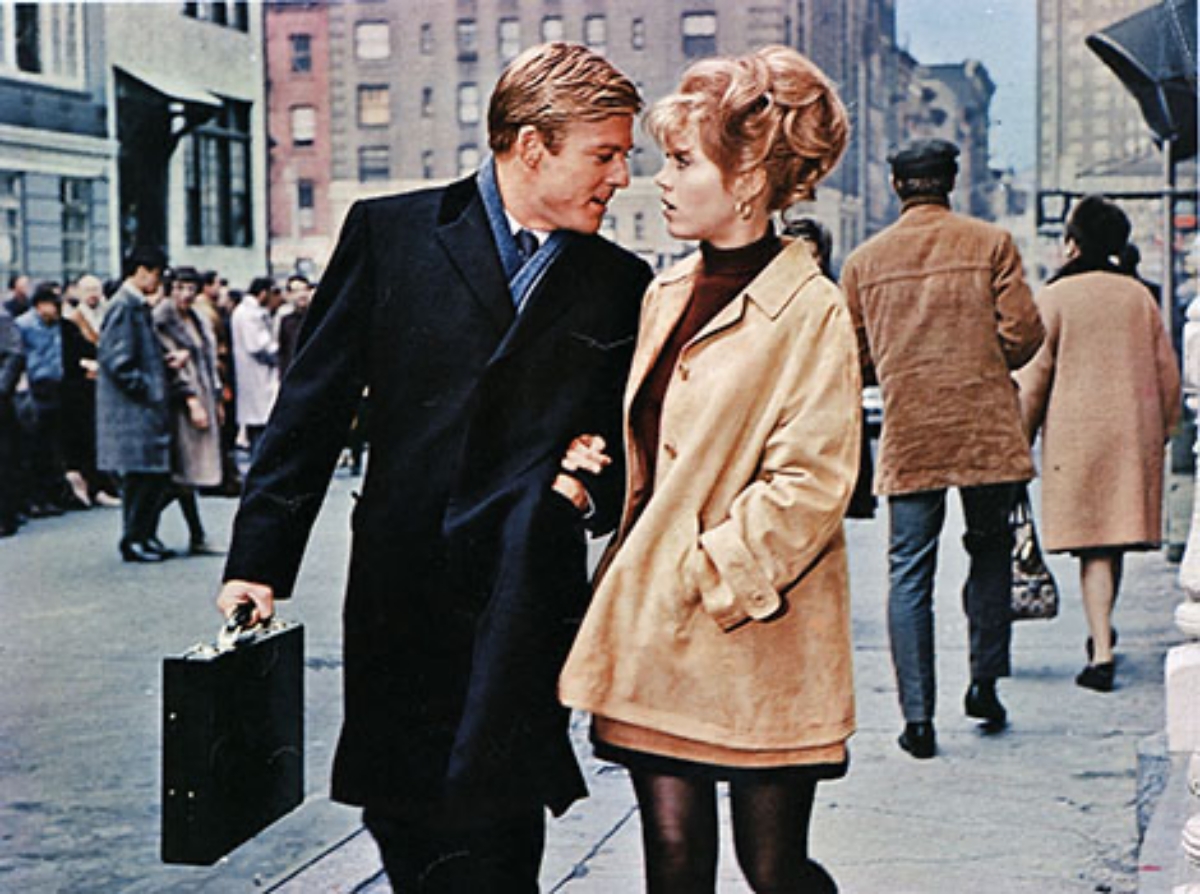
The 17th annual TCM Classic Film Festival took place in Hollywood from April 30-May 3 and only three days later, Ted Turner, visionary founder of the 24/7 all-cinema cable TV channel Turner Classic Movies, died at age 87. On April 30, Turner’s ex-wife Jane Fonda had presented a world premiere restoration of the 1967 romcom Barefoot in the Park, which she’d co-starred in with Robert Reford, as the opening night gala screening of the festival that grew out of the TCM channel. The Neil Simon comedy was presented at what is arguably the world’s most famous movie theater, TCL Chinese Theatre IMAX (formerly Grauman’s Chinese Theatre, with its fabled legendary courtyard featuring stars’ footprints and handprints immortalized in cement fronting Hollywood Blvd.).
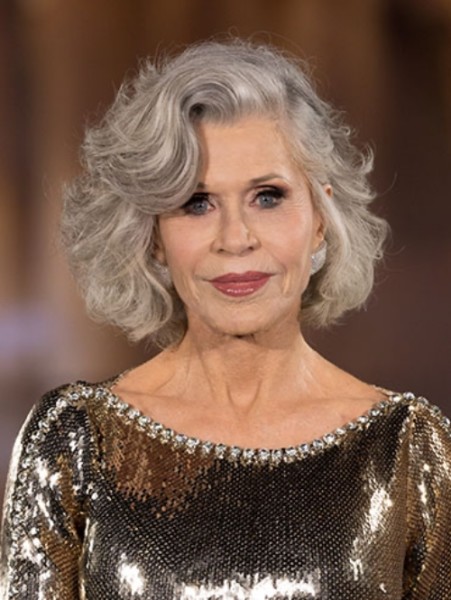 Jane Fonda
This year the filmfest’s theme was: “THE WORLD COMES TO HOLLYWOOD.” And this was literally true in the audience, as moviegoers from England, Hawaii, Oakland, Idaho, Wisconsin, Chicago, France and beyond flocked to this fete celebrating period pictures, forming an impromptu “Classic Community” or “Cineaste Nation” composed of citizen buffs, all united in our magnificent movie obsession, a shared love of the silver screen. I encountered more out-of-towner passholders than local Angelenos, proving that film festivals can be a big draw luring visitors from afar to destinations. In fact, the crowds were so thick that I was unable to get into several happenings and screenings, despite my press pass.
Hollywood Emigres and Exiles
The first event I couldn’t attend was May 1’s “A Conversation w/Carol Burnett” at “Club TCM,” inside what is usually the Hollywood Roosevelt Hotel’s ballroom. The event was mobbed and the line to get in to see the comedy legend was too long, which was especially disappointing to me as Carol and I had attended a screenwriting class at the University of Hawaii together and I’d interviewed her for a Honolulu publication. So, I decamped across the street to see the already-in-progress 1996 abortion satire Citizen Ruth presented by Laura Dern and director Alexander Payne, but despite the fact that the Chinese Multiplex #1 is quite large, the festival volunteers wouldn’t allow me in to find a seat in the capacious theater, saying it was too dark for me to safely do so. Also very disappointing, as Alexander and I previously crossed paths, and had recently been in touch re: the new book I co-authored re: shooting on location in Hawaii, which includes Payne’s 2011 The Descendants.
Alas, poor Yorick! I knew him Horatio!
Thus, I scurried back to the Hollywood Roosevelt Hotel and after cooling my heels, gained access to Club TCM for the excellent panel moderated by TCM “Noir Alley” host Eddie Muller on “Hollywood Emigres and Exiles.” The discussion zoomed in on European motion picture talents – many of them Germans and Jews – who fled fascism and relocated in Tinseltown prior to and during WWII, an appropriate subject for May Day. The panelists included curator and author Doris Berger; Annette Insdorf, Professor of Film at Columbia University and author of film books such as the biography Francois Truffaut; and Monika Henreid, daughter of Paul Henreid, who movingly portrayed the Czech resistance leader Victor Laszlo in 1942’s Casablanca.
Ms. Henreid pointed out that most of Casablanca’s co-stars, including her father and Ingrid Bergman, were immigrants originally from Europe. Of her Trieste-born dad who had Jewish ancestry and was as heroic offscreen as he was onscreen, she said that as a rising star of stage and screen, he “refused to be with the Nazis. He was bled under the Third Reich. He ended up in Hollywood and was bled again. The land of the free and home of the brave was not all that” – due to the Hollywood Blacklist, which Henreid valiantly opposed.
Berger added that these refugees from Goebbels and Hitler, “Shaped what we now call modern cinema.” Indsdorf cited some of the innovations of these foreign-born cinematographers, composers, etc.: “They brought chiaroscuro and psychological” filmmaking. Muller pithily mused that “The people who created our escapism were escaping.” Arguably the world’s top Film Noir historian, Muller cited the Europeans’ contributions to that dark, moody film genre. They included Dresden-born, Jewish director Robert Siodmak, helmer of Film Noir classics such as 1949’s Criss Cross, as well as the 1944 South Seas actioner Cobra Woman, screened May 2 at the Egyptian Theatre, introduced by TCM guest host Luis Reyes and reviewer Leonard Maltin.
Other emigres and exiles who enriched Tinseltown’s tapestry of talent included Jean Renoir, Fred Zinnemann, Hedy Lamarr, Billy Wilder, and Fritz Lang, who Insdorf recounted answered Minister of Propaganda Joseph Goebbels’ offer to head the Nazis’ new German film industry by fleeing the country. Safely relocated in Hollywood, Lang went on to make some of the WWII era’s top anti-Nazi movies, including 1941’s Man Hunt and 1943’s Hangmen Also Die! co-written by bard Bertolt Brecht. Goebbels shot himself in the jackboot: His goal to make Third Reich cinema the world’s best was undermined by the Nazis’ vicious antisemitism and authoritarianism, which forced many Jewish and antifascist artists to flee and use their talents abroad.
The Club TCM audience included Nicola Lubitsch; although her Jewish father, Ernst, had gone Hollywood before Germany went fascist, he would co-write and direct the superb 1942 anti-Nazi comedy starring Jack Benny, To Be or Not to Be. Ernst’s 1925 Lady Windemere’s Fan closed the filmfest (see below).
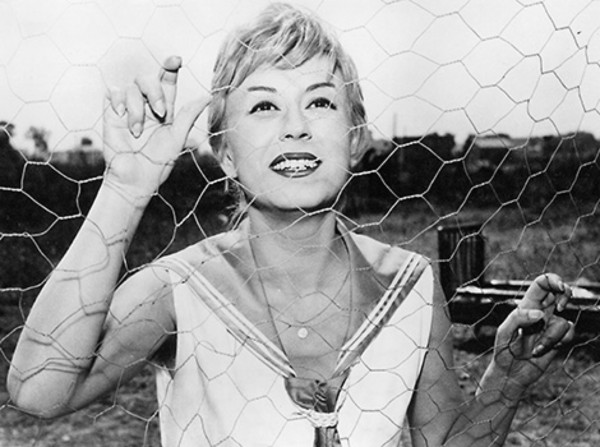 Nights of Cabiria
Nights of Cabiria, Days of Cinema
I had much better luck on May 2, watching Cobra Woman at the Egyptian Theatre and All the President’s Men at TCL Chinese Theatre IMAX (see my separate stories about those movies), where I had no problem getting seats. That evening I returned to the Egyptian (my favorite movie house on Earth) and witnessed the Founding Repertory Artistic Director of New York’s Film Forum and founder of classic film distributor Rialto Pictures, Bruce Goldstein, receive the filmfest’s Robert Osborne Award, named after the beloved longtime TCM host. Actor John Turturro (Spike Lee’s 1989 Do the Right Thing) spoke during the ceremony, paying Tribute to Goldstein and revealing himself to not only be quite a wit, but an in-the-know cinephile. Film historian Donald Bogle (himself a recipient of what Goldstein called “the Osbie”) sat a couple of rows in front of me and told me he was presenting the 1943 musical Cabin in the Sky; I said I’d be there.
After the award presentation Federico Fellini’s 1957 black and white Nights of Cabiria about the hard luck life of a Rome prostitute was screened, starring Fellini’s wife, Giulietta Masina, who scored the Cannes Film Festival’s Best Actress award, and the film won the Best Foreign Language Film Oscar. This was the first time I’d seen Cabiria on the big screen and I love Fellini, but I was unsure as to what he intended the very ending to mean. (If you think you know, please post a comment to enlighten moi.)
Give Them Enough Rope…
Although I arrived half an hour early and waited on line, I was unable to see Donald Bogle hold forth on Cabin in the Sky, and I learned an important lesson: So many film fans attend this festival that next year, I’ll have to make sure to arrive earlier in order to experience all that I want to behold. However, all was not lost – Alfred Hitchcock’s 1948 Rope was likewise playing in the Chinese Multiplex complex. Luckily, I managed to squeeze in literally to the very last row. Interviewed by the brilliant TCM host Jacqueline Stewart, Sex in the City’s openly gay Mario Cantone regaled the audience with his spin on Rope’s homosexual subtext. He also treated the crowd to uproarious imitations of Hitch’s 1963 The Birds – including the title characters.
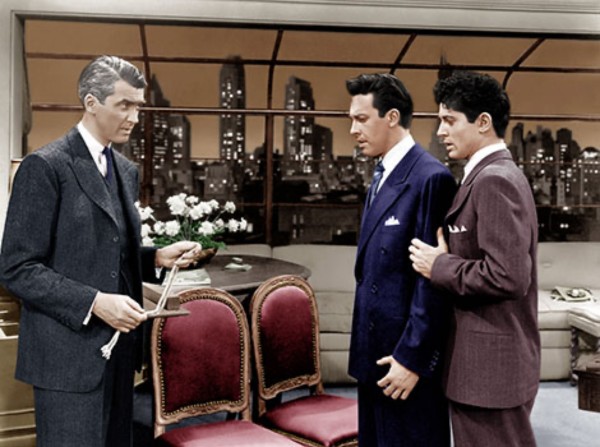 Rope.
Rope.Co-starring Jimmy Stewart and Farley Granger, Rope was the master of suspense’s first color film. Although Hitch is noted for his cinematic prowess, Rope is experimental in that it was shot in long takes, like a work of filmed theater. At times it was quite stagey and if you look outside the set’s picture window of the Manhattan skyline closely, it seems that the Technicolor clouds rarely move. Hitch’s rendition of the Loeb and Leopold murder case (which was also depicted in 1959’s Compulsion, starring Orson Welles) has a strongly philosophical vibe, with homicide defended by the upper class snobby pretentious perpetrators when it is committed by “superior” beings against their undeserving “inferiors.” My sense is that the screenwriters (including Arthur Laurents and Hume Cronyn) were commenting on the Nazis’ rationalizations for mass murder of the “mud people” by members of the Aryan Übermensch, only two years after the Nuremberg Tribunals for war crimes. Thus spake Alfred Hitchcock!
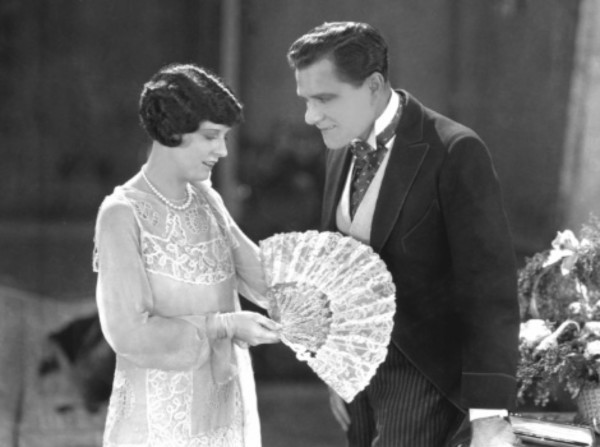 Lady Windemere's Band
Lady Windemere’s Band
The movie-palooza ended at the 516-seat Egyptian Theatre with an annual highlight for me: The projection of a silent film accompanied by a live orchestra, the Mont Alto Motion Picture Orchestra, a five-piece chamber ensemble specializing in music for motion pictures made before talkies and synchronized sound. Appropriately, Jacqueline Stewart, host of TCM’s “Silent Sunday Nights” weekly program, introduced Ernst Lubitsch’s 1925 adaptation of playwright Oscar Wilde’s Lady Windermere’s Fan. Alluding to the celebrated director’s famed “Lubitsch Touch,” Stewart observed that “clever filming replaced clever wordplay” – that is, title cards emblazoned with Wilde’s wry repartee. This black and white movie about the English upper crust’s mores is also notable because it is a rare film wherein the leading man, Ronald Colman, is the only key character to end up alone.
As the final curtain dropped on the festival, I made my way down fabled Hollywood Blvd., festooned with its stars embedded in pavement, to Club TCM back at the Hollywood Roosevelt. There I rubbed shoulders with my fellow citizens of “Classic Country,” sprinkled with motion picture pixie dust, to savor conversation and delicious appetizers. As the sun had set slowly in the West, we bid a fond adieu to the TCM Classic Film Festival, where a splendid cinematic time was had by all.
The fourth book co-authored by Ed Rampell and TCM guest host Luis Reyes about filmmaking in Hawaii drops in August.
