


Regarding the Trump administration—I still think Saunders has many wise things to say.
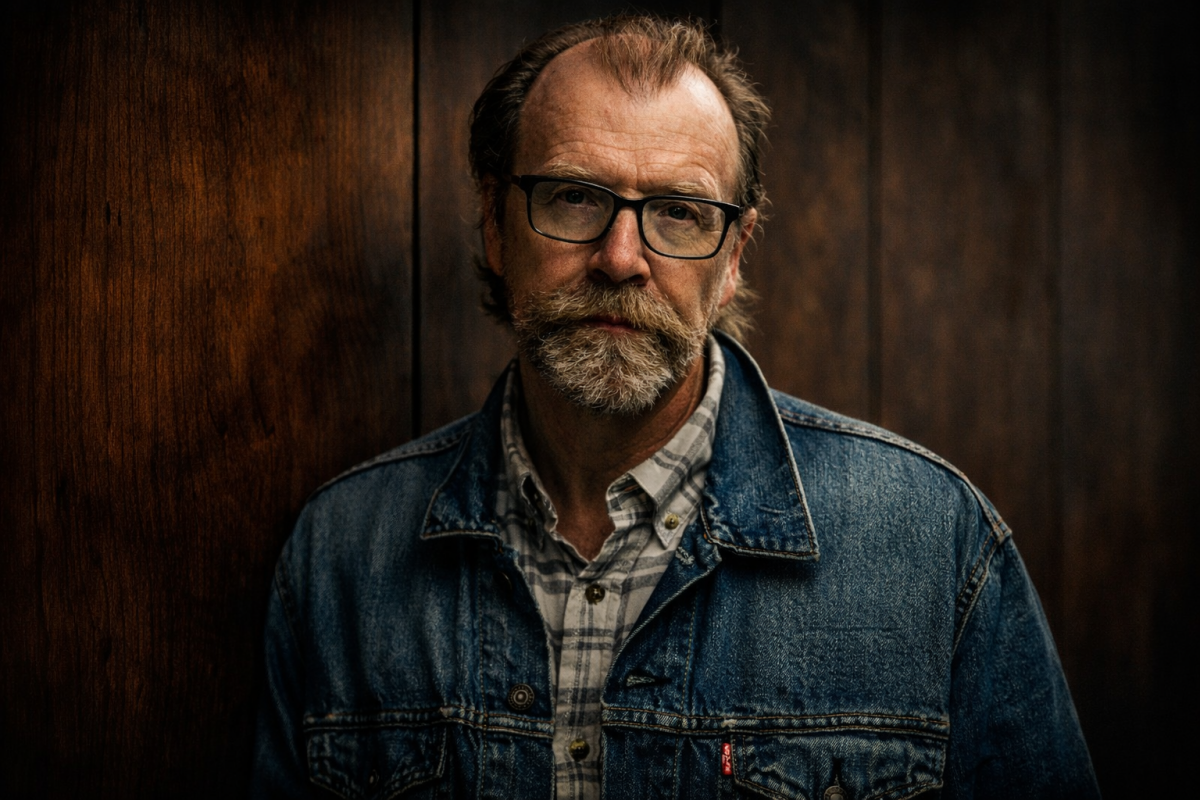
Award-winning George Saunders (age 67) is (or was?) one of my favorite U.S. writers—Stephen Colbert also referred to him (in 2017) as "quite possibly my favorite living author." I also have previously written two pieces on him, one in 2017 (“George Saunders’s Political Wisdom, Illegal Immigrants, and Trump”) and another in 2021 ("Review of George Saunders’ New Book on Russian Writers").
In my first article, in addition to Saunders defending immigrants and criticizing Trump, I emphasized his stress on values, especially empathy. In the second piece, I mentioned that he analyzed seven translated stories—two by Tolstoy (“Master and Man” and “Alyosha the Pot”), one each by Gogol (“The Nose”) and Turgenev (“The Singers,” which has also been adapted by the award-nominated Netflix short film The Singers), and three by Chekhov (“In the Cart,” “Gooseberries,” and “The Darling”). (All these stories are available for free download at the Gutenberg site.)
In addition, in his Substack app (Story Club With George Saunders), which has more than 300,000 followers, he deals at length with Tolstoy’s novella “The Death of Ivan Ilyich” and Chekhov’s “The Lady with the Pet Dog” (one of his favorites).
About a decade and a half ago I wrote about “The Death of Ivan Ilyich.” Like Saunders later, I mentioned that on Ivan’s deathbed the question occurs to him, "What if my whole life has been wrong?" (What if I have not spent my life as I should?) And also like Saunders later, it seemed to me that much earlier in our life we should be asking ourself that central question, “How should I live my life?”
Also like Saunders, I admire Chekhov’s “The Lady with the Pet Dog.” And about a decade ago, I pointed out that the agnostic Chekhov appreciated the transcendental. I cited as proof this passage from “The Lady with the Dog”:
At Oreanda [near Yalta] they sat on a seat not far from the church, looked down at the sea, and were silent.Yalta was hardly visible through the morning mist; white clouds stood motionless on the mountain-tops.The leaves did not stir on the trees, grasshoppers chirruped, and the monotonous hollow sound of the sea rising up from below, spoke of the peace, of the eternal sleep awaiting us. So it must have sounded when there was no Yalta, no Oreanda here; so it sounds now, and it will sound as indifferently and monotonously when we are all no more. And in this constancy, in this complete indifference to the life and death of each of us, there lies hid, perhaps, a pledge of our eternal salvation, of the unceasing movement of life upon earth, of unceasing progress towards perfection. Sitting beside a young woman who in the dawn seemed so lovely, soothed and spellbound in these magical surroundings—the sea, mountains, clouds, the open sky . . .
More recently, in January and February 2026, two Saunders interviews were posted in which he had some important things to say about a number of topics related to wisdom—truth, kindness, meditation, death, judgment, and sin. Although he was raised Catholic, he now considers himself a Buddhist. Influenced by that religion, in his January interview he mentions three things that you probably believed but “they’re not true....You’re not permanent, you’re not the most important thing and you’re not separate.”
In his second interview (with host Ezra Klein) he linked truth and sin—“My understanding is sin just means you’re out of step with truth.” (In a recent appearance on Stephen Colbert’s show, Saunders also mentioned the importance of truth-telling, and contrasted that approach to that of the Trump administration, which “seems to be lying so often we get used to it.”)
Klein also linked two more of the nouns mentioned earlier: “I’ve always thought of Saunders....as the kindness guy.” (In 2013, Saunders gave a Syracuse University commencement speech in which he said, “What I regret most in my life are failures of kindness.”) But....I began to realize that Saunders is more interested in something else now—not kindness, but the question of judgment.” Basically, the writer is saying we should not be so quick to judge others.
But before writing more about Saunders’ wisdom, I should explain the “(or was?)” in my first line. In a review of Saunders’ new book, Vigil—about a climate crisis denier named K.J. Boone—The New York Times’ Dwight Garner writes, “Saunders is making his points too heavily, working to insert wisdom into our open beaks.” Garner also observes, “Over the past 15 years or so he’s [Saunders] slowly drifted, in his writing and other commentary, toward becoming a kind of guru or secular saint, dispensing Buddhism-flecked feel-good messages about practicing kindness and bearing witness. He’s yoked fiction to his project, describing it as something akin to therapy.” But Garner also believes that “one thing’s certain: The writers who insist on the morally improving nature of fiction, and who robe themselves in the folds of wisdom or beneficence, tend to be the ones to avoid.” And the “injunction to love one’s neighbor as oneself turns out to not be enough to hang a novel on.”
Before writing my 2017 ad 2021 essays of Saunders, I had not yet read his then most recent novel, the Booker Prize-winning Lincoln in the Bardo (2017), which is soon to be made into a movie with Tom Hanks playing Lincoln. Although most critics praised it, it fits into Garner’s “past-15-years-or-so” window, and whether it is too didactic or for some other reason, when I finally got around to reading it I did not especially enjoy it. Perhaps it’s because I tend to agree with Garner—“writers who insist on the morally improving nature of fiction, and who robe themselves in the folds of wisdom or beneficence, tend to be the ones to avoid.”
Thus, even though I think climate crisis deniers like Saunders’ fictional K.J. Boone are wrong, I suspect that Garner is correct when he writes, “Saunders’s newfound enlightenment may have done wonders for himself personally, but it’s done his fiction no good whatsoever.” That being said, however, regarding wisdom qualities like truth, kindness, meditation, death, judgment, and sin—and regarding the Trump administration—I still think Saunders has many wise things to say.
