

Why Woody Guthrie Is Singing to Us Again


The newly released documentary explores the remarkable friendship between Steinbeck and Guthrie and the extraordinary moment when a novelist and a folksinger found themselves telling the same American story.
How does a man who died nearly sixty years ago suddenly become one of the most relevant voices in America?
That was the question I found myself asking after watching a recent PBS program about Woody Guthrie. It sent me looking for more, and that's when I discovered the newly released documentary, Woody Guthrie and the Ghost of Tom Joad Today. Together, they reminded me why Guthrie's voice still speaks so powerfully to our own time.
I suspect many Americans under the age of fifty know little about Woody Guthrie. They should.
Most of us recognize the song This Land Is Your Land. Fewer know the man who wrote it.
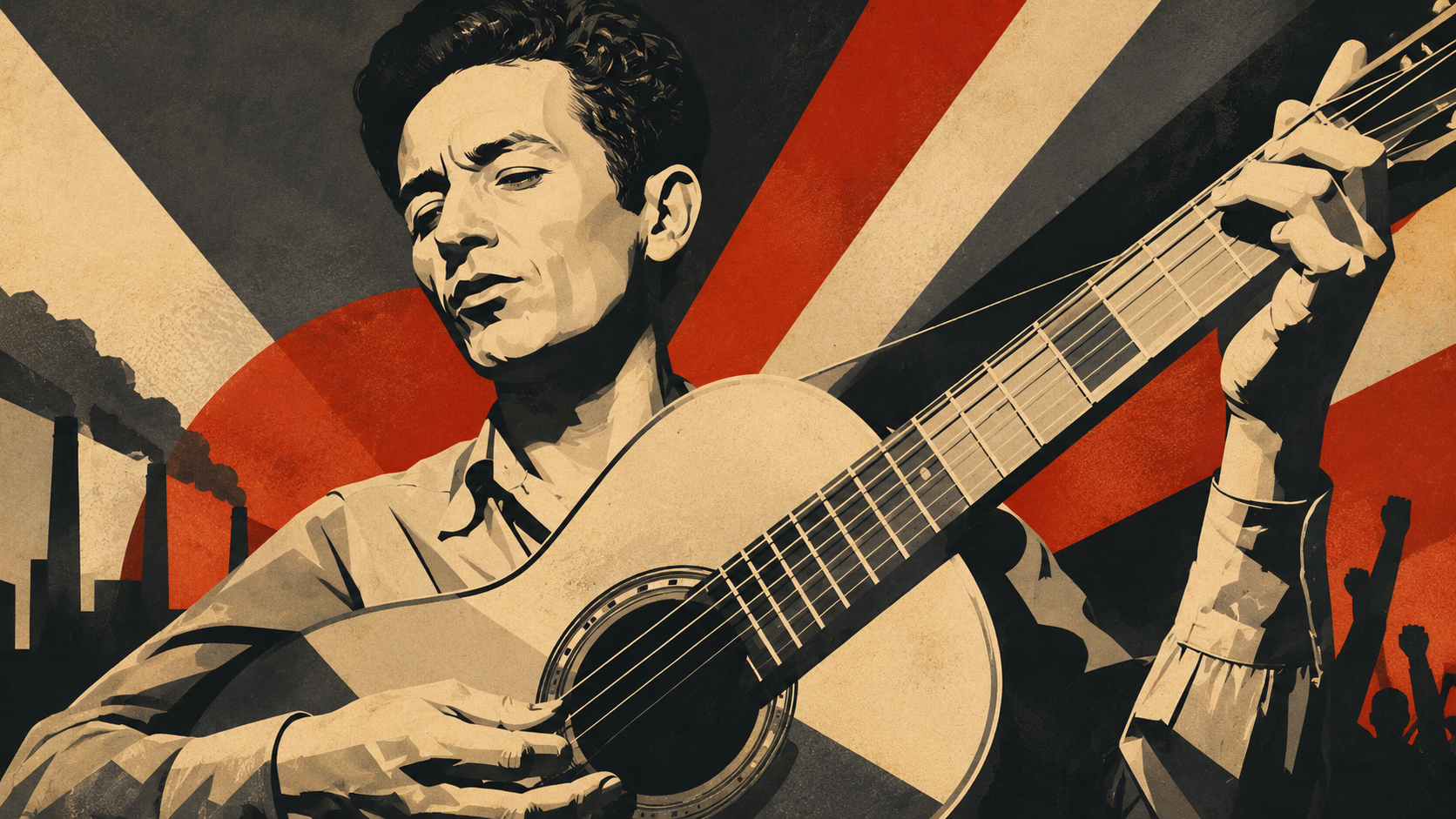
Woody Guthrie wasn't simply a songwriter. He was America's wandering witness. During the Depression he traveled the country, lived among migrant workers, and wrote about the people everyone else seemed to overlook. He believed songs could tell truths that speeches could not.
Painted across his battered guitar were these unforgettable words: This Machine Kills Fascists. He wasn't calling for violence. He was declaring that music, art, and storytelling have the power to confront fear, hatred, and authoritarianism. Nearly ninety years after the Dust Bowl, his voice sounds surprisingly current.
Many of us first encountered those years through John Steinbeck's The Grapes of Wrath. Considered one of America’s greatest novels. Woody Guthrie gave those same people a soundtrack. He lived among migrant workers in California, listened to their stories, and transformed those stories into songs.
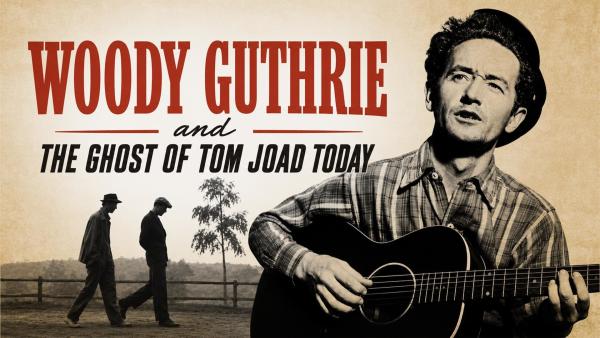
The newly released documentary explores the remarkable friendship between Steinbeck and Guthrie and the extraordinary moment when a novelist and a folksinger found themselves telling the same American story. Narrated by Rosanne Cash, it combines rare archival footage, Dorothea Lange's unforgettable photographs, and some of Guthrie's greatest songs to remind us why their work still matters.
What surprised me most was not simply the history. It was how contemporary it felt. The film reminds us that debates over migration, economic hardship, censorship, and the dignity of working people did not begin in our own time. They are part of a much longer American story.
One of those songs, Deportee (Plane Wreck at Los Gatos), still breaks my heart. It was inspired by a 1948 plane crash that killed Mexican farmworkers being deported to Mexico. Newspapers listed the names of the American crew but referred to the Mexican laborers simply as "deportees."
To Woody, that wasn't just careless reporting. It erased their humanity. These were not anonymous workers. They had names. Families. Dreams. They deserved to be remembered. That lesson has not grown old.
A few weeks ago, I watched Jane Fonda's Rise Up, Sing Out event. One of the evening's most memorable moments came when Bette Midler performed an updated version of Woody's anti-fascist song, All You Fascists Bound to Lose. Hearing those words nearly eighty years after Woody first wrote them reminded me that every generation needs artists willing to hold up a mirror to the country.
Some concerns never really disappear. The faces change. The languages change. The politics change. But fear of newcomers, suspicion of immigrants, and the temptation to divide "us" from "them" return again and again.
Artists keep memory alive. Steinbeck did it with a novel. Woody did it with songs. Dorothea Lange did it with photographs. They remind us that behind every headline is a human being.
That may be the most important lesson Woody Guthrie still has to teach us.
Woody Guthrie and the Ghost of Tom Joad Today is more than a film about two remarkable Americans. It is an invitation to think about the enduring role of artists in a democracy and the stories they preserve for future generations.
If you have the opportunity to watch it, I hope you will. You'll meet an American who believed that stories could make us braver, music could make us kinder, and art could help protect democracy itself.
Watching him again, I found myself wondering whether that old guitar still works.
I think it does.
