

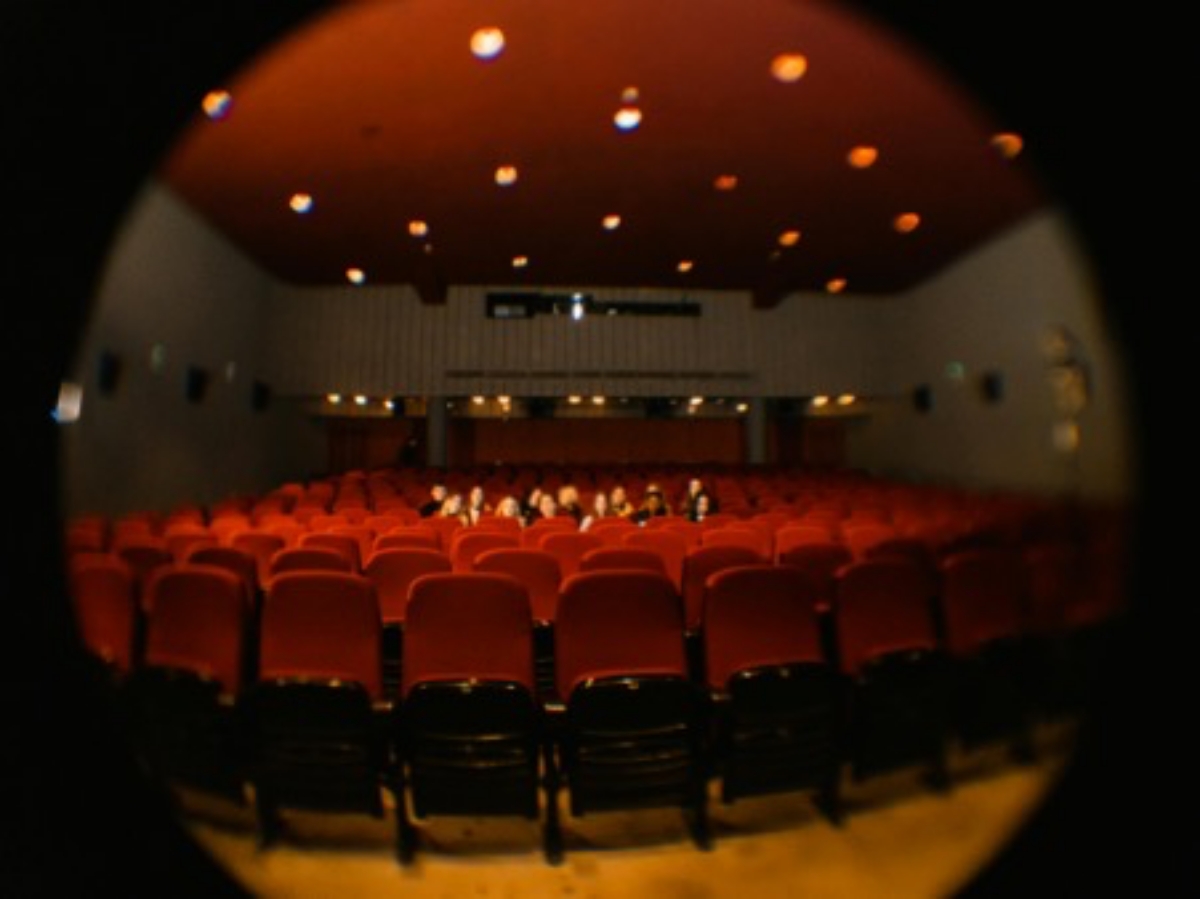


There was a time when the story began the moment the screen lit up. You bought a ticket, found your seat, and waited. Everything that mattered unfolded in front of you.
That’s no longer how it works.
Now the story starts in fragments. A cryptic 12-second clip. A poster that reveals tone but not plot. A cast appearance that feels suspiciously coordinated. Weeks before a premiere, audiences are already decoding, speculating, arguing. The narrative is in motion long before anyone presses play.
The DesignRush team has pointed out this shift when studying breakout campaigns: what looks like marketing is often the first act of the story. The anticipation isn’t a side effect. It’s engineered. And when it’s done well, it changes how the audience feels before the film even begins.
Let’s look at what that teaches us.
Lesson #1: Anticipation Is the First Ingredient
Teasers have replaced trailers because they unlock something more crucial than curiosity. And that's anticipation.
The blockbuster movie Barbie leaned into aesthetic saturation. Months of pink-drenched visuals and playful character posters created a mood before audiences knew what the film was actually about. The mystery wasn’t frustrating. It was magnetic.
Anticipation works because it gives the audience something to do emotionally. It turns waiting into engagement.
Lesson #2: Let People Step Inside the World
Something shifts when a premiere becomes physical.
When Stranger Things recreated Hawkins in immersive city spaces, or when Game of Thrones invited fans to stand before the Iron Throne, the experience stopped being promotional and started feeling immersive.
You weren’t being sold something. You were being welcomed in.
There’s science behind that, too.
Multisensory experiences anchor memory more deeply than passive observation. When you walk through a set, hear the soundtrack in a live setting, or interact with actors in character, your brain codes it differently.
Theater has always known this.
Shakespeare’s audiences weren’t quiet observers. They reacted, shouted, and moved. Modern immersive productions like Sleep No More push that even further, dissolving the boundary between viewer and performer.
When people feel physically present, they attach more meaning to what happens next.
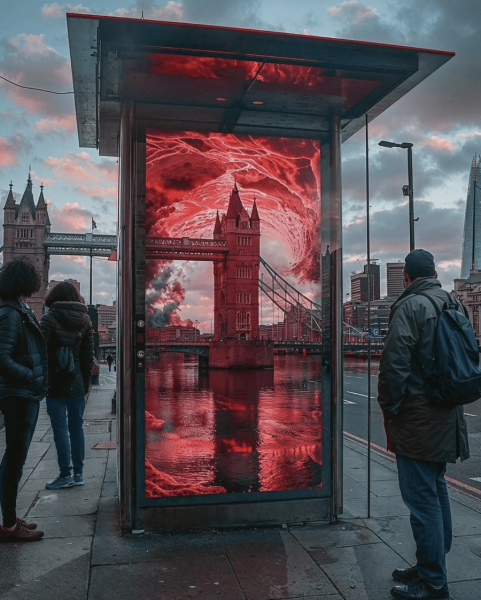 Source: BMOutdoor
Lesson #3: Visuals Carry Emotion Before Words Do
Sometimes one image does more work than a monologue.
● The red coat in Schindler’s List.
● The muted, wind-carved deserts of Dune.
● The neon melancholy of Blade Runner.
These aren’t just stylistic choices. They tell you how to feel before anyone speaks.
Viral teasers understand this instinctively. They don’t explain the story. They introduce its emotional temperature.
Historically, imagery has always shaped cultural memory.
Wartime posters, protest art, and avant-garde cinema. Visual language reaches us faster than dialogue ever could. In a scroll-heavy digital world, that immediacy matters even more.
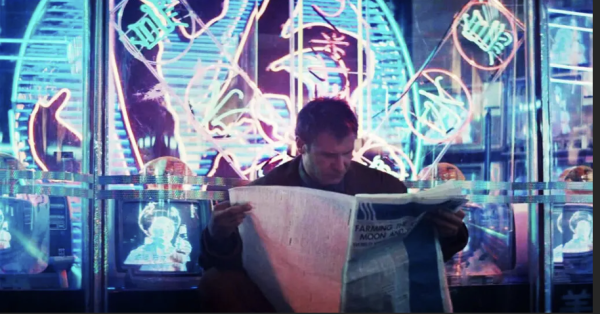 Source: FilmandFurniture
Lesson #4: Relevance Is Measurable
When a story connects to something already unfolding in society, the audience response shifts.
According to Edelman’s Trust Barometer, 63% of consumers choose, switch, avoid, or boycott brands based on their stance on societal issues.
Entertainment is not immune to that behavior, because viewers align their attention with stories that reflect their values or challenge existing systems.
You can see it in how certain films move beyond the entertainment cycle.
● Get Out didn’t just dominate the box office; it triggered sustained cultural analysis around race and liberal hypocrisy.
● Joker sparked global debates about alienation and violence before and after release.
● Don’t Look Up became shorthand for climate anxiety and media denialism, referenced in political commentary long after its premiere weekend.
Those films weren’t simply watched. They were argued about.
This is the terrain where The Hollywood Progressive, founded by Dick Price and Sharon Kyle, situates its mission.
The publication operates on a clear conviction: art is not separate from public life.
Film, television, music, and performance both reflect and shape cultural consciousness.
When storytelling confronts injustice or exposes uncomfortable truths, the premiere becomes more than a marketing milestone.
It becomes part of the broader everyday conversation.
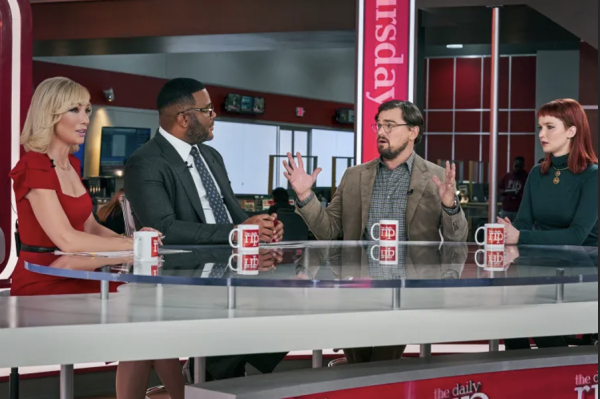 Source: VOX
Lesson #5: Shared Emotion Is Stronger Than Individual Reaction
There’s a reason midnight premieres still matter.
Psychologists describe emotional contagion as our tendency to absorb and mirror the feelings of those around us.
● That collective gasp during Avengers: Endgame.
● The breathless silence during Oppenheimer.
● The standing ovations at international festivals.
Alone, those reactions are powerful. Together, they’re amplified.
Storytelling has always thrived (and multiplied) in communal spaces. No wonder the Colosseum and ancient Greek theaters were the spotlight of culture even in the eldest of times.
And premieres, despite being modern, are the continuation of this psychological archetype.
People want to experience things, but they want to be seen while doing that.
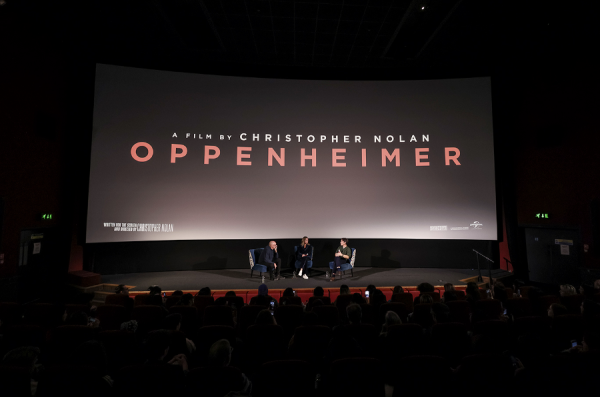 Source: TripWireMagazine
Lesson #6: Momentum Outruns Opening Weekend
Opening weekend used to define success. Now it’s just the first signal.
With global streaming subscriptions surpassing 1.8 billion, according to the Motion Picture Association, films don’t live or die in three days anymore. They build—or they disappear—based on whether people keep talking about them.
Everything Everywhere All at Once didn’t explode immediately. It expanded. Word-of-mouth, essays, memes, and repeat viewings. The audience carried it forward.
That’s the real metric now: not how loudly a story launches, but how long it lingers.
It’s infrastructure. Stories don’t begin on release day anymore. And the ones that matter don’t end there either.
