

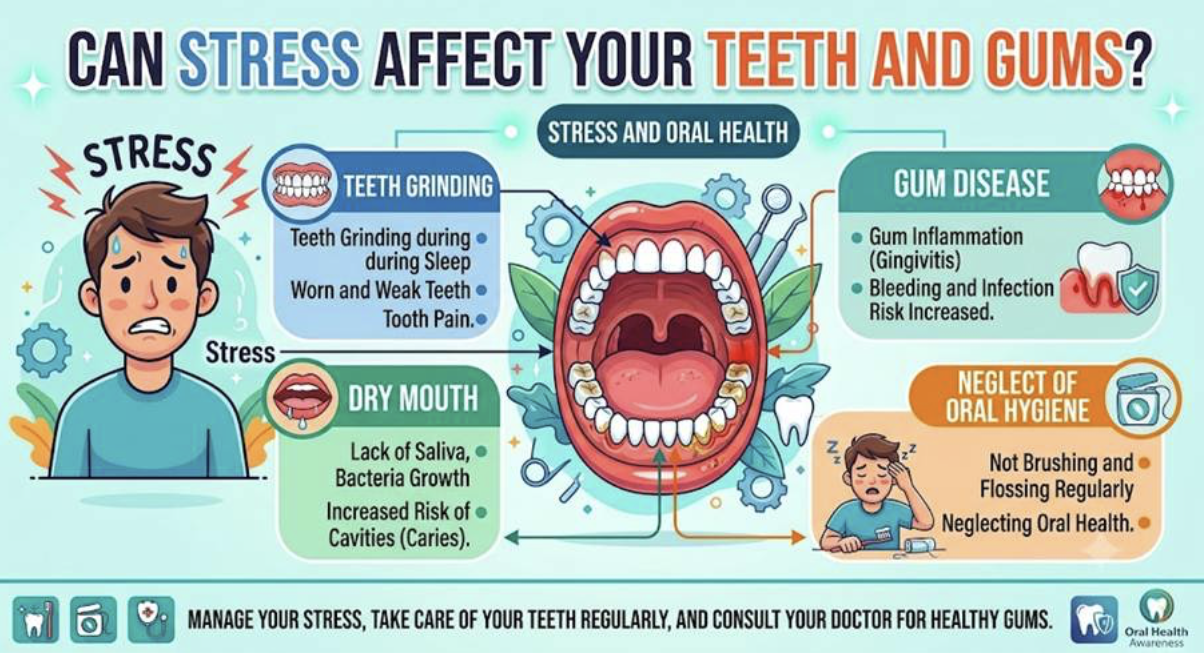


Can stress affect your teeth and gums? Learn the signs, from sore gums to tooth sensitivity, and find out when stress-related symptoms may need dental care.
Yes. Stress can affect your mouth through muscle tension, hormonal changes, dry mouth, and changes in daily habits. It may contribute to clenching, sore gums, mouth sores, cavities, and discomfort that becomes more noticeable during stressful periods.
Stress is not always the only cause. Many issues start when pressure changes how you sleep, eat, hydrate, or care for your mouth. A busy week can lead to skipped oral care, increased caffeine or sugar intake, and less attention to early symptoms. Over time, those small changes can create bigger dental concerns.
How Stress Affects Your Oral Health
Stress may affect your oral health by changing how your body responds to bacteria, pain, and inflammation. When your body remains under stress, inflammation and gum swelling may become harder to manage. Your mouth may also produce less saliva, allowing bacteria and acids to affect the enamel more easily.
Higher stress levels can also cause you to clench your jaw without realizing it. This often happens during sleep or while working. Over time, this pressure can contribute to tooth soreness, worn enamel, small chips, and headaches.
Common Signs in the Mouth
Stress can show up in different ways. Some symptoms may seem mild at first but can become more serious when left unaddressed.
Common signs include:
● Tightness in the face or jaw
● Headaches after waking up
● Sore gums when brushing
● Dry mouth during the day
● Small mouth sores
● Tooth sensitivity
● Worn or chipped enamel
Many people ask, can stress make your teeth and gums hurt? Yes. Clenching, inflammation, dry mouth, and inconsistent oral care can all contribute to discomfort.
Another common question is, can stress cause bleeding gums? Stress may not be the direct cause, but it can contribute by disrupting oral care routines, increasing inflammation, or allowing plaque to build up near the gumline.
Stress, Grinding, and Jaw Pressure
One of the most common stress-related dental habits is teeth grinding. This can happen at night, during work, or during tense moments. You may not notice it until you wake with jaw pain or begin to see changes in your teeth or bite.
This pressure can affect the enamel and the jaw joints that help your mouth open and close. It can also make chewing feel uncomfortable.
If pressure continues, it may increase the risk of cracks, gum soreness, and bite problems. A dentist can check for wear marks and recommend a guard when needed.
Stress and Gum Problems
Stress can affect your gums by altering both your immune response and daily habits. When you feel overwhelmed, you may snack more often, sleep less, or rush through brushing and flossing. These changes can allow plaque to build up along the gumline.
Redness, swelling, bleeding, and bad breath may signal irritation. If gum inflammation is left untreated, it can progress to more serious problems around the teeth.
People also ask, what effects does stress have on your teeth and gums? A clearer question is how stress changes your body and daily routine. Stress can affect saliva flow, immune response, muscle tension, food choices, sleep, and oral care habits.
A preventive visit to Smile Lab NYC can help identify early signs before they become painful or require more extensive care.
How to Protect Your Mouth
You do not need a complicated routine to protect your teeth and gums. The goal is to reduce pressure, keep bacteria under control, and respond early when symptoms appear.
Practical steps include:
● Brush twice a day with fluoride toothpaste
● Floss once daily
● Drink water often
● Limit frequent sugary snacks
● Avoid chewing ice or pens
● Ask about a night guard
● Use relaxation techniques before sleep
Small actions are most helpful when you practice them consistently. For example, setting a two-minute timer at night can help you avoid rushing. Keeping water nearby can help reduce dry mouth. Noticing daytime clenching can help you relax your jaw before tension becomes painful.
To manage stress, choose habits you can maintain. Walking, breathing exercises, screen breaks, better sleep, and mental health support can all reduce the pressure on your mouth.
When to See a Dentist
See a dentist if pain, bleeding, sensitivity, or mouth sores continue for more than a few days or keep returning. You should also schedule care if you notice chipped teeth, gum recession, loose teeth, or morning headaches.
Stress does not always lead to oral health problems, but it can make existing issues worse. Stress-related oral health problems are often easier to manage when you act early.
The best approach is to manage daily stress, maintain a consistent oral care routine, and address small symptoms before they become more serious.
