



Wondering about the Causes of Hair Thinning in Women? Explore common triggers, warning signs, diagnosis, and when to seek expert care.
Causes of Hair Thinning in Women: A Practical Guide
Hair thinning can develop slowly or appear after a major change in your health, hormones, diet, or stress level. The cause is not always clear from the pattern alone, so start by noting when the change began, where density decreased, and whether shedding increased. Some causes are temporary and reversible, while others progress without early care.
What Causes Hair Thinning in Women?
The cause of thinning hair in women depends on how the change appears and what happened in the months before it started. A widening part may suggest inherited thinning, while sudden shedding across the scalp may follow illness, surgery, childbirth, severe stress, or rapid weight loss.
The reasons for hair thinning in females often involve changes in the hair follicles, which may shrink, enter a resting phase too early, become inflamed, or experience repeated damage.. Changes in the normal hair growth cycle can reduce density even when the scalp still produces new strands.
The Most Common Causes
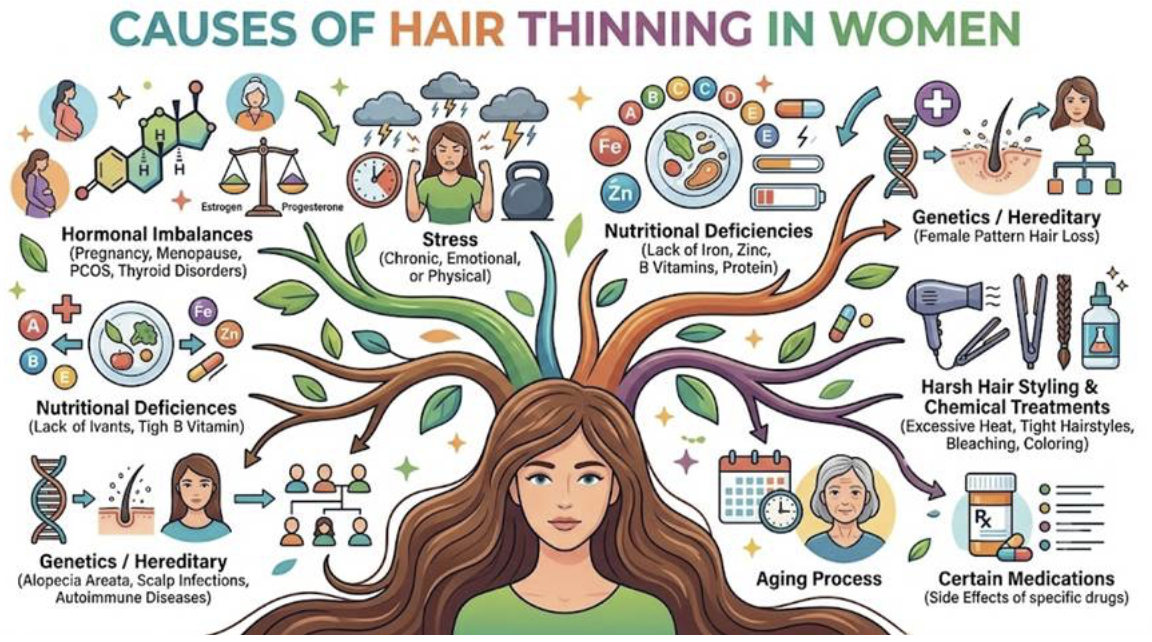
Several problems can reduce density or increase shedding:
● Genetics: Androgenetic alopecia usually causes gradual thinning over the top of the scalp. It often runs in families and becomes more noticeable with age.
● Hormonal shifts: Pregnancy, childbirth, menopause, and thyroid changes can alter the growth cycle.
● Physical or emotional stress: Fever, surgery, illness, grief, or rapid weight loss can trigger telogen effluvium several weeks or months later.
● Nutritional deficiencies: Low levels of iron, protein, zinc, or certain vitamins may affect hair production.
● Medications: Drugs used for cancer, arthritis, depression, heart problems, gout, or high blood pressure may cause shedding as a side effect.
● Hair practices: Tight hairstyles, bleach, relaxers, heat, and repeated chemical treatments can damage hair strands or follicles.
These factors do not all create the same type of hair loss. Timing and distribution help narrow the cause.
How Thinning Patterns Differ
Female pattern hair loss usually appears as a widening part or reduced density across the crown. The frontal edge often remains intact, so a clear receding hairline may point to another diagnosis. Female pattern baldness tends to progress slowly rather than cause sudden clumps of shedding.
During an evaluation, Dr. Ross Kopelman may examine follicle miniaturization, compare density across different scalp regions, and assess whether donor areas remain stable. This distinction matters because temporary shedding and inherited thinning require different plans.
Possible Causes in Older Women
Possible reasons for thinning hair in older women include menopause, genetic sensitivity, thyroid disease, nutritional deficiencies, medication changes, and cumulative styling damage. Lower estrogen levels may make hair strands finer, while inherited thinning can reduce density as follicles begin producing shorter, narrower hairs.
Age alone does not explain every change. Medical conditions such as anemia or thyroid disorders can lead to hair loss and should be investigated when thinning appears quickly, affects other body areas, or comes with fatigue, weight change, or skin symptoms. Thyroid changes and hair loss may occur together, while other health conditions can contribute through inflammation, hormonal disruption, or poor nutrient absorption.
Signs That Need Medical Evaluation
Seek an assessment when you notice:
● A widening part that continues to progress
● Sudden handfuls of shedding
● Smooth, round bald patches
● Scalp pain, burning, redness, or scaling
● Eyebrow or body-hair changes
● Hair breakage after tight styles or chemicals
● Thinning with fatigue, menstrual changes, or weight shifts
A clinician may review your family and medical history, examine your scalp, perform a gentle pull test, or order blood tests to check iron, thyroid, vitamin, and hormone levels. A scalp biopsy may be needed when inflammation or scarring is suspected.
Can Thinning Hair Grow Back?
Regrowth depends on the cause and whether the follicles remain active. Temporary shedding after stress, illness, childbirth, or a corrected deficiency often improves once the trigger resolves. Inherited thinning usually needs ongoing care to preserve density.
Hair regrowth does not happen immediately after hair loss stops. New strands may take months to become visible because follicles must return to an active cycle. Early evaluation can also prevent permanent follicle damage when inflammation, traction, or scarring is present.
Treatment Depends on the Diagnosis
The most suitable treatment options address the underlying cause rather than the appearance alone. A clinician may recommend:
● Correcting iron, protein, thyroid, or vitamin problems
● Changing damaging hairstyles or chemical routines
● Reviewing medications with the prescribing doctor
● Using topical or oral medicines when appropriate
● Considering platelet-rich plasma, laser therapy, or surgery in selected cases
Minoxidil is a common hair loss treatment for inherited thinning, but it requires correct use and may cause scalp irritation or unwanted facial hair. Other medications have pregnancy-related restrictions and require medical supervision. Hair restoration surgery may help selected women with stable donor density, but it does not correct active shedding or untreated scalp disease.
Take the Next Step
Do not judge the cause from photographs alone. Track when the thinning started, take monthly photos under the same lighting, list any new medications, and note illnesses or dietary changes from the previous three to six months.
Kopelman Hair can evaluate your pattern, follicle health, donor density, and goals before recommending a plan. An early diagnosis provides a clearer path and reduces the risk of spending time on products that do not address the cause.
