

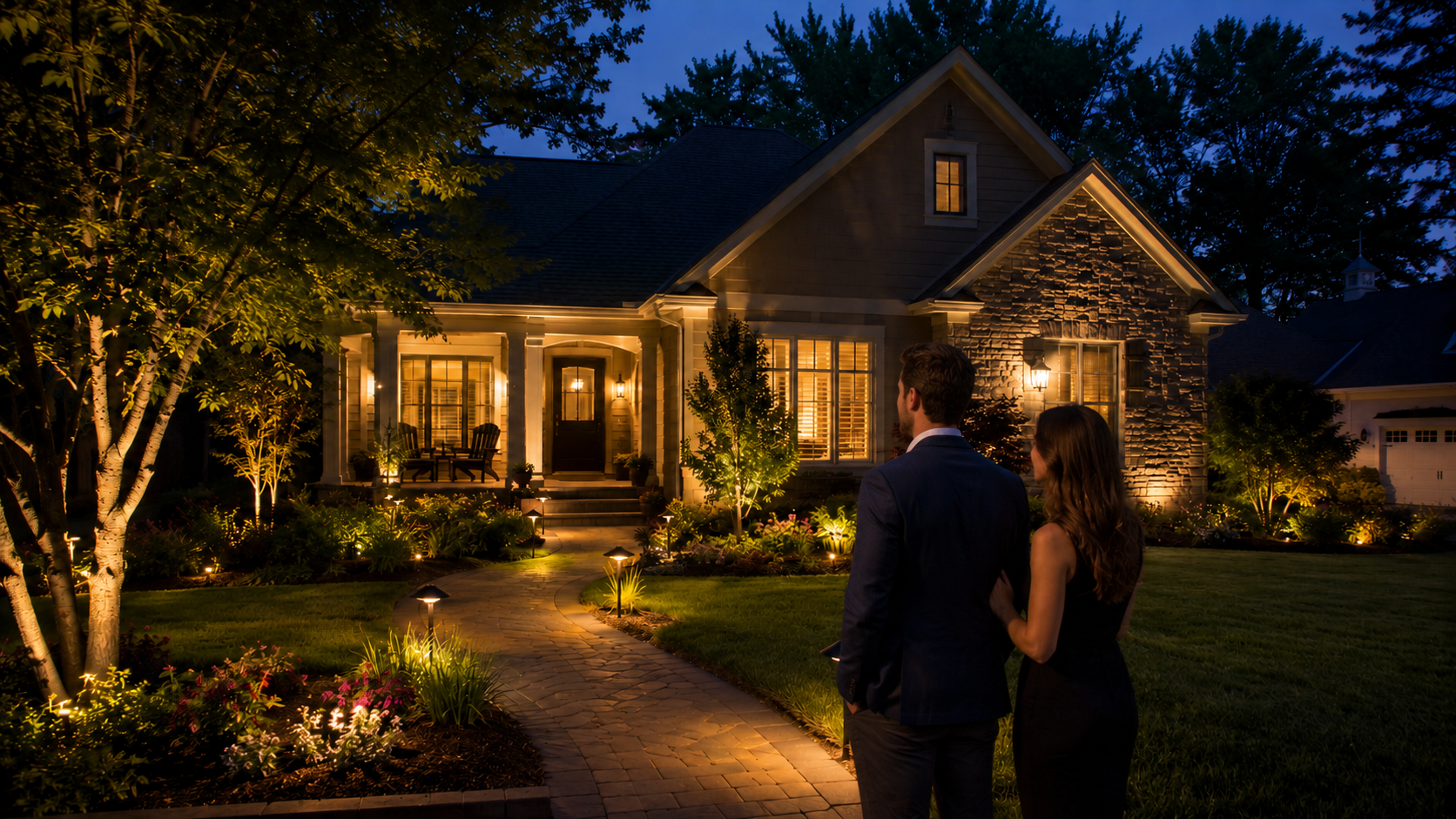


The layering principle in outdoor lighting parallels the same principle applied in interior lighting design, where ambient, task, and accent sources each serve different purposes and work together.
The difference between outdoor lighting that looks professionally designed and outdoor lighting that simply illuminates a property is almost entirely a matter of layering. Properties with a single category of exterior lighting, whether floodlights, pathway lights, or landscape uplights used in isolation, look adequately lit but not considered. Properties with multiple types of lighting working together at different heights, intensities, and purposes create the depth, dimension, and visual interest that communicates intentional design rather than functional sufficiency.
The layering principle in outdoor lighting parallels the same principle applied in interior lighting design, where ambient, task, and accent sources each serve different purposes and work together to create spaces that function well across different activities and times of day. Understanding the outdoor equivalent of these layers helps homeowners approach exterior lighting as a genuine design challenge with a clear organizing logic rather than a series of independent fixture purchases that happen to share a property. Astoria Lighting Co designs exterior lighting systems around this layering principle as a fundamental approach, and understanding each layer clarifies why the method produces results that single-category installations can't match.
The Ambient Layer: Establishing the Baseline
The ambient layer of outdoor lighting establishes the overall illumination level for the exterior environment, providing general visibility and setting the light level against which every other layer reads and operates. This layer typically comes from sources that provide broad, relatively even coverage: wall-mounted entry fixtures, post lights along driveways, overhead porch fixtures, and low-intensity area lighting that provides general visibility across open spaces.
The ambient layer alone creates a functional outdoor environment after dark but not a visually interesting or particularly inviting one. When everything is visible at a similar brightness level, the result has no depth or dimension. The ambient layer is the necessary foundation that makes other layers legible and provides context for the contrasts that create visual interest, but it functions as a starting point rather than a complete lighting solution regardless of how well individual ambient fixtures are chosen.
The Accent Layer: Creating Focus and Visual Hierarchy
The accent layer introduces focal points that draw the eye and create visual hierarchy in the exterior environment. Uplighting on significant trees, directional fixtures highlighting architectural features, and lighting that emphasizes specific landscape elements all belong to this layer, which is responsible for creating the contrast and depth that distinguishes designed landscape lighting from uniform functional illumination.
When specific elements are significantly brighter than their surroundings, they become focal points that the eye moves to naturally. The contrast between these illuminated subjects and their relatively darker surroundings creates the three-dimensional quality that makes professionally designed exterior lighting look rich and considered. The accent layer is what creates the depth and visual interest that people respond to when they describe a property as looking beautiful after dark, even if they can't identify the specific technique producing that impression.
The Task Layer: Functional Illumination Where It's Actually Needed
The task layer addresses specific functional illumination requirements at the locations where activities occur after dark: pathway lighting that guides safe movement, step lighting at grade changes, cooking area illumination in outdoor kitchens, and dining area lighting that provides sufficient brightness for comfortable evening meals outdoors.
Task lighting prioritizes function, but in well-designed systems it's also aesthetically integrated because the fixtures and their placement are selected to contribute to the overall composition rather than standing apart as utilitarian elements that interrupt the design. Task lighting that works against the aesthetic goals of the ambient and accent layers creates a disjointed result. Task lighting that serves its functional purpose while fitting naturally into the broader design contributes to the cohesion that makes the overall system feel complete.
The Architectural Layer: Revealing the Home Itself
The architectural layer is the one most consistently absent from self-installed outdoor lighting and the one that most dramatically transforms a property's nighttime appearance when it's included. This layer specifically illuminates the home's exterior surfaces, revealing the architectural character of the structure and providing a lit backdrop against which landscape elements gain context and visual clarity.
Without an architectural layer, landscape features like uplighted trees or lit garden beds appear as isolated elements floating in darkness without any background to give them visual grounding. When the home itself is illuminated, these landscape elements read against a backdrop that integrates them into a complete exterior environment. This integration is what makes a professionally designed outdoor lighting system look finished and cohesive in a way that even excellent landscape lighting without architectural illumination can't fully achieve.
Bringing All Layers Together
Each layer serves its own purpose independently, but the complete system creates an effect greater than the sum of its parts. Ambient illumination provides baseline visibility. Accent lighting creates drama and focal points. Task lighting serves specific functional needs. Architectural lighting provides the backdrop that ties everything together. Together these layers produce an exterior environment with visual depth, practical functionality, and the designed quality that communicates genuine intention behind every lighting decision.
The order in which these layers are planned matters as much as which fixtures are eventually specified. Starting with the architectural requirements, then establishing ambient coverage, then identifying accent focal points, then addressing task lighting needs produces a more coherent result than choosing fixtures independently and hoping they work together. For homeowners ready to approach their outdoor lighting as the layered design project it actually is, Astoria Lighting Co brings the design knowledge and installation quality that makes the difference between a collection of outdoor fixtures and a genuinely designed exterior lighting system.
