

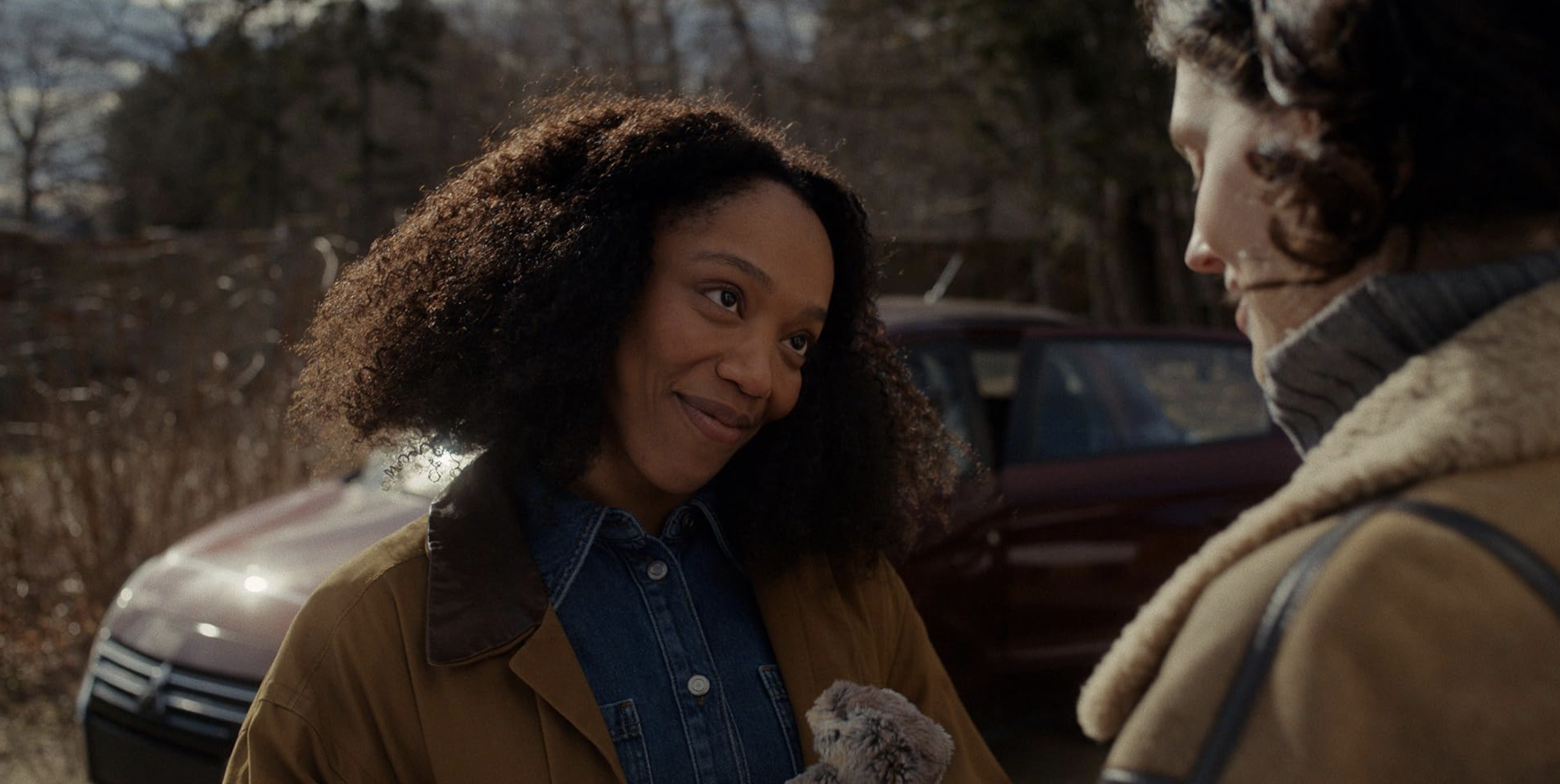


Sorry, Babby” is an excellent film, well acted and directed, and valuing the importance of moving on from bad experiences, and doing so in a loving way.
The title, “Sorry, Baby,” probably comes from words spoken by the main character, Agnes, to a baby (Jane) near the end of this well-reviewed film: “I’m sorry. That bad things are going to happen to you. . . . I hope they don’t. If I can ever stop anything from being bad, let me know. But sometimes bad stuff happens. That’s why I feel bad for you.” (Dialogue is taken from the filmscript, written by Eva Victor, who also directs and plays Agnes in the movie.)
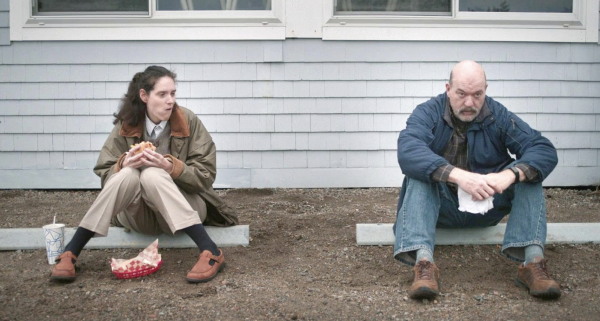
The line “sometimes bad stuff happens” comes from Agnes’s personal experience. As a grad student, she was “sexually assaulted” (her words) by one of her professors. It had a strong impact on her, but as her film-ending words to baby Jane indicate, she moves on with her life—not only does she offer to help Jane if anything bad happens to her, but she becomes a tenured English professor and has sex with a neighboring guy. She does not let the traumatic incident inflicted by her professor overwhelm her.
She tells the baby, “It’s weird cause you don’t love me yet and I don’t love you yet.” Baby Jane is the child of Agnes’s grad-school roommate, Lydie (Naomi Ackie), and her lovemate Fran (E. R. Fightmaster), both of whom have gone to a nearby New England lighthouse while Agnes watches Jane.
Agnes’s words about not loving Jane “yet” suggest that she (Agnes) will come to love Jane when she gets older and also reflect that Agnes has correctly ranked her priorities. As the recently deceased Pope Francis wrote, love is the only “reality that can unify all the others.” Eva Victor correctly perceives that when bad things happen to us, the best thing we can do is love more, not wallow in self-pity.
In our present condition, it is difficult to conclude that many people seem genuinely happy. Our polarizing politics (in the USA) is part of the story, so too, as the same Pope Francis noted, is people easily getting “caught up in a whirlwind of needless buying and spending.” But a deeper reason, I suspect, is people’s poor, unwise values. As U.S. neuropsychologist and Nobel laureate Roger Sperry has stated, “Human value priorities . . . stand out as the most strategically powerful causal control now shaping world events. More than any other causal system with which science now concerns itself, it is variables in human value systems that will determine the future.”
In general, the values of Agnes (and writer and director Eva Victor) seem solid. True, some conservatives might take issue with Lydie being in a same-sex relationship with Fran, and with the unmarried Agnes having sex with her neighbor, but Agnes’s moving on from being sexually assaulted by her professor, her friendship with Lydie, who is Black, and her stress on helping baby Jane and being open to loving her in the future all indicate mature values. They are unlike those being pushed by the current Trump administration, with its attacks on Diversity, Equality, and Inclusion (DEI).
In summary, “Sorry, Babby” is an excellent film, well acted and directed, and valuing the importance of moving on from bad experiences, and doing so in a loving way.
