

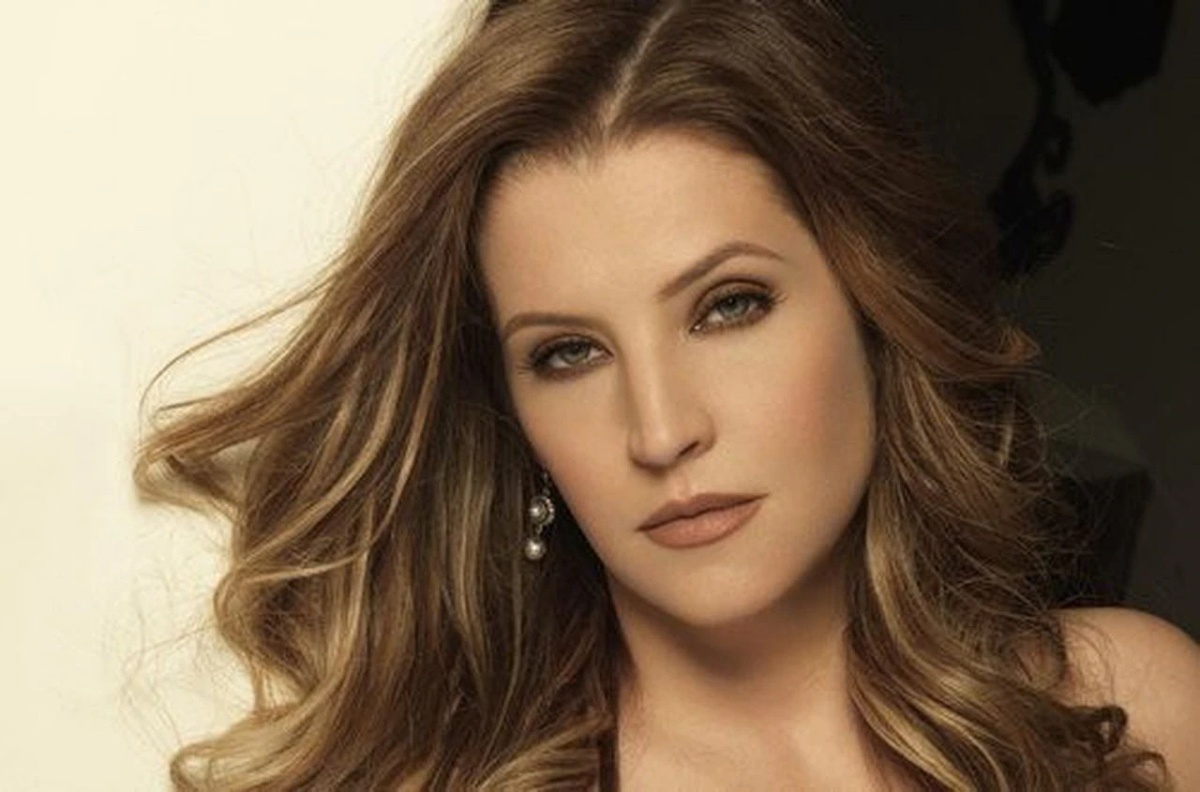

Lisa Marie could never escape being Elvis’ daughter, and would never have wanted to.
This Princess of Memphis has died. Her father was the King, and she was born into the royalty of Rock ‘n’ Roll and American Society. The latter designation is troublesome because she and her mom were tabloid fodder from the time she was born. As a result, I never paid much attention to the media coverage of this beautiful, gracious and talented woman, because much of it was so lurid and manufactured falsehood for profit. Her parents were also besieged by the dregs of so-called “journalism.” Call it a “first-world problem,” but the downsides of fame have driven many good people into despair and even suicide. A search on her name brings up those “dregs” sources before the real journalism sources, and she deserves better.
Though I’ve written about Elvis’ life, and dug deeper prompted by the recent Elvis film, I never really knew much about Lisa Marie or her music. She was a talented singer, who recorded three charted albums. Having an iconic father set an impossibly high bar for her to clear. Lisa Marie may have had more success, and been recognized for her talents if she had a different last name. One of her exes, Nicholas Cage took his last name to escape the long shadow of the great Coppola film family dynasty, from which he came. But Lisa Marie could never escape being Elvis’ daughter, and would never have wanted to.
The night Elvis died was the first time that all three broadcast networks devoted late-night specials to a news event. I recall that as the birth of “Nightline” with Ted Koeppel. Elvis’ death was soon followed by other major news and entertainment events that summer and fall, which prompted “Nightline” to roll into a regular featured program. Seeing Lisa Marie’s death covered by the same show 45 years later is spooky:
Byron Pitts is a credible journalist, but no Ted Koeppel. Chris Connelly pointed out that, “she’s been a part of American life since she was born in 1968,” and offered a comparison to Caroline Kennedy. She was a “Daughter of American Music royalty,” with a very public life.
Pitts pointed out that the Elvis film brought a form of renaissance to the Presley family. And that Lisa Marie approved of the film because Director Baz Luhrmann agreed to, “respect the debt Elvis knew he owed to the Black music.” A sad irony is that some very thoughtful Black Americans are wedded to the fiction that Elvis ripped off and exploited Black music. No film or historical source will change their minds. This illustrates how the power of urban myth can supplant the realities of history. Not a Trumpian “Big Lie,” but a consequential lie nonetheless, which casts an undeserving pall and shadow on Elvis’ legacy.
Her involvement in the film was that of an associate producer or creative consultant; passionately and protectively working with Luhrmann to craft an image of her father as she knew him. She was his daughter, but also his biggest fan of his music and performances. In that sense, Lisa Marie was a guardian of history in the same sense that Jacqueline Kennedy was toward the legacy of JFK and the White House; first with her televised guided tours of the White House after doing careful research, and later in organizing his funeral with the same elements that Lincoln received upon his death. Connelly pointed out the heartbreaking nature of how her passing coincides with a renaissance of Elvis that was prompted by the film, which she co-produced. Another part of her legacy was her bravery in confronting and publicizing her addiction issues. Elvis may have been the original, unwitting poster boy for the dangers of opioid addiction, and never successfully managed nor publically confronted it. Lisa Marie owned up to it and said, “I’m not perfect. My father wasn’t perfect, no one’s perfect. It’s what you do with it after you learn and then you try to help others with it.”
That she died just two days after a celebratory appearance at the Golden Globe Awards magnifies the tragedy of her loss, and the significance of her father’s life. And though she lived in LA from the time she was four, she kept her watch two hours behind, so she was always on Memphis time.
