



He punched me in the jaw, though with little impact. I remember thinking, “Did I just get punched?” and “He has a small hand.”
For some reason—maybe something as simple as the blatant bullying?—Donald Trump’s kidnapping of Nicolás Maduro (and his wife? WTF?) reminded me of a fist fight I had with the then-23-year-old Trump one Manhattan evening nearly 60 years ago. How that long-forgotten, less-than-main event came about—one of only two fist fights in my life—requires a bit of backstory that interweaves the musical Hair, the entertainer Maurice Hines, Jr., the Borscht Belt’s Concord Hotel, and Trump, who was an arrogant and shameless bully even then.
Hair
On April 29th, 1968, Hair, after playing Joseph Papp’s Public Theater and then the Cheetah discothèque, moved to Broadway. The “American Tribal Love-Rock Musical” was a sensation on several levels: It told an unconventional story through captivating music, its near-the-end nude scene shocked and titillated American society’s squeamishness about the human body, and—its biggest culture jolt—it flipped off “the Establishment,” “the Man,” and his rigid racial and gender stereotypes, his repression of sex and self-expression, his sanctimonious hypocrisy, his paranoid Cold War, and the (still) unfathomable atrocity of Vietnam. This long-running police action, initiated by the French and then handed off to the United States, was maiming and killing scores of thousands of people, including our own soldiers, and for what? I still don’t know. Maybe just inertia.
Hair‘s multiracial—and finally fully nude—cast sang of the dawning of a sex-suffused “Age of Aquarius,” a rose-tinted vision of a crash pad on a hill stocked with optimism-inducing, self-revealing recreational drugs. Its opening on Broadway celebrated the zeitgeist’s chrysopoeia. Broadway’s imprimatur was the tincture that transmuted the counter-culture into the culture. Seemingly overnight, the paradigm reversed poles: True north was true south. Self-denial was denied. Alcohol ceded its throne as the default intoxicant to marijuana and other “mind-expanding” drugs that opened pristine, and sometimes frightening, inner landscapes ripe for self-discovery. The unexamined life was not worth living; chemicals could help. Cynical, Kissingerian realpolitik was evicted by a substance-addled naïveté: Better to see the world through rose-colored glasses than to see a rose through world-colored glasses. Peace was patriotic. Love was free. “War is not the answer” bumper stickers papered over “America: love it or leave it.” The motto of a suddenly ascendant, whimsically and gaudily clad generation was “Clothes: love them or take them off.” There’s a case to be made that the reactionary present is the wage of Aquarius.
Hines
Hair was a smash: 1750 performances over four-plus years. Months after Hair’s Broadway opening, tickets were still impossible to get, so I was surprised and delighted when Maurice Hines invited me to see it with him. A show-business insider almost from birth—his grandmother Ora Hines danced at Harlem’s Cotton Club in the 1920s, and his father, Maurice Hines, Sr., was a musician and actor—Maurice had scored two front-row-center seats.
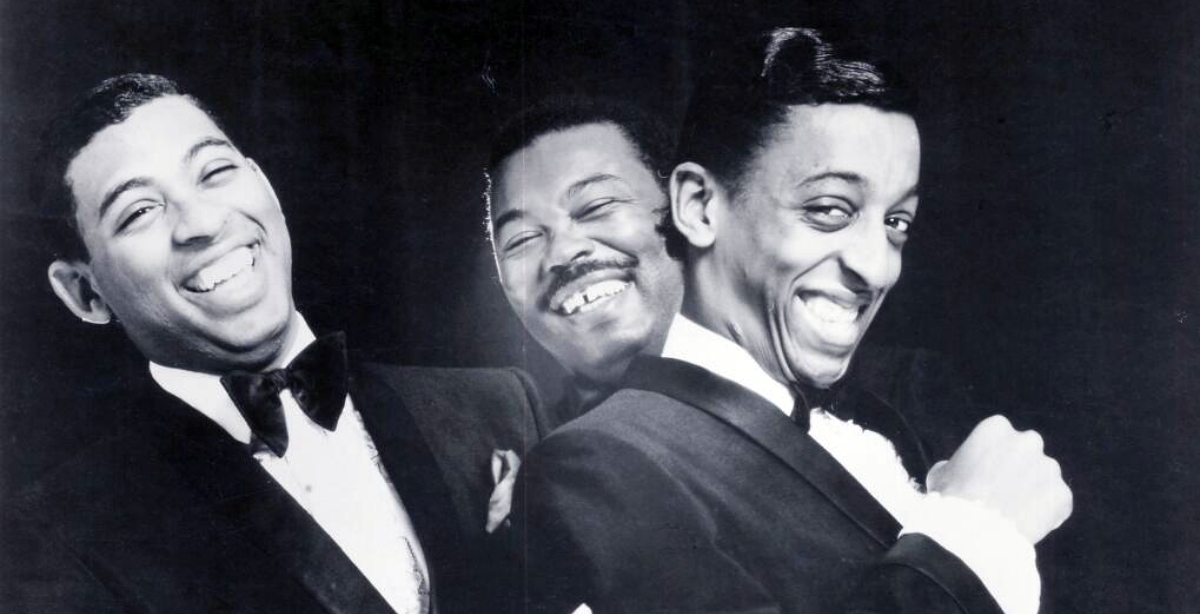
I’d gotten to know both Hines brothers, Maurice and the younger, ultimately more famous Greg, at the Concord Hotel.The brothers (who would later be estranged for a decade) first performed as the Hines Brothers, and then, joined by their father, as Hines, Hines & Dad. The Hines brothers fizzed with energy and talent: musicians, comedians, singers, actors, and above all dancers, mainly tap, which they resurrected as entertainment and elevated as art. Here they are as the tap-dancing “Williams Brothers” in Francis Ford Coppola’s The Cotton Club. When I met them, they were playing what today would be called a “residency” at the Concord.
The Concord
The Concord was a year-round, Catskill Mountains (the “Jewish Alps”) resort both lavish and huge—1500+ guest rooms on 2000+ acres, a kosher dining room that fed 3000+ voracious guests, a shopping arcade, and multiple lounges and stages, including a 3000+-seat night club that presented stars like Frank Sinatra, Sammy Davis, Jr., Judy Garland, Tony Bennett, a phalanx of Borscht Belt–resort-nurtured stand-up comics, and, of course, Hines, Hines & Dad, whose national fame was boosted by multiple appearances on The Tonight Show.
Much of my extended family lived in and around Monticello, New York, a Catskills village surrounded by hotels large and small, hundreds of them at the region’s peak in popularity. Like most area residents, many of my family members worked at those hotels, a slew of us at the Concord: My father worked security. (I cherish a photo of him escorting Martin Luther King, Jr., who had spoken about justice and inequality to a Rabbinical Assembly convention and who 10 days later would be assassinated.) During my high school and college years, my jobs at the Concord included hopping, jerking, and boying: bell- and car-hopping during the scrum that was guest check-in and –out, soda-jerking at the coffee shop, and cabana-boying at the Olympic-sized, outdoor pool. My uncle was head of maintenance. His son, my older cousin, operated the night club’s spotlight, illuminating the show business luminaries. It was he who became friends with and introduced me to Maurice and Greg.
On Hair night, I drove the two hours to Manhattan, parked at a nearby lot, and met Maurice outside the venerable Biltmore Theater, now the Samuel J. Friedman Theatre. (Sic. Note to historians of language: Investigate the recent shift in spelling from the American “theater” to the British “theatre.”) The show was terrific, although I remember being disappointed by the nude scene. I don’t know what I’d been expecting, but the anti-climactic (pun-intended) scene showed normal people with normal bodies, nothing to see there that I nor anyone else hadn’t seen before. I now realize that the nudity was a wildly successful marketing gimmick.
Trump
Afterward, we walked a few blocks to Maurice’s apartment. At one street corner, we waited at a red light. When it changed to green, I stepped down into the street. As I did a limo ran the red light and brushed me back.
“Asshole!” I yelled.
The limo stopped short. A rear door opened, and a guy about my age got out and walked up to me, his chin jutting pugnaciously.
“Wajusay?”
“Asshole.”
He punched me in the jaw, though with little impact. I remember thinking, “Did I just get punched?” and “He has a small hand.”
I said, “That doesn’t change anything. You’re still an asshole.”
He smirked. “You a fag? You with that nigger fag? The dancer?” He made “dancer” sound like “leper.”
“Yes, and you’re still an asshole,” I said.
He punched me again, the second punch having less impact than the first. After taking two punches, I thought that I should punch him back just for form’s sake. I was pretty strong, having spent the summer hoisting the many, full-to-bursting suitcases every Jewish-woman guest brought to the Concord. Their bags held every item of clothing and jewelry they owned because they each changed clothes and jewels several times a day. (Even their mink stoles had mink stoles; had PETA then existed, members present would have had a mass stroke.)
Every suitcase had to be hoisted at least four times: once from the trunk of arriving guests’ cars and stacked on a luggage cart or carts, once from the cart(s) and distributed about their hotel rooms, once from their hotel rooms and stacked on a luggage cart or carts—often their bags were heavier leaving then arriving, guests having pillaged the hotel’s shopping arcade’s high-end clothing and jewelry shops plus stolen hotel towels—and once (often more than once) when loaded into their cars. This last frequently required multiple hoists to rearrange bags to fit.
More out of a need for self-respect than anger, I clocked him on his jaw. The punch lifted him and laid him back across the limo’s broad trunk. He lay there a moment, slid off onto his feet, stood a little woozily, and looked at me reproachfully, as though I had violated some rule. He then, without saying anything more, got back into the limo, which drove off through the red light, bullying its way through the stream of honking cars coming from its right.
Thinking back, the original running of the red light, the brushback, the short stop when I objected—as though it had been expected, indeed looked for—the pugilistic posture, all of that feels deliberate, premeditated, as though this wasn’t the first time he’d played that game. By then, the light was again red. I rejoined Maurice on the sidewalk, looking at him quizzically. (WTF wasn’t a thing then.) We were among a large group of pedestrians, but no one made eye-contact, much less said anything. Maurice shrugged and said, “New York.”
“Crazy,” I said.
He nodded. He’d been openly gay since childhood, something his family had simply accepted. He was also brave. He never came out of the closet because he’d never been in. Although it hurt his career, he never fudged or dissembled about his identity. I didn’t then and still don’t understand why some people care about whom others sleep with or love.
“Nothing I haven’t heard before,” he said. “I know that guy.”
In his apartment, Maurice told me what little he knew about that guy.
“His name’s Don Trump. His father owns half of lower Manhattan and a chunk of Queens.”
Maurice had a closeted friend whose family did business with my sparring partner’s father, Fred Trump. The friend had gossiped about Fred’s undisciplined and incorrigible son, who’d ultimately been sent to private military school in hopes that the experience would make a decent man out of him. (We know how that turned out.) Next day was a work day, so after a glass of wine, I thanked Maurice, walked back to my car, and drove home to Monticello.
We can’t know what Trump’s experience with his father was, but armchair psychoanalysis suggests Trump is desperate for the approval of a stern and strong father figure, thus his sucking up to vicious dictators and autocrats: Russia’s Putin, Hungary’s Orban, Brazil’s Bolsonaro, North Korea’s Kim. He’s expressed admiration for Hitler.
Sometimes in fiction, a bully mends his ways after he’s confronted. Clearly, that’s not real life. I can’t say for certain why the arrest of the Maduros should trigger a 60-year-old memory of an inconsequential fist fight, other than the realization that despite multiple comeuppances, a bully might remain a bully for the rest of his life.
