

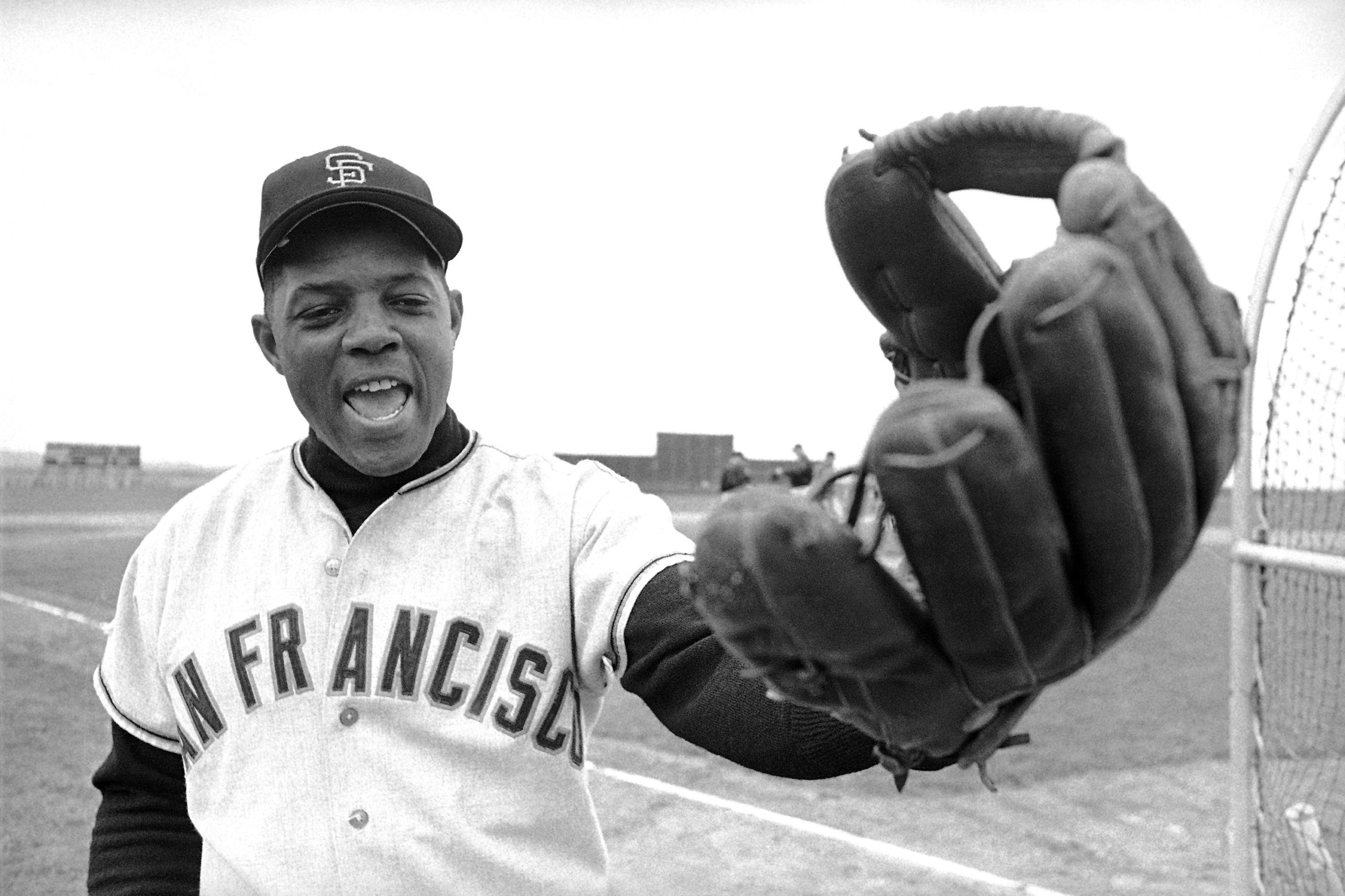

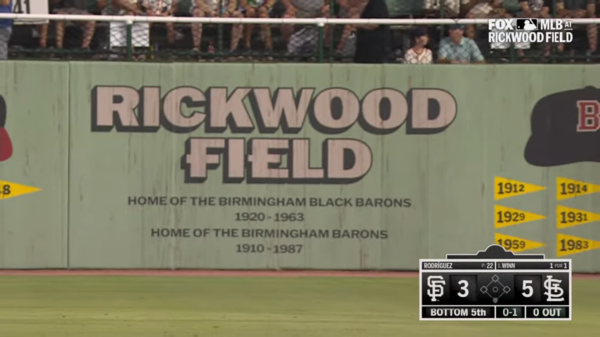
The Negro League tribute game between the St. Louis Cardinals and San Francisco Giants at Birmingham’s Rickwood Field (where Willie played minor league ball) was a beautiful production, masterfully choreographed.
This is a tribute to Willie Mays, but also the legacy of the Negro Leagues, which is part of his legacy; and now thankfully, Major League Baseball (MLB) official record history. I mean . . . with all those greats, how could the competition possibly be less? This tribute is not brief nor condensed, for the same reasons that we do everything slowly at Jewish funerals—because we’re not in a hurry to tell him goodbye, and we want to be thorough. Yes, there IS crying in baseball, and getting misty-eyed counts too.
The Negro League tribute game between the St. Louis Cardinals and San Francisco Giants at Birmingham’s Rickwood Field (where Willie played minor league ball) was a beautiful production, masterfully choreographed. Value-added came with Jon Batiste as musical director and the presence of all living Negro League veterans who were fit to travel, escorted by one of the Cards or Giants players. They did a beautiful rendition of the Star Spangled Banner and Lift Every Voice, both of which are challenging songs for anyone to sing well. (Let’s face it.) There is an element of charm to have a MLB game in a minor league park. Like a major college basketball game in a small gym at University of San Francisco, or the old Pitt Fieldhouse. Having the teams wear uniforms of their cities’ Negro League teams elevated the nostalgia. The Giants wore unis of SF Sea Lions, who played only in 1946, the Cards wore threads of the old St. Louis Stars, who played from 1910-1931.
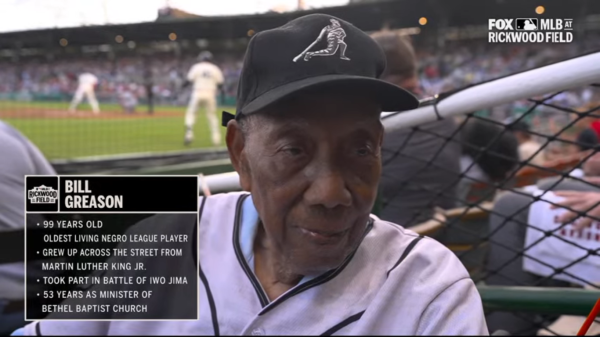
Willie Mays was the Muhammad Ali of baseball—the Greatest and universally loved. Mays became a superstar when games were first broadcast on TV. That fueled his legend, especially in the American Black communities looking for heroes. Willie made as much baseball history as anybody in his 24-year career. The pre-game show, and narration throughout the broadcast of Thursday’s game was a loving tribute to Mays, and a celebration of the legacy and heritage of the Negro League. Mays played for the Birmingham Black Barons (BBB), before ascending to the Giants. As the oldest professional ballpark in America, it has seen 180 Hall of Famers, including Stan Musial, Reggie Jackson, Hank Aaron, among others. Another fitting touch was having 99 year-old Bill Greason throw out the first pitch. He was Mays’ BBB teammate in 1948 and the Cards’ first Black pitcher.
The long-planned Negro League celebration was planned to coincide with the first federal Juneteenth holiday. But it became “The Willie Mays Game,” as he died two days before. I got worried when the San Francisco media announced on Monday he wouldn’t be attending, but said he’d watch it on TV. Willie made a gracious statement that the game was not to be about him, but rather his colleagues, who made greater sacrifices without the rewards.
Why was Willie Mays so important? Aside from being a beautiful, charismatic person, Willie was “The original 5-tool player”–he could hit, hit with power, run, field, throw all with excellence, for 24 years. He brought to the game, “Joy, passion & smile, a style and swagger all his own, and gave his heart to the game,” as the pre-game noted. HOF’er Andre Dawson said Willie Mays was “arguably the Negro Leagues’ greatest living legend.” And MLB’s too. Reggie Jackson played minor league ball at Rickwood, and compared Willie to Baryshnikov or Gretzky in terms of greatness, and called him, “the most gifted player ever.”
I was thrilled to see him play in person against my beloved St. Louis Cardinals in 1968 for three games in July 1968. The Cards were World Series champs and headed for another National League pennant, with the Giants closely behind. I got to see the Cards sweep the Giants aces: Juan Marichal, Mike McCormick, and Gaylord Perry, who threw brazen spitballs all night. Willie only had one hit all weekend, but put on a show, making great throws and catches, and stealing bases. Former Giant Orlando Cepeda was my favorite Cardinal, though Tim McCarver was from my hometown.
Willie Mays was special for who he was beyond a ballplayer. Former Yankee Ron Blomberg (1st DH in history) lived in the same building as Willie, the Riverdale, when he was traded to the Mets. He shared this story: “During the off-season we started seeing each other a lot living in Riverdale which seemed to be 99% Jewish. I took him to the deli down the street that I went to before every game. Liebman’s Deli was the name. I introduced him to corned beef, pastrami, and brisket and half sours. He went nuts. I had made a great new friend. . . I used to go down to the Garment District all the time, met a lot of great baseball fans who owned big manufacturing companies. I told Willie I would take him down to the companies and I contacted the owners and they went crazy when I told them I was going to bring Willie Mays down there. When we used to walk into these manufacturers, there would be 30-40 people waiting for us. We signed a lot of balls, bats, and pictures for everyone. Both Met fans and Yankee fans. Willie never had that before.”
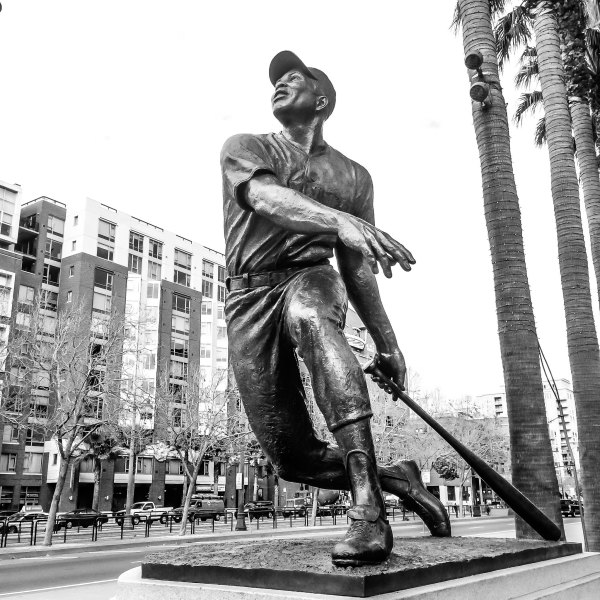
Baseball is a game of numbers and stats. I was a baseball nerd as a kid, carefully studying every relevant box score, ongoing MLB stats, the standings and math possibilities. Consider that Willie’s numbers would have been greater had he not missed the 1952-53 seasons for military service. Or hadn’t played his entire career in cavernous ballparks with long fences—the New York Polo Grounds and Candlestick in San Francisco. It gave him more room for great plays in the field, but took away who knows how many home runs.
I can’t thank my dad enough for taking me to St. Louis to see Hank Aaron in 1967 and Willie Mays in 1968. (Aaron was also a 5-tool player and Negro League veteran, and a real nerd could argue comparisons of the two all day and night.) Gerald Prosterman operated one of the first integrated dental practices in Memphis, and was the first white man to be on the Board of the Memphis Urban League. My mom, Bert Adler Prosterman, joined the NAACP as a freshman at Sarah Lawrence, and was Memphis School Board president during an awful time for school desegregation. They socialized their kids with Black people early on, and took us to music and sports events where WE were the minority.
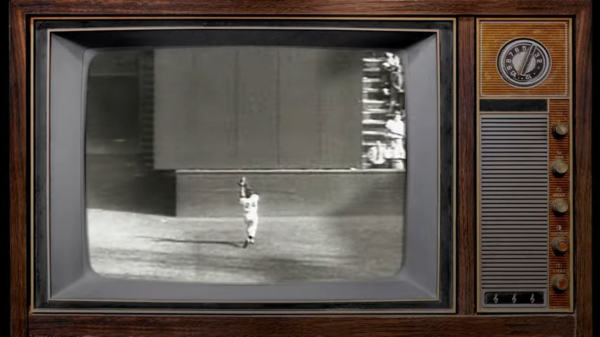
On a vacation in 1965, we stopped in Muscle Shoals on trip to Florida. There was a Black American Legion park across the street from our motel when we pulled in, with a pre-game going on. As I marveled at the site, Dad said, “This is a park like Willie Mays and Hank Aaron played at in Alabama. You wanna go to the game? We’d be the only white people there, but everybody will be real nice to us; and we might see another Mays or Aaron coming up.” It sounded pretty cool for a minute, but all I wanted to do was swim in the motel pool and watch cartoons, after the long car ride. But he took us to Cardinal games a few years later, and Black high school basketball games in Memphis. Thanks Dad.
I’m proud of my one connection with the Negro Leagues. I jogged for a few minutes among the tall weeds at the old ball field of the Homestead Grays in 1996, when I lived in Pittsburgh. Just so I could say I did it.
