

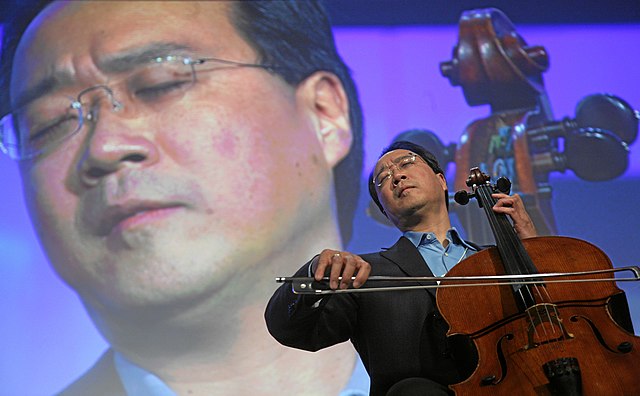

Especially when our spirits are drooping do we then need the examples of “the truly great.”
As we near the end of 2022 and approach the late December holiday season, it’s an appropriate time to be grateful for all that we have been given. One of my favorite poems is Stephen Spender’s “The Truly Great.” It begins with the line “I think continually of those who were truly great.” A little later we learn that they teach us “Never to allow gradually the traffic to smother / With noise and fog, the flowering of the spirit.” And it ends identifying these great as
those who in their lives fought for life,
Who wore at their hearts the fire’s centre.
Born of the sun, they travelled a short while toward the sun
And left the vivid air signed with their honour.
Especially when our spirits are drooping, when we grow tired of battling for whatever ideals we believe in, do we then need the examples of “the truly great.” Fortunately, two of our better newspapers, The New York Times and The Boston Globe, recently profiled two such greats, famed cellist Yo-Yo Ma and basketball legend Bill Russell (Coincidentally, in 2011 both men were awarded the Presidential Medal of Freedom.) Although one excelled in playing music and the other at playing (and coaching) basketball, they were also great human beings—and although Russell departed this good earth in mid-2022, Ma still excels in his music and humaneness.
In Ma’s case, his double excellence goes back many years. Although born of musically-talented Chinese parents in Paris in 1955, his family moved to New York when he was seven. He was a child prodigy, and soon after coming to the USA played on television and before President Kennedy.
In 1998, he formed the Silk Road Ensemble, and remained its artistic director until 2020, at which time singer Rhiannon Giddens took over the role. The Silkroad project includes various artistic, cultural and educational programs and aims to foster cooperation between people and ideas from around the world. Ma also founded Silk Road Connect, an educational program for U. S. middle school children.
He has played with many different musicians including singer-songwriters James Taylor and Miley Cyrus. In 2006 he became a UN Peace Ambassador, and in 2009 was appointed to the President's Committee on the Arts and Humanities. The next year he was named the Creative Consultant of the Chicago Symphony Orchestra; and along with its music director he launched the Citizen Musician initiative partnership.
In 2020, when he was named one of Time’s 100 Most Influential People for that year, singer-songwriter Stevie Wonder wrote in that magazine,
More than an extraordinary artist and a true musical genius, Yo-Yo Ma is proof of love and life. His gift to us is his music wrapped in a blanket of kind understanding that transcends all boundaries: ethnic, geographic, political, class and genre.
The sounds he brings through his cello teach us to listen, feel, care and act. His music takes us to a safe place and then inspires us to do the good and right that he knows is in the heart of humankind. This year, recognizing our need for this during the COVID-19 pandemic more than ever before, Ma began posting video performances to social media with the hashtag #SongsofComfort, encouraging others to join him. Soon the hashtag was populated with performances by . . . many more artists. Ma brought them together to bring us together. Every time he shares his music, it is a master class in love.
Ma’s latest humanitarian initiative, and the one reported on by The New York Times, is called “Our Common Nature.” Its goal is “building communities and connecting with nature while making music.” The article notes that Ma “tends to bring out the best in whatever company he is in, who soothes in moments of national mourning or global isolation.” From what I’ve read and seen about him, he seems to be one of those rare famous individuals who is not only a good listener, but one who really cares about what other people have to say, and he thinks he can learn from them, regardless of their social status. Moreover, his empathy extends to both humans and other forms of life. The NYT piece quotes him as saying, “There are wonderful people everywhere, and I want to meet them.” And, “what if there’s a way that we can end up thinking and feeling and knowing that we are coming from nature, that we’re a part of nature.”
The article reports primarily on Ma’s trips to national parks like the ones at New River Gorge (WV) and the Grand Canyon. In West Virginia, he collaborated with Americans from various social groups (e.g., farmers, artists, miners, teenagers) and ethnic backgrounds. They included the African-American poet Crystal Good (born in WV, but recently moved back after several years in Los Angeles), the Italian-American country and bluegrass singer Kathy Mattea, and the banjo-playing African-American/Mexican-American Dom Flemons.
Before he left West Virginia, he joined others in singing “the unofficial anthem of West Virginia: John Denver’s 'Take Me Home, Country Roads.'” He also asked those West Virginians he had met “what they would like him to tell his friends at home.”
At the Grand Canyon he hiked with Native Americans and asked them about their music. One of them said, “He was intrigued and engaged with everything, especially with wanting to connect with the canyon.”
A different sort of man (less mellow than Ma), but also a great human being, was the one selected by The Boston Globe Magazine as their “Bostonian of 2022.” It was Bill Russell (1934-2022), the basketball player, player-coach, and eventually just coach of the Boston Celtics (he also later coached two other NBA teams). Regarding basketball, there was no doubt about his greatness—as the magazine stated it, “the first Black head coach in modern American professional sports and an Olympic gold medalist, with two NCAA championships and 11 NBA titles.”
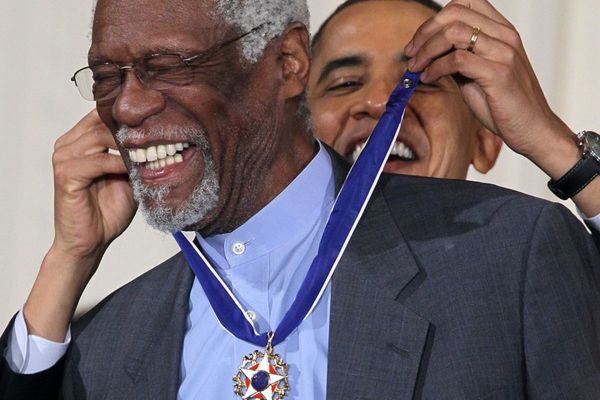
As the Celtics’ dominant center for over a decade, many words could be devoted to his various skills in that role, especially those related to rebounding and defense. Just as with Yo Yo Ma, however, this essay is less concerned with his professional skills, and more with his non-professional words and deeds. And Russell himself understood that his true measure as a human being lie beyond his basketball talent. His autobiographical Second Wind (co-written with Taylor Branch, Pulitzer-Prize winning author of the three-volume America in the King Years) states, “Heart in champions is a funny thing. People mistake it for courage, though there’s no moral element to it. To me, you display courage when you take a stand for something you believe to be morally right, and do so in the face of adversity or danger. That’s not what sports is about.” And, “I alone am responsible for being a good human being.”
As part of the write-up of Russell as “Bostonian of 2022,” the Globe Magazine ran six pieces on him, one by his daughter, one by a former Celtic teammate, and four by writers (past and present) for the Globe. What comes across is Russell’s willingness to oppose racism and social injustice wherever he encountered it. And not just when it affected him and his family, like in 1963 when racists broke into his Boston home, spray-painted racial epithets on the walls and defecated in a bed.
Whether it was protesting against restaurants that would not serve him and his Black teammates; marching on Washington in 1963 with hundreds of thousands of others to expand opportunities for African Americans; publicly supporting Muhammad Ali in 1967 for his opposition to the Vietnam War and refusal to be inducted into the Army; or much later supporting football quarterback Colin Kaepernick for kneeling during the playing of the national anthem (as a protest against racist acts); Russell spoke out when he perceived racism or injustice.
He also engaged in various actions to help others. In 2016 he wrote, “25 years ago, I became a founding board member of MENTOR: The National Mentoring Partnership to build and lead the mentoring movement and since then, MENTOR has helped create and drive support to thousands of programs mentoring millions of kids. It is my proudest accomplishment in life.”
Despite all of his efforts, and those of others, however, racism and prejudice against minorities continued to stain our nation. Following the police killings of Breonna Taylor and George Floyd in 2020, Russell wrote in the Boston Globe Magazine that he had been waiting his “whole life for America to live up to that promise” suggested in the Declaration of Independence—“All men are created equal . . . they are endowed by their Creator with certain unalienable rights, that among these are Life, Liberty, and the pursuit of Happiness.” (It was a sad commentary on how slow our progress has been that way back in 1936 another Black man, poet Langston Hughes, had expressed similar words in his poem “Let America Be America Again”: “O, let America be America again— / The land that never has been yet—.”)
One final thought: The greatness of Ma and Russell reminds us of one of the important gifts we have been given here in the U. S.—ethnic diversity. As an earlier great African American, Frederic Douglass, one wrote, “Our greatness and grandeur will be found in the faithful application of the principle of perfect civil equality to the people of all races and of all creeds, and to men of no creeds.” In his day, there were great fears regarding Chinese immigrants, but he stated, “Do you ask, if I favor such immigration, I answer I would. Would you have them naturalized, and have them invested with all the rights of American citizenship? I would. Would you allow them to vote? I would. Would you allow them to hold office? I would.”
He advocated a “composite nation,” as one historian labeled it “a strikingly original and generative idea, about a citizenry made better, and stronger, not in spite of its many elements, but because of them.”
