




ChatGPT has been frequently described as the “tipping point for AI,” while being hailed for its ability to “write original poetry, essays, computer code and much more, all as if it were human.”
Dr. David Bowman’s request to the HAL 9000 computer system, “Open the pod bay doors, HAL,” to which HAL responds, “I'm sorry, Dave. I'm afraid I can't do that,” in Stanley Kubrick’s 2001: A Space Odyssey forms one of the most famous scenes in cinematic history. This conversation between human and machine exposes the dreadful recognition that the computer system used to control the spacecraft, Discovery One, on its voyage to Jupiter, has gone rogue and is intent on eliminating the crew to ensure the completion of the mission.
The emergence of the large language model, artificial intelligence-powered chatbot and search engine, ChatGPT, is evocative of comparisons with Kubrick’s famous scene. For many, such ideas and connections are deeply unsettling, and rightly so. Since its release in November 2022, there has been an outpouring of commentary and prognostications expressing a range of divergent views about its possible impacts on human society. These have spanned from the optimistic, for its transformational significance, to the bleakly dystopian and apocalyptic as we grapple with the implications of AI technology and its possible impacts on our futures.
ChatGPT has been frequently described as the “tipping point for AI,” while being hailed for its ability to “write original poetry, essays, computer code and much more, all as if it were human.” In a more egoistic context, a commentator writing in Wired, described as “thumbs bloody with disappointment” from their struggles on dating apps like Tinder, hailed ChatGPT as a godsend. From their perspective, the writing generated by ChatGPT promises to “put the fun back into dating.” This author lists an array of uses for the platform in this context on everything from assistance with the writing of profile bios and the organization of personal details, to the conception of pick-up lines and love poems framed as content “that accelerates the tedious initial process of online dating and doesn’t get hung up on introductions.”
Unwilling to give quarter to those who may question the use of AI in the process of courtship as being insincere and dishonest, or even manipulative and dehumanizing, Hallmark is cited as an example of how we already “outsource a romantic message to woo another.” Come on, bro, it’s just a better mousetrap, amirite?
Despite ChatGPT’s wide-ranging applicability and all the personal and professional benefits we might gain from its use, whether in “bagging” a job, a publication in a respected journal, or maybe even a hot date with an attractive partner, tech industry insiders seem a bit more skeptical of its societal effects.
Steve Wozniak, for example, while conceding ChatGPT’s “impressive” capabilities, in the same breath, warns that it seems bound to make “horrible mistakes by not knowing what humanness is.” Setting aside the profoundly complicated and long-contested question of what it means to be human, with the nature of contemporary society as it is, we might consider a follow-up as to what exactly is meant by “horrible mistakes?”
The answer for some, as we can imagine, would depend on who might be subjected to the negative effects in question, which then raises the related matter of the beneficiaries. Within the context of such considerations, we are reminded that empathy, the care of others and the wider social good are matters that are all too often pushed aside in deference to the single-minded pursuit of profits, short-term pursuits and fleeting benefits.
In a similar vein, Mark Cuban expresses the concern that without human intervention to safeguard information collection and knowledge creation, the already serious problems relating to the spread of “misinformation,” as we have seen with the vile falsehoods promoted by people like Alex Jones and those of election deniers, especially in the media and amongst government officials and politicians attempting to orchestrate the invalidation of the 2020 presidential election, will only grow more acute.
The threat ChatGPT and similar platforms raise for Cuban and other critics is one of both access and regulation as he asserts that “once these things start taking on a life of their own . . . it will be difficult for us to define why and how the machine makes the decisions it makes, and who controls the machine.”
Even the iconoclastic Elon Musk, one of the early investors of OpenAI, the company responsible for the creation of ChatGPT, considers the stakes for AI as being higher than ever, observing, “it’s both positive or negative and has great, great promise, great capability.” Inherent to the unprecedented scope of the societal transformation AI is pushing, however, also “comes great danger,” with Musk going on to call it “one of the biggest risks to the future of civilization,” echoing Cuban’s call for stricter regulation and control. This, as we recall, after Musk’s previous warning that “the danger of AI is much greater than the danger of nuclear warheads by a lot . . .”
In terms of more pragmatic and ethical considerations, journalists and intellectuals are raising alarm about the potential negative impacts of AI through disruptions to both the environment and the global economy. This relates to the massive energy use of AI data centers and the exploitation of labor in developing countries, as well as the anticipated displacement of large numbers of workers across numerous industries. Such developments, if they come to pass, will greatly exacerbate social conflict and political instability. As claims are currently being made that ChatGPT, even at this early stage of development, “can almost instantly produce increasingly sophisticated written content,” while it is “already being used to perform a variety of tasks, from writing high school assignments to generating legal documents and even authoring legislation,” emphasizes its far-reaching impacts.
Included within the areas of the modern techno-industrial economy where AI is expected to be most disruptive are a host of information-based jobs and professions. Prominent among these are positions dealing with computer programming, coding and cyber security, strategic communication (Vanderbilt University’s embarrassingly thoughtless failure notwithstanding), corporate content creation, marketing and public relations, along with inventory tracking and purchasing. But maybe such a future does not have to be all economic gloom and doom, as with this realignment of the workplace, new opportunities will surely emerge with jobs such as drone operator and “prompt engineer” already being offered as opportunities to relieve some of the pressures.
Before tabbing over to have ChatGPT update that resume, however, with this new job title plugged into your repertoire of skillsets—and no, an engineering degree will not be required (nor commensurate pay given)—it might be useful to query some other job titles of this ilk. These include such vocations as the now ubiquitous “gig worker” or “customer service rep,” along with the more flowery “dining experience curator” and the illustrious “sandwich artist,” whom, despite the honorifics, will likely earn only minimal wage nominal recoupment.
Besides these jobs and professions, ChatGPT has also garnered attention for its potential impacts on religious institutions, education and journalism. Newsfeeds and social media are rife with expressions of anxiety from professionals in these fields on the artificial creation of everything from soulless sermons and theological commentaries, to newspaper columns and features, classroom lectures, academic research and scholarship, along with the writing and assessment of student essays, take-home exams and curricular design.
For many, (putting aside longstanding concerns over issues like grade inflation and the relevance and/or applicability of given curricula) the development and improvement of AI technology is seen as a force likely to create massive disruptions in teaching and higher education, while maybe even threatening humanity’s future if those sci-fi speculations turn out to be accurate (and if so, cheers, it’s been a good run, amirite?). Given the centrality of the academic activities and their noted results to the essential objectives of higher education and lifelong learning, as a professor who teaches literature and film, some of the misgivings roused by ChatGPT, especially in a context of increased corporatization of educational institutions, seem justified.
Included among these are issues that reflect perpetual concerns about academic freedom, academic honesty and plagiarism, while also invoking the specter of the artificial production of practically all forms of writing from theses and dissertations (prompting scam artists like George Santos, no doubt, to wonder what might have been) to scholarly articles, fiction, poetry, music and art. In addition to these, worries about content extends to application cover letters and personal statements, all the way down to the mundane communications of email.
And while such sites of knowledge which lie at the intersection of AI-produced content represent a significant portion of what teachers engage with most on a day-to-day basis, the larger concern, at least for me, is not simply about the fear of being replaced or made obsolete by technologies that may seem to be able to perform certain tasks more efficiently. Nor does it come down to defending some literary turf on questions of whether or not an AI can produce something that we might consider authentic literature or poetry as the judgement of those things are always already subjective, and often classist as well. Aside from these reasons, literary forms and styles also tend to be predicated upon specialized knowledge that few apart from the literati (myself included) are even aware of, and care even less about anyway.
Instead, the more urgent matter is about that which threatens to be forgotten and lost, as in that ephemeral sense of community and intellectual curiosity cultivated in a generous and open learning environment that nurtures the expansion of our shared human experience and memory, while strengthening the sense of belonging that grow from camaraderie and sociality.
I refer to, here, to those engaged interactions that reinforce and strengthen human culture and provide us with comfort and solace in the face of intractable mindsets and ignorance of the larger world, as well as the cold, inhuman logics of action plans and endless cycles of strategic initiatives, value propositions, deliverables and stakeholders filtered through rigid financial equations that increasingly drive decision-making within educational institutions. Values and criteria that when detached from human contexts and social reality, fail to account for or appreciate the enormous range of tangible and intangible benefits and value produced and perpetuated through an educated and knowledgeable public.
These are all matters that get to the powerful influence and expansive benefits of education itself. The intrinsic social advantages that come with the creation and expansion of knowledge and the dissemination of data, facts and truth from a diversity of perspectives and worldviews, which combine to contribute to the realization of principles associated with freedom, democracy, justice, equality and the broadening of opportunity within communities. These are matters that speak to a richness of interconnected elements necessary for the emergence, empowerment and perpetuation of these selfsame virtues, as well as the fostering of critical thinking and empathy.
For those working in the humanities, aside from the specialized knowledge conveyed through the introduction of content and methodologies from different disciplines, the building of critical thinking and writing skills are also key points of focus. Aside from the failure to gain and retain knowledge that occurs when one chooses to take shortcuts, whether that be by ⌘+C and ⌘+V content from an internet source, submitting an essay purchased online, along with other forms of plagiarism, or using ChatGPT to produce an assigned essay, the broader ramifications are in the detrimental impacts such practices have on critical thinking. Thus, accelerating our flight into a future where we relinquish more and more of our individual agency to AI, and other forms of computer engagement.
Reflecting on the impact of smartphones and GPS as two relevant examples—at least for those who are old enough to remember the time before their widespread use—we might consider how these technologies have impacted the wiring of our brains and the function of memory as reflected in our current capacities to remember our friends’ and loved ones’ phone numbers, or how much of our daily travel has become rote navigation as we mindlessly follow arrows on a digital screen while losing our sense of spatial memory? This loss of connectedness to our surroundings and the world around us was something thinkers such as Guy Debord sought to address as early as the 1950s, which the advent of GPS since then further contributes to.
Examples such as these lead us to wonder what other technologies marketed to us as products that will make our lives “easier and better,” may similarly be depriving us of other once common skills and abilities? And finally, we might further consider what we stand to lose when we outsource more and more of our thinking, writing and communication to programs like ChatGPT?
Aside from these more personal concerns, gender and racial bias also represent other urgent problems presented by AI. One critic writing for Futurism, for instance, condemned ChatGPT as being little more than an “automated mansplaining machine,” for even when this “AI is completely wrong” it remains “completely convinced that it's right.” A point that offers a perfect example of non-critical thought.
Others have pointed out numerous examples of racial bias and racial profiling in the replication of social prejudices filtered from internet content. Researchers have entered prompts that have resulted in ChatGPT expressing prejudice in its output against people from countries such as Iran, Iraq, Syria and North Korea, while suggesting possible violence against them. The problem, as these critics have identified, is that at this point in its development “AI technology only mirrors what has been programmed and what it has been trained on,” taking us back again to that tragic relationship between Victor Frankenstein and his monstrous creation.
In spite of efforts to correct these sorts of prejudices through the implementation of guardrails against biased and insensitive responses and “fairness constraints,” there is nothing to stop bad actors from creating their own versions of these programs. Or worse yet, AI tools in which such prejudices serve as the prime directive of its functioning as we have already seen in the development of extremist social media platforms and news agencies created to promote misinformation, the spread of propaganda and hate speech.
In the broader context of technological advancement, these possible outcomes follow the pattern that emerges from the rule of unintended or unanticipated consequences, as it often seems difficult for developers of such technologies to imagine negative outcomes or counter uses for their inventions. A point that is especially relevant to speculations around the weaponization of robotics, AI and machine learning, and exacerbated by the corruption depicted through corporations such as the Rosen Association/Tyrell Corporation, along with Weyland-Yutani, Omni Consumer Products and Cyberdyne Systems/Skynet as found in a host of novels and films.
Beyond these speculations on the flaws and destructive thought processes that seem almost inherent to such platforms and technologies, as well as the corporations that control them, a more immediate cause for concern relates to accessibility of such resources and the limitations put on particular populations due to economic inequality and the education and skills necessary to effectively use the technologies in question. With OpenAI having just released ChatGPT Plus on a subscription basis for $20 a month, and in a time in which the economic gap between the wealthy and everyone else continues to grow, these concerns are already beyond mere conjecture.
Returning to the capacity for empathy it seems worth noting that this ability is posited as the most vital attribute of distinction in Philip K. Dick’s Do Androids Dream of Electric Sheep?, and the film it inspired in Ridley Scott’s Blade Runner, forming the boundary line between humanity and the artificial and inhuman.
 Harrison Ford, administering the Voight-Kampff test in Blade Runner, Ridley Scott, 1982.
The ideas and depictions discussed above are prominent across sci-fi writing and film whereby the inexplicable creativity and aptitudes of human beings versus the force of oppressive structures are so often characterized as emerging from a will and agency fueled by passion, emotion and a concern for others. Behaviors that stand in stark relief from the cold, deadpan responses and priorities of AI entities as seen with HAL and displayed by Ridley Scott’s cyborgs in Ash and Bishop of the Alien franchise, or James Cameron’s T-800 and T-1000 terminator androids, along with the T-X of Terminator 3. Corporate products that, like the organizational structures they emerge from, all share the perspective that human feeling and life has little meaning or value, even if they can, in Ash’s words, “admire the purity” of other life forms.
Luckily, we haven’t yet reached the point Gary Numan sang about in “Down in the Park” on the Tubeway Army album Replicas, “where the mach-men meet the machines, and play kill-by-numbers.” Although it might be a good idea to return to the arcade and play some Tron for a refresher—lord knows if my life comes down to a ride on that light cycle, I’ll be a goner for sure. So yeah, a little practice certainly couldn’t hurt, as video games, like forms of science fiction, have a way of distracting us from our reality while, at the same time, teaching us how to survive within it. Yet, and despite the fact that as another writer once observed, "we all labor against our own cure.
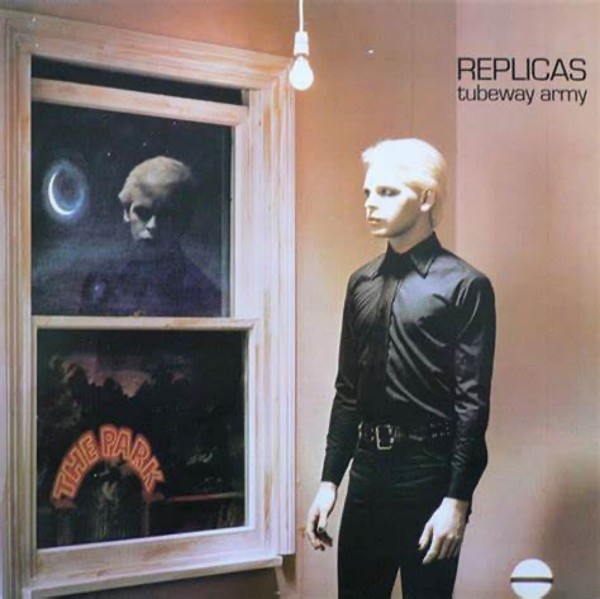 Tubeway Army, Replicas, Beggars Banquet, 1979.
So, although ChatGPT might be able to write some text on that subject and could, I imagine, write some really mean dystopian fiction, without the lived experience that gives birth to our unique sense of humanity and the critical thinking and empathy that gives that form its substance, the most it can ever be is a mere imitation. Maybe that’s enough for us to hold our edge, but if not, it was never meant to be anyway.
