

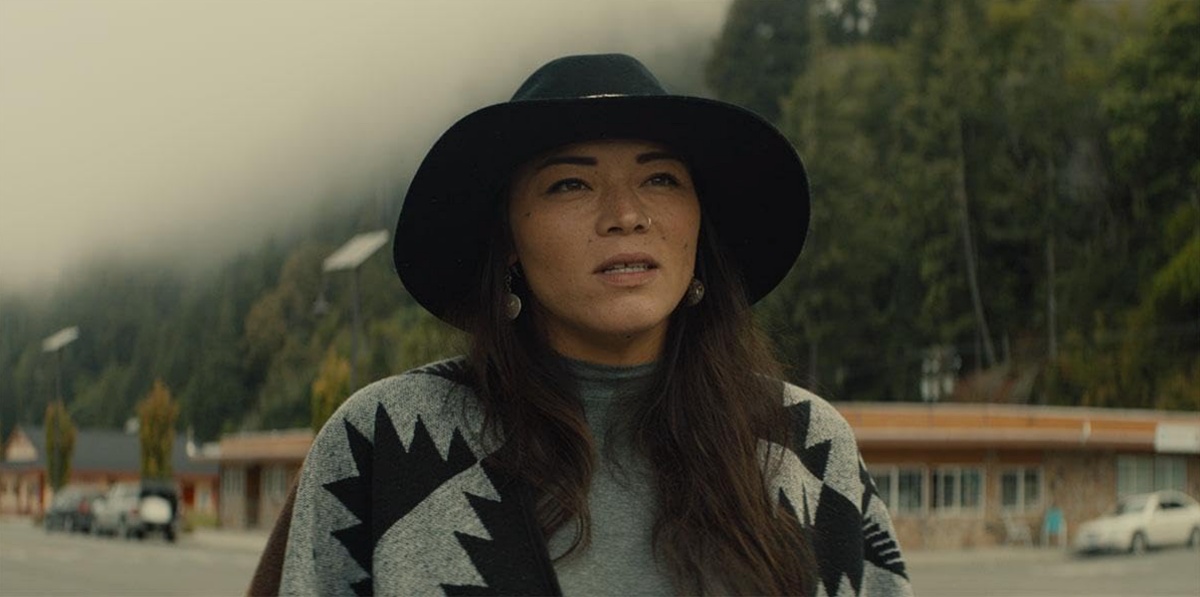

An empowering doc entitled Boil Alert, follows a Mohawk woman activist, Layla Staats, who admits she lost her direction along life’s challenging journey due to alcohol, drugs and depression.
It should be accepted that Canadian cinema gets special attention in its own host country, and there were many great offerings from our northern neighbors at this year’s Toronto International Film Festival. It should be mentioned that for many years, and at the beginning of every screening at the festival, there is a solemn video recognition of the lands Canadians live on. Of course, Canada has its unpleasant history of mistreatment of the First Nations and has been doing everything possible to rectify that since. Among the many films focussing on Canada, a couple stand out.
An empowering doc entitled Boil Alert, follows a Mohawk woman activist, Layla Staats, who admits she lost her direction along life’s challenging journey due to alcohol, drugs and depression. This, unfortunately, is quite common among the Native communities. However, she found a way to overcome her demons by getting involved in water rights activism, while turning her life around chronicling and exposing how poisoned water has been been destroying Canadian Native communities.
In her new challenging life, she’s fighting against powerful development corporations that exploit the land with little concern about the effects it has on the communities. Canada has one of the highest rates of boil water alerts that are found mostly in poor Native communities, with many alerts having lasted for several years! Bottled water is shipped to these forgotten remote areas where residents are forced to pay higher prices and do the physical labor to deliver to each home.
Her personal interviews with victims and determination to expose the injustices facing her people, results in a thoroughly engaging study of journalistic research that serves the people. The film ends with her singing a beautiful song written by her brother about the importance of respecting your elders. Staats has found an important mission in life, trying to save clean water for everyone. Water is gold.
The first two episodes of a 4-part TV series entitled Telling Our Story, premiered at TIFF in its English version. It highlights 11 different First Nations in Quebec. The heartwarming and thought-provoking interviews of proud Natives addressing the themes of “Territory, Identity, Spirituality and Rebuilding.” adds to the stunning photography that brings their history alive. Abenaki Nation director Kim O’Bomsawin used an all-Indigenous crew to give voice to those who are often unheard, offering them an opportunity to share their world views, beliefs, values, and long histories in this place.
A couple of new documentaries from well established filmmakers also premiered at TIFF. The constantly working Haitian-American director, Raoul Peck, well known for his progressive class-conscious films like Young Karl Marx, I Am Your Negro and the extraordinary anti-imperialist HBO series Exterminate All Brutes, chose to do a documentary about a Black family in North Carolina fighting to keep their land. The examination of white supremacy worldwide is a basic theme in most of his works that all deserve viewing. His new film, Silver Dollar Road is also the name of the street going down the middle of this historically Black community, that to no surprise becomes appealing to corporate land developers.
Peck’s work is based on the extensive research of Lizzie Presser who writes for ProPublica and the New Yorker. She became embedded within the family for years in order to create this definitive study of how white supremacy affects the lives of Black people. The long struggle to save their land has paid a toll on many members of the family and is compassionately documented not only for its legal and social implications but with deep humanistic concerns. After 8 years in prison, for no reason except to punish them for trying to save their land, two of the brothers return home to see the area totally changed.
The film addresses race, gentrification, injustice and the court system. Peck presents the struggle as most Marxists would – the problem is the capitalist system, with laws that favor one class over another and utilize the tool of racism to divide and conquer. Loads of creative graphics, titles and charts of family trees are utilized throughout the film to describe the family genealogy and the history of the land. Major land development companies use every trick in the book to drive out indigenous landowners to make profit on this prime waterfront property. It’s a stunning fact that around 90% of Southern Blacks have lost their land since slavery ended, and were forced to move and live up north.
The venerable documentarist Errol Morris, (The Thin Blue Line, A Brief History of Time) targets yet another well-known figure, spy novelist John le Carré (real name David Cornwell) who rarely gives personal interviews. Morris created a cleverly devised camera setup he calls the Interrotron that allows both subject and interviewer to look directly at each other while also looking straight into the eyes of the audience. After his famous ‘interrogation’ of two former U.S. Secretaries of Defense, Robert McNamara in 2003 (The Fog of War) and Donald Rumsfeld in 2013 (The Unknown Known), he now points his camera and probing questions towards this famed writer in Morris’s new engrossing and entertaining doc called The Pigeon Tunnel. It’s a fun watch, an absorbing and probing study of the famed spy novelist with much unknown history revealed. Spanning decades in the life of the writer, most of which centers around the Cold War period, the doc is filled with priceless archival footage, reenacted scenes and dramatic anecdotes. It tells of a father he called Ronnie, a crook and scam artist, and a mother he never knew who left him at 5 years old.
There’s a large section about the British spy Kim Philby who disgusted LeCarre because he was a Soviet double agent who betrayed his country. Le Carré was obsessed with the idea of betrayal. He felt that Soviet communism didn’t work, but did admit both sides have a problem with the truth – another main theme of this probing and philosophical study. He believes that truth is subjective – it depends on what side you come from, your experiences and how you define things.
Two people may see the same thing but have totally different recollections later. He claims it’s another all-seeing person that holds the truth. Morris asks who is that 3rd person? Is it God? Le Carré replies “No,” but that’s the search – for that third entity. This was his last interview before his death in 2020, just now being released after extensive editing by the Oscar-winning director Erroll Morris.
