

Fiscal Fiasco: NYC on the Brink in 1975

The Big Apple had a bite for everyone, although the “white flight” out of the city to the suburbs dramatically undercut New York City’s tax base.
DROP DEAD CITY: FILM REVIEW
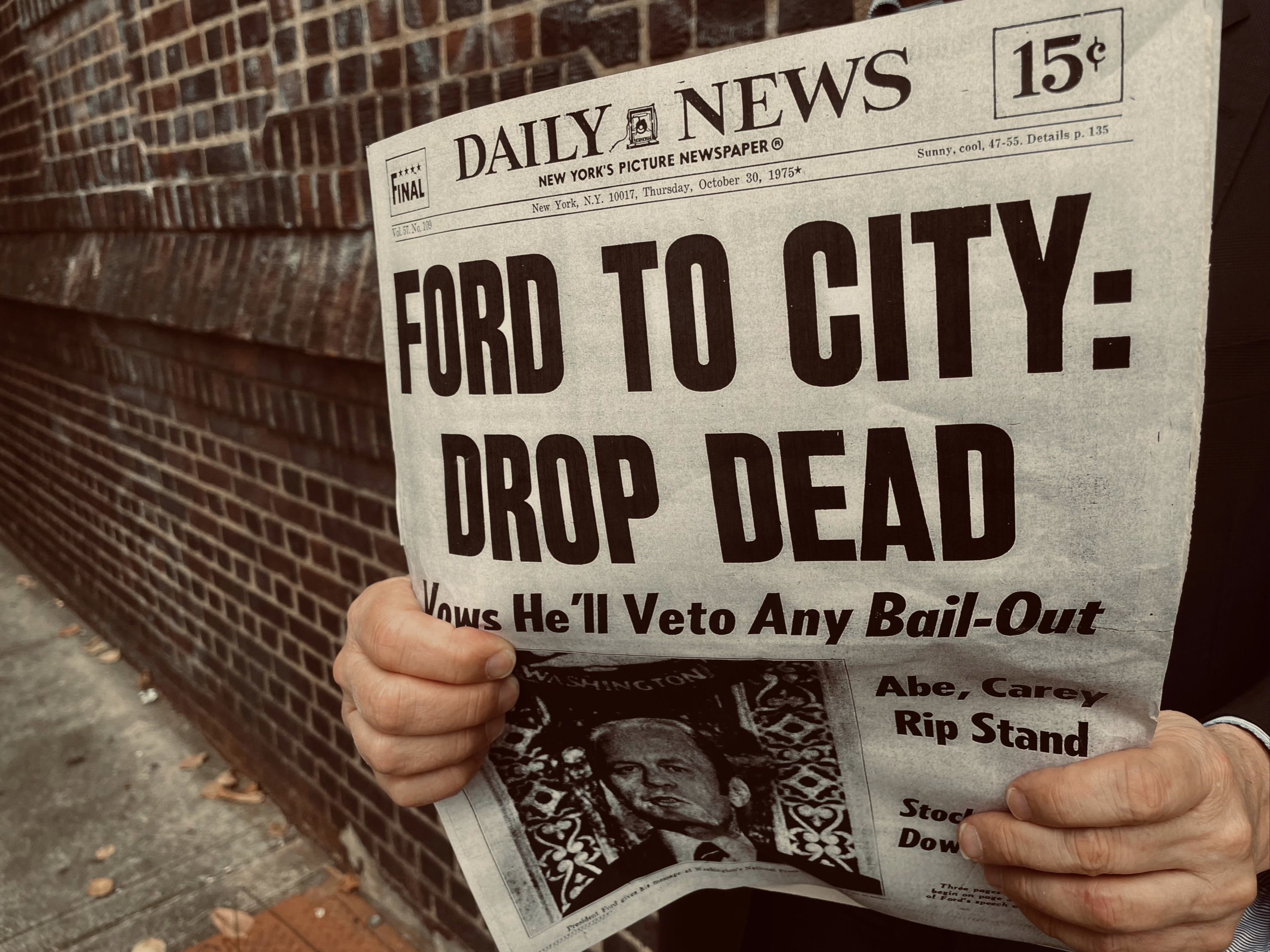
As Trump and the MAGA GOP strive to decapitate the “administrative state” and cut the “welfare state” and essential services such as Medicare, Medicaid, etc., Drop Dead City chronicles New York City’s struggle against bankruptcy and defaulting on its debt exactly half a century ago. This vivid 108-minute documentary filled with period news clips (from the last year when news stations shot with 16mm cameras) and contemporary interviews with some surviving (if now much older) newsmakers, of course takes its title from what may well be the most infamous newspaper headline in American history: “Ford to City: Drop Dead.” The Daily News, of course, was referring to then U.S President Gerald Ford’s 1975 refusal to bail New York City out of its fiscal crisis with loans.
The film, which won the Library of Congress Lavine/Ken Burns Prize for film, and was the 2024 closing night feature of DOC New York City, focuses on union leaders such as the United Federation of Teachers/American Federation of Teachers’ President Albert Shanker and AFSCME District Council 37’s Vic Gotbaum, President of the largest municipal union in New York City, plus political leaders like Irish-born City Council President Paul O’Dwyer (who reputedly had IRA links), Mayor Abe Beame and investment banker Felix Rohatyn. The co-director with veteran documentarian Peter Yost is actually Felix’s son, Michael Rohatyn, so Drop Dead City has an insider’s (if arguably biased) perspective.
According to the doc, during the period of postwar posterity, New York City was a sort of social democracy where the city provided extensive essential services, from sanitation to firefighting to welfare to healthcare to eventually tuition-free university educations for any resident who graduated from high school, in a highly unionized metropolis where workers received benefits and high salaries. The Big Apple had a bite for everyone, although the “white flight” out of the city to the suburbs dramatically undercut New York City’s tax base.
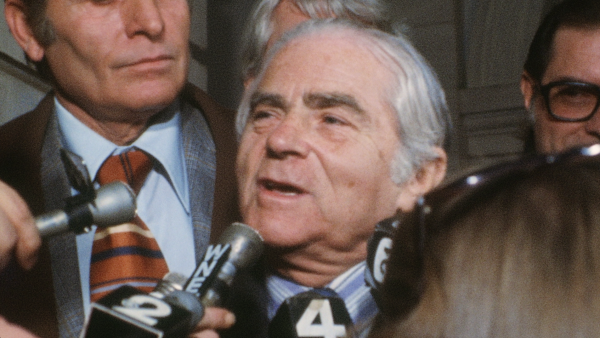
However, not only was New York living above its means, but city officials – including Beame, that “scion” of the Brooklyn Democratic Machine, who’d graduated from Baruch College, and was an accountant who’d been New York City’s comptroller before being elected mayor – were not properly keeping the books. As the film has it, after the city’s spree of deficit spending, when the bills came due in the mid-1970s, the profligate municipality did not have the cash to meet its payroll, bond payments and other fiscal obligations.
The riveting film also has brief scenes depicting explicitly socialist organizers resisting the unfolding financial crisis. I was part of the last class of CUNY students who attended college tuition free (the economic collapse ended that, along with much of New York City’s “social democracy”), and participated in the struggle against the cutbacks. When subway fares rose, we chained and padlocked exit gates open at train stations and urged passengers to ride for free. I wrote an open letter published in our school newspaper to Hunter College’s president, ex-nun Jacqueline Wexler, urging “the lying nun” to resign for collaborating in imposing tuition and other austerity measures. One of our rallying cries was “Screw Hugh” – Carey, that is, New York State’s governor, another prominent figure in this absorbing film.
While it was gratifying to see glimpses of the leftist opposition included in the hard-hitting documentary, the Left’s solutions aren’t explored. A big demand of ours was to cancel debt service – that is, not paying the interest “owed” to the banks for loans they’d provided New York City. The doc does indicate in passing that even if debt service was cancelled, along with other payments, that still wouldn’t have solved the deficit crisis. But no hard numbers are given, and the filmmakers never consider the option of a “tax the rich” solution for the unfolding fiscal fiasco in New York, where Wall Street is located, along with many banks and moneybags.
Be that as it may, for this ex-“Native” New Yorker who lived through the NYC collapse of 1975, this doc was like a time machine, and revisiting that bygone era was a fascinating excursion. However, although Yost and Rohatyn’s nonfiction film is set 50 years ago, the parallels with what’s happening today in America, as social benefits are once again on the chopping block and austerity is on the horizon, this doc provides a stark cautionary tale that is very timely and relevant. You don’t have to be a New Yorker to love Drop Dead City – a real New York film.
Drop Dead City is being theatrically released now; in L.A., it is playing May 22 at NoHo 7; May 23 at Monica Film Center; and May 24 at Town Center 5, with the filmmakers attending some screenings. For more info see here. The film will begin streaming in July.
Ed Rampell’s novel about the Native Hawaiian Sovereignty Movement for Indigenous rights, The Disinherited: Blood Blalahs, will be published this year.
