

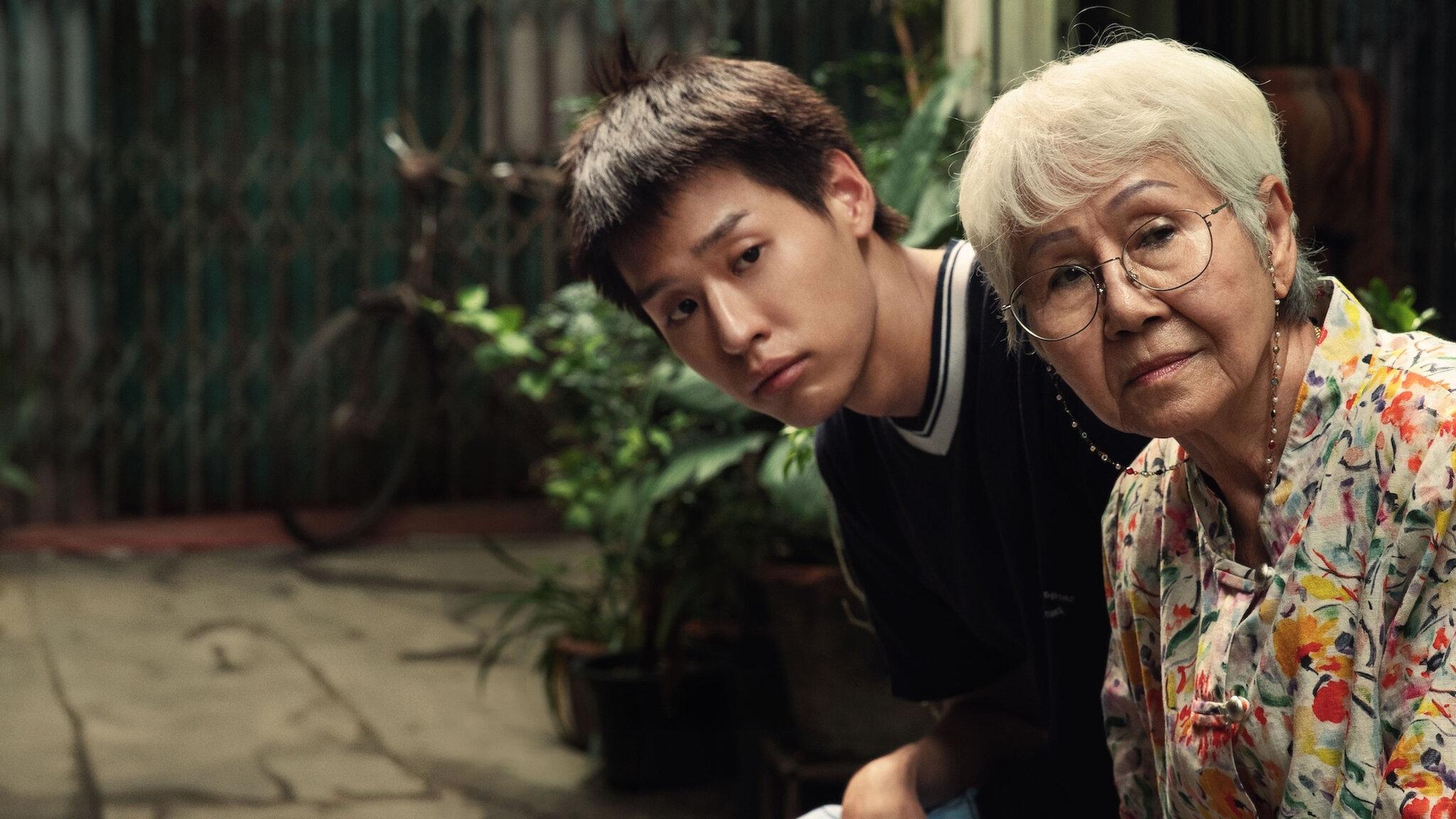

Among the topics this movie touches upon are sickness and death, family dynamics, caring for the elderly, the quest for money, generational differences, the effects of changing technology, and religious beliefs.
The highly-praised Thai film How to Make Millions Before Grandma Dies (2024, hereafter MBGD), now streaming on Netflix, reminds me of the following words from poet Carl Sandburg:
Everywhere is love and love-making, weddings and babies
from generation to generation
keeping the family of Man alive and continuing.
Everywhere the sun, moon and stars, the climates and weathers,
have meanings for people.
Though meanings vary, we are alike in all countries and tribes
in trying to read what sky, land and sea say to us.
Alike and ever alike we are on all continents
in the need of love, food, clothing, work, speech,
worship, sleep, games, dancing, fun.
From the tropics to arctics humanity
lives with these needs so alike, so inexorably alike.
….…………………………………………………
There is only one man in the world
and his name is All Men.
There is only one woman in the world
and her name is All Women.
There is only one child in the world
and the child’s name is All Children.
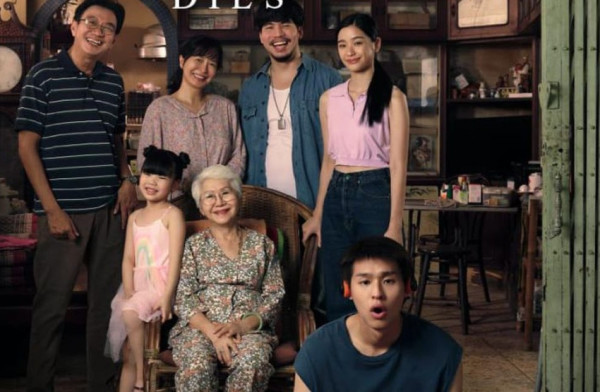
Sandburg’s words were written in the 1950s, but they are even truer today–as the habits of people around our globe become more similar. Thus, a film shot in Bangkok, Thailand–as this one was–depicts an extended family of Chinese origins with concerns that do not seem very different than our own.
The basic plot of this movie is about a grandmother in her late 70s who is diagnosed with Stage 4 cancer and the maneuvering of her family, especially her grandson M (Putthipong Assaratanakul), to gain the major share of her affection–and inheritance–during her final months of life. As M tells his female cousin, he goes to live with grandma and care for her so that he “can get a place of my own. It takes so long when you're not privileged. Some people are just born with a head start. They're rich or inherit a business.” His cousin then asks, “So you think of Grandma as an asset?” To which M responds, “That's harsh. Do you think it's so wrong?” (All film quotes are taken from the filmscript, which was accurately followed.)
Highly valued cultural products–whether art, books, films, or TV series–are often so because they deal with universal concerns. And, as my quoting of Sandburg suggests, this is certainly true of MBGD. Among the topics this movie touches upon are sickness and death, family dynamics, caring for the elderly, the quest for money, generational differences, the effects of changing technology, and religious beliefs. These issues are not separated from their human context, however, but reflect natural changes occurring within a family and Thai society. The skill with which this is all combined is thanks in no small part to a fine screenplay, adept directing (by first-time movie director Pat Boonnitipat, who is in his mid-thirties), good dubbing (into English), and excellent acting–especially by Usha Seamkhum, who plays the grandma and had never acted before.
Sickness and death come to people in all societies, and they often deal with it in similar ways. A major division within most societies is between those who believe in some type of afterlife and those who don’t. In general, the afterlife believers are more frequent among older people, and so it is in MBGD, where grandma prays to the Mahayana Buddhist goddess (Bodhisattva) Guanyin. M, however, tells her that “when people die, they die. Game over. The brain stops working, and the body will either become part of the earth and help flowers grow, or become part of the stratosphere.”
Caring for the elderly when life requires it has become a major problem in many modern societies, and there is no easy solution. In MBGD, grandma is briefly put into an assisted living facility, but then taken out. In confronting the issue, financial considerations often come into play, and grandson M is not the only family member aware of the financial angle. To M’s credit, however, as the movie evolves, so does he, and by the end of it we sense his growth as a caring individual.
Early on, his mom says to him that he “decided to quit school [apparently college] to become a gamecaster from our living room,” that “you'd be rich in no time. . . . would rent your own house,” that you would “give me an allowance.” After discovering that her mother (“grandma”) has cancer, she also tells M “to spend time with her,” to which he responds, “What'll you give me to go see Grandma? My time is money now, yeah?”
But M realizes that he has his faults, at one point telling grandma, “I'm just a slacker, Grandma. I can't compete in the real world.” (The use of the word “slacker” here reminds us of the 1991 film of the same name directed by Richard Linklater.) M also becomes more caring and less money focused, and this is reflected in his willingness to invest in a larger burial plot for his grandma, just as she wished–the ramifications of having a larger plot are one example of the film’s depiction, despite its dealing with universal themes, of particular Thai values.
But despite gaining some insights into Thai culture, and specifically the Thai Chinese element within it, the global relevance of the film remains paramount. Aging, sickness, family problems, caring for the elderly, generational divides, and adjusting to changing technology–the frequent use of cell phones by M and others is prominent–are all universal concerns. The beauty of MBGD is that it deals with such issues in such a realistic, yet in-depth, manner.
