


From the 1971 Indo-Pakistan War to Iran, Gaza, and Ukraine, an anti-war film reminds us how little humanity has learned about the devastation of war.
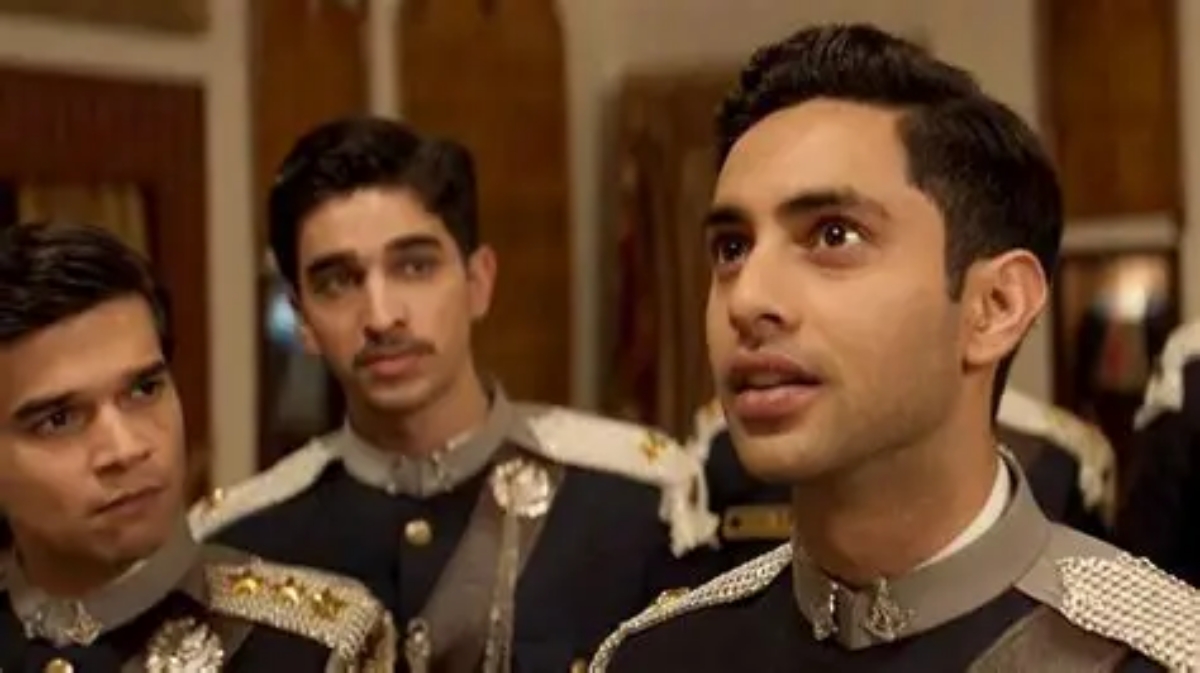
I’m old enough to remember the 1970 box office hit song of 1970, "War,” with its lines "War what is it good for? Absolutely nothin'!" As I read or hear about our present war in Iran or what’s going on in Gaza or Ukraine—or even past wars such as WWI—I often think of these lines. The recent anti-war film Ikkis (2026) also brought these words to mind. Toward the end of it, the main character’s father, retired Indian General Madan Lal Khetarpal (the great Indian actor Dharmendra), says to the Pakistani officer who in battle killed Khetarpal’s son Arun in 1971: war “destroys crops and destroys families. It’ll stop when we stop it.”
Some five centuries ago, the Dutch humanist Erasmus provided a similar description of the effects of war: “War, on a sudden and at one stroke, overwhelms, extinguishes, abolishes, whatever is cheerful, whatever is happy and beautiful, and pours a foul torrent of disasters on the life of mortals.” In contrast, he thought that “peace was at once the mother and the nurse of all that is good for man....Peace shines upon human affairs like the vernal sun. The fields are cultivated, the gardens bloom, the cattle are fed upon a thousand hills, new buildings arise, riches flow, pleasures smile, humanity and charity increase, arts and manufactures feel the genial warmth of encouragement, and the gains of the poor are more plentiful.”
But back to Ikkis and what it portrays—primarily the soldiering activities of Lt. Arun Khetarpa, especially in the December 1971 Indo-Pakistan War. (Before his battlefield death, the young Arun was a real-life war hero.) This war was not the first between predominantly Hindu India and a dominantly Islamic Pakistan (although both had plenty of minorities). I have earlier written of the conflict between these two nations, which began as soon as Great Britain granted independence to them (formerly both part of British India) in 1947. Gandhi was still alive then, hoped that they could remain one independent nation, and was assasinated the following year by a man who thought he (Gandhi, a tolerant Hindu) was too favorable toward Muslims.
Not only was there tension and conflict between India and Pakistan, but hostility also existed between East and West Pakistan. “They were geographically, culturally, and ideologically distant and distinct,” over a thousand miles of India separating the two Pakistani parts. They were principally united by their predominant Muslim faith, but divided by ethnicity—much of East Pakistan was part of the Bengal region—and the eastern part’s desire for more self-rule.
Following tensions resulting from the political success of an eastern Pakistani political party, western Pakistan sent the Pakistani army to eastern Pakistan. According to an Ohio State U. website, the military deployed “weapons such as fighter jets, tanks, and napalm” and “committed war crimes that reached the level of genocide.” Within that same month of December 1971, India supported east Pakistan, aiding it to become victorious, to break away from west Pakistan, and become the independent state of Bangladesh.
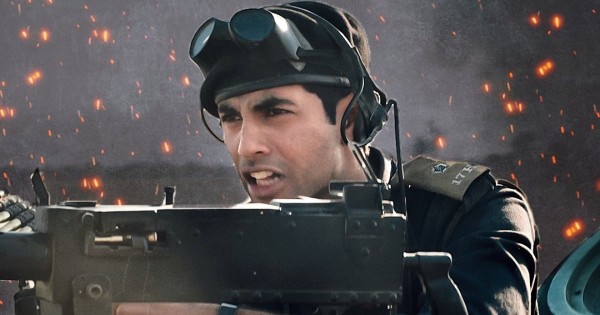
During the war, the young Lt. Arun Khetarpa becomes a tank commander, and it is in his tank that he suffers a battlefield death while fighting in western Pakistan. His father was born in that region when the whole area was still part of British India. The hostility between the two former parts of British India was captured well by writer Salman Rushdie: “In Punjab [the western region where Arun’s father was born and afterwards split between India and Pakistan], Assam, Kashmir, Meerut—in Delhi, in Calcutta—from time to time they slit their neighbor’s throats...They killed you for being circumcised and they killed you because your foreskins had been left on. Long hair got you murdered and haircuts too; light skin flayed dark skin and if you spoke the wrong language you could lose your twisted tongue.”
In modern times, different skin color or speaking different languages, as Rushdie noted, could often get you killed. In 2022, Rushdie himself suffered knife wounds— “four wounds to the stomach area of his abdomen, three wounds to the right side of the front part of his neck, one wound to his right eye, one wound to his chest and one wound to his right thigh”—resulting from a long-standing 1989 edict issued by Iran’s leader after the publication of one of Rushdie’s novels.
In Ikkis the corroding influence of intolerance is not much highlighted. But if we stop and think about Arun Khetarpa’s death, we begin to realize all that was lost by the death of this young man. I’m reminded of author Ian McEwan’s comments in his novel Black Dogs (1993) about the deaths in WW2: War involves a “multiplicity, a near-infinity of private sorrows...a boundless grief minutely subdivided without diminishment among individuals ... all those unique and solitary deaths, all that consequent sorrow, unique and solitary too, which had no place in conferences, headlines, history, and which had quietly retired to houses, kitchens, unshared beds, and anguished memories.”
Before Arun’s death we see his growth as a human being and his charming romance with Kiran Kochhar (Simar Bhatia). But then his young life is cut short by shelling from a Pakistani tank. It’s as if we learned nothing about the preciousness of human life in the five centuries since Erasmus wrote that “war, on a sudden and at one stroke, overwhelms, extinguishes, abolishes, whatever is cheerful, whatever is happy and beautiful, and pours a foul torrent of disasters on the life of mortals.” And in the more than half century since 1971, as we look around at Iran, Gaza, Lebanon, it seems that we still have learned nothing of the folly of war. But, as the young Arun’s dad tells the Pakistani that killed his son—and this former Pakistani tank commander is portrayed sympathetically in the film—war will only “stop when we stop it.”
