


The main problem with the values reflected by both Martys is that growing up in the United States most kids are not asked to think about values.
Six years ago I wrote “Two American Dreams: Will Voters Choose John Lewis's or Donald Trump's?” In it I quoted the line, “In every decade, Trump is the same as he ever was... seemingly singularly obsessed with wealth, power, and self-promotion.” Now, six year’s later, not much has changed with Trump’s “dream.” Lewis, however, had a different dream. It was encapsulated in the sentence, “Let the spirit of peace and the power of everlasting love be your guide.”
For much of our history the American Dream has meant “that those who work hard and play by the rules will be rewarded with a more comfortable present and a stronger future for their children.” But Lewis chose to emphasize not earning more money, but something else–love. Whether he realized it or not, he agreed with Holocaust survivor and psychotherapist, Dr. Viktor Frankl, who wrote in Man's Search for Meaning, “love is the ultimate and the highest goal to which man can aspire.”
True, for many Americans the American Dream meant a better financial future for their children; but there were always some like Lewis or John Muir, sometimes referred to as the "Father of the National Parks," who tried to resist all those “trying to make everything dollarable.”
Muir realized that our values are important. As U. S. neuropsychologist and Nobel laureate Roger Sperry once stated: “Human value priorities...stand out as the most strategically powerful causal control now shaping world events. More than any other causal system with which science now concerns itself, it is variables in human value systems that will determine the future.”
What we spend our money on reflects our values. At present, the highest salaries for any large group go to entertainers, including professional sportspeople. In 1985, Neil Postman wrote in Amusing Ourselves to Death, “Our politics, religion, news, athletics, education and commerce have been transformed into congenial adjuncts of show business, largely without protest or even much popular notice. The result is that we are a people on the verge of amusing ourselves to death.” What he wrote four decades ago is even more true today.
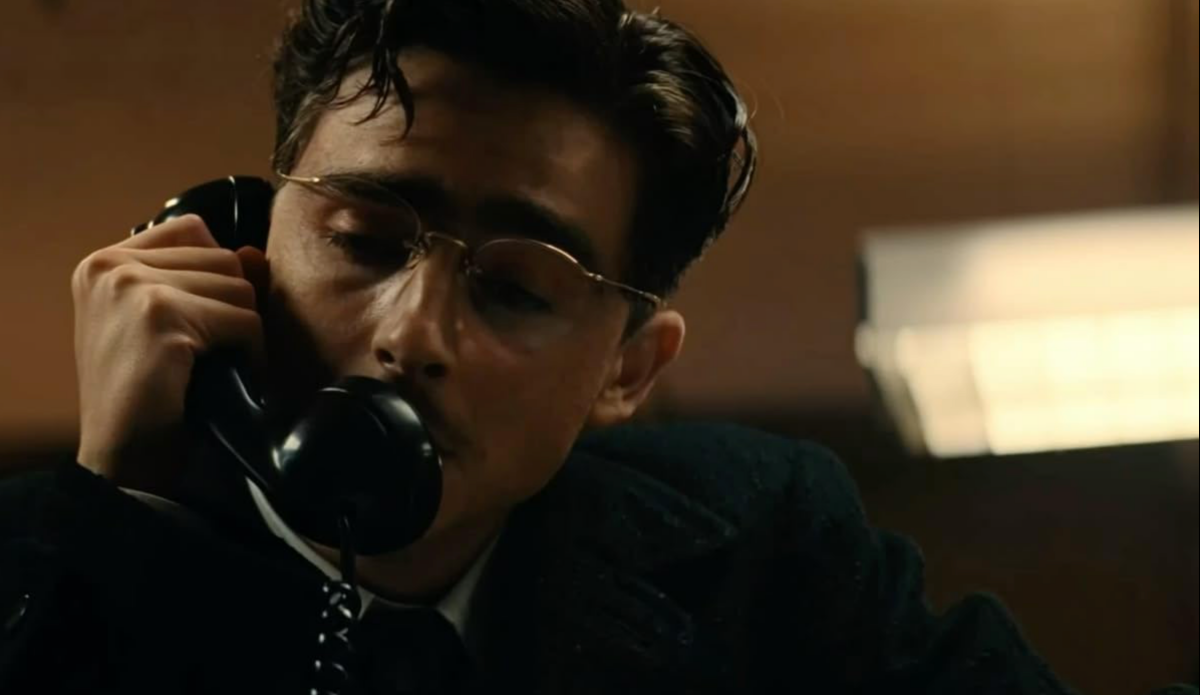
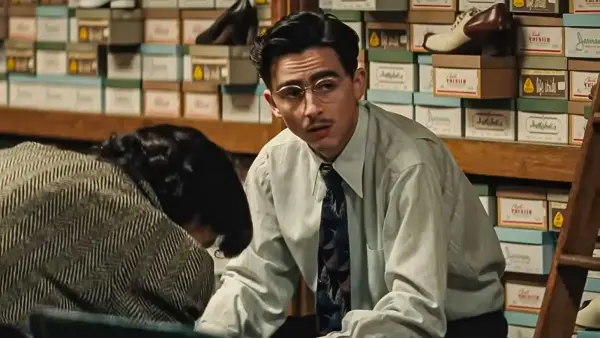
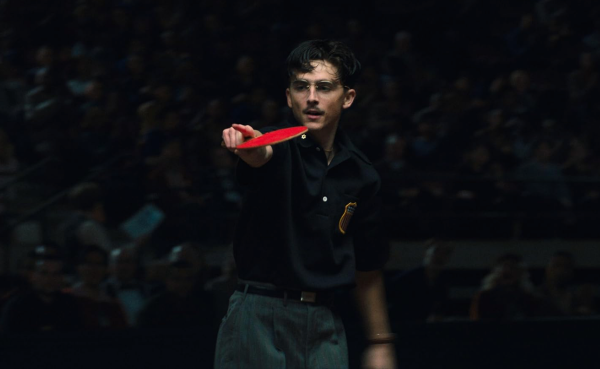
Having just watched the 2025 film Marty Supreme (directed by Josh Safdie, who also co-wrote the script with Ronald Bronstein), it’s easy to conclude that Marty falls more on the side of, as Muir expressed it, making “everything dollarable.”
The movie is loosely based on Marty Reisman’s 1974 book, The Money Player: The Confessions of America's Greatest Table Tennis Champion and Hustler, the book’s subtitle acturately reflecting both Reisman’s ego and hustling nature.
A 2025 article in the Smithsonian Magazine quotes a knowledgeable source indicating: “From hustling unsuspectingtargets in New York City to serving as the supporting act for the Harlem Globetrotters, all while wearing bold, expensive suits and stylish fedoras, Reisman “is considered the most flamboyant and probably the best-known U.S. player from back in those days. (The movie focuses on the 1950s.)
Another article, this time on Slant magaine’s website, writes of the movie’s “hollow promise of American self-reliance” and the “terminology used to sell outsiders on social advancement—purpose, obligation, sacrifice—as tools that reinforce the stranglehold of the rich.”
Like many movies loosely based on autobiographical material, Marty Supreme takes many artistic liberties. But the depiction of the film’s star’s, Marty Mauser (an excellent Timothée Chalamet), nature is essentially similar to that of the real-life Marty Reisman. They’re both basically hustlers, focused on earning money.
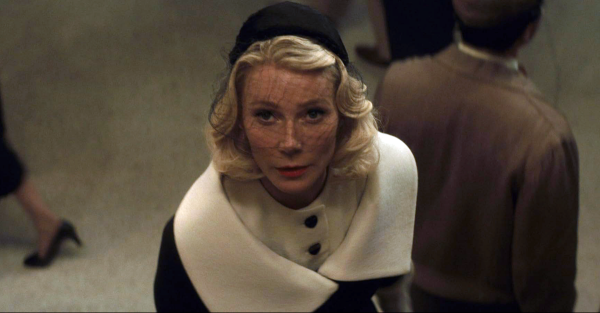
That neither Marty (the real-life one nor the film’s depiction of him) should be anyone’s role model does not mean the movie lacks quality. Besides, Chalamet, who was so good playing Bob Dylan in A Complete Unknown (2024), the movie also features other fine acting, including by Gwyneth Paltrow, who plays the fictional actress Kay Stone.
The main problem with the values reflected by both Martys is that growing up in the United States most kids are not asked to think about values. I wrote about this a decade and a half ago in an article on the Wisdom Page. It contained this quote from A Guide for the Perplexed (1977) by economist and environmentalist E.F. Schumacher: “All through school and university [in Europe and the USA] I had been given maps of life and knowledge on which there was hardly a trace of many of the things that I most cared about and that seemed to me to be of the greatest possible importance to the conduct of my life....Not only are they [people] utterly helpless when they are born and remain so for a long time; even when fully grown, they do not move and act with the sure-footedness of animals. They hesitate, doubt, change their minds, run hither and thither, uncertain not simply of how to get what they want but above all of what they want....Who can guide me to it [truth or wisdom] or at least point out the direction in which I have to proceed?”
In that same article, I mentioned one person who tried to answer Schumacher’s question–Yale psychologist Robert Sternberg in his “It's Not What You Know, but How You Use It: Teaching for Wisdom” (2002). He mentioned that at Yale University's Center for the Psychology of Abilities, Competencies, and Expertise, he and colleagues “are seeking a solution—teaching students from roughly age 10 or so to think wisely. Underlying this program is the view that we need to teach students not only knowledge but also how to use that knowledge well.”
Sternberg goes on to state that “people are wise to the extent that they use their intelligence to seek a common good. They do so by balancing, in their courses of action, their own interests with those of others and those of larger entities, like their school, their community, their country, even God. And they balance these interests over the long and the short terms....Our goal is not to teach values but to help children develop positive values of their own that promote social welfare.”
Apparently, Marty Reisman was never helped to develop such values. His education was secondary to him. In his teen years, it was ping pong and gaining money that mattered to him. According to the Smithsonian article mentioned above, he “moved into a [New York] hotel with his [divorced] father, who was a compulsive gambler, at age 14. He supported himself financially from that point on.” [In the film he lives in an apartment with his mother.]
Part of the problem regarding his values is that for too long liberals and progressives disdained talk about values because they associated such references with conservatives–see, e.g., The Book of Virtues: A Treasury of Great Moral Stories (1993), edited by former Secretary of Education under President Reagan, William Bennet, and the conservative Values Voter Summit, held annually since 2006.
Only in Barack Obama’s The Audacity of Hope (2006) did a prominent progressive devote a whole chapter to values, writing that “Democrats are wrong to run away from a debate about values,” and that the question of values should be at “the heart of our politics, the cornerstone of any meaningful debate about budgets and projects, regulations and policies.”
Yet, getting back to Marty Supreme, it should be noted that in a penultimate scene, after Marty returned in the early 1950s to the USA from Japan–where he played a Japanese champion–he goes to the maternity ward to visit a young woman he got pregnant. He tells her that he loves her, and when he sees the baby they had together he (as the filmscript described it) “suddenly bursts into tears, sobbing uncontrollably, like a dam has broken.”
To what extent these scenes matched reality, I’m not sure. And there is plenty of evidence that Marty continued to play table tennis–and hustle–long after the 1950s. But in real life, there is also a redeeming side to Marty Reisman’s story. In 1982, he married his second wife, Yoshiko Koshino, and they remained together for over three decades. In Fact or Fiction: The Life and Times of a Ping Pong Hustler, a documentary released in 2014, two years after his death, he indicated that he had spent the past several years caring for his sick wife. “It’s really amazing how my life and my existence with Yoshiko has taken a 180-degree turn...Everything she did for me, I now do for her.”
The lesson his life holds out for us all is as Leo Tolstoy’s famous novella, “The Death of Ivan Ilyich,” indicates, even though there may be little time left before our death, we can still change, we can still become more loving.
