

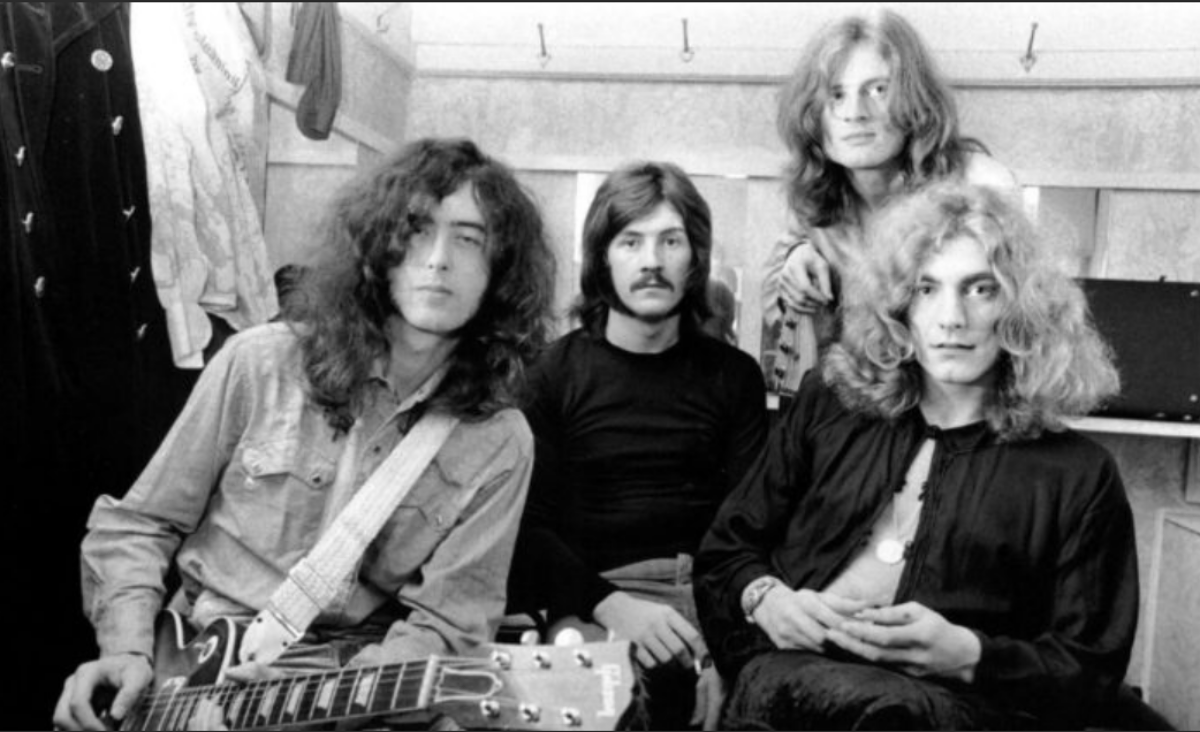
Not a Whole Lot of Love


Like all British rock of the era—like all rock—Led Zeppelin’s music grew out of black/delta blues, albeit bleached and diluted for White audiences.
Becoming Led Zeppelin (documentary, 137 minutes; in general release)
British documentarians Bernard MacMahon and Allison McGourty’s best known previous work, American Epic, is a comprehensive, multi-media survey of the earliest recorded American “roots” music. Painstakingly and lovingly researched, it is a kind of musical archeology that unearths America’s musical foundations. It’s an important contribution.
Becoming Led Zeppelin is not. It is, instead, an authorized—and therefore banal and bland—origin story of a famously infamous British rock band. Led Zeppelin, the mold for subsequent heavy-metal and hair bands, piled up accomplishments both acme and nadir. Their exploits have evolved into myths of sex, drugs, and rock-and-roll. And hotel sacking: After they destroyed a Tokyo hotel room—that much is fact; the myth is that Bonham did it with a samurai sword—Hilton banned the band from all its properties worldwide for life. At one point the world’s number one supergroup, they sold more than 300 million albums (and counting) while bulldozing new fronts in debauchery, depravity, and dissolution. These four talented British musicians, John Paul Jones, Jimmy Page, Robert Plant, and John Bonham were champions of rock success and excess.
Of their success: MacMahon’s and McGourty’s documentary lays out—competently, if by-the-numbers—the band’s formative years and musical influences. The first third of the film obligatorily covers post-WWII social changes that were roiling Western, particularly British, societies. Via generic home movies and file footage, it dutifully presents the band members’ backstories. Interspersed are onscreen comments from not only the three living band members, but also, eerily, Bonham, who died in 1980 from choking on his own vomit following an alcohol binge. (Bonham’s disembodied voice comes from a years-old interview.) Musically, both Page and Jones were in-demand session players who can be heard, mostly uncredited, on many of the era’s pop hits. Plant, a charismatic blues shouter with a multi-octave range, and Bonham, a percussion prodigy, came up through local bands. All of them marvel at the instant synergy they heard when they played together for the first time. Despairing of finding that again, the band … disbanded shortly after Bonham’s death.
Of their excess, the debauchery, depravity, and dissolution, the film presents … nothing. That silence is amplified in the context of so raucous a band.
Of their excess, the debauchery, depravity, and dissolution, the film presents … nothing. That silence is amplified in the context of so raucous a band. Despite the unlimited flow of narcotics, the heroin blackouts and cocaine whiteouts, the word drugs is heard once only when, during this long film’s monotonous last third, Page, adopting the tone of a now-wiser rock elder statesman, obliquely refers to the temptations of touring. Of the waves of hormone-addled underage girls with rock stars in their eyes, there is no mention. Nor of the stream of copyright-infringement accusations and lawsuits.
I wanted to like this film. I attended the November 6th, 1969, concert at San Francisco’s Winterland Ballroom the night Led Zeppelin and Taj Mahal opened for Country Joe and the Fish. As good as the latter acts were, Led Zeppelin was mind-blowing. Beyond opening that show, the young quartet, still feeling their way musically, were also opening new fronts in the culture war young White rebels were waging against anyone over 30.
Like all British rock of the era—like all rock—Led Zeppelin’s music grew out of black/delta blues, albeit bleached and diluted for White audiences. But two things differentiated Led Zeppelin’s sound from other blues-derived White rock. The first was their full melding with electrification and amplification. Blues had gone electric in the late 1940s (dubbed “rhythm and blues” by the record companies). For post-WWII Black and White musicians seeking to define themselves against the anxiety-soothing musical harmonies of the recent war years, electrification and amplification were symbolic of a break with the past. But they also allowed musicians to expand the performance envelopes of their instruments; to add dissonance that countered the saccharine euphony of acts like the Andrews Sisters, Mitch Miller, and Guy Lombardo; and, as their popularity and venues grew, to reach larger audiences. For Led Zeppelin, though, electrification and amplification were ends in themselves. Page was a pioneer and innovator exploring distortion and odd effects, often bowing across his guitar strings to create strange and hypnotic soundscapes that mesmerized stoned listeners.
Led Zeppelin’s second difference from other White rock acts—Black musicians wouldn’t dare venture into this territory until much later—was their frank expression of sexuality. Though sex permeated black/delta blues, commercial music purveyors, whether recorded or live, whether race or White, permitted sexual innuendo only. So concerned were the FCC, CBS, and Ed Sullivan about the impropriety of beaming Elvis Presley’s gyrating hips directly into America’s living rooms that “Don’t Be Cruel,” which Presley performed during his second appearance on “The Ed Sullivan Show,” was telecast only from Presley’s waist up. In contrast, not only were Led Zeppelin’s lyrics sexually explicit, they were amplified by Jones’s urgent bass, Page’s sensual guitar licks, Bonham’s driving drums, and Plant’s strutting and suggestive blues-shouting.
Audiences flocked to them. Critics did not. Particularly in the band’s formative period before they grew so big that criticism became irrelevant, music writers trashed them for their lack of subtlety and originality. Critics were missing the point. Led Zeppelin’s vocabulary was single entendre, their music deliberately raw and coarse. The primal urges they affirmed and celebrated provided their fans with direct intellectual and emotional access to their music. It was/is this accessibility that made Led Zeppelin, along with their downstream metal and hair-band progeny, so wildly popular. One would have to work hard—which, critics seemingly did—to miss the point of “Whole Lotta Love's” opening riff: Da dah de dah DAH!
Lifted from Howlin’ Wolf’s “Killing Floor,” the following lyrics are from Led Zeppelin’s “The Lemon Song”:
Squeeze me, babe, 'till the juice runs down my leg
Do, squeeze, squeeze me, baby, until the juice runs down my leg
The way you squeeze my lemon-a
I'm gonna fall right outta bed, 'ed, 'ed, bed, yeah
Yeah
Hey, hey, hey, hey, hey, hey, hey, hey
Juice, baby, baby, baby, baby, baby
Baby, baby, baby, baby, baby, baby
Hey, babe, babe, babe, babe, oh, no
No, no, now, now
I'm gonna leave my children down on this killing floor
If craft is the mastery of a medium, and art is the ability to transcend a medium and evoke broader intellectual and emotional truth, then Led Zeppelin’s members lacked the spark that ignites art.
None of which is to say that Page and company, though they eagerly sought temptations to which to succumb, weren’t also thoughtful about their music, an aspect of the band’s persona that the film makes clear. These were skilled, inventive, and committed players. Also the film makes clear that band members want to be remembered as artists; throughout the film, one hears their defiance and defensiveness. But if craft is the mastery of a medium, and art is the ability to transcend a medium and evoke broader intellectual and emotional truth, then Led Zeppelin’s members lacked the spark that ignites art. Still, they were brilliant craftsmen. Why isn’t that enough?
Critic’s pans were one thing. Charges of intellectual and musical plagiarism another, and these latter came early and often. And follow them still. And with reason: The band exploited the gray area between homage and theft, freely lifting others’ lyrics and riffs. Yet the water is muddied by the fact that the distinctive treatment they gave to what they took made it their own. Plant, who “wrote” most of the band’s lyrics, talks of gaining confidence in his songwriting as time passed; really what he gained as time passed was a sense of increasing impunity as the band became a rock behemoth.
In one copyright-infringement case that they lost—they lost multiple such cases—the band settled with Willy Dixon, who in 1985 sued after lyrics from his "You Need Love" were “borrowed,” uncredited, for Led Zeppelin’s “Whole Lotta Love.” Here are Dixon’s lyrics:
You've got yearnin' and I got burnin'
Baby you look so, ho, sweet and cunnin'
Baby way down inside, woman you need love
Woman you need love, you've got to have some love
I'm gon' give you some love, I know you need love
Here is a snatch from Led Zeppelin’s version:
You need coolin'
Baby, I'm not foolin'
I'm gonna send ya
Back to schoolin'
Way down inside
Honey, you need it
I'm gonna give you my love
I'm gonna give you my love
A-way, way down inside
I'm gonna give ya my love
I'm gonna give ya every inch of my love
I’m gonna give ya my love
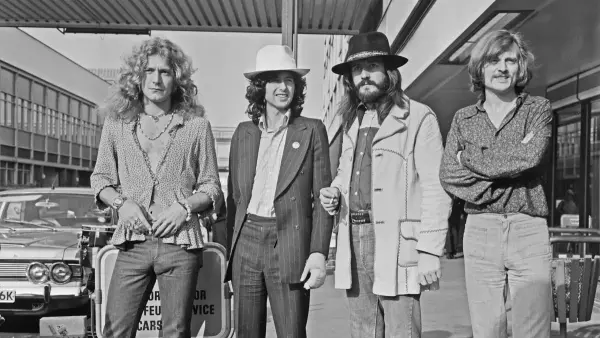
They settled that suit with a payment to Dixon and credit on subsequent releases. Plant is reported to have admitted the theft, saying, “Well, you only get caught when you're successful. That's the game.” Led Zeppelin’s ethos: high fidelity to music, low fidelity to integrity.
In the best-known of their copyright-infringement cases, a trustee for the estate of songwriter Randy Wolfe (who performed as Randy California), charged that the band stole the opening riff of “Stairway to Heaven” from Wolfe’s “Taurus.” “Stairway to Heaven” ranks among the most instantly recognizable, most often requested, and most frequently-played rock songs. It’s been broadcast and streamed millions of times. One radio station kicked off an all-Led Zeppelin format by playing only "Stairway to Heaven" for 24 hours. That one song has made them millions, so had they lost, a settlement would have been costly. But they won (weirdly with a legal attaboy supplied by the Trump Justice Department).
Judge for yourself: Listen to the opening bars of “Taurus,” then of “Stairway to Heaven.” Then consider two points: First, due to a technicality of copyright law, the judge ruled that jurors were not allowed to hear the music itself, only expert testimony about the music in the context of music in general. And second, for several nights in 1968 and 1969, Led Zeppelin played on the same bill as Wolfe/California’s band, Spirit. During those shows, Spirit played “Taurus.”
Becoming Led Zeppelin has the substance and grit of a corporate PR presentation. Never is heard a discouraging word.
Given their film’s lack of discordance, it’s clear what price MacMahon and McGourty paid for the band members’ “full cooperation” and participation. Becoming Led Zeppelin has the substance and grit of a corporate PR presentation. Never is heard a discouraging word. If the filmmakers gathered any negative footage, they left it on the killing floor. Where they aren’t innocuous, Jones’s, Page’s, and Plant’s—even Bonham’s—quotes are uniformly self-serving and self-aggrandizing. “Stairway to Heaven” is never mentioned, let alone played. Sex and drugs are out; rock and roll is in.
When I bought my ticket to the film, Led Zeppelin’s pioneering debauchery was not on my mind. Still, that side of this seminal (and semenal) band is as relevant, perhaps more relevant, to their, our, and music’s history as are their (commonplace) origins. Yet special as the band was, nothing in this film distinguishes it from any other rockumentary—and there are many—about post-WWII British—or any other—rock bands. There is the usual hardscrabble upbringing; the working-class parents; the teenage angst and alienation finding an outlet in rebellion and rock; the adoption of electric instruments as markers of a cultural event horizon; and the use of dissonance, distortion, and amplification to disrupt the musical pabulum of the past and drown out the immediate generations’ hectoring drone. Scanning the post-WWII damage-scape, standing among the rubble, the young, particularly the British young, weren’t merely disillusioned. They were done. They were saying, “You oversaw half a century of carnage, you allowed this decimation and wanton waste, yet somehow you feel entitled to tell us what to do and how to live? You think we’re gonna listen? You gotta whole lotta nerve.” Da dah de dah DAH!
It’s common for critics to ding a work for its failure to do what its creator never intended. That’s unfair, so MacMahon and McGourty would be entitled to say, to justify their film’s lack of adverse content, “Look at the title. Our film is about Led Zeppelin’s roots, not their overall history.” In this case, though, that would be a Potemkin defense. Given the band’s impact, notoriety, and ongoing cultural relevance, it is disingenuous to suggest that Becoming Led Zeppelin could be about only the band’s genesis. That would be like marketing an authorized documentary called Becoming Charlie Manson and saying, to justify omitting all that “Helter Skelter” unpleasantness, “We’ve focused on Charlie’s youth.” Led Zeppelin is a subject worth tackling only because of both its success and notoriety, both its good time and bad times. Outside that full context, it’s just another British rock band.
This is a film that is not all it could be. Instead it is all it was allowed to be. Given the “never before seen” family movies and concert footage, Led Heads will find value in it. And, via a theater’s big screen and sound system, those who never got to see Led Zeppelin live can experience their power in ways small screens cannot render. For a general audience, though, there’s nothing to see here. MacMahon and McGourty have failed to turn Led into gold.
