

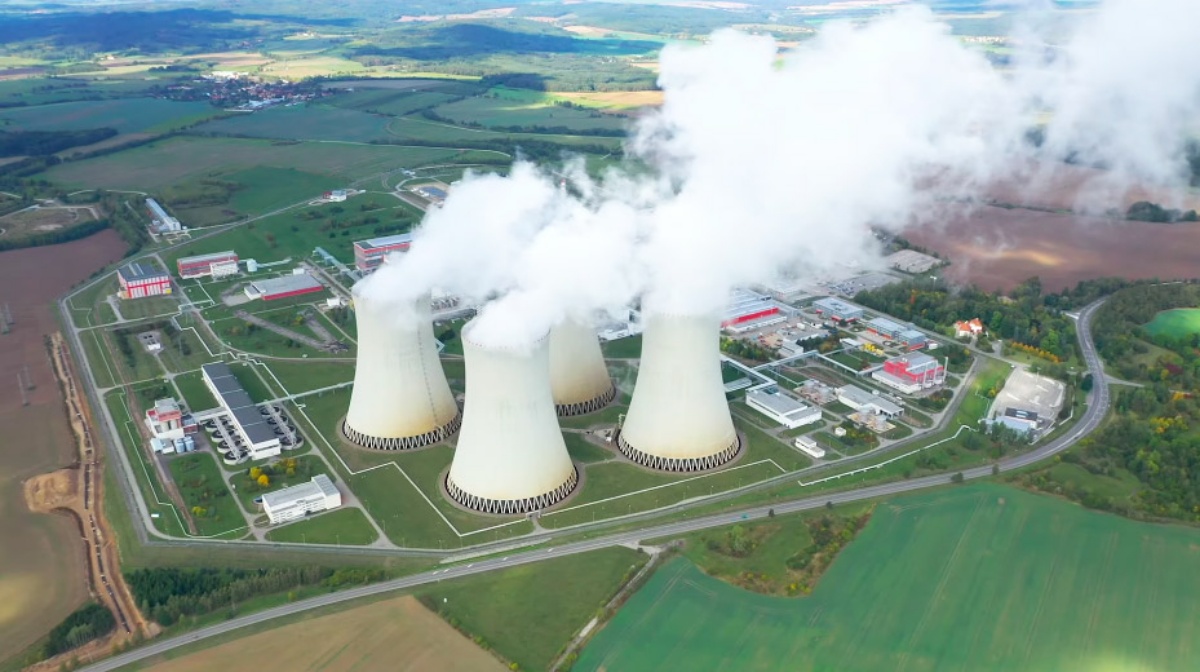


As a film, Stone’s “Nuclear Now” is slow, boring and infuriatingly inaccurate.
Oliver Stone has honored me with a speaking role in his newly released “Nuclear Now.”
But his atomic advocacy is dangerously unsustainable and would doom our planet. Thankfully, we have a Solartopian alternative.
In 1975, at a Toward Tomorrow Fair at UMass/Amherst, clean energy visionaries Amory Lovins and William Heronemus mapped a green-powered future geared to solving our global climate crisis while creating immense wealth and millions of jobs.
A half-century later, the International Energy Agency says green-powered investments now top $1 billion/day. Worldwide in 2023 more than $1.7 trillion will be invested in renewables out of $2.8 trillion in energy overall. Green investments are topping fossil fuels for the first time.
Sadly, Stone is stuck on the delusion that atomic reactors are “miraculous” unicorns that never break down, blow up, create unmanageable wastes or cost way more than the alternatives.
But the last eight major Euro-American reactor projects—which didn’t make the Stone cut—are fiscal disasters. Two at VC Summer, South Carolina, helped bankrupt Westinghouse, costing $10 billion for nary an electron. Two more at Vogtle, Georgia, are seven years late and $20 billion over budget, more than double their original $14 billion promise. Britain’s twin Hinckley reactors have soared over L35 billion and can never compete with renewables. France’s Flamanville and Finland’s Olkiluoto have come in massively over budget. Olkiluoto is now being periodically shut to make way for cheaper wind.
Such inconvenient fiscal truths never tarnish the “Nuclear Now” fantasy. But in fact the issue is no longer atomic energy…it’s the individual reactors.
Of America’s 94 licensed reactors, 91 average forty years of age. Pro-nuclear Pollyannas like Stone can carry on about the alleged wonders of atomic technology. But it takes just one errant excursion to blow the industry’s cover…Big Time.
Years of breathless hype can shatter at the crumbling of a shield wall (as at Ohio’s Davis-Besse), at an embrittled reactor pressure vessel (Diablo Canyon, and many many more), miscalculation of tired operators (Three Mile Island, Chernobyl) or the lethal rumblings of a seismic shock and tsunami (Fukushima).
That no existing US reactor can get meaningful accident insurance is not in Stone’s film. Nor is the reality that not one first generation nuke is under construction in the US. For financial reasons alone, no more will ever be built here.
Instead Stone directs our attention to Small Modular Reactors, which have the distinct advantage of not yet existing. While “Nuclear Now” waxes poetic about the SMR future, the technology remains unproven while soaring in cost even before it enters an uncertain tunnel toward mass production.
But here’s what’s certain certain about SMRs: they will emit radiation, they’ll generate radioactive waste, they’ll be vulnerable to accidents and terror attacks, they will soar in budget, they’ll come in years late, they’ll never compete with renewables, and they’ll suck up billions in public money before they fail.
They’ll also threaten our health in ways Stone completely misrepresents.
They do, however, let the avuncular conspiracist spin off a feel-good finale, singing the praises of a priced-out technology set to solve all our energy demands.
Sadly, it’s a cartoon reality, an illusion of balance filled with No Nukes concerts, and out-of-context pronouncements meant to shade the likes of green activists such as me.
To fit the fact-free vision of old reactors that can operate safely forever. along with futuristic newbies that have zero flaws, Stone’s narrative never deals with hard costs or production schedules, increasingly likely disasters in decaying old reactors, annoying but real radioactive carbon emissions, long-proven health effects, or an accelerating renewables industry already blowing everything else away.
As a film, Stone’s “Nuclear Now” is slow, boring and infuriatingly inaccurate.
As a technology, the atomic reactors that inspired it are uninsured, unreliable, diarrhetic and headed out to pasture.
