

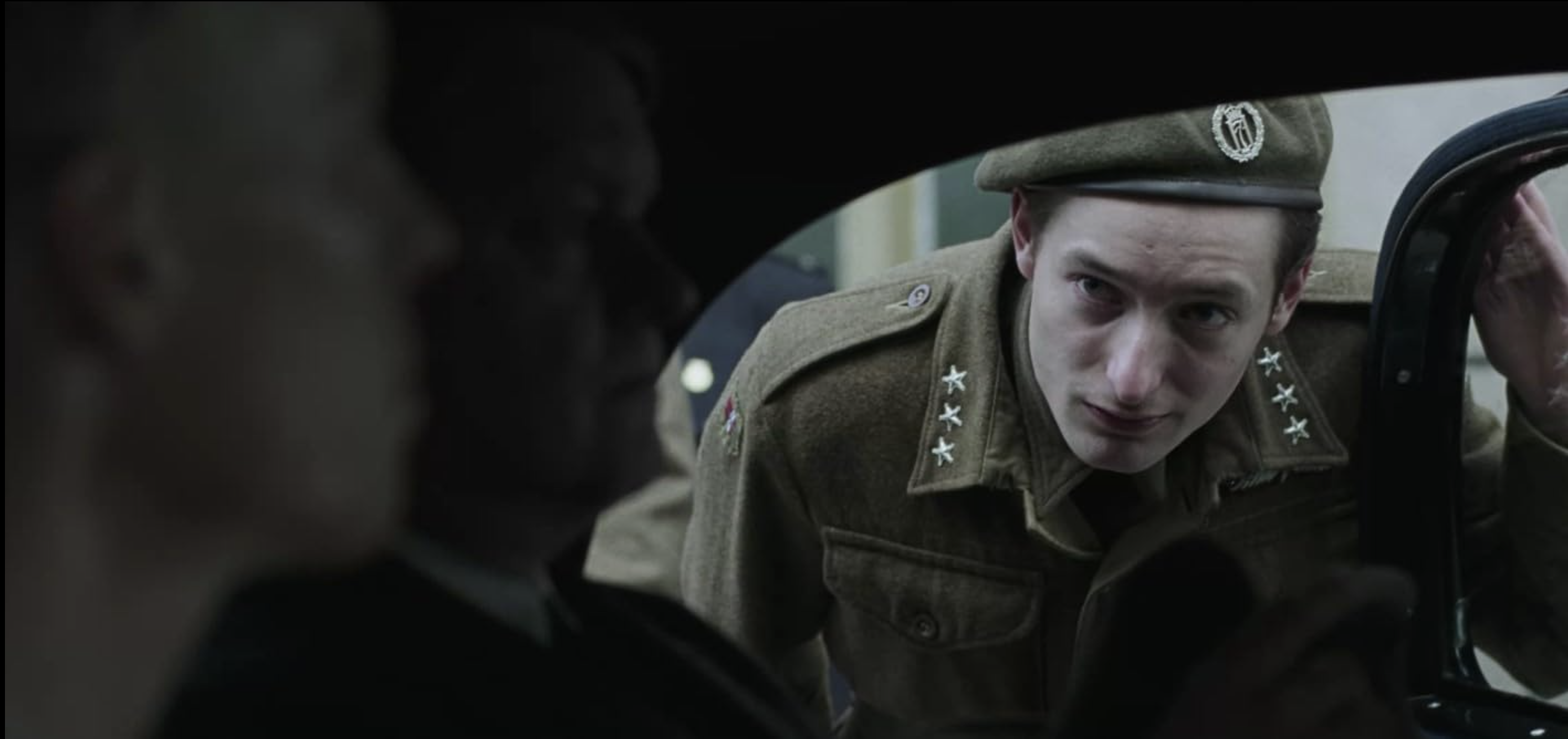

There are some similarities to what the Norwegian Gunnar faced in 1940 and what we U.S. citizens face today at the beginning of Donald Trump’s second presidential term.
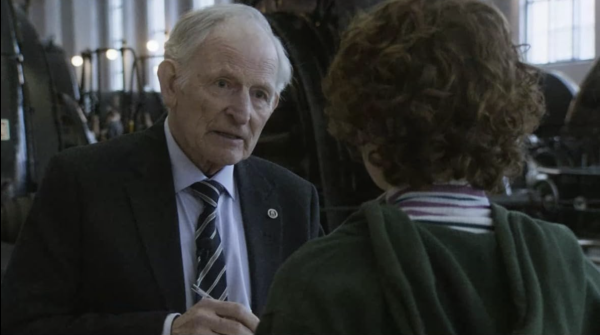
Near the end of last month, I wrote about “the murkiness of our values.” So when I heard the central character, Gunnar Sønsteby (Sjur Vatne Brean when younger; Erik Hivju as an older guest lecturer) in the excellent 2024 Norwegian film Number 24, say to a group of students, “Let’s talk about values,” I was keen to hear what followed. Almost immediately afterward—still near the beginning of the film—he says this:
I went to the same school as you over 70 years ago. We lived a democracy. But some of us felt it starting to tighten around us. Does everyone here feel secure? ... I also felt most secure. All companions of mine, they also felt secure, right to when we were not any longer. . . .The Germans trooped in the 9th of April 1940. They needed barely 800 soldiers to take over Oslo. Yes, about twice as many people are sitting here. In a war, you have to figure out if you want to accept the situation you are in and to embrace what’s going to become your new reality or stand up against it and thus risk everything. I continued to go to work, but I had a hard time concentrating. . . . We were so damn unprepared. And I promised myself that I would never again be so unprepared for anything. (Film quotes are taken from filmscript.)
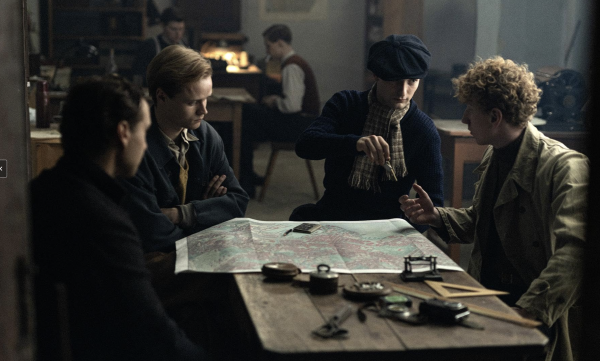 Philip Helgar, Benjamin Myhre, Ulrik William Græsli, and Sjur Vatne Brean
After the elderly Gunnar speaks these words, I’m really hooked. Hooked because there are some similarities to what the Norwegian Gunnar faced in 1940 and what we U.S. citizens face today at the beginning of Donald Trump’s second presidential term. Do we today feel “secure”? Are we in a similar position to that of Gunnar in 1940, i.e., “Do “you have to figure out if you want to accept the situation you are in, and to embrace what’s going to become your new reality? Or stand up against it and thus risk everything”?
I’m not stating that Trump and his followers are Nazis or that they will be as bad as the Nazis. But already two weeks into the new presidency, there is plenty for lovers of democracy to be scared about—all the new executive orders, Trump’s cabinet picks, his pardons of those convicted of January 2021 crimes, his immigrant deportation plans, etc. In "New Research Indicates Trump-Hitler Comparison Is Not Outlandish" (October 2023), I indicated that the Trump-Hitler comparison was greater than I realized in 2016-17. Now, in February 2025, the likeness between the two men seems even more acute than I indicated in late 2023. So who knows what the near future—until Trump’s presidency is over—will reveal?
Number 24 (originally the WW2 code name of Gunnar and his age when he joins the resistance) starts and ends with his modern-day guest lecture to what appears to be Norwegian college students. But most of the film deals with his actions against Nazi occupiers. These activities really occurred, and the movie is based on the hero’s real-life actions. At the end of it these words appear on the screen: GUNNAR SONSTEBY WAS NEVER ARRESTED BY THE GERMANS. HE CONDUCTED MORE THAN 20 SABOTAGE MISSIONS DURING THE WAR. HE IS THE HIGHEST DECORATED NORWEGIAN CITIZEN AND THE ONLY ONE TO RECEIVE THE WAR CROSS WITH THREE SWORDS. Thus, he was Norway's most decorated civilian war hero.
In that many viewers might not be fully aware of Norway’s predicament in WW2, a brief summary of its history seems in order. After Nazi Germany began the war by invading Poland in September 1939, the Nazis expanded it in the spring of 1940 by occupying numerous other countries in western Europe, including Norway. The Norwegian occupation was aided by Vidkun Quisling, a local Nazi sympathizer who briefly held power in early April until being replaced later in the month by the German Nazi official Josef Terboven. (The earlier Norwegian government, including its king, escaped to Britain, to where on a few occasions Gunnar flew.)
In early February 1942, however, Quisling was appointed minister president of a Nazi puppet government, and from then until the end of the war carried out German orders as directed by Terboven. (Near the end of the film, Gunnar is shown accompanying Quisling on his way to brief Norwegian imprisonment before his execution later in 1945.)
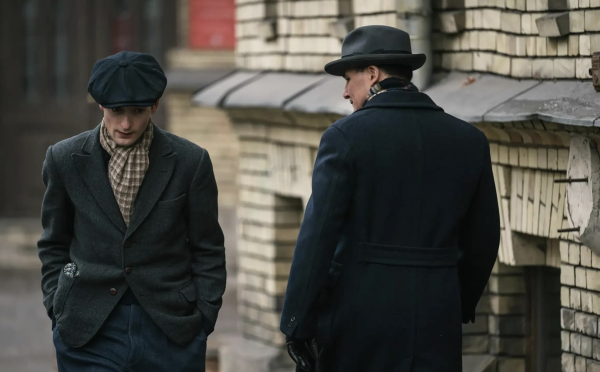 Sjur Vatne Brean
Although most of the film deals with the heroic actions of Gunnar during the war, the heart of it—the center of its moral core—comes towards the end in a question-and-answer section of the older Gunnar’s lecture, especially involving his exchange with a female student.
She asks him if he didn’t kill some Norwegians during the war, on “82 occasions” to be exact. He responds that although he didn’t keep count, that number is “probably correct.” But he defends his actions, saying, “We took particular individuals who were committed Nazis and those who were about to do something that would ensure Norway was unable to be free again.”
She then asks him if he ever considered a non-violent approach, one like that employed by Gandhi. He answers, “Non-violence is all well and good in theory. But that can't be done if your country is attacked by those with contempt for humanity.”
Later on she reveals that her great-grandfather's brother had been killed by the Norwegian resistance, apparently for “snitching.” And she hopes that Gunnar can tell her something about his case. He responds that “there was a lot of that” during the war and asks for the name of her relative. She tells him, “Erling Solheim.” He denies any knowledge of the case, but the film makes clear that he does remember it and that Erling was a neighbor and former friend who offered the “State Police” help in finding and arresting Gunnar.
The head of that agency was the Norwegian Karl Marthinsen, who Gunnar says “was responsible for the Holocaust in Norway. He sent the Norwegian Jews to concentration camps. You can probably call him the biggest mass murderer in recent Norwegian history.”
Gunnar was aware that if he were arrested, he would probably be tortured, and he did not know what he might reveal if that occurred. So aware was he that if caught, he was ready to commit suicide as instructed by those above him in the resistance movement. (Near the end of Number 24, the elderly Gunnar seeks out the girl student and perhaps tells her that he did order the killing of Erling Solheim, but the film does not reveal the content of their conversation.)
I earlier mentioned that Gunnar’s exchange with the female student was the moral heart of the film. And this is so, and also its central values question, because it’s hard to think of any other inquiry that is more important than “When, if ever, is it justified to take another human life?” Whether it’s in wars, capital punishment, or merely self-defense, our answers are central to our very existence.
Personally, I’ve never felt compelled to kill (I was in the military during peacetime and never had my life threatened). Generally, I admire Gandhi and Martin Luther King, Jr., and think that if non-violence will work, it should first be tried—too many people have been killed in foolish wars and violence. I also greatly admire Dorothy Day, who was a pacifist even during WW2.
However, perhaps Gunnar was correct when he asserted that "non-violence is ideal in theory." But that can't be done if your country is attacked by those with contempt for humanity.” And perhaps Nelson Mandela was right when, although he started out hoping to employ Gandhian non-violence, he eventually concluded that the racist apartheid system in South Africa left his political group “no alternative to armed and violent resistance.” And perhaps the German Lutheran minister Dietrich Bonhoeffer, despite his fondness for the ideas of Gandhi, was right in supporting the assassination of Hitler--and being hanged at age 39 for the offense.
Concerning President Trump and his supporters it is difficult to know how far they will go. We can hope that it will not be as far as some of us fear—see my "The Trump Voters May Be Better People than You Think." But resistance to many Trumpian policies, opposition preferably of the non-violent type, rather than acquiescence, is required--required if we wish to maintain a life-affirming democracy.
