

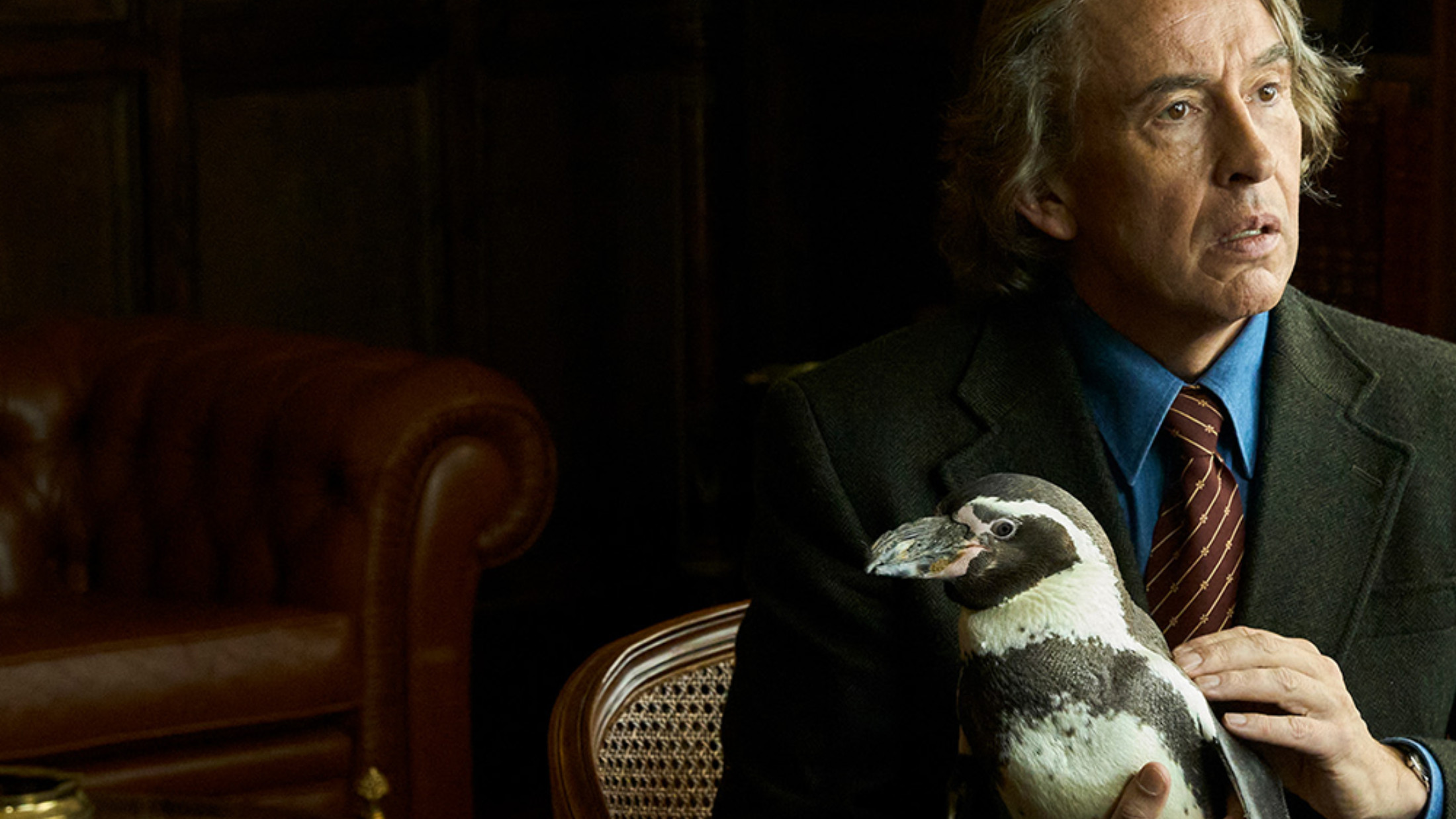

Although Penguin Lessons has serious lessons to teach us—including the importance of opposing anti-democratic tendencies in our own country—the film has many comic moments.
The Penguin Lessons (2024), now available on Netflix, has three valuable lessons to teach us:
- About the authoritarian military government imposed on Argentina in 1976;
- about the wondrous world—and often companionship—of non-human creatures; and
- insight into what our present climate policies are doing to non-human life throughout the world.
We should also note that as part of its fight against communism and leftist movements in Latin America, the USA backed the Argentinian military government that remained in power until 1983. This military junta, plus police and death squads, unleashed right-wing terror that included seizing suspected citizens, torturing them, and making some just “disappear.” A “ballpark” figure of around 25,000 killed or “disappeared” by the junta seems tenable. According to one source which appears accurate, “the primary targets were communist guerrillas and sympathizers but also included students, militants, trade unionists, writers, journalists, artists and any citizens suspected of being left-wing activists who were thought to be a political or ideological threat to the junta.”
The film is based on the same-named 2016 memoir by Englishman Tom Michell, who also co-wrote the filmscript. Both works deal mainly with his few-years experiences at St George's College (actually more than a “college,” and better described as a private, learning institution that included pre-college preparation) in Buenos Aires. These events included his interactions an oil-covered penguin he cleaned up and brought back from a beach in neighboring Uruguay.
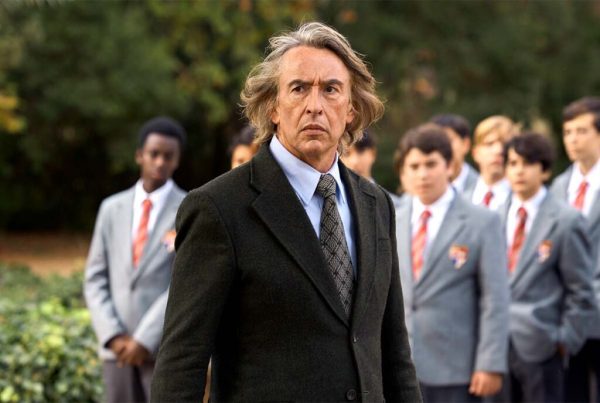
The movie is clearly sympathetic to the anti-military opponents of the regime. Michell (English actor Steve Coogan), who is clearly the main character, says at one point, “Just for the record, fascism is one of my least favorite things.” And the grandmother (Vivian El Jaber) of Sophia (Alfonsina Carrocio), both other important positive characters, notes that “the military, they take you just for thinking another way. They don't need a reason.” (Film quotes are taken from the filmscript.) Later, we see that same grandmother marching with an important protest group, the Mothers of Plaza de Mayo, who protested against the “disappearance” of their children.
In both the memoir and film, a central figure is the penguin, named by Michell as Juan Salvador. In that we humans don’t know enough about what goes on in animals’ brains, we can only imagine what is going on in Juan Salvador’s as he waddles around in Michell’s apartment and in his classroom, where the Englishman teaches English, including some English literature.
Illustrative of our not knowing how or what penguins think is the following exchange between Michell and another teacher, Tapio (Björn Gustafsson) from Finland, a science teacher. Michell says, “He's an animal. He just wants food and somewhere to sleep.” But Tapio responds, “No, no, no, no. You know, the penguins, they're very sensitive. It's a common misconception that penguins have no empathy. But I believe,at a certain strata, he is aware he owes his life to you.”
None of us—at least no one I know—can be sure of what’s going on in the mind of penguin Juan. But I like to think there’s a lot of wisdom in the outlook of poet Mary Oliver, who believes there are more similarities between us and other non-human forms of creation than most of us believe.
In an interview, writer Michell said that “said that he wished to see people become more responsible for the environment and take care of it.” The main environmental culprit in The Penguin Lessons is the spill that drenches Juan Salvador in oil. To get some idea of how such spills are harming our planet, consider these statistics from the 2010 Deepwater Horizon spill in the northern Gulf of Mexico. [Source of info is the National Oceanic and Atmospheric Administration (NOAA)—the Trump administration has not yet gotten around to removing the information.] “Scientists estimated that the oil spill resulted in the death of
- Up to 5 trillion newly hatched fish
- Up to 84,500 birds of at least 93 species
- Between 4,900 and 7,600 large juvenile and adult sea turtles
- Between 55,000 and 160,000 small juvenile and hatchling sea turtles.
Wildlife recovery, cleaning, and rehabilitation is often an important part of oil spill response. However, wildlife is difficult to find and catch, oil spills can happen over wide areas, and some animals (like whales) are too big to recover. Unfortunately, it’s unrealistic to rescue all wildlife impacted during oil spills.”
Biodiversity, it seems, is important to slowing down climate change. As the British natural historian David Attenborough narrates in Netflix’s “A Life on Our Planet” (2020): “To restore stability to our planet, we must restore its biodiversity. The very thing that we’ve removed. It’s the only way out of this crisis we have created.”
In addition to the important truths that The Penguin Lessons manifests for us, it is a well-acted and enjoyable film. Among its other actors, there is Jonathan Pryce as the headmaster of St George's. Among his earlier works was his excellent portrayal of Pope Francis in The Two Popes (2019). And the movie’s director is Peter Cattaneo, best known for his earlier award-winning Full Monty (1997). Although Penguin Lessons has serious lessons to teach us—including the importance of opposing anti-democratic tendencies in our own country—the film has many comic moments. At least three of its leading performers—Coogan, Gustafsson, and El Jaber—are comedians as well as actors, and at times they, especially the first two, inject humor into their acting. Summing up: watching The Penguin Lessons is both instructive and pleasant.
