



This film is important because of the light it shines on the motivations of corporations--if capitalism has “no moral or transcendental ethic,” then there is always the danger that profitability will come before anything else, including human life.
The 2024 film “Relay,” now on Netflix, is complex, but important. Important because it once again indicates that we must be wary of corporations. As Wendell Berry wrote in the early 1990s: “We live in a time when technologies and ideas . . . are adopted in response not to need but to advertising, salesmanship, and fashion. . . . The first duty of writers who wish to be of any use even to themselves is to resist the language, the ideas, and the categories of...ubiquitous sales talk, no matter from whose mouth it issues. But, then, this is also the first duty of everybody else,” the duty to resist “these hawkers of guaranteed satisfactions, these escape artists, these institutional and commercial fanatics.”
The conservative economist Milton Friedman once wrote, “The social responsibility of business is to increase its profits.” And Daniel Bell in his The Cultural Contradictions of Capitalism stated that “in its products and in its advertisements, the corporation promotes pleasure, instant joy, relaxing, and letting go,” and that this situation left “capitalism with no moral or transcendental ethic.”
Since these two observations were made, there have been plenty of instances of corporations putting profits first. One need only mention Purdue Pharma’s marketing of OxyContin, the company that “put profits first. Before any ethical considerations. Before the interests of people. Even if it killed them.”
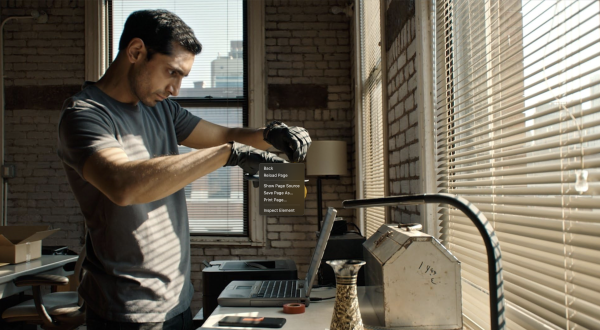
The story of “Relay” is about an apparent whistleblower, Sarah Grant (Lily James of Downton Abbey fame), who says she changed her mind about whistleblowing. She had worked for a biotech company, Cybo Sementis Research Institute (CSRI), and here (in her own misleading words) is her story:
I was in a research group developing a new strain of insectresistant wheat. Um, a foodsafety report came back with disturbing data about side effects. I told my bosses. Next thing I knew, I’d been reassigned and later dismissed. Production of the new strain has gone ahead, but these findings have been suppressed. Um, but I was able to get a copy of that food safety report out of the building...In a small number of cases, there were extreme allergies, anaphylaxis. And in longerterm cases, diverticulitis and cancer well above base rate. They project massive worldwide sales. Thousands of people will be affected. But without the information I have, it will be impossible to trace it back to the food people have eaten.
She later adds that she “wanted to do the right thing. But then the intimidation started. Last night, they set my car on fire.” (Film quotes are from the filmscript.)
She tells her apparent history with CSRI to Ash (award-winning British actor Riz Ahmed), who uses Telecommunications Relay Services (TRS), a real free U. S. “government-mandated program that connects deaf, hard of hearing, or speech-disabled callers with standard telephone users. A Communication Assistant (CA) acts as an interpreter, either typing spoken words to the deaf user or voicing typed messages back to the hearing.”
The complexity of the movie stems from Sarah misleading Ash about her background with TRS. Actually, she is working for the corrupt Optimo Pharmaceutical, which stands to benefit from TRS’s research and (like Purdue Phrama) puts its profit-making before any concerns about the safety of its product--or before any other ethical concerns.
As mentioned in this review’s beginning, this film is important because of the light it shines on the motivations of corporations--if, as Bell writes, capitalism has “no moral or transcendental ethic,” then there is always the danger that profitability will come before anything else, including human life.
To illustrate this insight, let’s examine the background of a factual whistleblower, Frances Haugen. In 2021, according to Time magazine, she disclosed tens of thousands of pages of internal Facebook documents indicating how the corporation “contributed to harms ranging from its impact on teens’ mental health and the extent of misinformation on its platforms, to human traffickers’ open use of its services. The documents paint a picture of a company that is often aware of the harms to which it contributes—but is either unwilling or unable to act against them.”
As might be expected, “Facebook has rejected Haugen’s claims that it puts profits before safety.” But the Time piece about her indicated that she “had a strong moral compass.” It also stated that “you have to accept when you whistle-blow like this that you could lose everything. You could lose your money, you could lose your freedom, you could alienate everyone who cares about you. There’s all these things that could happen to you.” (With all the wealth and power that a corporation like Facebook has, the Time assertion sounds true.)
The Time article, however, makes some attempts to remain balanced, noting Facebook’s and other objections to Haugen’s whitleblowing.
The movie’s acting is excellent, especially that of the English actor Riz Ahmed, who along with Lily James is one of the stars of the film--he is in his mid-40s and of Pakistani and Muslim background, and is also a rapper. Scottish director David Mackenzie also does a fine job in this suspenseful film.
