


My recent rethinking about pacifism has not convinced me that killing is always wrong.
Witnessing the present wars in Gaza and Ukraine, plus viewing the Indian film Raazi (2018, now on Amazon Prime) has led me to rethink my stance on pacifism. I served as an officer in the army for almost two years right after John Kennedy was elected president. But I would have fled to Canada rather than participate in the Vietnam War. Yet, I never considered myself a pacifist, and always thought that I would have fought against Hitler in World War II.
Nevertheless, I had admired pacifists like Leo Tolstoy (in his latter years), Gandhi, Dorothy Day, and Martin Luther King, Jr. Five years ago in "A Memorial Day Lament for Capt. Wilfred Owen, Sgt. Joyce Kilmer, and the Needless Dead of Foolish Wars," I quoted Ian McEwan’s novel Black Dogs (1993) where his main character “was struck by the recently concluded war [World War II in Europe] not as a historical, geopolitical fact but as a multiplicity, a near-infinity of private sorrows, as a boundless grief minutely subdivided without diminishment among individuals who covered the continent like dust….For the first time he sensed the scale of the catastrophe in terms of feeling; all those unique and solitary deaths, all that consequent sorrow, unique and solitary too, which had no place in conferences, headlines, history, and which had quietly retired to houses, kitchens, unshared beds, and anguished memories.”
At least, I added, “the war McEwan writes of (WWII) was fought against a major evil, Adolf Hitler’s Nazi regime, and such a fight was more justifiable than WWI.” More justifiable, perhaps, but the Allied (mainly U. S.) bombing of cities such as Hamburg, Dresden, Tokyo, and the A-Bombs on Hiroshima and Nagasaki make us pause just as they did the monk and poet Thomas Merton. He once stated, “If a pacifist is one who believes that all war is morally wrong and always has been wrong, the I am not a pacifist.” But, as George Woodcock explained about Merton, although he did not completely reject the Catholic defense of the “just war” theory, he thought that twentieth-century war, with its massive bombing and other tactics, no longer could be justified by such a theory.
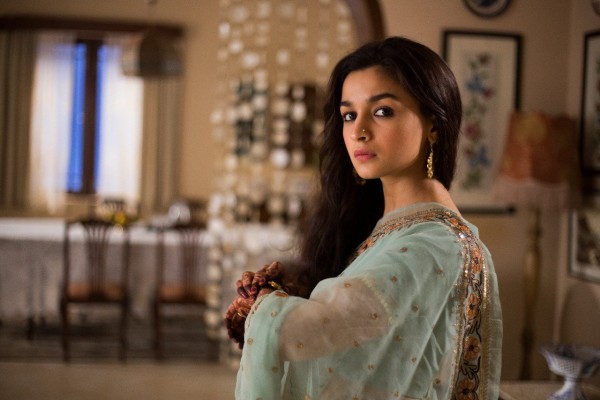
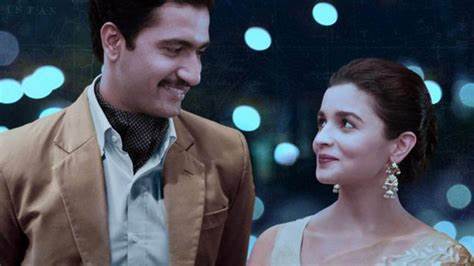
Catholic theologians had developed the theory, but one of its criteria was that the end had to be “proportional to the means used.” And, as with Merton and WW2, my problem with the Israeli war in Gaza, the Russian war in Ukraine, and the Indian film Raazi is one of proportion. I just don’t see how whatever aims Israeli Prime Minister Benjamin Netanyahu, Russia’s Vladimir Putin, or Sehmat Syed (English actress Alia Bhatt and the main character in Raazi ) may espouse can justify the killing (and in Gaza’s case, starvation) they oversee or commit.
Since developments in Gaza and Ukraine are more familiar to most readers of this magazine, let’s begin with an explanation of the less familiar film Raazi, which has received many positive reviews. It is set mainly in 1971 and is based on the 2008 novel Calling Sehmat by Harinder S. Sikka, which itself fictionalizes a true story–being made a decade later than the book, amid the nationalistic rule of Prime Minister Narendra Modi (2014-Present), the movie seems even more nationalistic than the book. (In the novel, for example, “Sehmat learnt of her father’s role in easing tensions between Hindus and Muslims and his efforts towards spreading harmony between the communities.” And Sehmat’s son wonders, “Why can’t the rest of the country learn from these people what it means to be an Indian?....How long will we suffer this caste and religious divide at the hands of our politicians?”)
The religious divide that the son speaks of is primarily that between Hindus and Muslims. In 1947 the British granted independence to their former colony of India. But the Muslim leaders in that territory feared they would be treated as a minority in an independent India, so (against the advice of Gandhi, who was assassinated in 1948 by a man who thought he was too pro-Muslim) they persuaded Britain to divide their former possession into two states, and one became India, where Hindus were dominant, and the other Pakistan, where Muslims were the majority. (Pakistan itself was divided into two parts, West Pakistan and East Pakistan, which were separated from each other by parts of India until 1971, when India helped East Pakistan become the independent country of Bangladesh.)
The main problem, however, was that Muslim and Hindu communities were scattered throughout British India, and conflict between the two groups occurred right away. One source estimates that because of it “15 million people were displaced and an estimated one million died.” The war that broke out in 1947 between India and Pakistan was also known as the First Kashmir War because Kashmir was a central locus of the conflict.
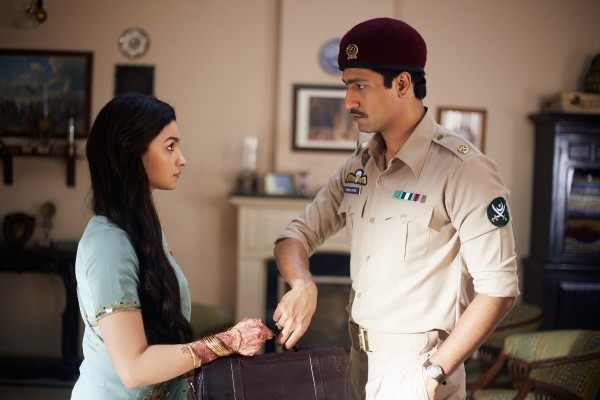
Sehmat is the daughter of a Kashmiri Indian freedom fighter, Hidayat, who also happens to be a Muslim. He dies of cancer early in the film, but not before he arranges for daughter (and college student) Sehmat to carry on his work as an Indian spy who passes on Pakistani information to the Indian intelligence agency. To further her new goal she ceases her college studies and marries the youngest son (Major Iqbal Syed) of Pakistani General Parvez Syed.
After her marriage, she and Iqbal reside in the Syed home in Rawalpindi, the location of Pakistan Army's headquarters, which is not far from Kashmir. In an often tense atmosphere she hides equipment in the house, examines secret Pakistani documents, and telegraphs Pakistani information to the Indian intelligence agency, headed by Khalid Mir.
A trusted servant of the Syeds, Abdul, discovers that Sehmat is a spy, and he rushes out to inform on her. She follows him and along the way grabs an army jeep and runs over him, and he dies not long afterward. A little later Iqbal’s older brother also becomes suspicious and Sehmat thinks it’s necessary to also kill him, which she does.
The two killings take a heavy emotional toll on Sehmat, but convictions put her country first, and she believes the killings are justified. Her father once told her, “There is no ME before the nation. I am the nation. I am India.” And she also believes that “nothing comes before the country, not even yourself.” After her husband discovers that she is a spy he says to her, “I love you, Sehmat. But love can never come before the country. And who knows that better than you?” (Film quotes are taken from the filmscript.)
Near the end of the film husband Iqbal is killed by a bomb ordered by Sehmat’s mentor (Khalid Mir) at the Indian intelligence agency–before having it detonated, he says “Nothing before the Nation.” Sehmat later berates him, saying, “Killing Iqbal was never part of the plan. Why? Why did you kill him? What loyalty do you preach and practice? You even gave orders to kill me! [which he did, but she avoided it] . . . I sacrificed my conscience–my life, for you! And you did not even hesitate to take my life.” Mir’s response? “That is the nature of war, Sehmat. Innocent lives are lost in collateral damage. But duringwar, except for the war, nothing else matters. No one matters. Not you. Not me. No one.”
To these words, Sehmat replies, “I don't understand this world of yours...Where relationships don't matter, and neitherdoes life. Before I become completely like you, I want out of all this.”
But these words are not the movie’s final message because there is a song often heard and whose words are flashed on the screen at the end (though not in the filmscript, but accompanying the credits) that include the following:
My country, my motherland, forever may you bloom.
Wherever in the world I roam, you will always remain home.
You are my purpose, my very being is you.
Wherever I may reach, my reason remains you.
I will meet each peril before it touches you.
My life at stake forever, always to protect you.
A Master’s dissertation on Raazi and several other Indian films summarizes the nationalism that often radiates out of Raazi and connects it to the rule of the nationalist Prime Minister Modi. Since the 19th century, nationalism has often fueled the toxic mix that led to wars, including World War I, where it is often listed as one of the main causes of the war.
I wrote my Ph.D. dissertation on one of Russia’s chief 19th century critics of nationalism, the philosopher Vladimir Soloviev. And later on before Leo Tolstoy’s death in 1910, the great writer also became a severe critic of nationalism, wars, and violence. (He also became a strong influence on the much younger Gandhi, who in turn strongly influenced the civil disobedience of Martin Luther King Jr.)
A dozen years ago I wrote about “true patriotism” and differentiated it from nationalism, indicating there could also be a non-violent patriotism. The main problem with Raazi–and Ukraine and Gaza–is all the killing and suffering, the disproportionate violence, that the film and the wars exhibit. They remind one of the lines from Indian-born writer Salman Rushdie’s The Moor’s Last Sigh: “In Punjab, Assam, Kashmir, Meerut–in Delhi, in Calcutta–from time to time they slit their neighbor’s throats....They killed you for being circumcised and they killed you because your foreskins had been left on. Long hair got you murdered and haircuts too; light skin flayed dark skin and if you spoke the wrong language you could lose your twisted tongue.”
My recent rethinking about pacifism has not convinced me that killing is always wrong. I have great admiration for the German Dietrich Bonhoeffer, who was executed for plotting to assassinate Hitler. Considering all the evil the German dictator ordered, including the killing of millions of Jews and others, I think Bonhoeffer was correct in so plotting.
But before I ever support killing in another war, the suffering and killing of civilians would have to be minimal–not like in Gaza or Ukraine–and I would never agree with Raazi’s Khalid Mir that “during war, except for the war, nothing else matters.” Morality matters. Our values matter. The deaths of innocent people matter. And all these considerations should be prioritized over nationalism.
