


In our terribly polarized political world, it is terribly important to know which sources, and not just historical ones, are trustworthy.
The Iranian film The Seed of the Sacred Fig (2024)—directed by Mohammad Rasoulof, who had to leave Iran to escape imprisonment—is a frightfully relevant film, and not just for Iranians. This production, now available on Hulu, is also germane to many other people living in other countries, especially the USA now in 2025. Clocking in at a tad over 2 hours and 45 minutes, some people may find it too long, but suspense is maintained throughout, and it was named the Best International Film of 2024 by the U. S. National Board of Review.
The main characters are Iman (Missagh Zareh), his wife Najmeh (Sohelia Golestani), and their two daughters, college-aged Rezvan (Mahsa Rostami) and high-school-aged Sana (Setareh Maleki). Iman is what is sometimes referred to as a “self-made man,” and is on track, after two decades of working for the government, to be elevated to the Islamic Revolutionary Court, founded in 1979, the same year that the Islamic Republic of Iran (the official name of Iran) came to power. The republic is a theocracy, with supreme power (since 1989) vested in Ali Hosseini Khamenei (now age 86), a Shia Muslim religious leader. (There are two major divisions in Islam, the Sunnis and the Shiites, with the latter in Iran being the strongest— 90 percent of all inhabitants. The only other country with the Muslim majority being Shiite is Iraq, where they make up about 60 percent of the population.)
According to one source, the Revolutionary Court was “founded to prosecute ideological enemies,” and “was known for its secretiveness, for coming to verdicts with ‘no jury, no defence lawyers and often no evidence beyond a confession extracted...by means of torture.’ From 1979-1989 the Revolutionary Court sent ‘more than 16,000 people’ to their deaths.”
Key to the plot is a recent promotion that Iman receives. As an early conversation between Iman and wife Najmeh reveals he’s become an “investigating judge” at the prosecutor’s office and before too long he’ll be transferred to the Revolutionary Court and become “an advisory judge and then a chief judge.” (Film quotes are taken from the screenplay, which accurately mirrors the film dialogue.)
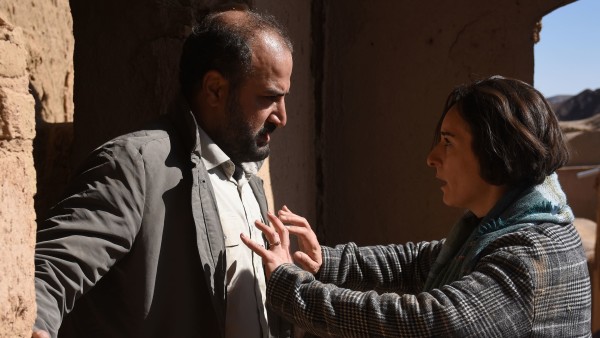
Iman is a devout Muslim who generally supports the regime’s theocracy. His backing of it is best revealed in an argument that he has with oldest daughter Rezvan. It occurs not long after the death of a young woman named Mahsa Amini in September 2022, which sparked unprecedented protests that continued until spring 2023, when they largely subsided. Iman tells Rezvan, “I agree there are some flaws [in our political system]. But the main point is that you and people like you don't know that the world is united against us! These [reports of the treatments of protesters] are all the enemy’s conspiracies...Your information is wrong, she [Amini] was not killed, she had a stroke. But the enemy makes you think that she has been killed! You’re going too far...I have been serving this system for twenty years. Me, and thousands like me are trying to protect this country from dawn to dusk, for whom? For you! Then you defend a series of thugs.”
He asks Rezvan if she doesn’t think he knows “what's going on better than” her. Her response? “No, because you’re devoted to this system, you believe in it. You don't see its flaws.” On another occasion, he describes protesters this way, “These dirtbags . . . eat this regime’s salt and then chant slogans against it too. We’ll get rid of them.”
Yet, Iman has some creeping doubts. He asks wife Najmeh, “Why do you think they chose me as an investigating judge?” But then answers himself, “They think I will do whatever they ask me,” and elaborates, “The previous investigating judge was fired when he did not sign the execution sentence of a defendant...Why didn't he sign it? Maybe the accused is innocent.” He further explains that his superiors think he will “sign off on that death penalty sentence,” regardless of his own opinion.
But in a previous dialogue he tells his immediate boss that he can’t approve a prosecutor's order until he has read the accused’s file. After his superior tells him weather “you read it or not, you must write the sentence and sign it” he responds, “I can't do that; I swore for justice!” Alarmed, his boss writes a note telling him, “Listening bugs.”
Despite his scruples and the advice of Najmeh not to sign, however, Iman finds a way to cooperate with his boss. Najmeh generally supports her husband against the criticism of his daughters, especially that of older sister Rezvan.
Central to the plot is a gun that his superiors give to him for personal protection.
An acquaintance tells Najmeh, “Some godless people have been identifying names, addresses, phone numbers, and details of investigating judges... in short, anyone who is serving this system. And they are posting them on Instagram, Facebook, and cyberspace, whatever. From there, it gets to enemy networks.” When he returns from work, he leaves the gun at home until he leaves for it again, but it mysteriously disappears, and the daughters become his chief suspects. After its disappearance, most of the remainder of the movie involves his search for it and the turmoil it causes his family, as his chief suspects are his daughters. He could be sentenced for up to three years in prison for the loss.
Thus far in this review we have focused on Iranian developments, but as I mentioned in the first sentence, the Hulu offering is a “frightfully relevant film, and not just for Iranians.” Let’s examine four aspects of its global relevance, particularly in the USA in 2025.
First, regarding religion, what Pope Francis said in a 2013 sermon is relevant. He warned Christians against making their religion into an ideology: “When a Christian becomes a disciple of the ideology, he has lost the faith...But it is a serious illness, this of ideological Christians...His attitude is: be rigid, moralistic, ethical, but without kindness.” He urged Christians “to remain humble, and so not to become closed.” And just as his words apply to Christians, so too are they pertinent to Muslims.
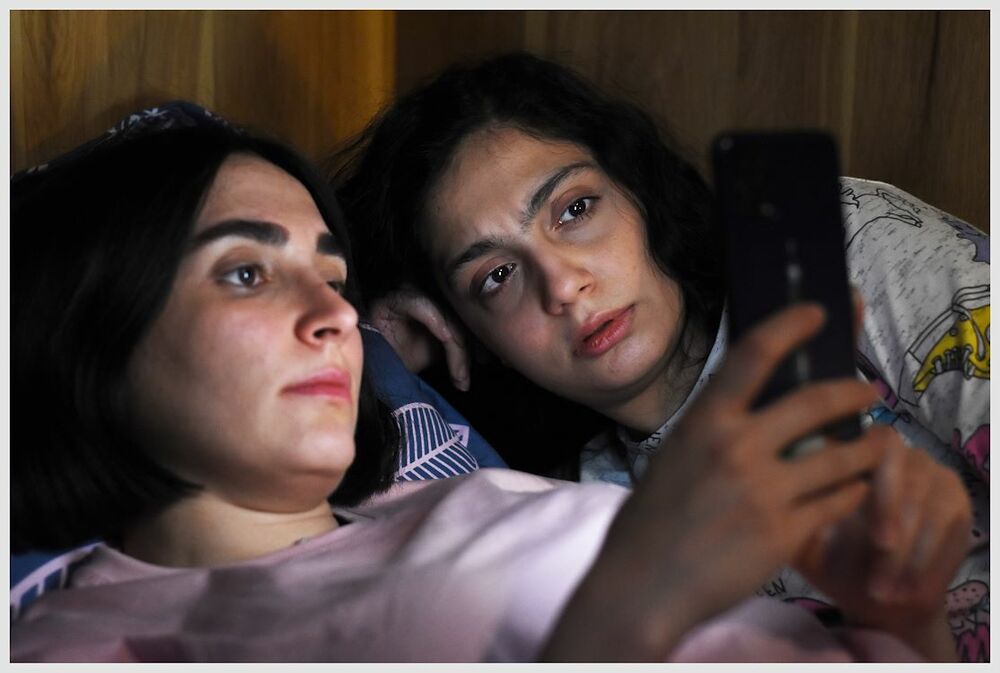
Secondly, there is the question of “Who, what sources, are your going to believe?” In his argument with daughter Rezvan Iman states, “Your information is wrong. . . . the enemy makes you think that she [Mahsa Amini] has been killed! You’re going too far.” In another home scene the television is on and broadcasts (in the words of the screenplay) “government propaganda.” Rezvan states its “suffocating us with lies, turn it off, for God’s sake.” Asked by dad Iman to repeat what she said, she replies, “I said they are lying all the time.” (One of her main sources of info during the protests are cell phone videos taken by protesters, some of which are replayed in the film under review.)
Several years ago on the History News Network I wrote, “Who and what to believe about...You furnish the ending. The question could be asked of almost any topic. The January 6 storming of the capitol building. The FBI seizure of boxes of documents from Trump’s Mar-a-Lago mansion. Global warming. The Inflation Reduction Act. As historians, one of our main tasks is to give students and other pursuers of history some guidance in terms of using various historical sources. How do we know which sources are more reliable than others? In our terribly polarized political world, it is terribly important to know which sources, and not just historical ones, are trustworthy. You don’t trust Fox News? Why not? What criteria are you using to make your judgment?”
Now, in mid 2025, still early in the second term of Donald Trump (“the most mendacious president in U.S. history”) and amid social media not known for its truth-spreading, this question of reliability is more important than ever.
Thirdly, there is the question of one’s career versus one’s ethical values. At a time when many U. S. federal workers (e.g. at the Environmental Protection Agency and National Institutes of Health) are witnessing their agencies’ work being reassessed to serve political goals, the query is relevant here as well as Iran.
Iman and wife are well aware of the material comforts that his serving of the Islamic government has brought him and will bring him if he remains a faithful to it. And his immediate boss reminds him of the rewards he has received. At one point he asks Iman, “Do you want to turn your back on your own progress and success, your wife and children? Do you know how many people were trying to be an investigating judge in this office?” At one point Iman says to daughter Rezvan, “Did you see anything but love and support from me? The best house, the best life...car, money.” At another point after reflecting on his new promotion, wife Najmeh says, “I am very happy, for the girls. Finally, our financial situation will improve. Hopefully, they will give us a three-bedroom house. They are all grown up now, it's difficult for them to share a room.”
Thoughts of financial security and increased comfort may not determine the married couple’s decisions about Iman’s work choices, but they certainly influence them.
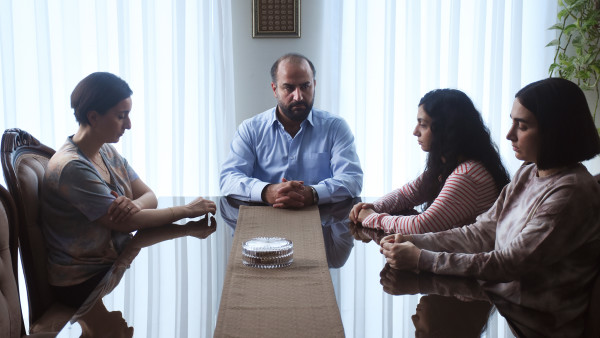
A fourth aspect of the movie which is relevant to life beyond Iran is that of family dynamics—the relationships between husband and wife and between them and their children. Najmeh generally supports her husband—daughter Sana even tells her, “You’ve always surrendered and gave him whatever he wanted”—but at times she defends her daughters against him.
After one of Rezvan’s college friends, Sadaf, gets shot “with metal pellets in the face” and gets arrested Iman asks Najmeh, “Why does Rezvan have such friends?” To which his wife responds, “She can't do an entry test for making friends...The poor girl didn’t do anything at all.” But he remains convinced otherwise and says, “It is enough that she got arrested at a gathering.”
Najmeh tries to explain to Iman why their daughters think differently than their parents. He asks, “Why does Sana want to dye her hair at this age? blue! Why does she like to paint her nails?” His wife responds, “My dear, the world has changed, young people think differently... At this age, they are influenced by their classmates, friends.” But he objects, that they “shouldn’t be friends with such people” and “the world has changed, but God hasn’t changed. God's rules have not changed.”
Another major cause of the generational difference is the sources of their information (see above). For example, while the parents rely more on television—controlled by the government—the two daughters rely more on cell phone depictions, privately recorded.
In summary, The Seed of the Sacred Fig is a well-acted film that gives us plenty to think about. Which includes the role of religion in public life, the sources of our information and political views, our work and ethical views (providing we have such) and their interrelationship, and, finally, family and generational dynamics.
