


The series is set in Berlin between the Christmas Market terrorist attack of 2016, which occurred in that capital city, and a few years later.
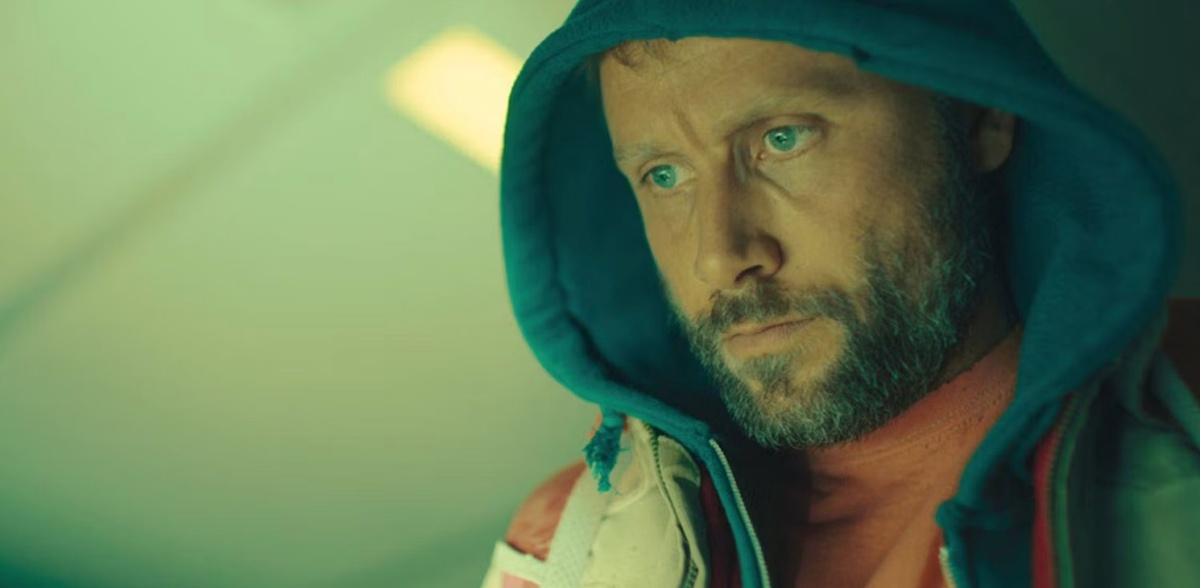
The Netflix six-part German crime thriller “Sleeping Dog”—adequately dubbed into English—keeps us guessing until the last episode. In Episode 1 we learn that a Berlin judge has been killed, and a young Moroccan Muslim, Mussa Basher, who was being held for his murder, committed suicide inside prison. But did he really kill the judge or is he being framed? And if so, why? In addition, one of the detectives, Mike Atlas, who helped put Mussa in prison, has experienced some sort of memory-loss shock, and it isn’t until the final episode that he finally figures out what happened regarding the judge and who was really responsible.
But in addition to all of the who-done-it aspects of the series, we learn quite a bit about modern Germany—the series is set in Berlin between the Christmas Market terrorist attack of 2016, which occurred in that capital city, and a few years later. The attack was made by a North African who hijacked a truck and crashed it into the market, killing 12 and injuring 50 more. The Islamic State organization claimed responsibility.
The first thing that strikes us is in “Sleeping Dog” is that Mussa and his brother Abou are both Muslim migrants from North Africa and their main prosecutor, Corinna, is accused by assistant (Jule) of being a “racist.” Corinna associates the brothers with gang members who are “macho idiots who can't control their egos, who beat up their women and drive around the city in their big-ass cars...It's genetic,” she claims. (Film quotes are taken from the script, to which the series adheres.)
Like the United States, Europe has been having a major problem dealing with immigrants and refugees, until 2022 mainly from the Middle East and North Africa. Like those desiring to get into the USA, many of those wanting to enter Europe are fleeing desperate conditions like war or hunger, and there are no easy solutions to crafting humane, intelligent, compassionate policies to deal with the problem.
In recent years, I have written about this situation, most recently in a review of the film “The Swimmers.” It is about two sisters from war-torn Syria (a Middle East, overwhelmingly Muslim country) who risk a perilous sea crossing to seek refuge in Berlin. In that review I indicate that Chancellor Angela Merkel’s refugee policy was more compassionate than that of many other European leaders. (As with prosecutor Corinna, it was also too compassionate for Donald Trump, who referred to Merkel’s policy as a “catastrophic mistake” and claimed that because Germany had taken in “all of those illegals” German crime had increased. )
In fact, between 2015 and 2019, 1.7 million people applied for asylum in Germany, which increased its refugee population to the fifth highest in the world. According to “Muslim Life in Germany 2020,” somewhere around five and a half million people “with a migration background from a predominantly Muslim country of origin” lived in Germany in 2019, thus making up around six and a half percent of the German population. Currently, in Berlin alone there are more than 80 Muslim mosques.
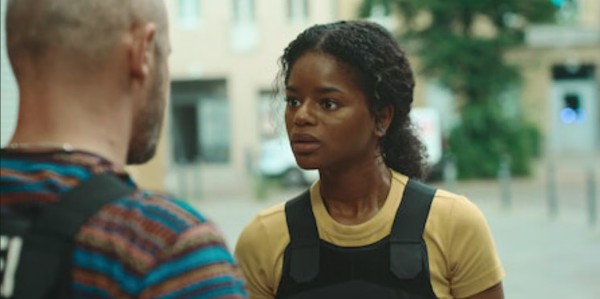 Melodie Wakivuamina as Britney Adebayo
More recently, since February 2022, the Russian attack on Ukraine has greatly exacerbated Europe’s refugee crisis. By mid October, Germany had already accepted a million Ukrainians. But their acceptance has not been as controversial as has been that of those of Middle Eastern or North African descent, partly because most of those are of Muslim heritage.
At the end of June 2023 the police killing of one with such a background, 17-year-old Nahel Merzouk, a French citizen of Moroccan and Algerian descent, set off more than a week of protests that rocked France. In general, backlash in a number of European countries on the part of those fearful that migrants and refugees will dilute European cultural and religious values has strengthened right-wing approaches.
In addition to ethnic, religious, and cultural fears, however, “Sleeping Dog” also stimulates thinking on a number of other issues. Among them are memory loss, family relations, prosecutorial and police methods, and homelessness (during months of his memory loss, Atlas sleeps on the streets or in a storage container).
Throughout most of the episodes Atlas’s faulty memory causes serious problems, ones which those with no experience with dementia or other memory loss would have trouble imagining or knowing how to encounter. Atlas’s problem causes special difficulty with his wife, Lenni, and his teenage daughter, Tinka.
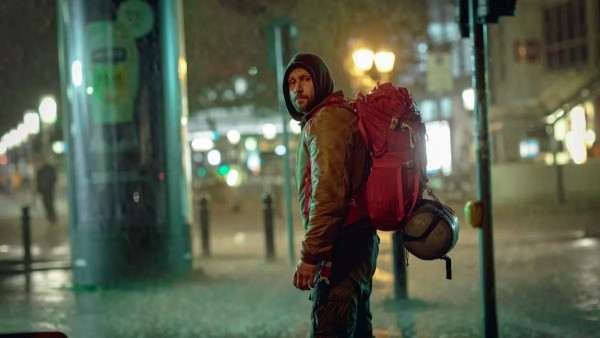 Max Reimelt as Mike Atlas
The series deals especially well with the latter and her relationship with her dad. Tinka is a sensitive girl who has a self-image problem—at one point she says, “I'm not beautiful. I'm fat.” Her words caused this reviewer to try to imagine how hard teenage life must be, regardless of one’s culture, for a girl who sees herself in such a way.
Observing prosecutor Corinna’s approach is especially interesting. From Episode 1 through Episode 5, we are left wondering why she is so determined to find the two African-born brothers guilty of murdering the judge. Is it racism? Is it that she desires a simple, easier solution to the crime rather than a complex, more drawn-out case? Is she deliberately covering something up? As with the famous Central-Park-Five case in 1989, criminal-justice arrests and prosecutions sometimes incarcerate the wrong people and do so for a variety of reasons, with racism sometimes playing a part.
The last issue that the series encouraged reflection upon was homelessness. According to a 2021 study, the Berlin homeless population was estimated at about 60,000. And, as in LA, it presented a serious problem. Not only is Atlas homeless—primarily by his own choice during his period of memory failure—but in Episodes 5 and 6 he spends some time at a homeless shelter and at a memorial service for a man who once spent some time there.
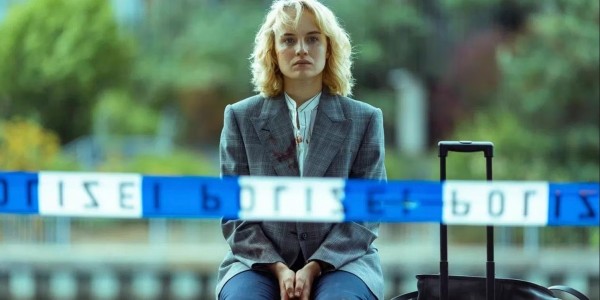 Luise von Finckh as Jule Andergast
Finally, just a personal observation. At one point in the final episode, Atlas is talking to daughter Tinka, and she reflects that he might go to prison for something he did. He admits that might be true. But she counters, “Yeah, but you were on [a] drսg.” To which he answers, “I was. It was my decision to take them. My decision, my responsibility...If you do something that doesn't feel right, and it takes over your life to the point where you take [a] drսg to deal with it, you gotta get out. Even if it means turning your whole life upside down. I just blindly kept going. That's what I did wrong.” I very much appreciated Atlas’s taking responsibility rather than trying to shift the blame on circumstances or someone else.
In summary “Sleeping Dog,” though not without its faults, is well acted, is complex and interesting enough to keep us guessing throughout the series, and it stimulates thinking on a number of important topics. Not a bad way to spend a tad over five summer hours.
