

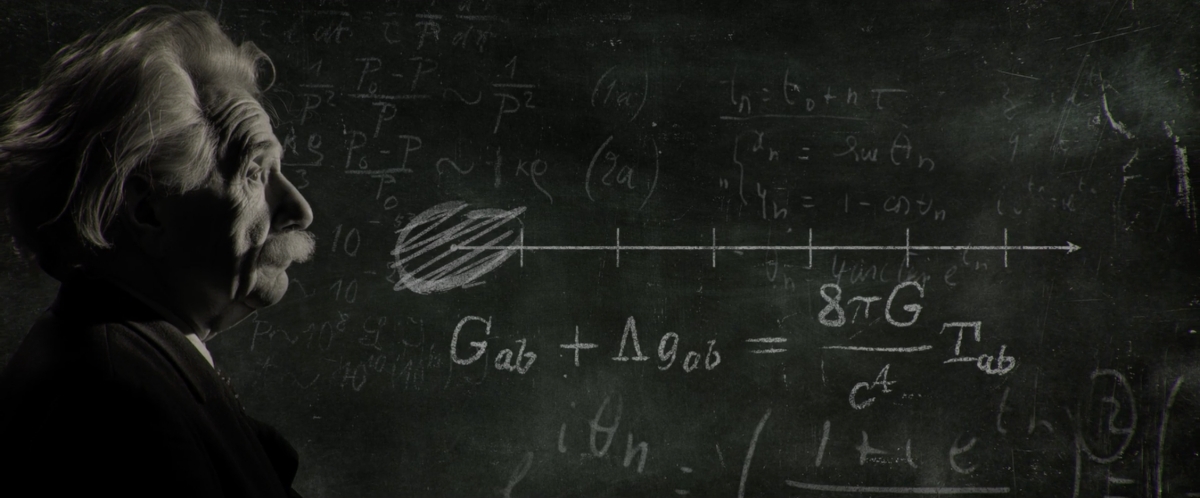

The film gathers its voices with a kind of deliberate grace, assembling not a chorus of agreement, but a constellation of minds drawn toward a shared intuition.
A Sypher Studios Production, in association with Mews Films
Reviewed by Peter McLaren
A review of The Story of Everything must begin where the film itself dares to begin—not with data, nor with argument, but with an invocation that feels almost liturgical.
The screen opens upon a message carried across two millennia, attributed to Cicero in De Natura Deorum:
“The celestial order and beauty of the universe compel me to admit that there is some excellent and eternal Being who deserves the respect and homage of men.”
It does not arrive as a mere quotation. It arrives like a bell struck in the dark—its resonance lingering, asking not to be believed, but to be reckoned with.
Then, a second voice enters—a woman’s voice, measured, precise, almost surgical in its calm. It does not soothe; it summons: “There are those in science who say the exquisite nature of the universe, the exquisite laws of the universe, are evidence of a designer. Does that view make sense to you”?
It lands like a gauntlet at the feet of the audience.
Not a question, really—but a challenge.
Not an invitation—but a threshold.
From this charged stillness emerges Stephen C. Meyer, not as narrator alone, but as a kind of cartographer of metaphysical conflict. His voice does not rush; it unfolds, tracing the deep fault line that has run beneath Western thought for twenty-five centuries.
Two stories, he tells us—two rival tellings of everything.
In one, the universe is the artifact of mind: a deliberate act, shaped by intelligence, borne of purpose, held together by an originating intention that precedes matter itself.
In the other, there is no author—only process: matter and energy, blind and unknowing, colliding, combining, arranging themselves through time into stars, into cells, into consciousness—without foresight, without aim, without design.
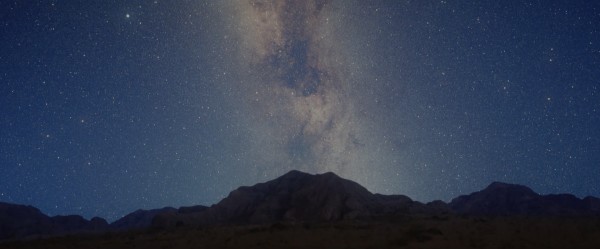
Between these two stories, Meyer suggests, we have long oscillated—not merely as thinkers, but as a civilization trying to understand whether it is spoken into being or merely assembled.
And then, like a shadow cast across this philosophical divide, appears Richard Dawkins—the film’s emblematic defender of the latter view. Not caricatured, but positioned: an intellectual presence, austere and unyielding, standing as the high priest of a cosmos without intention.
Yet The Story of Everything resists the simplicity of a duel.
The film opens in the charged space of public discourse. We encounter Meyer in widely circulated media appearances—on The Joe Rogan Experience podcast and in the adversarial theater of Piers Morgan’s debate program—where questions of origins, design, and meaning are pressed into the mainstream. Intercut throughout the film are familiar arguments made by figures of contemporary atheism, including Lawrence Krauss and Dawkins, whose confidence in a self-sufficient, unguided universe has shaped much of popular scientific rhetoric over the past several decades.
What is striking in these juxtapositions is not merely disagreement—it is a difference in philosophical posture. Dawkins speaks from within a framework that assumes the sufficiency of material explanations, even when those explanations remain incomplete. Meyer and those aligned with him, by contrast, begin from the conviction that explanation must follow evidence wherever it leads—even if it leads beyond the boundaries that materialism has historically set.
Though grounded in Meyer’s work—his long-standing challenge to what he and others term scientific materialism—the film does not proceed as a prosecutorial brief. It does not marshal evidence toward a single, crushing conclusion free of debate. Instead, it widens.
It becomes, gradually, a gathering.
The film gathers its voices with a kind of deliberate grace, assembling not a chorus of agreement, but a constellation of minds drawn toward a shared intuition. Among them are John Lennox, Michael Behe, and Peter Thiel, alongside others who move between the disciplines of physics, chemistry, and philosophy.
They do not appear as partisans so much as interpreters—each approaching the same reality from a different angle, each tracing, in their own idiom, the faint outline of something that exceeds the merely material. Empirical findings—once confined to the language of measurement and mechanism—are here allowed to breathe, to suggest, to gesture beyond themselves.
What emerges is not a single argument, tightly sealed, but a layered meditation: discoveries in molecular biology, in cosmology, in the mathematical structure of nature are drawn upward into questions of meaning, purpose, and origin. The data remain, but they are no longer mute. They begin, tentatively, to speak.
And in that speaking, the film invites us to consider whether the universe is not only intelligible—but, in some profound sense, addressed.
Scientists, philosophers, scholars enter—not as witnesses for a case, but as participants in an unfolding conversation. Their voices do not collapse into uniformity; rather, they converge around a shared unease: that the reigning materialist paradigm, for all its triumphs, may not reach deeply enough into the structure of reality to explain its most arresting features—its order, its intelligibility, its strange and persistent openness to meaning.
What the film stages, then, is not certainty, but pressure.
A sense that the old framework, though powerful, may be straining at its edges.
And so the central contest clarifies—not as slogan, but as atmosphere:
- atheism and theism, yes—but more profoundly,
- a universe that is spoken versus a universe that simply happens.
The film does not merely present these as positions to be weighed. It renders them as ways of seeing—two lenses through which the same cosmos appears either as a text filled with intention or as a phenomenon emptied of it.
In this sense, the opening sequence is not prologue but prophecy.
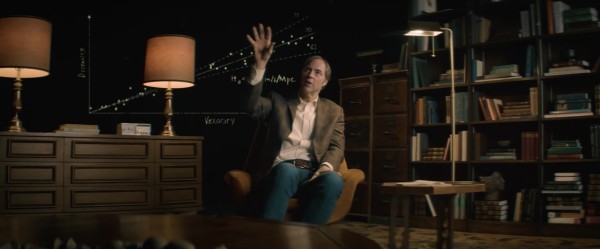
For everything that follows is already contained within it:
- the ancient voice insisting on order,
- the modern voice demanding justification,
- and the contemporary mind—our mind—caught between them, asked not simply to observe the universe, but to decide how it is to be read.
In its first movements, The Story of Everything does something rare. It restores to cosmology its oldest gravity—the sense that to speak of the universe is also, inevitably, to speak of meaning.
And it leaves us there, at the edge of that realization, where explanation begins to blur into interpretation, and where every answer risks becoming, once again, a question.
What begins as a provocation becomes a kind of intellectual convocation, drawing into its orbit scientists, philosophers, and scholars whose voices do not so much agree as resonate. They speak from different disciplines, different traditions, yet share a subtle and growing unease: that the reigning materialist account of reality—so powerful in its predictions, so elegant in its mechanisms—may nevertheless leave something essential unexplained.
Not a gap in data, but a thinning of meaning.
And so the film opens itself outward, becoming less an argument than an inquiry—one that circles, returns, deepens.
In its early movements, the film reaches backward—into a time when science itself was born not in defiance of belief, but in its shadow. The early architects of modern inquiry saw no contradiction between reason and reverence.
Figures like Johannes Kepler and Isaac Newton believed that the rational order of the universe was not accidental but bestowed—that the human mind could decipher the cosmos precisely because both mind and cosmos shared a common source.
To study the world was, in this view, to think God’s thoughts after Him.
The laws of nature were not merely regularities; they were signatures.
But the film does not linger in that harmony. It turns, as history turns, toward the nineteenth century—toward a transformation as profound as it is unsettling.
The universe expands in scale and contracts in meaning.
With the rise of scientific naturalism, the cosmos begins to shed its voice. What once appeared as intention becomes process; what once suggested design becomes the byproduct of blind forces unfolding over unimaginable time. The solar system is no longer crafted—it condenses. Life is no longer given—it emerges. Humanity is no longer called—it happens.
The film evokes this shift with a quiet severity. We are invited to contemplate a universe in which we are not authored but assembled products of impersonal forces that neither know nor care that we exist.
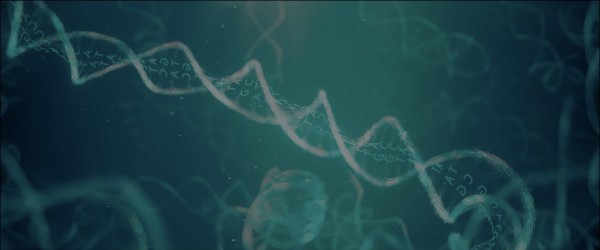
Here, the voice of Carl Sagan drifts through the narrative like a calm, cosmic resignation: if the universe is infinitely old, he suggests, then the need for a creator dissolve into the vastness of time itself. Eternity becomes explanation.
And with that, meaning begins to thin into silence.
The future, in this telling, is not culmination but exhaustion—a long, slow drift toward entropy, toward a final stillness where all structure dissolves into cold and darkness. A universe that began without purpose will end without remembrance.
And yet—here the film pivots again, almost imperceptibly.
For even as this materialist vision settles into place, the universe begins to whisper something unexpected.
Vesto Slipher appears, not as a revolutionary, but as a watcher of light. Studying the night sky, he notices something subtle yet profound: the spectral lines of the nebula of distant galaxies are shifted toward red, stretched as though the light itself had been pulled across an expanding distance. The nebula was moving away from us.
It is a small observation.
But it refuses to remain small.
For this redshift is not merely a technical anomaly—it is a clue. A fracture in the assumption of a static, eternal universe. A suggestion that the cosmos is not fixed, but moving—unfolding, expanding, carrying within it a history.
The film treats this moment with a kind of quiet awe. Light, the most constant of companions, has begun to testify.
From Slipher’s patient observations, the narrative begins to gather force, preparing the way for a more radical implication—one that will soon draw in Edwin Hubble and even confront Albert Einstein himself.
If the universe is expanding, then it has not always been as it is.
If it has not always been as it is, then it has changed.
And if it has changed, then it has a past—one that can be traced backward, step by step, toward a moment when all things were closer, denser, perhaps even unified. Space time itself was uniformly shifting, expanding, like a balloon being blown up.
The film does not yet name this moment outright. It lets it emerge, like a horizon slowly revealed through mist.
But the implication is already there, pressing against the edges of thought:
The universe may not be eternal after all.
It may have a beginning.
And with that possibility, the film circles back—quietly, inexorably—to the question with which it began.
If the universe has a beginning, what accounts for it?
If the laws of nature arise with the universe, what explains their existence?
If mind appears within a cosmos once thought mindless, what does that say about the nature of reality itself?
The Story of Everything does not rush to answer. It allows the questions to accumulate, to deepen, to take on weight.
Like light stretched across the ages, they arrive bearing the memory of an origin.
And the film, standing at that threshold, invites us not merely to observe—but to decide what, at last, the story is that we believe we are living inside.
A review of The Story of Everything must follow the film where it dares to go next—beyond its opening challenge and into the slow unfolding of an argument that feels less like a lecture than a widening horizon.
In the early decades of the twentieth century, the cosmos was still imagined as a grand, fixed cathedral—eternal, unmoving, complete. Even Albert Einstein, whose equations had bent space and time into a new geometry, believed the universe must be static. To make it so, he introduced a quiet adjustment—a “cosmological constant”—a kind of mathematical brace to hold the heavens still.
But the universe, it seems, had no intention of standing still.
Enter Edwin Hubble, peering through the great eye of the Hooker Telescope. What he saw was not stillness, but flight. The galaxies were not fixed stars pinned to a cosmic ceiling—they were drifting, fleeing, like lanterns carried outward on an invisible tide.
And more than that: their light had changed.
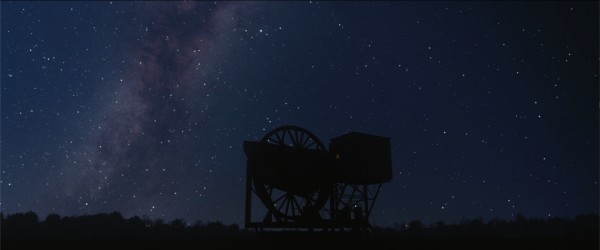
The colors had shifted toward red—the long, weary wavelength of light stretched thin. This “redshift” was not merely a curiosity. It was a message. The farther a galaxy lay, the more its light had been stretched, as though space itself were expanding, pulling the fabric of reality wider and wider. All the galaxies were moving away from us!
Imagine the universe not as a machine, but as a breath.
What Hubble saw was not galaxies fleeing into emptiness, but the after-effect of an exhale—space itself expanding like lungs releasing air. The redshift becomes the fading warmth of that breath, stretched thinner with distance and time.
And if we follow that breath backward?
We arrive at an inhale so profound it gathers everything into a single, silent point—a moment before moments, when the universe was not yet a chorus, but a single note waiting to be sung.
The Big Bang, then, is not merely an explosion. It is the first word of a sentence still being spoken.
In Meyer’s telling, this is more than physics—it is philosophical drama.
A universe that begins is a universe that invites questions.
A cosmos with a past suggests a cause.
A story unfolding suggests, at the very least, that reality is not indifferent to meaning.
And so Einstein, reluctant witness, becomes something like a character in a larger narrative: the mathematician who discovered that the equations he trusted were not describing a static monument, but a living, expanding story.
For what the universe now discloses is not stillness, but flight.
Everywhere, galaxies are moving outward—each from each, a great recession written in light itself. The cosmos is not a monument; it is an event.
And the mind, once it sees this, cannot help but perform the forbidden experiment: Run it backward.
Wind the clock of creation in reverse. Let the galaxies fall inward, their distances shrinking, their separations collapsing. A thousand years ago. A million. A billion. The great outward drift becomes a gathering. The scattered becomes dense. The distant becomes near.
Until—inevitably, inescapably—everything converges.
Not metaphorically, but physically. Not poetically, but mathematically.
- All matter.
- All energy.
- All space itself.
Compressed into a unity so absolute it strains the limits of thought.
If everything is moving apart now, then once—once—it must have been closer.
Closer still.
Until all things met.
Not an eternal equilibrium, unchanging and serene—but a beginning.
Einstein’s own equations had already whispered this possibility. By revealing that massive bodies curve space, he had transformed the universe from a stage into a structure—no longer a passive container, but an active, evolving geometry. The cosmos could stretch. It could bend. It could change.
And yet, this very dynamism carried a danger.
For if gravity alone ruled, if curvature only pulled inward, then the universe should have collapsed upon itself—drawn all things into a single, catastrophic embrace, a final and total coalescence.
But that is not the universe we inhabit.
We live, instead, in a cosmos threaded with distance—vast gulfs of emptiness separating star from star, galaxy from galaxy. Space does not merely yield; it resists. It opens. It expands.
There must be, then, not only gravity, but its counterpoint—an outward thrust written into the architecture of reality itself.
And that outward thrust speaks of a past.
A moment when the expansion began.
This was the thought Einstein resisted.
Not because the mathematics failed him—but because it succeeded too well. It led him to a conclusion he found difficult, perhaps even unbearable: that the universe is not eternal, not static, not self-contained.
But born.
He would later call his refusal to accept this implication his “greatest blunder.” Not an error of calculation, but an error of trust—a hesitation before the full weight of his own insight.
For the equations had done more than describe the cosmos.
They had given it a history.
A direction.
Perhaps even—though the film only dares to suggest it—a story.
And Einstein, standing at that precipice, glimpsed what it might mean for the universe not merely to exist, but to have begun.
Scientists worried about trying to theorize what an uncreated creator might look like given the implications now arising that the universe had a beginning.
There was a resistance to theological explanations. The vast majority of scientists wanted to find an eternal universe.
The narrative turns to Stephen Hawking, whose work in quantum cosmology sought to extend the explanatory reach of physics to the earliest moments of the universe. Hawking’s no-boundary proposal offered a vision of a self-contained cosmos, finite yet without a classical beginning, seemingly obviating the need for a creator. It was a bold and mathematically elegant attempt to render the universe fully intelligible within the framework of natural law.
In the 1960s, Hawking deepened the strange grammar of Einstein’s universe into something almost unbearable to imagine. A black hole, he showed, is not merely a massive object—it is matter driven to such extremity that space itself collapses around it. The curvature becomes so severe, so absolute, that even light—the swiftest messenger in the cosmos—cannot escape its grip.
Here, gravity does not pull; it imprisons.
Space does not hold; it yields.
And yet, in contemplating these cosmic abysses, Hawking glimpsed something far larger than black holes.
For if the universe is expanding forward in time—if galaxies drift apart, if matter thins and scatters into the vastness—then the mind, once again, is drawn into reversal.
Run time backward.
What was diffuse becomes dense.
What was scattered gathers.
What was stretched begins to fold inward upon itself.
The universe, in reverse, does not merely contract—it intensifies.
Matter crowds into itself.
Energy thickens.
And space, obedient to Einstein’s insight, curves ever more tightly around this mounting density, like fabric drawn into a tightening fist.
Until there comes a limit.
A point beyond which the equations themselves refuse to proceed—where curvature becomes infinite, density becomes unbounded, and the geometry of space-time collapses into something that can no longer be described within the terms that gave rise to it.
Hawking named this boundary with austere simplicity:
the singularity.
In proving that such a singularity lies in the past of an expanding universe, Hawking did something extraordinary. He showed that the cosmos is not merely old—it is finite in its history. Time itself, like space, is not an endless corridor, but a path with an origin.
And yet, the film lingers on a tension—almost tragic in its intellectual honesty.
For Hawking, having followed the mathematics to this precipice, spent much of his later work seeking ways around it, searching for models that might soften or evade the implications of a true beginning. It is as though he had discovered a door in the structure of reality—and then devoted himself to proving it need not be opened.
Not because the reasoning was weak, but because its consequences were immense.
Here, the film sharpens its philosophical edge.
For if one follows the logic of the singularity to its end, one arrives at a paradox that feels less like physics and more like ontology:
As we approach the beginning, the volume of the universe tends toward zero.
But zero volume is not merely small—it is the absence of space altogether.
And if there is no space, there is nowhere for matter to be.
If there is no time, there is no moment in which anything can occur.
The beginning, then, is not an event within the universe.
It is the boundary of the universe.
A limit where the categories of physics—space, time, matter, energy—cease to apply.
And so the ancient question, long deferred, returns with renewed force:
What brings a universe into being?
If the cosmos were eternal, the question might dissolve into the infinity of its duration. But a finite universe—one that begins—refuses such escape. It presses the mind toward causation.
Whatever begins to exist, the film suggests, does not do so unbidden.
But here, causation encounters a profound constraint:
Before the beginning, there is no matter to act, no energy to transform, no space in which processes unfold, no time in which causes precede effects.
The cause of the universe, if there is one, cannot belong to the universe.
It must stand beyond it—independent of matter, unbound by space, untouched by time.
Not another object within reality, but something of a different order altogether.
This is the problem the film circles with increasing intensity: the problem of the first cause.
Not merely how the universe evolves—but why it exists at all.
Not merely what laws govern it—but whence those laws arise.
If the universe came into being at a definite moment, then explanation cannot end within its boundaries.
It must cross them.
And yet, as The Story of Everything carefully—and almost patiently—reveals, this grand intellectual project does not dissolve the mystery of origins so much as relocate it, like a horizon that retreats as one advances.
Quantum cosmology, for all its elegance, does not abolish the question of beginnings. It refines it. It translates it into a more rarefied language—into fields, fluctuations, equations trembling at the edge of nothingness. But the deeper question remains untouched, waiting beneath the symbols:
Why these laws?
Why this order, rather than another—or none at all?
Why a universe that does not merely exist, but coheres, unfolds, and—most improbably of all—becomes intelligible to the very minds it has produced?
In its later movements, The Story of Everything presses further still, descending into the problem of fine-tuning—a domain where the question of origins acquires a new and unsettling precision.
The constants of physics, we are told, are set within astonishingly narrow bounds. The strength of gravity, the charge of the electron, the rate of cosmic expansion—each calibrated with a delicacy that borders on the improbable. Alter them even slightly, and the universe collapses into sterility: no stars, no chemistry, no life.
This is not presented as ignorance, but as knowledge.
Not as a gap, but as a pattern.
A universe poised on a razor’s edge, balanced between possibility and nothingness, as though its very structure were tuned—not loosely, but exquisitely.
And so the film circles back, once more, to its central tension.
A cosmos that merely happens—
or a cosmos that, in some profound and unsettling sense, is meant.
It does not resolve the question.
It intensifies it.
And in doing so, it leaves the viewer not with an answer, but with something rarer: The sense that the universe, in revealing itself, has also begun—quietly, insistently—to ask something of us.
The film’s treatment of fine-tuning is neither hurried nor superficial; it returns to it, circles it, deepens it. The constants of physics do not merely fall within life-permitting ranges—they do so together, in concert. Gravity must be strong enough to form stars yet weak enough to prevent premature collapse. The cosmological constant must be calibrated to a precision that borders on the incomprehensible. The electromagnetic and nuclear forces must align in ratios that permit stable atoms, chemistry, and ultimately biology. These are not isolated coincidences. They form a system of mutual constraint—a network of dependencies in which multiple independent variables must align within extraordinarily narrow margins.
What emerges is not simply improbability but coordinated improbability.
It is here that the film gestures toward the work of Roger Penrose, whose calculation of the universe’s initial low-entropy condition yields a number so vast as to resist comprehension: a probability on the order of 1 in 10^(10^123). This is not merely unlikely. It is, for all practical purposes, inconceivable within the resources of chance.
It is here that the multiverse hypothesis enters the frame, offered as the most prominent attempt to dissolve the force of fine-tuning. If there exist countless universes, each with different parameters, then it is not surprising that at least one would permit life. Our universe, on this view, is simply one among many.
The film treats this proposal with seriousness, but not with deference. It presses the questions that such a hypothesis must bear. The universes posited are unobservable, causally disconnected. The multiverse operates at the edge of testability, raising the question of whether it remains within science or has slipped into metaphysical speculation.
More fundamentally, it does not eliminate fine-tuning.
It relocates it.
Any mechanism capable of generating a multiverse must itself be governed by laws—meta-laws—that require explanation. The improbability is not removed. It is deferred.
In every other domain, when we encounter systems in which multiple independent variables are finely adjusted to achieve a functional outcome, we do not appeal to unseen multiplicities. We infer calibration. We infer mind.
The film does not force this conclusion.
But it refuses to dismiss it.
From the vastness of the cosmos, The Story of Everything turns inward—to the interior of the cell. Here, the scale shifts dramatically, but the question remains unchanged: what is the source of the order we observe?
The discovery of the double helix by James Watson and Francis Crick revealed something far more profound than structural elegance. DNA is not merely a molecule. It is an information-bearing system.
The sequence of nucleotide bases functions as a code—directing the construction of proteins through transcription and translation. DNA does not merely exist. It performs.
The film draws the viewer into the cell, where one encounters not passive chemistry but dynamic organization. Ribosomes assemble proteins. Enzymes regulate and repair. Molecular machines operate with astonishing precision. The cell reveals itself as an information-processing system—an integrated architecture in which sequence determines function.
This is not mere order.
It is specified complexity.
And here the film advances one of its most provocative insights: wherever we find information—functionally specified, symbolically encoded—we find the prior activity of mind.
Information theory itself presupposes this distinction. Information is not reducible to matter; it depends upon arrangement, upon sequence, upon meaning, and function. A sequence that performs a task—whether in language, code, or DNA—points beyond its physical substrate.
The question is unavoidable.
Why should matter give rise to information?
Darwinian evolution explains much about the diversification of life once replication exists. But the origin of the information necessary to build the first functional systems remains unresolved. Chance lacks the combinatorial resources. Necessity lacks specificity.
The film does not claim to solve this.
It insists that it matters.
What emerges is a convergence. The fine-tuning of the cosmos and the information content of DNA are not isolated problems. They are parallel patterns.
The universe is finely tuned.
It is deeply coded.
I am old enough to recall the time—distant now—when the question of intelligent design moved through the corridors of the university like an unwelcome ghost. It lingered at the edges of conversation, rarely named without embarrassment.
And yet something shifted.
The question returned—not as proclamation, but as problem. It returned clothed in the language of cosmology, probability, and information. It began to think again. Many of us in the field of education became apprentices to skepticism. We learned to distrust final answers, to remain within the measured certainties of explanation.
It is within this altered atmosphere that The Story of Everything takes its place.
The film does not preach. It does not impose. It allows a pattern to emerge.
And in doing so, it reintroduces wonder—not as ignorance, but as recognition.
At the edge of this recognition, another word begins to form.
Logos.
Not imposed.
Remembered.
The universe is not merely structured.
It is intelligible.
And intelligibility is not trivial.
It is a sign.
In contrast, the rhetoric of Dawkins begins to appear less like a conclusion than a constraint—a refusal to consider what the evidence may suggest. What is presented as inevitability reveals itself as choice.
The film does not dismantle this through polemic.
It exposes it.
And in that exposure, something opens.
The crack in the cosmos is not a flaw.
It is an opening.
And through that opening, meaning returns.
Not as certainty.
But as possibility.
If the galaxies are moving apart, the film insists, then time itself has direction. And if time has direction, it has a source.
This is where the documentary begins its final pivot. What starts as an account of observational astronomy becomes, almost imperceptibly, a meditation on origins. The Big Bang is not presented merely as a model, but as a threshold—a crossing from physics into philosophy.
At times, this movement feels earned; at others, it feels guided, even shepherded, toward a conclusion the film is eager to reach.
Where Meyer’s film succeeds most fully is in its visual and rhetorical language. The expanding universe is rendered not just as data, but as metaphor: light stretching, space unfolding, galaxies drifting like embers from an unseen fire.
The redshift becomes, in the film’s hands, something like a cosmic memory—the faint echo of an origin event still reverberating through the present.
And here the review must pause, because this is where the film’s ambition becomes clear. It is not content to describe the universe; it wants to interpret it.
The Big Bang, as Meyer frames it, is less an explosion than an unveiling—a beginning that carries within it the suggestion of meaning, or at least the refusal of randomness.
Meyer refuses to structure the Einstein–Hubble encounter as a kind of religious conversion narrative—the scientist confronted, the evidence revealed, the implications unfolding. He refuses simplifying the historical and scientific complexity of cosmology. The real story is less a single moment of revelation than a gradual convergence of theory and observation, contested and refined over decades.
And so Einstein becomes, in Meyer’s telling, a symbolic figure: the reluctant witness to a universe that will not remain static, that insists on having a beginning—and therefore, perhaps, a supernatural meaning.
As a film, The Story of Everything is most compelling when it dwells in wonder—when it allows the expanding universe to remain mysterious, luminous, unresolved. It is less persuasive when it presses too quickly from observation into metaphysical conclusion.
But perhaps that tension is the point.
For the redshift itself is a kind of paradox: a simple measurement that opens into an abyss of questions. Meyer’s film lives in that space—between what we can see and what we are tempted to say about what we see.
In the end, the film does not simply recount the discovery of an expanding universe. It stages it as a moment of philosophical awakening, where light stretched across billions of years arrives not only at a telescope, but at the edge of human understanding.
And perhaps that is where the deepest significance of The Story of Everything resides. Not simply in the arguments it advances, nor in the evidence it presents, but in the moment it inhabits.
For this is not merely a film about science.
It is a film about the conditions under which science is understood.
It marks a turning point—quiet, contested, but unmistakable—in the intellectual history of the modern mind. A moment in which the long-standing assumption that science requires the exclusion of supernatural meaning begins, however tentatively, to loosen its hold.
For generations, science has been taught within an implicit boundary: that it may describe the universe, but not interpret it; that it may uncover order, but not ask why such order exists; that it must remain silent before the question of purpose.
What this film signals is not the end of science, but its release.
It suggests that the data uncovered by science—the fine-tuning of the cosmos, the information encoded in DNA—do not close the question of meaning, but reopen it.
And in doing so, it carries a profound pedagogical significance.
It invites us to teach science not as a closed system, but as an open inquiry. Not as the elimination of wonder, but as its deepening. It restores the possibility that students may encounter the universe not only as mechanism, but as mystery—not as something exhausted by explanation, but as something that continues to speak.
In this sense, one hears again the echo of Paulo Freire: that education, at its most vital, is a practice of freedom—a process through which the world is not only known but encountered as meaningful.
The Story of Everything does not settle the debate.
It transforms it.
It makes it possible, once again, to ask—within the very heart of scientific inquiry—the questions that gave rise to it in the first place.
And in that possibility, something remarkable occurs.
The universe, once thought to be silent, begins—just faintly—to speak in a language hitherto unimaginable.
And now, perhaps, we are beginning to learn how to listen.
Like Stephen C. Meyer, I am drawn to what he calls an inference to the best explanation—a reasoning that, when followed with integrity, points beyond the material universe to a source that is not bound by it. For me, that source is not abstract. It is God.
And yet, The Story of Everything does something both admirable and unsettling: it stops just short of naming Him.
As a Catholic, I do not live at the level of inference alone. I live in a world where the Word has already crossed the abyss—where the Logos has taken on flesh, has entered history, has been broken among the poor and poured out in the suffering of the world. Here, truth is not only deduced; it is received, consumed, and lived. It is not only thought—it is encountered in the trembling nearness of bread that is more than bread, of presence that demands response.
The film, by contrast, remains at the threshold. It constructs a cathedral of reason—stone upon stone, argument upon argument—until the arches rise and the heavens seem near enough to touch. But when one steps inside, there is no Eucharist. The altar stands bare. The tabernacle is closed. The sanctuary lamp does not burn.
And so one waits.
One waits for the moment when the silence will break, when Presence will descend—not as probability, but as gift. One waits for the tearing of the veil, for the Word to become more than a conclusion, for meaning to take on flesh and dwell among us.
But the moment is withheld.
There is a discipline in this restraint, yes. A philosophical caution. A refusal to say more than reason alone can justify. And yet, to the believing heart, it feels like a fasting without end, a liturgy arrested before consecration, a gospel that dares to speak of creation but not yet of incarnation.
For the human heart does not rest in explanations. It starves on them.
It longs for communion.
It longs to hear not only that there must be meaning, but that meaning has spoken; not only that there must be a source, but that the source has drawn near; not only that intelligence stands behind the cosmos, but that Love has entered it—and has suffered within it, among the crucified of history.
Here is the tension that would not release me:
I admired the film’s clarity, its courage, its refusal to surrender the world to nihilism. In an age that has forgotten how to ask why, it dares to ask again. In a culture anesthetized by accident and necessity, it reawakens the possibility of purpose.
But purpose, if it is real, is not content to remain distant.
If the universe bears the mark of intelligence, then that intelligence is not silent. It calls. It summons. It interrupts. It stands not above history, but within it—wounded, speaking, demanding.
And a call unanswered becomes, in time, not neutrality—but exile.
The film leaves us, perhaps deliberately, in that space of suspension—in the long, echoing silence of Holy Saturday, when the stone has been rolled across the tomb and reason has gone as far as it can go. It is a silence heavy with possibility, but also with absence. A silence in which one must decide whether to remain outside, tracing the outline of the mystery… or to step forward into it, where knowledge becomes obedience, and understanding becomes surrender.
For some, that silence will be sufficient. The argument will satisfy. The architecture of reason will be enough.
But for others—for those who have tasted and seen—it cannot be.
Because once one has encountered the Word made flesh, inference is no longer the end. It is the beginning of responsibility.
To know, and not to kneel, is its own kind of refusal.
And so the film leaves me not at peace, but summoned—standing before a door it has carefully outlined, knowing that it will not open it for me.
That task, it seems, has been left to the soul.
