

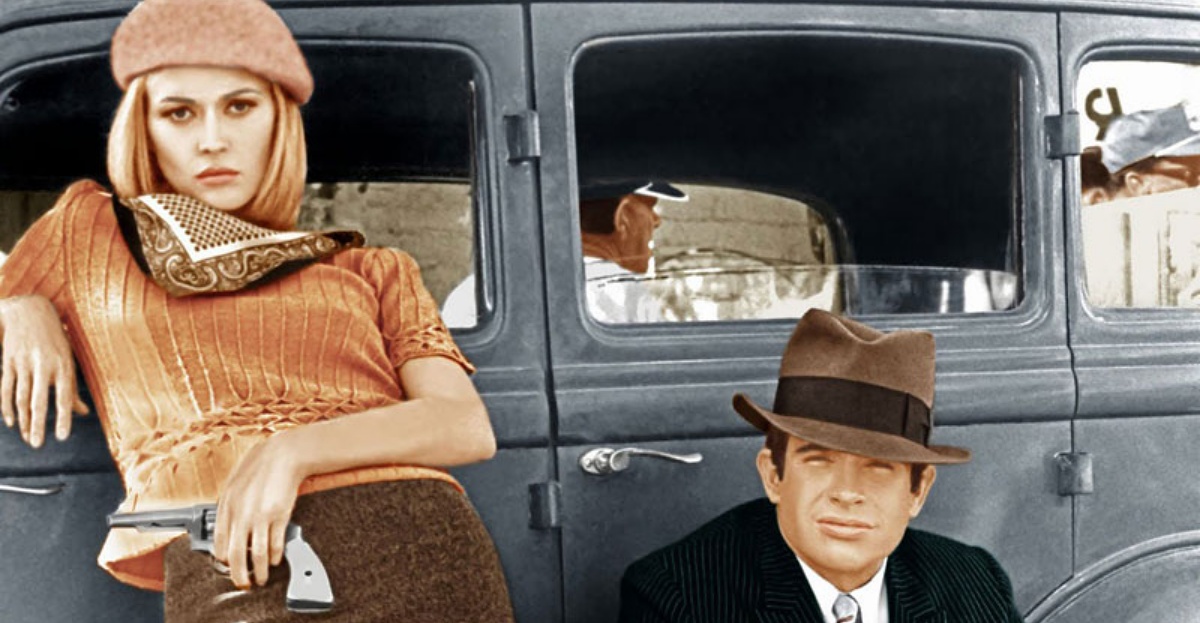


It has been said time and time again that this “New” Hollywood was a moment when “The lunatics took control of the asylum.”
Its name was the best thing about the whole idea. Seeing it splashed above a movie title could conjure up thoughts of class and prestige in the minds of sophisticated cinemagoers. For those on the outside looking in, the exclusive club was a creative and collaborative paradise. What auteur in their right might wouldn’t have wanted fistfuls of cash and creative control? That was the theme of the day, after all, and this was seventies filmmaking at its purest.
Too bad, The Directors Company was one of the biggest ideas to come out of New Hollywood and one of its most aggravating fumbles.
Fifty years on, we are left to ponder what could have been. The initial plan was to go for a dozen films, which sounds retrospectively miniscule—but keep in mind, we barely received one-quarter of that quota. Would it have guided a string of masterworks that shook Hollywood to its very core and consistently revolutionized the art of storytelling? Or resulted in self-indulgence that wasted studio dollars and audience’s time? Would completely different members have yielded greater results? It just so happened the deck was stacked against this particular combo. This, we will never know.
The company was only possible after the creative river ran dry throughout the 1960s, and out-of-touch musicals like Hello Dolly and Dr. Doolittle failed to please a younger, edgier audience.
The company was only possible after the creative river ran dry throughout the 1960s, and out-of-touch musicals like Hello Dolly and Dr. Doolittle failed to please a younger, edgier audience. The dam burst towards the end of the decade. Expensive sword and sandal flops like Cleopatra had been bleeding studios dry—leaving them with insurmountable debts and only a pile of straws to grasp at. The old guard of studio heads were dying off or being chased out when it became apparent tastes were out of touch.
In that river came a flood of talent that captured an unsettled zeitgeist of people pushing back against authority and longstanding social norms. Strikingly handsome Warren Beatty shepherded Bonnie and Clyde, a gangster picture that depicted violence like no others before it. Dennis Hopper advocated for the dope-smoking counterculture in Easy Rider. Robert Altman tinkered with structure and audio in M*A*S*H. A whole cast of scruffy ragtag characters that included atypical actors like Jack Nicholson and experimental artists like Rob Rafelson changed the whole system at the turn of the decade.
It has been said time and time again that this “New” Hollywood was a moment when “The lunatics took control of the asylum.” Three so-called “lunatics,” in particular, were called to rise and fall above rest at The Directors Company.
Francis Ford Coppola, the middle son of Italian immigrants, was raised in an artistic environment in New York City. He had studied film at UCLA and broken through the studio system after an acclaimed thesis project, You’re a Big Boy Now. With a thick beard, portly build, and guiding love of French and Italian cinema, Coppola was hailed by awestruck classmates when he went on to helm the Fred Astaire musical Finian’s Rainbow. He followed that up with the critically acclaimed Rain People and unexpectedly picked up an Oscar for co-writing the biographical war drama Patton.
William Friedkin came from a lower-middle class family in Chicago. After being heavily influenced by a screening of Citizen Kane, Friedkin spent the better part of a decade directing television episodes and documentaries, one of which (a short called The People vs. Paul Crump) got a man off death row. More of a journeyman at this juncture, Friedkin honed his craft by directing Sonny and Cher’s Good Times, Norman Lear’s burlesque comedy The Night They Raided Minsky's, and queer cinema milestone The Boys in the Band.
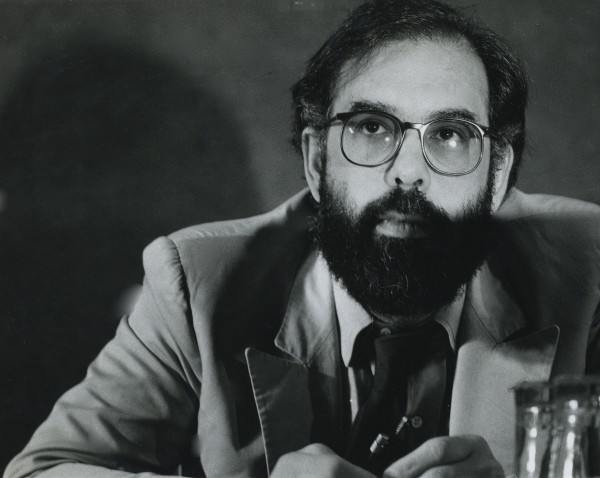 Francis Ford Coppola
Peter Bogdanovich’s background was in film criticism rather than directing. The New Yorker wrote for Esquire and Film Culture before programing retrospectives on legends like Howard Hawks at the Museum of Modern Art. It was the influence of French critics-turned-auteurs like François Truffaut that sent in search of a career in Los Angeles. Under the tutelage of indie-God Roger Corman, Bogdanovich spliced together his first movie using low-budget film and B-movie footage. It was a well-received horror called Targets.
What these early experiences did was pave the way for these young, knowledgeable film geeks to succeed on an unprecedented level. Arriving at the exact right time with the exact right mentality, New Hollywood belonged to them—the precursors to the so-called “movie brats,” who’d be the first fresh-faced students, barely over 30, to earn acclaim and box office gold.
Bogdanovich adapted Larry McMurtry’s The Last Picture Show, filming the bleak coming-of-age Texas tale in stark black and white. He kickstarted the careers of Timothy Bottoms and Jeff Bridges while exonerating the older one’s belonging to Cloris Leachman and Ben Johnson. It earned rave reviews and eight Oscars, but 1971 was Bogdanovich’s year to lose. Friedkin would slip ahead with his intense and gritty crime drama The French Connection—also nominated for eight Oscars—and take the top prize for Picture, Director, and even Actor for Gene Hackman.
Following up hailed masterpieces isn’t easy, but Bogdanovich scored big with a screwball throwback What’s Up, Doc? starring Barbara Streisand and Ryan O’Neal. It, too, was among the highest earners and recipient of countless accolades. Adapting William Peter Blatty’s novel into arguably the most iconic horror features ever made, Friedkin’s next move would be to craft a full-out phenomenon, The Exorcist.
No one could quite compare, however, to the success of Francis Ford Coppola. An unpopular last choice to adapt Mario Puzo’s novel, the director would helm the definitive picture of the 1970s—perhaps ever. The Godfather brought together Marlon Brando, Al Pacino, Robert Duvall, Diane Keaton, and James Caan for a sprawling mafia family saga accentuated through a rich classical style and New Hollywood perspectives. It set box office records and raked in eleven Oscars, including Best Picture. Two years later, Coppola would do it all again with The Godfather Part II—finally clinching Best Director and setting an untouchable precedent.
The undeniable talent within these three directors is what attracted businessman extraordinaire Charles Bluhdorn like a fly to honey. An Austrian immigrant with a thick accent and impeccable taste for the finer things in life, Bluhdorn worked his way up through odd jobs and successful investments until his meager auto parts company grew into Gulf+Western Industries. It became a Fortune 500 company with holdings in a variety of brand names, including Paramount Pictures.
Paramount was nothing short of a dilapidated ghost town at the time of Bluhdorn’s acquisition. Minus its one financial saving grace in the mid-1960s, The Sound of Music, the studio had fallen to number nine in box office receipts. Like RKO before it, the Golden Age relic was in danger of shuttering its gates for good. What Bluhdorn did to turn the studio’s fortunes around was to hire wildcard producer Robert Evans as head of production and install experienced sales manager Frank Yablans as Vice President. Together, the advocation and skillful marketing done for the weepy Ali McGraw/Ryan O’Neal romance Love Story moved the studio out of the red. Yablans taking the top position and Evans’ endorsement of classic after classic (Chinatown, Serpico, and, of course, The Godfather movies to name a very few) cast the studio to number one at whiplash speed.
For inspiration, Bluhdorn looked to companies that had fostered artistic control over studio intervention in the past and present day. Looking all the way back to the silent era, United Artists was a prime example of a bold move that paid off. D.W. Griffith, Charlie Chaplin, Mary Pickford, and Douglas Fairbanks formed United Artists in 1919—a production company still in existence at the time, that was designed to give more freedom in project choosing to its members. A more modern version of such a company had sprung up in 1969 called First Artists, which had the likes of Streisand, Sidney Poitier, and Dustin Hoffman pushing forth more creative endeavors for themselves while financially reaping what they sowed. Notable movies included Steve McQueen’s The Getaway and the third version of A Star is Born.
With this premise in mind, Bluhdorn flew Coppola, Friedkin, and Bogdanovich to New York City. He enticed them with little details other than “this is how they could make a lot of money.” Coppola was already familiar with him, given their collaboration on The Godfather, so he was far more receptive than the other two, who were only meeting Bluhdorn for the first time.
The hook was simple; each director would receive up to $3 million per movie to make whatever they wished. Not even Evans, a notorious meddler, would be allowed to interfere. Better yet, they’d have a say in what should and shouldn’t be produced, therefore sharing in each other’s profits. It meant they’d fail and succeed together and that nothing was off the table.
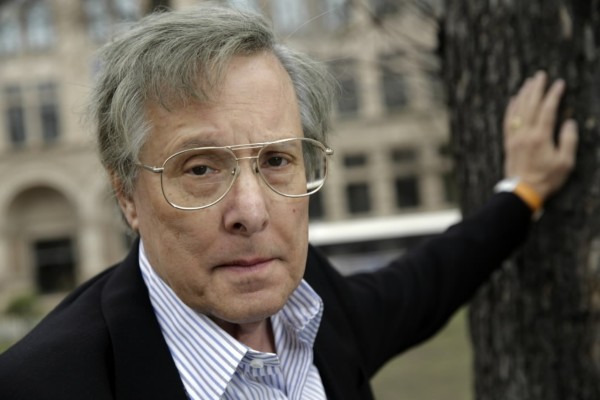 William Friedkin
From the start, Yablans was vocal about his displeasure with the idea—only finding out about it after the meeting was held. He certainly recognized what an asset the powerful trio were but remarked to Bluhdorn, “Why don’t you just given ‘em the company?” His fear was that the directors would take on more commercial projects at other studios and leave them with artsy duds no one would want to see. It was just too unprecedented to get behind.
The imposition of peer support held up the deal on the directors’ end. They were all friendly with each other but not friends—a big distinction when it came to doing business. Each director, driven by distinct tastes, climbed different ladders to get to where they were and had never collaborated before. Bogdanovich would playfully flash glowing reviews of The Last Picture Show to Coppola, while Friedkin assured him after his Oscar loss in 1971 that he’d be earning his at the next ceremony. Closer to rivals than anything else, the best you could say is that they were admirers of each other’s work.
Misgivings were ultimately discarded in pursuit of riches and freedom. Coppola, Friedkin, and Bogdanovich agreed to form The Directors Company. It would be a 50/50 deal; half owned by Paramount Pictures and half by the directors. Each director was obligated to direct at least three motion pictures and serve as executive producer for another to reach the minimum quota of 12. These films were to be completed over a six‐year period with a total $31.5 million of Paramount’s money being invested. Yablans made the formal announcement in September of 1972. The New York Times touted the details, prompting insiders to applaud Bluhdorn for bagging the three hottest auteurs in town and veteran director Billy Wilder to quip, “The deal should win an Oscar.”
The trio subsequently met up for dinner at Coppola’s production company office, Zoetrope, in San Francisco. Friedkin was only just finishing The Exorcist but pledged that his next movie would be made through The Directors Company. It was Bogdanovich who had a fully-fledged idea ready to go; an adaptation of Joe David Brown’s depression-era novel Addie Pray. The others were enthusiastic about its potential, so the company already had its first project underway.
Retitled Paper Moon, the road trip comedy played perfectly into Bogdanovich’s talents. Filmed in black-and-white and crafted in such a way, it seemed to have been made forty years earlier, the project started The Directors Company on the best foot forward. Following the escapades of a slick grifter and the young girl used in his scams, Paper Moon raked in $30 million at the box office and earned some of the reviews of 1973. Tatum O’Neal, the fresh-faced daughter of her co-star, became the youngest Oscar winner at the age of ten when she nabbed Best Supporting Actress. Coppola and Friedkin were entitled to a cut of $300,000 each as per the deal, and effectively quieted any naysayers who were skeptical about the arrangement.
When it came time to Coppola’s turn to throw forth a project, he suggested a surveillance thriller called The Conversation, where a surveillance expert grows obsessed with a potential murder. It was loosely inspired by Michelangelo Antonioni’s 1966 film Blow-Up, with the subject of photography getting swapped for sound recording.
Friedkin was not pleased with the script, feeling it was more of a direct rip-off of the original Italian film. That didn’t stop Coppola from pressing ahead, casting Gene Hackman in the lead and John Cazale in a memorable supporting part. Despite the Watergate scandal helping draw real-life intrigue, Friedkin’s mind remained unchanged. After a rough screening, he apparently told Coppola it was like “listening to hair grow.” He feared the dull nature would lead to the film losing money at the box office.
Chump change compared to the success of Paper Moon, it ultimately did succeed, making its money back, plus another $1.4 million. But that figure meant a significantly smaller cut for the other stakeholders. Where it did triumph was on the awards circuit. The Conversation was nominated for Best Picture during the same year Coppola swept the Oscars with Godfather Part II. It would instead be crowned with the Palme d'Or at the Cannes Film Festival, a rare reward for a Hollywood film.
All eyes were now on Friedkin to make his first contribution to The Directors Company. It was first announced that he would direct a little-known project entitled The Bunker Hill Boys, but nothing materialized. He suggested a passion project set deep within the South American jungle where four strangers intensely haul a load of nitroglycerine. Paramount balked, citing budgetary constraints. Friedkin had a vision and $3 million just wasn’t going to cut it. When the idea was nixed, Coppola suggested a science fiction screenplay written by his friend George Lucas. Neither Bogdanovich nor Friedkin were interested after reading the script. Increasingly antsy over squabbles and stalls, Bluhdorn suggested other potential names to rope into the company to get things moving, specifically Mike Nichols and Stanley Kubrick.
Another part of the whole deal was to encourage and even foster promising young directors as protégés that the members believed in. Coppola had even put Lucas’ name forward in attempts to further his outer space idea. It was Bogdanovich who physically brought someone to the table, Orson Welles. The famed wunderkind of the 1930s and ‘40s had become a troubled parody of his former self. Scruffy, severely overweight, and relying on alcohol, Welles hadn’t finished a significant project in nearly fifteen years. But Bogdanovich believed in the filmmaker, advocating that he had “one more Citizen Kane” in him. The two had become close friends after the screen legend mentored Bogdanovich’s earlier work. Welles even moved in with the director when he fell on hard times. Despite their admiration, Coppola and Friedkin objected to his involvement.
What Welles did end up doing was influencing Bogdanovich’s next project choice by praising the romantic novel Daisy Miller by Henry James. The director had left his wife and production designer Polly Plat at the time of filming The Last Picture Show for the film’s lead actress, young and buxom blonde Cybill Shepherd. Upon reading the book, Bogdanovich became adamant Daisy Miller be made as a starring vehicle for her.
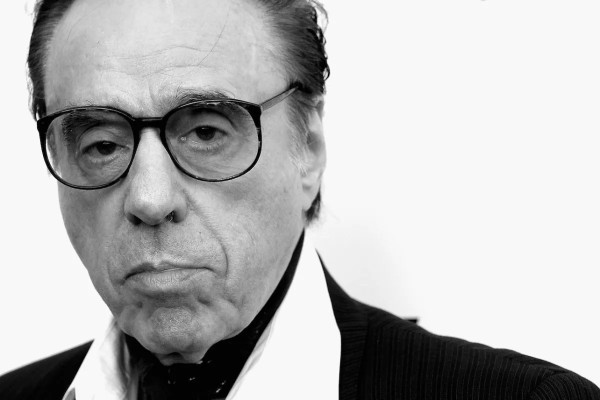 Peter Bogdanovich
A comedy of manners full of period costumes and nineteenth-century morals, the idea was a hard sell at The Directors Company. Coppola played Switzerland, preferring not to get involved in the decision-making of other director’s projects. Friedkin was far more vocal, calling Shepherd completely wrong for the role and claiming Daisy Miller had no commercial potential. Bogdanovich pushed back, reasonably retorting that he was the only one reliably making movies for the company. He went ahead with the shoot, given there was nothing the others could do to stop the production other than verbally object.
Daisy Miller was released on May 22, 1974, to hostile reviews. Critics thumbed their noses at Shepherd’s acting abilities. Audiences were in no mood for a “handsome” costume drama and didn’t show. The movie failed significantly to make its $2.2 million budget back. It was a major embarrassment for Bogdanovich, who had grown overly accustomed to praise. For The Directors Company, its failure meant trouble.
Clutching a bounty of accolades, Coppola had more backers than the other two; Paramount’s deal simply wasn’t necessary for him to get good offers. He began developing dream projects like a musical about automotive entrepreneur Preston Tucker through his Zoetrope company. And he didn’t think twice about keeping his Vietnam riff on Joseph Conrad’s Heart of Darkness for himself. The scope he had in mind for the overseas production was far too risky for The Directors Company to ever back. He pursued what would become Apocalypse Now with financing from both United Artists and his own pocket. The director essentially vanished.
Friedkin considered The Conversation a major disappointment and now had a legitimate flop to point to as an excuse. He desperately wanted out. Far more displeased than the others, he railed against Bogdanovich for being blinded by his girlfriend. He blamed Yablans for purposely destroying the company by endorsing “vanity projects” he knew would make the company look bad. He felt a promise had been made to Bluhdorn that the projects be “commercial.” With an incurable grudge against Daisy Miller and without support for his nitroglycerine thriller, he had no use for the company and walked.
Bogdanovich was the only one truly tailored for such an arrangement. His films were smaller. He had his mentor-cum-protégée. But there was truth to his peer’s concerns. Always the intellectual, the director made certain his film-historian background was on full display with films faithfully paying homage to the classics. After trying to set-up a new film for silent movie director King Vidor to helm at the company, he opted to make a musical over at Fox under the suggestion of Shepherd, featuring the songs of Cole Porter. At Long Last Love was released in March of 1975 to pure hatred. The reaction was so bad, Bogdanovich took out newspaper ads to apologize for its low quality. His Hollywood-themed follow-up Nickelodeon didn’t fare much better.
Friedkin did go on to make his passion project—Sorcerer—but the demanding shoot in the Dominican Republic jungle ballooned the budget from $15 to $22 million. A co-production with Paramount and Universal, it was released in June of 1977—less than a month after George Lucas’ idea (the very one that The Directors Company turned down) revolutionized the industry. That film was indeed Star Wars. Though given glowing reviews in modern times, Sorcerer failed to recoup half its budget.
At the same time, Coppola was going through a similar experience in southeast Asia, dealing with horrific weather conditions, defiant actors, and a convoluted vision. The hellish shoot became the stuff of legend, detailed in the documentary Hearts of Darkness: A Filmmaker's Apocalypse. The gamble paid off, despite a budget that reached the heights of $31 million. It grossed triple that and brought Coppola back to the awards circuit in 1979 after a five-year absence. By then, the world that had created The Directors Company was disappearing.
Following the company’s demise, a shake-up at Paramount would completely alter the studio’s direction. Bluhdorn replaced Yablans with a new president, Barry Diller; prompting him to become an independent producer. He would go on to champion pictures like the notorious Joan Crawford biopic Mommie Dearest in 1981. Robert Evans followed a similar path with varying results masked by cocaine tracking charges and implications in what tabloids called the “Cotton Club Murder.” Bluhdorn himself stepped down as Chairman of Paramount at the end of 1974 and named Diller as his successor. He died of a heart attack in early 1983 at the age of 56.
It’s unclear if the failed company prompted the shuffle, but Paramount did have a noticeably different output in the latter half of the decade, emphasizing low-brow comedies (Up in Smoke), family films (Bugsy Malone), and ill-conceived passion projects (The Last Tycoon).
The Directors Company wasn’t alone either. After a steady stream of flops that included the likes Bobby Deerfield and Straight Time, First Artists disbanded in 1980. United Artists’ name was significantly tarnished after the $44 million loss from Heaven’s Gate—prompting its sale to Metro-Goldwyn-Mayer. Few in Hollywood could seemingly “play nicely in the sandbox” while out-of-control budgets, rampant drug use, and bullheaded directors were threatening a collapse of the industry. The return of studio influence and glut of successful sequels and summer blockbusters would ultimately save the day.
While Spielberg, Scorsese, Lucas, and many others adapted and thrived—The Directors Company alumni did not. What should have been a blessing, or a least small hiccup, turned out to be a clear marker for their careers.
Friedkin stumbled with controversial works like the gay BDSM thriller Cruising and misguided comedies like Chevy Chase’s Deal of the Century. Besides positive reviews for To Live and Die in L.A. in 1985, Friedkin never had another hit.
Declaring bankruptcy after distributing They All Laughed himself in 1981 and then experiencing the shocking murder of then-girlfriend Dorothy Stratten, Bogdanovich was left in ruins. Though he’d continue working, his output consisted of television movies and documentaries.
Apocalypse Now bought Coppola time, but his attempts to open a fully-fledged studio in the early-1980s also brought bankruptcy. While his output was far more mainstream, he tackled his debt by directing everything from teen comedies to an evidently unwanted Godfather Part III. He would semi-retire 1997 to focus on winemaking and cinematic experiments.
The company itself had no formal ending. More or less a handshake deal to begin with, the idea was abandoned without so much as a public announcement or postmortem meeting.
It’s more than likely the three films that were made through The Directors Company would have been made with or without its existence. But if it functioned the way it was intended, film fans would have gotten more. If the primary concern wasn’t taking cuts from ticket sales and its members actually stuck it out, their career trajectories would likely have been different. Executive-turned-editor Peter Bart, who was with Paramount at the time, claimed, “It was never really a company to begin with.” He theorized that the directors would have gained so much more if they had taken it seriously and gotten more invested in the company’s setup. Instead, they fled before it really got going. Others have shrugged it off as nothing more than a failed marketing ploy attempted by Bluhdorn.
Coppola, Friedkin, and Bogdanovich never collaborated after the company folded. The latter two expressed regret for squandering the prime opportunity and not heeding each other’s advice, but sadly, both have now passed on. With 84-year-old Coppola, the last man standing, finishing up his self-funded dream project Megalopolis, it’s evident lessons may not have been learned through past mistakes. Yet, it is this unflappable belief in oneself that keeps many of us spellbound by the auteur theory and interested in the story of The Directors Company half a century later.
In an era where funding is hard to come by, and deals such as the one Paramount offered are unthinkable…egomania is comparably tame and cinematic offerings are routinely bland…one can’t help but romanticize history and conclude that the company was formed at the wrong place and the wrong time. Level-headed creative collaboration and faithful funders willing to take risks could be exactly what Hollywood needs to shake off the dust and feel new all over again.
