

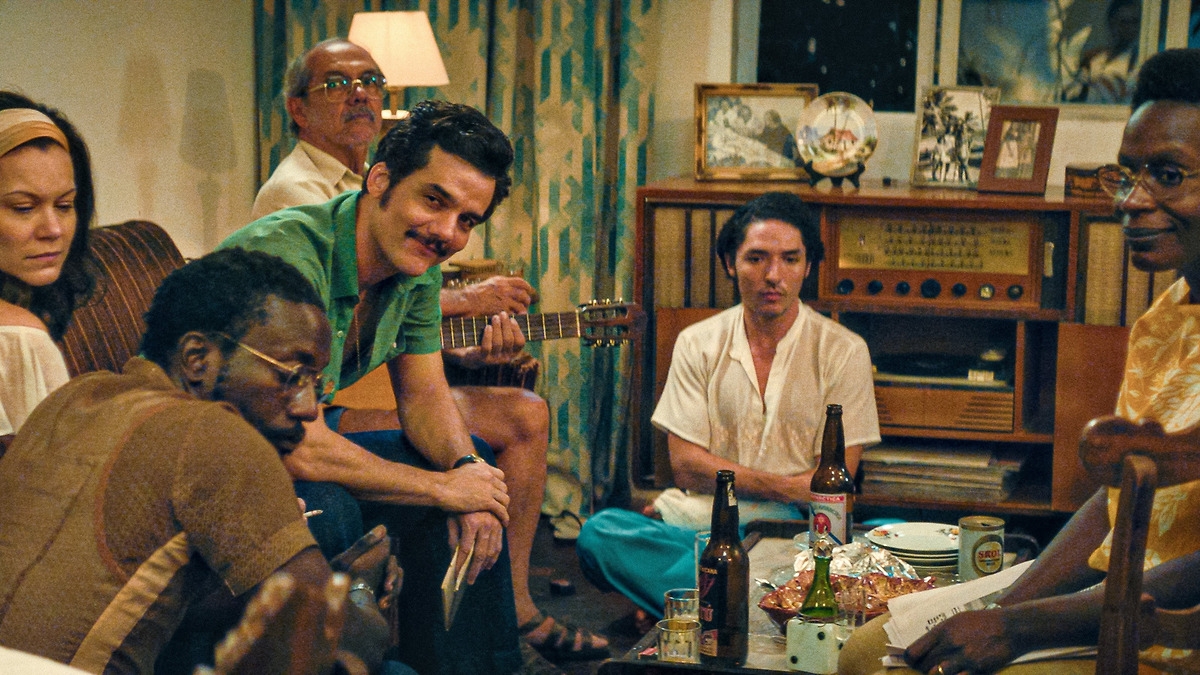

Not only is it a very watchable thriller, but it also provides some insight into the history of Brazil, South America’s largest country, which also possesses about 213 million people.
The 2025 Brazilian film The Secret Agent, directed by Kleber de Mendonça Vasconcellos Filho, was nominated and won various awards for films first viewed last year. Not only is it a very watchable thriller, but it also provides some insight into the history of Brazil, South America’s largest country, which also possesses about 213 million people.
Brazil has not been alone among South American countries in bouncing back and forth between democratic and authoritarian governments. During the last half-century, it had a government brought about by a military coup in 1964 (supported by Brazil’s Catholic hierarchy and the USA), and it was not until 1985 that civilian rule was reestablished.
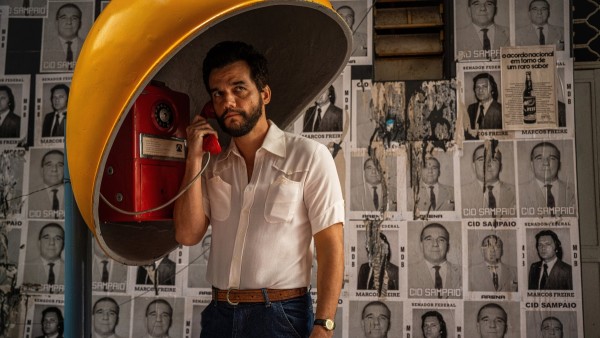
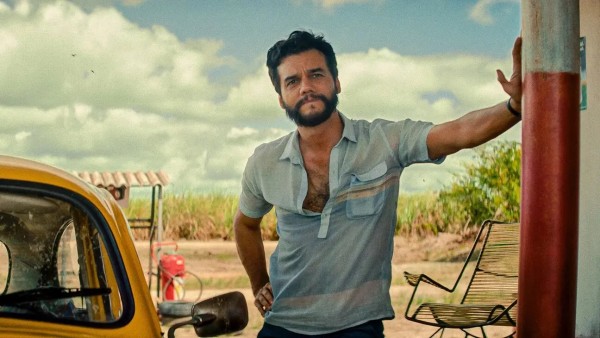
The Secret Agent is set mainly in 1977, and depicts Armando Solimões (Wagner Moura) in Recife, a city of almost 4 million people, located in the northeastern Atlantic coastal area of Brazil. Previously, Armando had been a professor, but a former government minister, Henrique Ghirotti (Luciano Chirolli), had shut his department down. Ghirotti exchanged harsh words with both Armando and his wife, Fatima (Alice Carvalho), even calling Armando a communist.
Armando had since become a widower, Fatima apparently dying of pneumonia. Their young son, Fernando (Enzo Nunes), lives in Recife with his maternal grandparents. In one moving scene, in answer to his son’s query, “Can mom be here with us now?” Armando answers, “She won’t return,” except she can be “with us in our memory.” (Film quotes are taken from the filmscript.)
In Recife, Armando is given refuge, along with other dissidents, by an old lady, former anarco-communist Dona Sebastiana (Tânia Maria). The city’s dissident network also provides work for him at the local identity card office, where he is able to search files on his late mother, “India,” about whom he knows little. Meanwhile, Ghirotti hires a couple of hitmen to kill Armando, and they in turn hire another man, Vilmar, to do the job.
Near the end of the film, Armando is warned about the plot against him, and Vilmar comes looking for him, but ends up in a gun battle with a couple of other guys instead. They are taken away to a hospital and Vilmar is wounded in the leg.
The movie’s final scene is some years later when son Fernando is a doctor who talks to Flavia (Laura Lufési), who had done some research on his father and now hopes to find out more. But Fernando tells her that he was raised by his maternal grandfather and doesn’t remember much about his father, who died when he was still very young.
This Secret Agent film does not detail what happened to Armando, but filmgoers familiar with Brazilian history know that many regime opponents "disappeared" in the late 1970s. And film fans also had the reminder of last year’s Oscar winner for best international film, I’m Still Here, another Brazilian movie which dealt with the “disappearance” of a military regime opponent.
Following the end of military rule in 1985, Brazil saw the last of military governments, but not the end of authoritarianism. The period from 1985-1990 was sort of a transition period, and since then, most governments have been either somewhat leftist (democratic socialist or progressive) or somewhat rightist (more conservative.) An exception was that of Jair Bolsonaro, elected in the fall of 2018, ending 16 years of left-wing rule, most of it under Luiz Inácio Lula da Silva of the Workers' Party. Bolsonaro ruled until the end of 2022, and Secret Agent star Wagner Moura referred to his administration as “a criminal fascist government.”
Moura also declared that both he and the film’s director, Mendonça Filho, were opponents of Bolsonaro, and Armando was “just trying to stick to his values.” (See here for values being the key to political differences.)
Among other measures, the Bolsonaro administration increased industry in the Amazon rainforest, increasing deforestation and the adverse effects of climate change. In the presidential election of fall 2022, Bolsonaro was defeated by former president Lula da Silva, but in an attack (broadly compared to the U. S. Capitol attack orchestrated by Trumpites on January 6th 2021) Bolsonaro supporters argued the elections were fraudulent and called for military intervention.
The Brazilian judicial system, however, ruled against Bolsonaro and his supporters and in the late summer of 2025 sentenced him and his allies to long prison sentences. The reelected U. S. President Trump referred to the verdict as a “witch hunt” and imposed a 50 percent tariff on Brazilian goods.
Prior to this, Bolsonaro had often expressed admiration for Trump, who in 2020 welcomed him to his Mar-a Lago resort. In response to Trump’s comments on the sentencing, Silva wrote an opinion piece in mid September 2025 to The New York Times.
In it he noted that
the tariff increase imposed on Brazil....is not only misguided but illogical...The lack of economic rationale behind these measures makes it clear that the motivation of the White House is political. The U.S. government is using tariffs . . . to seek impunity for former President Jair Bolsonaro, who orchestrated a failed coup attempt on Jan. 8, 2023, in an effort to subvert the popular will expressed at the ballot box..This was not a ‘witch hunt.’ The judgment was the result of proceedings carried out in accordance with Brazil’s 1988 Constitution, enacted after two decades of struggle against a military dictatorship. It followed months of investigations that uncovered plans to assassinate me, the vice president and a Supreme Court justice. Authorities also discovered a draft decree that would have effectively annulled the 2022 election results.
Silva also mentioned that since 2023 his administration had “cut the rate of deforestation in the Amazon by half. In 2024 alone, the Brazilian police seized hundreds of millions of dollars’ worth of assets used in environmental crimes.”
In February 2026, the U. S. Supreme Court ruled that Trump exceeded his authority to issue some of the sweeping tariffs that he had in 2025, including the 50 percent rate on some Brazilian products. Nevertheless, Trump’s sympathies for Bolsonaro and animus toward Silva remain. Thus, it is still unclear what stratagems he may try to use against the leftist Silva government.
