

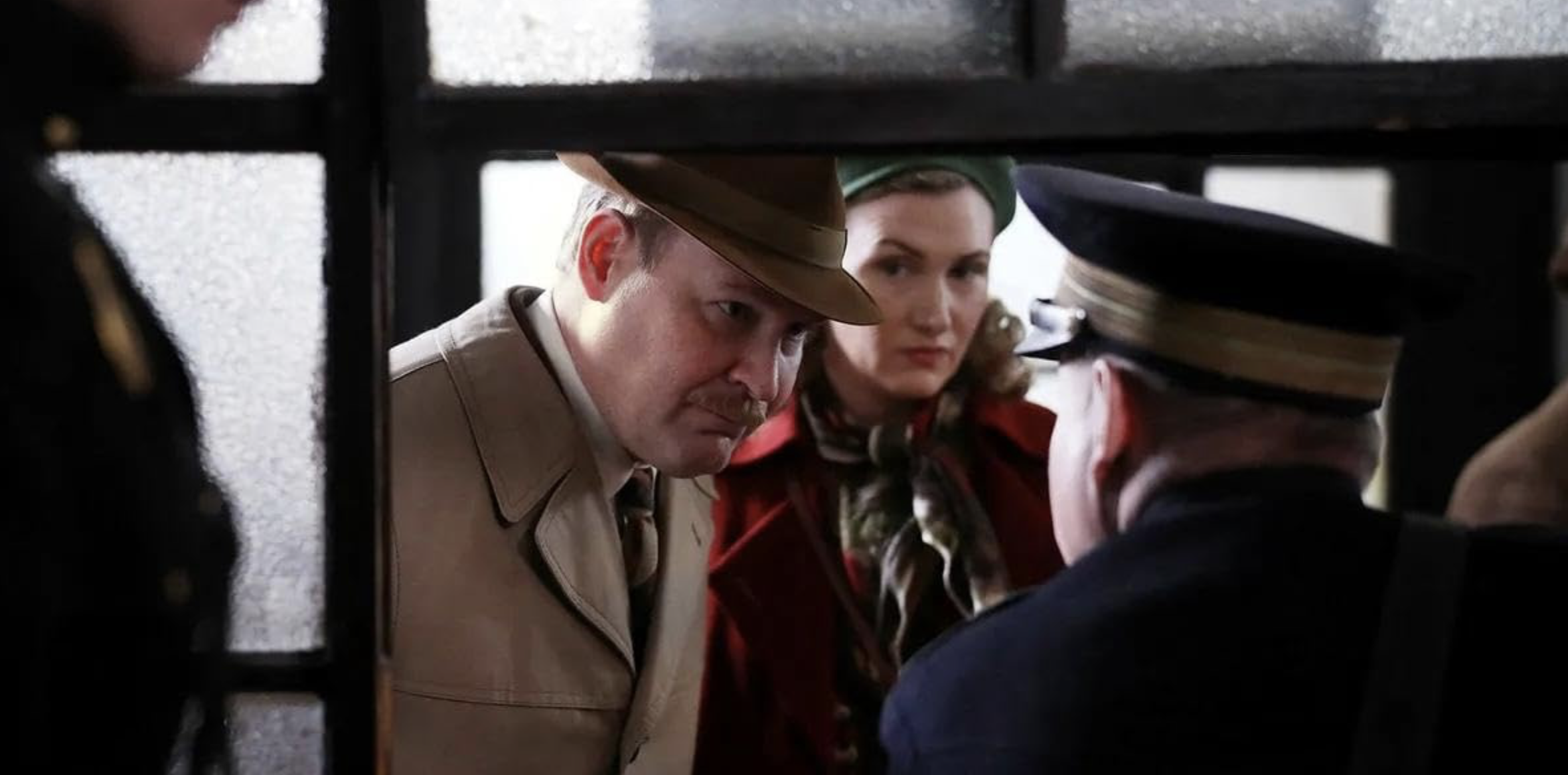

“The Swedish Connection” demonstrates what one mid-level bureaucrat was able to do to save tens of thousands of Jewish lives during the Holocaust.
The film “The Swedish Connection” (2026 and now streaming on Netflix) focuses on a small corner of the much larger Holocaust tragedy. In that catastrophe about 6 million Jews were killed (mainly in camps like the Polih Auschwitz and fields like the USSR’s Ukrainian Babi Yar), as well as countless millions of non-Jews. But the present film under review concentrates only on Scandanavian Jews, and what a Swedish official’s office did to prevent some of them—especially from Denmark, which contained about 7,500 Jews when Germany occupied it in April 1940—from being arrested and killed. (Sweden remained officially neutral during WW2).
Near the end of “The Swedish Connection,” the following words appear on the screen in capital letters: “THANKS TO ENGZELL'S WORK, MORE THAN 100,000 JEWS WERE SAVED.” The Engzell referred to is the soft-spoken head of the Swedish Foreign Ministry’s legal department, Gösta Engzell (comedic actor Henrik Dorsin). Also in capital letters, we read that he “NEVER SPOKE PUBLICLY ABOUT HIS WORK FOR THE JEWS DURING WORLD WAR II” and that “HE CONTINUED TO WORK IN DIPLOMACY AND DIED AS AN UNKNOWN SWEDISH WAR HERO IN 1998, AT THE AGE OF 100.”
Non-documentary films are not history. Directors take artistic liberties. And so, as a historian, I am not going to vouch for the 100 percent accuracy of the assertions in “The Swedish Connection,” especially the “more than 100,000 Jews” that Engzell is claimed to have “saved.” But Engzell did save the lives of many Jews, especially from Denmark.
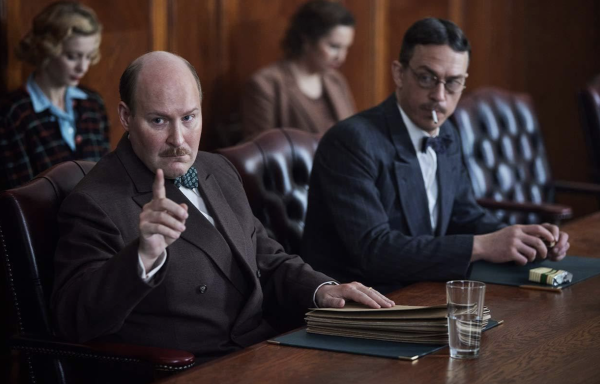 Henrik Dorsin
In the film, his main opposition comes from his immediate superior, Staffan Söderström (Jonas Karlsson), who thinks that Germany is going to win WW2 and wishes to remain in Hitler’s good graces. At one point he tells Engzell, “The war will soon be over. And it will end with Germany becoming the absolute superpower, trust me. And if we've been too soft in dealing with the Jews, then we will suffer the consequences.” (Film quotes are taken from filmscript, which accurately mirrors film dialogue.)
In reality, Söderström is a fictional character based partly on Staffan Söderblom, a leading figure in the Ministry for Foreign Affairs' Political Department. Engzell is a cautious man, and he only slowly comes to resisting Nazi pressures. But with the encouragement of a new secretary, Rut Vogel (Sissela Benn), in 1943 he steps up his resistance. At first he tries to help Norway’s Jews, but with Nazi-sympathizer Vidkun Quisling the head of Norway's Nazi puppet government, what Engzell can do is limited, and it is estimated that about 750 of Norway's Jews were killed in Nazi camps.
But Engzell will have more success with Danish Jews. After his boss Söderström attempts to block his attempts to help foreign Jews, Engzell announces—without telling Söderström—that he is going to hold a press conference. At it he states, “I am now going to read a communique from the, uh Swedish government. The visa requirement that was previously imposed on all incoming Jews has, as of today's date, been revoked...Accordingly, all members of the Jewish religion are now welcome on Swedish soil."
Soon after this, on 2 October, 1943, the news announces that “anyone belonging to the Jewish religion is now welcome on Swedish territory.” The film then displays all kinds of small boats—with Jewish passengers—landing in Sweden.
Articles on the Danish Jews from the United States Holocaust Memorial Museum in DC and from Wikipedia on “The Rescue of the Danish Jews” provide background material that confirm the truthfulness of the film’s account.
The first piece indicates that “Danish authorities, Jewish community leaders, and countless private citizens facilitated a massive operation to get Jews into hiding or into temporary sanctuaries. When German police began the roundup on the night of October 1, 1943, they found few Jews. In general, the Danish police authorities refused to cooperate, denying German police the right to enter Jewish homes by force, or simply overlooking Jews they found in hiding. Popular protests quickly came from various quarters such as churches, the Danish royal family, and various social and economic organizations. The Danish resistance, assisted by many ordinary Danish citizens, organized a partly coordinated, partly spontaneous rescue operation...Over a period of about a month, some 7,200 Jews and 700 of their non-Jewish relatives traveled to safety in Sweden, which accepted the Danish refugees.” The Wikipedia article indicates that “99 % of Denmark's Jewish population survived the Holocaust.”
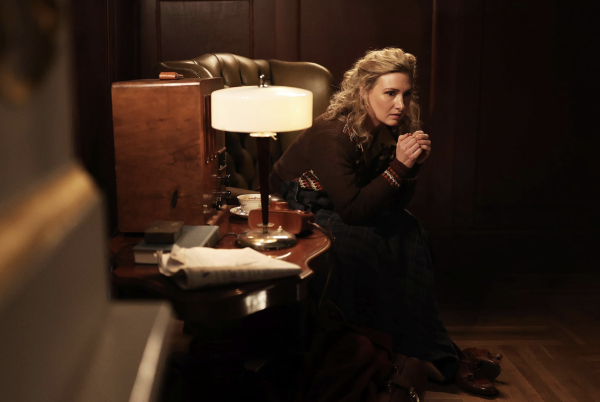 Sissela Benn
Toward the end of the film, two future famous Swedes make brief appearances. One is Dag Hammarskjöld, Secretary-General of the UN from 1953-1961, who helps Engzell aid Denmark’s Jews. The other is Raoul Wallenberg, who saved thousands of Jews in Hungary during WW2, partly from what he learned from Engzell.
Overall, “The Swedish Connection” is a well-done movie, especially for those interested in history. It demonstrates what one mid-level bureaucrat was able to do to save tens of thousands of Jewish lives during the Holocaust. The great tragedy is that there were not more government officials—and ordinary citizens—willing to exert themselves, despite some inconvenience, to help their fellow human beings.
-
