

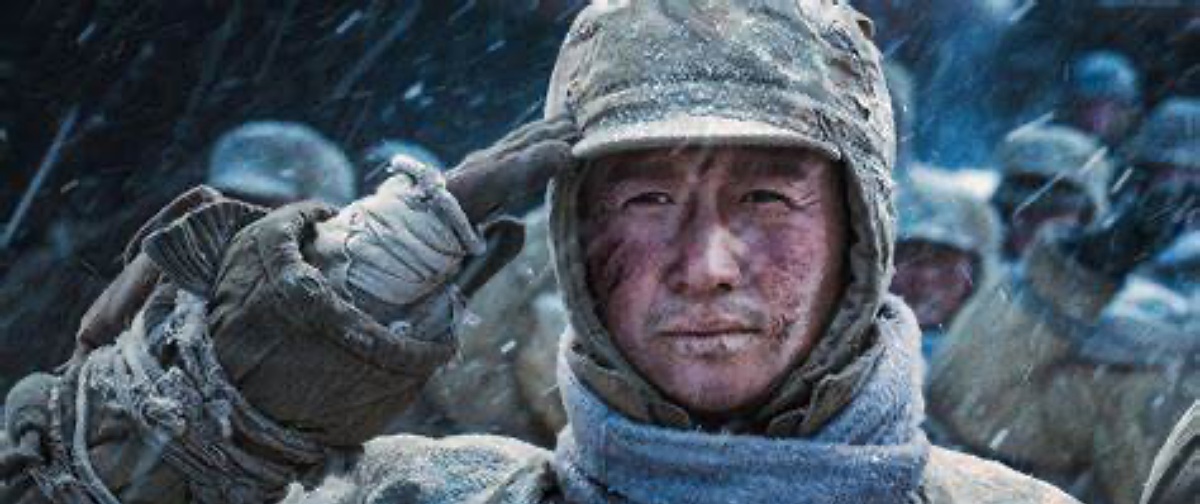


The U.S. cultural domination that has been forced worldwide in cinema is gradually being replaced by national and indigenous products, most notably in the Chinese film industry.
China has surpassed the West in many areas, and now it’s also gaining ground in the film industry. In 2021 China had the world’s biggest film box office. Hollywood and the US cultural hegemony that it has exerted around the world for over a century obviously provides no content that would question capitalism, let alone US imperialism. But this cultural domination that has been forced worldwide in cinema is gradually being replaced by national and indigenous products, most notably in the Chinese film industry. Amazing works of art, much beyond the experience of most Western viewers, are now becoming the norm. More Chinese films are being shown in the US while less American films are released in China.
China suffered what was termed the Century of Humiliation from 1839 when the British Empire fought the Opium War, until the victory of the Communist Revolution in 1949. These hard times were not forgotten when the US Empire started encroaching on Korea in the early 50s after Japan was defeated in WWII. The Chinese chose to defend the Korea to prevent the perceived attempt of the US to eventually takeover China. Also, in return for the Korean support of the Chinese revoultion, China entered the Korean War (they call it the Resisting America and Assisting Korea War) when the US crossed the Yalu River into China and began its first successful battle against the worlds strongest empire. As the New Cinema of China is quickly developing, historical events, such as the victory over the US in Korea, have become major themes in dozens of new films. The highest grossing film in China’s history was for the blockbuster action drama, Battle at Lake Changjin, one of the many new patriotic war films that inspire the Chinese people to defend against possible foreign intervention. The film was so powerful that is was actually banned in parts of Canada and the US, because of ‘threats’ to Americans, as it depicted the overwhelming resistance to US aggression that occurred back in the 50s. The full movie with English subtitles is available to watch on Youtube.
This year’s Toronto International Film Festival presented three extraordinary films from China that display tremendous technical skills and cinematic style. Youth (Spring) is directed by Wang Bing, a prolific rising star in Chinese cinema. This penetrating 5-year study of young textile workers in the local economy of Zhili is almost 4 hours long and is just the first part of a trilogy. The young workers mostly in their 20s who migrated from their villages to live, eat and work together for a certain length of time, offers a rich fascinating study of labor in China.
One of the most technically advanced films at the Festival, Snow Leopard provides a stunning view of the vast landscapes of Tibet. This is a wondrous black and white film by the promising Tibetan director Pema Tseden, who tragically died of a heart problem soon after completion of the film. It’s a spiritual and naturalistic study of man’s relation to animals. Two young men are driving in the desert of Tibet absorbing the beautiful panoramas of nature, en route to pick up their brother who is training to be a monk. The brother’s nickname happens to be Snow Leopard Monk because of his affinity to the animal. Snow leopards are first-class protected animals in China, and as the men reach their destination, the ranch of yet another brother, they find a rare snow leopard trapped in their brother’s corral. The brother’s cattle was killed by the leopard and he plans to kill the animal. The battle of life and death is applied both to animals and humans in interconnected ways, as they negotiate a solution to saving the animal and reimbursing the brother for his loss. Monk had saved the leopard in a previous encounter when the animal had been trapped and later the leopard saved the Monk when he was lost and dying in the desert. It’s a moving and extraordinary film on many levels, and the photography is beyond reality, as the snow leopard moves in an almost human manner narrowing the differences between man and animal. Not to be missed!
Actor turned producer, Andy Lau, plays a celebrated star of the film festival circuit in The Movie Emperor, a comical satire of the movie industry. In real life he IS a celebrated star of Asian cinema, who happened to receive a TIFF special tribute and appeared in the prestigious In Conversation series, while in Toronto for the Festival. He plays a megastar who feels he needs a change and takes on a role of a pig farmer in an indie production in order to appeal to the sensitivities of film festival goers seeking honest portrayals of real people and their real life challenges.
Director Ning Hao, who considers Lau his mentor, has impressive accomplishments of his own. His 2019 film Crazy Alien was his most successful film commercially, taking in $304 million dollars. The full movie with English subtitles is available to watch on Youtube. But he says, “Box office is not the only benchmark, but commercial success will make it easier for filmmakers to make their next passion project.”
20 years ago China had only around 3000 cinema screens, while now it has grown multiple folds to over 70,000 theaters! Ning says, “As the market gets more mature and the audiences more discerning, it has come to a time when we can create more diverse films that are aesthetic or thought-provoking.” He has great hope that film can foster positive cultural exchange. Look for more great cinema from China.
