

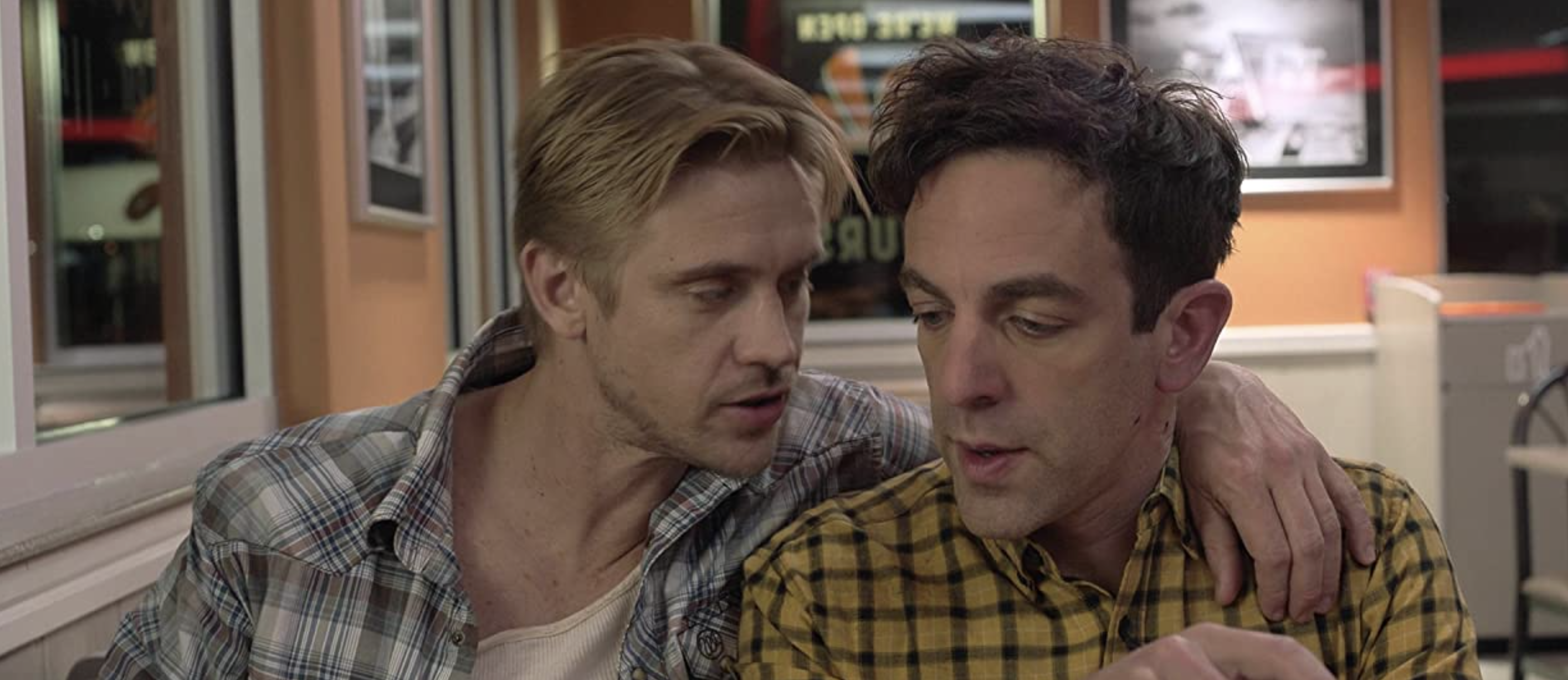

The death of Abilene is about the death of American identity the truth is too hard to accept.
As I watched the 2022 film Vengeance (now on Amazon Prime), directorial debut of B. J. Novak (Ryan Howard in the TV series “The Office”), I often thought back to two other dramas set in Texas. One was the film American Sniper, and the other was Billy Lynn's Long Halftime Walk: A Novel. What I wrote about these two works in 2015 could also be said about Vengeance: “Texas figures prominently in both works, as does right-wing patriotism, and the macho male American culture that delights in sports like football and, at least in Texas, rodeo riding.”
One Vengeance scene in particular reminded me of Texans’ fondness for football and rodeos. The film’s central character, Ben Manalowitz (B. J. Novak), a New York journalist and podcaster, is at a west Texas rodeo and the rodeo announcer asks how many people in the stands are fans of the University of Texas. Ben is the only one to stand up and yell. The announcer then asks, “Who here is a fan of Texas Tech?”— located, like where Ben is, in west Texas. Almost all the remaining fans yell their support. [Unless otherwise indicated, film quotes are taken from filmscript.]
The announcer then asks for both a “Mr. University of Texas” and a Texas Tech fan to come out of the stands into the rodeo arena. After Ben responds to what he does by saying he is a writer, the announcer says “You don’t look like a rider. What do you ride, son?” After another question that reflects the announcer mixing up “writer” and “rider,” Ben explains that a writer writes words, like in a book or article. The announcer’s interrupts him with an angry “I know what a writer is you condescending asshole.” And, “Tell me, Shakespeare, what do you like so much about the University of Texas?”
Ben answers that it is a state school that gives “financial opportunities” to “local people who could use the help” and it has a very good film department. When asked what he likes about Texas Tech, the other person standing next to Ben yells, “quarterback Matt Harris!” And the fans in the stands cheer and clap in approval.
This scene tells us much about the Texas that B. J. Novak is satirizing—about Novak himself. And it tells us much about present U. S. political polarization, liberals and progressives on one side, Trump voters on the other.
In real life Novak is a Harvard graduate (2001), born in Massachusetts, and from a family of intellectuals. In addition to acting and directing, he has written best-selling, well-reviewed books. Following his graduation, he worked for a while as a stand-up comedian in Los Angeles. Thus, like Ben in Vengeance, he is a relatively young (43) well-educated urban intellectual—just the sort of person that many Trump supporters resent. Often in their eye such a person is, as the rodeo announcer said, a “condescending asshole.”
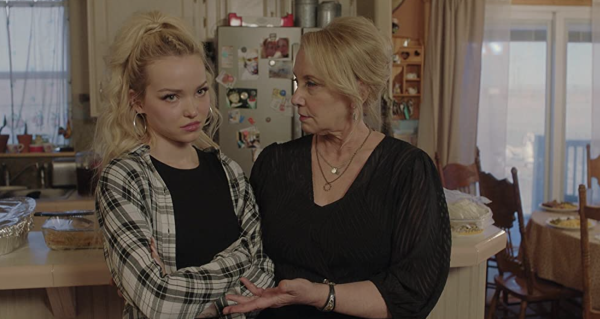 Dove Cameron and J. Smith-Cameron
Looking at the Trump supporters in 2020, we see that in general they are older, less educated, and more prominent in the U. S. heartland, inland from the Atlantic and Pacific-Coast states. And in 2020, as in 2016, Trump carried Texas. For a feeling of the Trump voters’ grievances against liberal and progressive opponents one can read a book like the 2016 memoir Hillbilly Elegy, by J. D. Vance, now a Republican senator from Ohio.
We’ll examine our political polarization a little more later in this review/essay, but first a summary of the plot. It hinges around a young woman, Abilene Shaw, who had come to New York with her guitar hoping to fulfill her dream of becoming a singer. Ben hooked up with her on several occasions. Apparently, she thought these casual sexual encounters had more meaning than he did. Thus, not long after the start of the film, Ben receives a phone call from her brother Ty, informing him “Your girlfriend's dead,” and “this is the worst phone call you're ever gonna get in your life.”
Ty assumes that Ben will come to the funeral in Texas, and he will pick him up at the airport. Ben tries to let Ty know that the relationship was not that serious, but he is not blunt enough. When he says to Abby’s brother that he’ll be there (at the funeral) “in spirit,” Ty replies, “Spirit Airlines. Right, man. That's a great choice.”
Thus, apparently too embarrassed or guilt-ridden to refuse coming to the funeral, Ben flies to Texas. We soon see Ben, Abby’s family (consisting of her mom, Ty, a younger brother, two sisters, and granny), and many others including a priest in a cowboy hat at an outdoor funeral ceremony. After Abby’s mother says her daughter “found love” with Ben, he is asked to speak, he stumbles through a short speech, spouting generalities like “She loved music. I know that. I know that. She loved music….and….she will always be a song in our heart.”
After the funeral he is apparently about to fly back to New York, but as Ty drives him away he tells Ben that Abby did not die of a drug overdose as reported, but that she was killed and the two of them are “gonna track her killer down and deliver vengeance.” Ben asks, “Who do you think did it?” Ty replies, “I got a couple theories. Cartels. Mexican gangbanger I got my eyes on. I mean, this is just the beginning. It goes deep.” Ben then asks, “And what's this based on?” To which Ty responds, “Gut” and goes on to explain how it’s such a reliable guide.
Although Ben keeps resisting becoming involved in any such vengeance, he changes his mind after Ty says, “Stay down here and avenge Abby's death with me. Oh, what a story that would be.”
The next scene we see is Ben on the side of the road talking via his cell phone to his podcast producer Eloise (Issa Rae) back in New York. Earlier in the film we had seem him talking to her at a party about why America is as divided as it is. His theory? “We're all living in our own individualized times.” A little later he’s at his computer, and next to it is Tocqueville’s classic Democracy in America. Thus, he’s obviously interested in what ails the USA. As he tells his producer, “I care about America….And now I see it falling apart.”
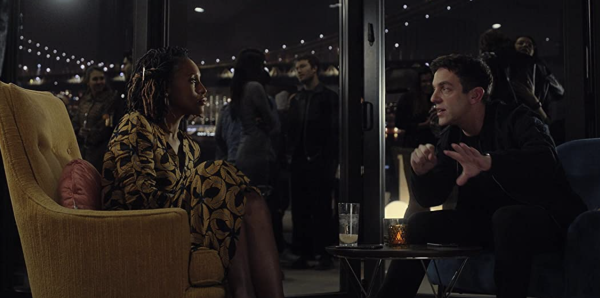 Isa Ray and BJ Novack
Now on the phone, he excitedly tells Eloise, “I have a story….this family just lost their daughter to an opioid overdose….Except, her brother won't accept it's an overdose. He says it was a murder….This is about a new American reality that people can't accept. So instead, they invent these myths and conspiracies so they can cast themselves as heroes because….the truth is too hard to accept. The death of Abilene is about the death of American identity the truth is too hard to accept.”
Later on in a verbal confrontation with Ty, Ben elaborates on what he told Eloise. After Ty explains that he didn’t tell Ben that Abby was hooked on opioids because he was following his heart [his synonym for gut], “and that’s what we do around here,” Ben suggests maybe it’s time to “ask yourselves how that’s working out for you. Maybe you should try following your brain for a change. Because when you follow your heart, the Earth is flat, climate change is a hoax, vaccines contain microchips, and Mexican drug dealers killed your sister. You invent these insane fucking narratives to explain why your lives are such shit shows because the truth is too scary for you to face.” After a little more ranting, Ben adds, “I don't understand you people.” [Film quotes from this paragraph to the end of article are taken from the actual film.]
Ben’s reaction to relying on your gut or heart instead of your reason or mind reminds us that another Texan, former Texas governor and later president George W. Bush, and Donald Trump once identified as “gut players” while Barack Obama disdained such an approach. And up to this point in the film (there’s about a half hour left), Ben’s remark—“I don't understand you people”—is one many liberals and progressives could share.
Ben has spent some time with the Shaw family, sleeping in Abby’s former bedroom, and has gotten to know her family fairly well—he earlier told Ty “I'm gonna stay with you guys for a couple of weeks. I'm gonna record everything that you think happened to Abilene.” And in interacting with them, he has experienced some additional aspects of that mindset progressives disdain. For example, after Ty had said he had been thinking they could go out and deal with Abby’s “murder” with a .45, granny replies: “Ty, you can't solve something like this with a .45. It's not as simple as one person….It's the breakdown of society, is what it is. It's the breakdown of the school system, the government. It's the pharmaceutical companies. It's the breakdown of the family and tradition. Oh, there's a whole lot of people responsible for what happened to Abilene. You're gonna need a 12-gauge, couple of ARs….A Wesson automatic….And a sidearm for safety.” In addition, the family’s pick up truck contains a rifle rack with two rifles on it.
Yet, Ben has also come to appreciate some of the family’s good points. Right before Ben’s verbal confrontation with Ty, the family and Ben were eating in a Whataburger—the restaurant chain exists in various states but overwhelmingly in Texas, where there are 718 of them. Granny asks Ben if he has family in Texas. After he says no, she states “You do now.” And Abby’s mother adds, “We’re so lucky you found Abilene.” After Ben says he doesn’t know what she saw in him, the mom (Sharon) says, “I do. I get it.” And earlier she had spoken of “our values.”
Also, after Ben says “I don't understand you people,” it is Sharon who speaks words that seem to lead Ben to reevaluate himself. Earlier his podcast producer had referred to his “whole way of life. It's dating, it's hookup culture. How it enables disconnectedness.” And its selfishness, emptiness, hollowness, and lack of self-awareness. And “how sad” his life was. But Ben suggests she’s just teasing him, and perhaps many film viewers also do not take her too seriously. But after he insults Ty, Sharon tells him that life is more complicated than he realizes. “People [like Abby] don't do drugs for no reason. They do drugs because they're in pain, pain like maybe caring for someone who hardly knows your name.” She suggests that maybe Ben didn't have to come all the way to Texas to see who was to blame for her death.
Her words seem to really hit Ben hard because shortly afterwards he is recording on his cell phone a message to his producer: “You were right, Eloise. I was the story, a self-absorbed know-it-all thinks he's gonna figure out the meaning of America, and all he learns is how empty he is.” He regrets the way he acted with Abilene: “I didn't love. I have no story….I am the story, and the story sucks." A bit later he is lying in bed in Abby’s bedroom and he tells her younger brother, “I’m leaving tomorrow, Mason. I love you mucho.”
Love! He didn’t love Abby, he didn’t care that much for her, and now he regrets it—during the course of the film, he has watched some videos and reread some texts of her’s, and he comes to realize he didn’t appreciate her enough. It’s almost as if he now recognizes the truth of St. Paul’s words, “If I have the gift of prophecy and can fathom all mysteries and all knowledge, and if I have a faith that can move mountains, but do not have love, I am nothing (1 Corinthians 1).
About half of the last 20 minutes or so of the film is devoted to a conversation between Ben and local record producer Quentin Sellers (Ashton Kutcher), and the ending to their exchange is not the film’s finest moment. Not much follows that except his telling Abby’s mom that all the material he gathered for the podcast about Abby and her family will never air—“that story’s just for us.”
Except for the rather weak ending, there is much to like about Vengeance. The acting is good, and most of the dialogue crisp and often humorous. But it’s the insights regarding the cultural clash that mainly appealed to me.
In a 2008 book, I wrote: “James Davison Hunter in his book Culture Wars (1991) summed up the clash over values that had come to characterize U. S. politics. On one side of this “war” were conservatives who believed that some sort of eternal, unchangeable, external moral authority existed that enabled them to determine what was right and wrong. For most of them the ultimate such authority was God, but their church, scripture, or some other source or combination of sources aided them in determining God’s will. On the other side were those whom Hunter called progressives. They relied more on reason, their inner selves, and contemporary conditions in deciding right from wrong.” Ben on one side and Abby’s family (and more generally Texas) on the other represent the clash, the polarization, in our own present political culture.
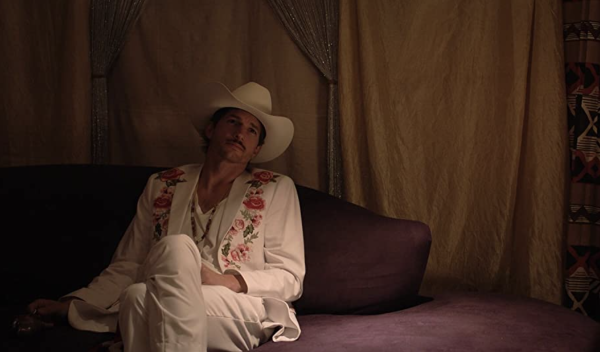 Ashton Kutcher
Several times in my own life I have confronted different cultures, not only when living in France for six months in 1961 and 1962 or latter in the 1980s and 1990s in many visits to the USSR and eastern Europe. But, like Ben, I also experienced it in Texas. As a young, liberal Democrat in the early 1960s, I once spent a long weekend at a more conservative fellow army officer’s home in eastern Texas. (We were stationed not too far away in Oklahoma.) When we got to his rather rural or small-townish house, he put on his cowboy hat and boots—his dad was a horse auctioneer—and one night we played poker with some of his pals. They all treated me kindly, but as sort of an Eastern “city-slicker.”
A little more than a decade later, I spent a few days in Rolla, Missouri (part of the Ozark Mountain region) where I gave a talk at the university there. My contacts had arranged for us to spend an evening at a local home. I was told that that area’s congressional district was very conservative, but our evening’s hosts were very gracious and we heard some wonderful live bluegrass music.
Then, just last year when Nance, my wife, was experiencing the last year of her Alzheimer’s shortend life, the non-family member who visited her most often (and helped me care for her) was probably a Trump voter.
What all of these experiences taught or reminded me of is that just because someone is more conservative than I am, maybe even a Trump voter, it does not mean that she (or he) is a bad person. In fact, she can be quite good, just (from our progressive viewpoint) politically misguided. Ben learned the same thing about some of Abby’s family, especially her mom, Sharon. In depicting this basic truth, Vengeance provides us with not only good entertainment, but a much-needed reminder that in a society as torn apart as ours is, a little more humility, tolerance, empathy—even charitable love—might help. Might help repair our fractured nation.
