



Many historians believe that some of the causes of WWII, with its even greater loss of life, flowed from WWI settlements, especially as they affected Germany.
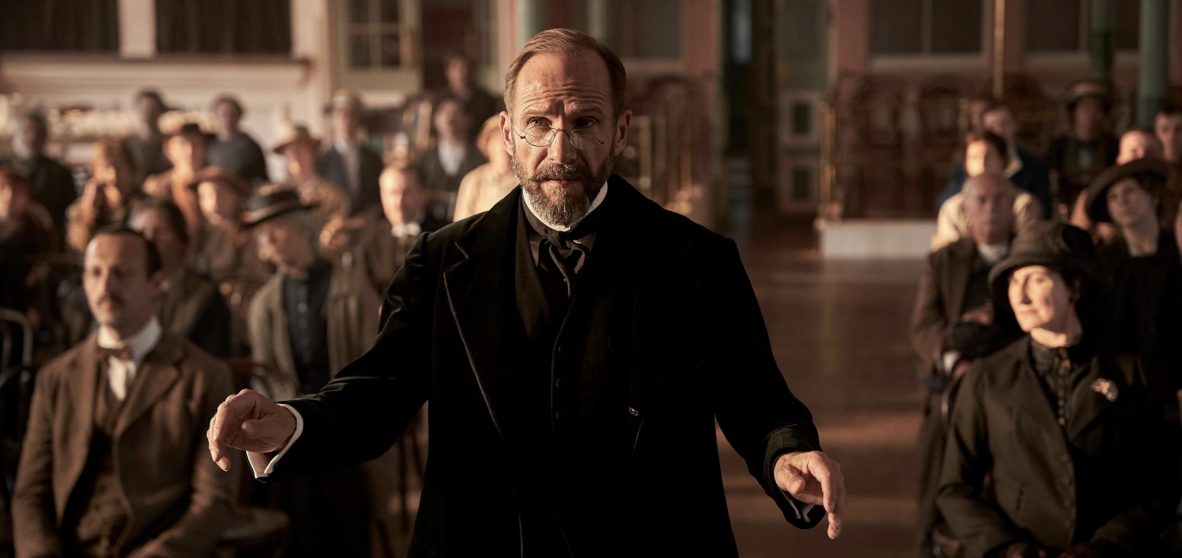
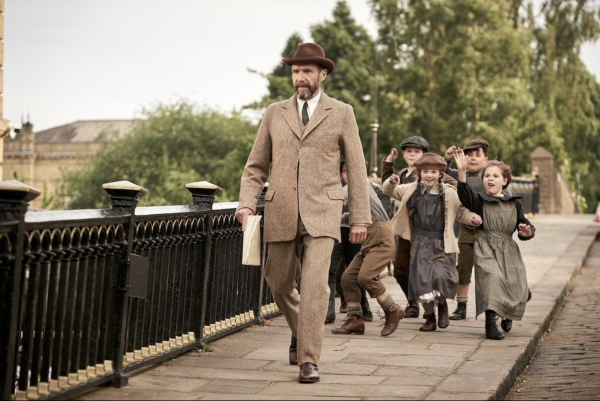
“The Choral” (2025), now on Netflix, is an appealing film set in the middle of World War I (1914-1918). The place is the fictional town of Ramsden in Yorkshire, England, and it stars Ralph Fiennes as choirmaster Dr. Henry Guthrie. He had been living in Germany, but has returned to England and is selected, with some reservations, to replace the outgoing choirmaster, who has decided to enlist in the army.
The hesitations about Guthrie come mainly from mill-owner and alderman Bernard Duxbury (Roger Allam)—Allam is perhaps best known to U.S. audiences as Inspector Morse’s boss, Fred Thursday, in the long-running series about Morse, which aired on PBS. Duxbury’s reservations about Guthrie stem mainly from the musician’s long stays in Germany—at a time when the German nation is Britain’s chief WWI enemy. But his homosexuality is also hinted at, and his rumored atheism is mentioned.
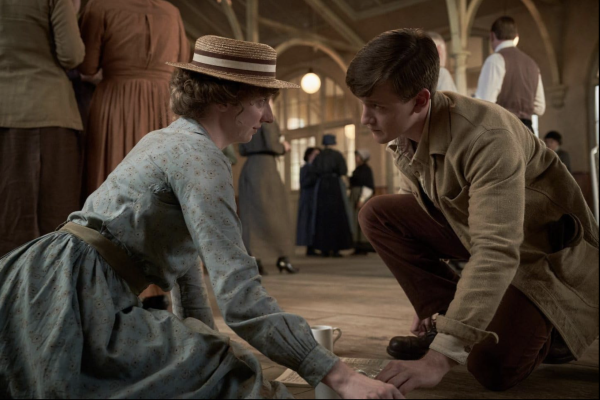
Asked about his stance on the war, Guthrie quotes the German Goethe: “A man should hear a little music, read a little poetry, and see a fine picture every day of his life, in order that worldly cares may not obliterate the sense of the beautiful which God has implanted in the human soul.” There is little doubt that he is less enthusiastic about WWI than most of the people in his town—or nation—including Duxbury, who has lost a son in the war.
Now that we have had over a century to look back at that war and assess it, there is little doubt that it was a foolish and unnecessary war. Although Germany’s Kaiser Wilhelm II’s erratic, insecure, and belligerent personality shares part of the blame for the war’s start in the summer of 1914, none of the other European leaders had done all they might to prevent the conflict from occurring. (The USA did not enter the war until 1917.) They had all valued security, prestige, influence, and allies more than peace, and they had all failed to imagine the full scale of the tragedy they were about to unleash.
The scale? Roughly 10 million military dead, twice as many wounded. One in ten Frenchmen were killed, three of ten between the ages of 18 and 28. Civilian deaths approximated the military toll. One historian has written, “Among the major [European] combatants, it is not an exaggeration to suggest that every family was in mourning: most for a relative–a father, a son, a brother, a husband–others for a friend, a colleague, a lover, a companion.”
Although writing of WWII, Ian McEwan’s novel Black Dogs (1993) also captures well the scope of WWI when he writes of his main character: “He was struck by the recently concluded war not as a historical, geopolitical fact but as a multiplicity, a near-infinity of private sorrows, as a boundless grief minutely subdivided without diminishment among individuals who covered the continent like dust. . . . For the first time he sensed the scale of the catastrophe in terms of feeling; all those unique and solitary deaths, all that consequent sorrow, unique and solitary too, which had no place in conferences, headlines, history, and which had quietly retired to houses, kitchens, unshared beds, and anguished memories.”
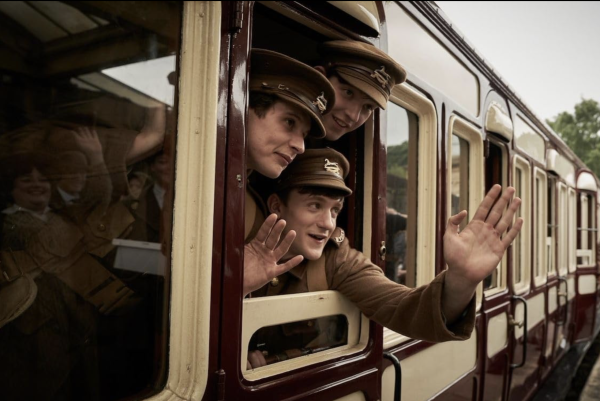
In addition, many historians believe that some of the causes of WWII, with its even greater loss of life, flowed from WWI settlements, especially as they affected Germany.
Besides Guthrie, his pianist, Robert Horner (Robert Emms), selected by Guthrie, has reservations about the war—he does not think it is “part of God’s plan”; in fact, he is a conscientious objector who refuses to fight and, in the end, is hauled off by the military police. It is also Horner who suggests to Guthrie that he modify Edward Elgar's “The Dream of Gerontus,”composed in 1900, mainly from a work about an old man dying and going to purgatory to one that depicts a young WWI soldier undergoing that experience. (For a variety of reasons, Guthrie accepts the suggestion and puts the performance on that way, although a briefly-visiting Elgar objects, and one Anglican cleric insists that his church does not believe in purgatory.)
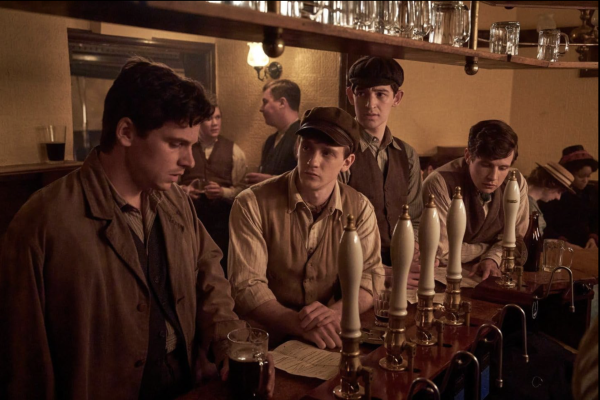
Besides differences about the war and the transcendental power of music and other arts to lift us above life’s mundane cares, there are other subjects the film treats—the maiming of so many (there is one young man in the chorus who lost his arm in the war); the reception of news that a family member has been killed in the war; religious differences (including Guthrie’s suspected atheism and Elgar’s Catholicism); the outlook of the young, liable for the draft (beginning in 1916) when they turn 18; homosexuality; prostitution (there is at least one prostitute in town); faithfulness when one’s boyfriend is away fighting in the war; race relations (one of the leading female singers is a Black woman, to whom a young White male is attracted); and finally, a topic more suggested than fully treated—the fate of souls after death.
All in all, a lot to think about. The film is based on a filmscript by Alan Bennett, who has received many awards for his stage and screen productions, and is directed by Sir Nicholas Robert Hytner, who also has received many awards for the films and plays he has directed. Much of the singing in the film is enjoyable to hear, and some of it is done by voices substituting for the actors who play the main roles.
