

How a Downturn in the Economy Became a Cookbook


June Pagan: In what seemed like only a moment, I went from being hired on virtual every job for which I interviewed, to being passed over because of my pay rate – or worse – because it was assumed that my style of cooking was considered “old school.”
After working as a full-time private health chef and caterer to the rich and famous for over 30 years (and collecting a very comfortable salary), the well suddenly ran dry – in an instant. I found myself laid off, replaced by a younger, less expensive version. Suddenly, at the age of 52 – and at the height of my cooking career (with a 10-year old son under my wing) – I found myself in quite a predicament.
I ran to my agents and submitted my updated resume, hoping to find another full-time client. I felt doomed when one of the agents told me that he felt more like a casting director – than a domestic staffing agent. He explained that instead of sending resumes out, he seemed to be sending mostly headshots. The writing was on the wall: The private chef industry was changing – and changing rapidly. It was as if the bottom dropped out. In what seemed like only a moment, I went from being hired on virtual every job for which I interviewed, to being passed over because of my pay rate – or worse – because it was assumed that my style of cooking was considered “old school.” Fortunately, because I specialize as a private health chef, I’ve managed to continue in my career via on-demand freelance work through referrals from dieticians and physicians.
One benefit of working for the rich and famous was that there was always an unlimited budget - my two favorite words. It was not uncommon for me to spend as much as $500 a day for a family of four. I’m just now remembering when I worked for Elizabeth Taylor, who had no problem with spending $250 a day just for herself. On a daily basis, I would purchase every imaginable food item on her preferred list; bring it back to her kitchen; and wait for her to call the kitchen with a request. I took particular pride in knowing how to shop – in advance – to accommodate her every whim. (At the time, I was also actually able to reduce food cost by 25%, compared to what her prior chef had been spending.)
At the end of each day, all of the uneaten food would be transferred to a third refrigerator/freezer. Then, and at the end of the week, the housekeepers would take the excess food home to their families. I admired Elizabeth Taylor for allowing this. Sadly, some of my other clients were not so generous. I remember one client in particular, who would only offer four-day-old food (which included fish) to their housekeepers. On one occasion, I witnessed a new housekeeper (a mother of three who had previously been unemployed for several months) eating off of the unfinished dinner plate of a flu-ridden child, instead of throwing the food out. At that same estate, I later learned that a housekeeper of three years was fired for taking a piece of day-old apple pie home. My confrontation with the boss over that firing was not pretty.
After 30 years of catering to the conspicuous consumption by my clients, I now found myself on the opposite side of the tracks. I decided to fill in my free time by volunteering for the Chefs Move to Schools Program, initiated by Michelle Obama. I partnered with Venice High, at Title I school in Los Angeles, where many of the students struggled with hunger. I learned that many of them did not eat breakfast; only ate the unappetizing school lunch (the well-liked pizza had been removed from the menu). Only 35-40 percent had a decent dinner, and those were the lucky ones (who had a grandmother at home or a parent that had the energy and determination to cook after a long day at work). The experience pulled at my heart strings and enough to provoke me to dedicate more time and energy into changing those numbers – because eating well should be a right, not a privilege.

Getting back to the vast abyss between the conspicuous consumption of the rich – and empty dinner plate of the less fortunate…With the change in my own income, I found myself somewhere in the middle. I realized that although we had considered ourselves to be among middle class, our own shrinking financial resources necessitated a change in our food shopping habits. It was no longer possible to shop as if there was an “unlimited budget” for food, as I had done for so many years. Food costs were rising rapidly, and it was time to start walking the walk instead of just talking the talk.
I still wanted to feed my family well – buying organic and as fresh from the farm as possible. I also realized the importance of selecting ingredients that are packed with as much nutritional value as possible. And that is how this book journey began. Each day, I would document my forays into the food marketplace, faced with challenge of putting good food on the table within a restricted budget. At the same time, I conducted extensive research on the nutritional value (and in some case, the medicinal value) of each ingredient. I applied what I learned over my three decades of experience as a private health chef by incorporating as many “functional whole foods” into each recipe – without sacrificing flavor.
For most of us – including me - eating for enjoyment comes first. I’m in the process of putting the final touches on Purple Pizza and Other Flavors to Savor – a journey away from the SAD (Standard American Diet) to a more healthful approach to eating. Turn off the Food Network, get in the kitchen and create your own health, having fun while you are doing it!
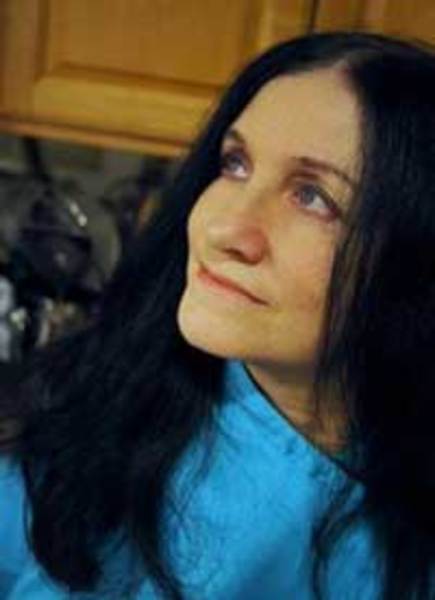
June Pagan
June Pagan/Private Chef
Check out Purple Pizza on Facebook.
