

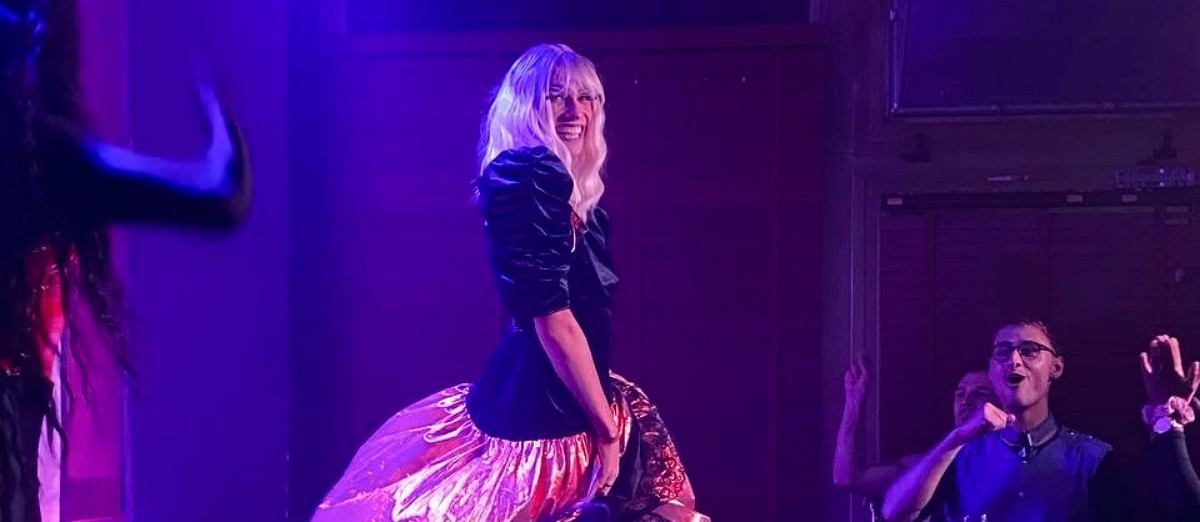
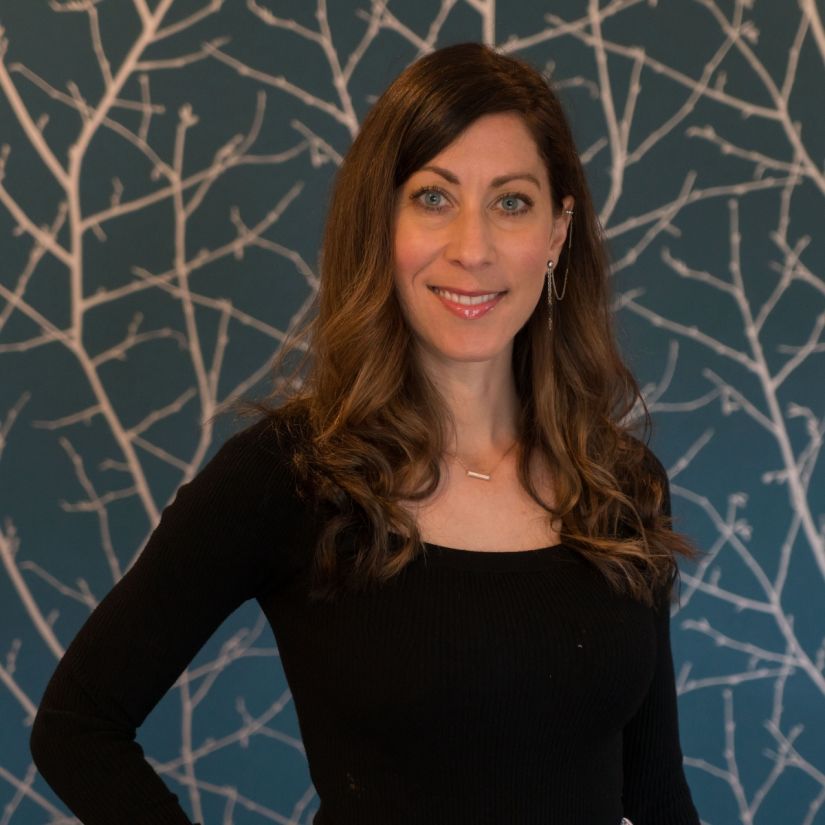

Samu/elle Striewski is one of many bi+ drag artists challenging gender and sexual binaries in drag and society at large.
Television shows such as RuPaul’s Drag Race, Dragula, and Drag Den have brought drag deeper into the public consciousness and opened up conversations on the expansiveness of drag itself. With this growing awareness, though, has come an escalation of attacks. This year alone, drag has faced armed protests, violent actions, and legislative efforts to restrict performances in multiple states. Yet drag has always been a political act, and artists are continuing to define and redefine this art form.
Samu/elle Striewski is one of many bi+ drag artists challenging gender and sexual binaries in drag and society at large.
When Samu/elle saw their first drag performance in Paris, they remember thinking, “I don’t want to sit in the audience, I want to be on stage!” Inspired by artists such as Barbie Breakout (the non-binary, openly HIV positive hostess of Drag Race Germany) and Cunning Stunt (a trans* man and drag king based in New York), Samu/elle’s drag transgresses the “gay drag queen” boundaries.
Samu/elle has performed in New York and Berlin. Next year, they are headed to the University of Oxford on a prestigious Rhodes Scholarship.
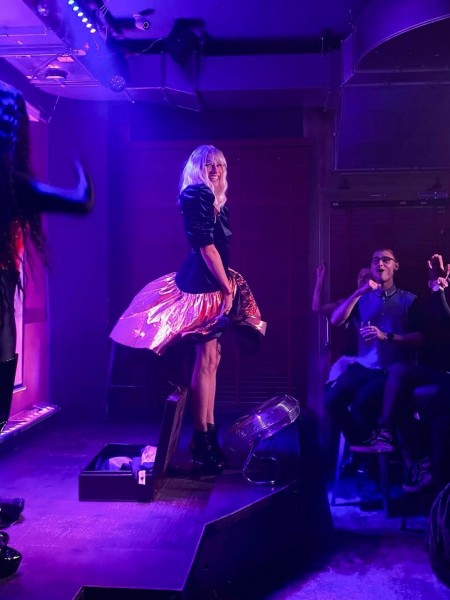
“I was quite honest in my application [for the Rhodes Scholarship] about my standpoint on trans and queer rights and my personal essay was a full disclosure of what it means for me to be non-binary, a drag queen, and a bi+ activist in times of drag bans, anti-trans hate crimes, bi+ erasure, and ‘Don’t say gay’ bills,” explains Samu/elle on a train between Paris to Berlin. “I was male assigned at birth and many people tend to read me as a slightly feminine, white gay man. So, I tried my best to irritate everyone’s expectations and wore a wonderful red dress by my mother for the final interview day. I felt beautifully masculine, powerfully feminine, and unapologetically myself.”
Samu/elle is not the only bi+ drag artist performing on stages across the world, though it can sometimes feel that way. Mainstream publications and social media were abuzz with questions about who drag is for when Drag Race UK featured a bisexual contestant, Ally Cubb (formerly Scaredy Kat), who was dating a girl while he was on the show’s first season, or more recently, when Drag Race cast its first trans male contestant, Gottmik, who is also pansexual.
“But drag does not belong to gay men,” exclaims Samu/elle. “It has been an integral part to lesbian, bi+, trans, inter, and non-binary culture, and lesbian, bi+, trans, inter, and non-binary people have made drag culture what it is today. I try my best to reclaim this wonderful queer form of life for myself and for some of the non-G’s in 2SLGBTQIA++.”
Samu/elle, has faced biphobia within the drag community, which they believe is perpetuated by the fact that most of the people working backstage in drag competitions are gay men.
Samu/elle, though, has faced biphobia within the drag community, which they believe is perpetuated by the fact that most of the people working backstage in drag competitions are gay men. The 23-year-old bi+ activist shares that while they have encountered many amazing drag artists across the gender and sexual orientation spectrums, they used to always feel like they had to hide their bisexuality. “Given the jokes and anecdotes that were shared, particularly among the queens, I was pretty safe to share stories about my own experiences as long as they could be read as ‘gay.’ Ironically, even in these liminal spaces where gender loses its interpretative force, I had reservations to talk about experiences that might question my ‘queerness’—which here is to say ‘gayness.’”
Many bi+ people, whether or not they are drag artists, can relate to this pressure to remain invisible. "Bisexuals are commonly erased from our own marginalization," says Nicole Kristal, founder and executive director of Still Bisexual, a U.S.-based national nonprofit. "When there are wars against Drag Queen Story Hour, for instance, no one assumes those drag queens might be bi. Same goes for the bills being passed against transgender people. No one assumes that impacts bi+ people because no one assumes trans people are bi. No one really thinks about the fact that trans people have sexual orientations. In fact, nearly half of them identify as bi or pan. We need to stop defining people by just one aspect of their identity or by assumptions, which are often limiting and wrong."
“One of the tricky things about bi erasure is that it often comes silently,” adds Samu/elle, who has been living in an open poly relationship with a queer cis woman for many years. “Say, I am on a pride parade kissing a person and we are perceived as gay, then this will probably lead to positive affirmation by the social environment. If I am kissing a person at that very same event and we are perceived as straight, then people might, in the very best case, perceive us as an ally and say nothing, or they just will ignore or tolerate this supposedly non-queer interaction. However, I am not an ally!”
Samu/elle no longer holds back from speaking out about their bi identity on or off stage. “I have reached the point where I do not silently accept anymore that anyone devalues these experiences.” For them, drag is less about the incorporation of a “persona” and more about a “social context” that allows people to acquire a different perspective and relationship towards themselves and their bodies, behaviors, emotions, and thoughts. In other words, drag is an invitation into a new way of being, one that at its core, challenges binary thinking.
On a recent cold October night in what is locally known as the “Queer Heart” of Prenzlauer Berg in Berlin, Samu/elle got on stage at the Tipsy Bear Berlin without a wig, just a black coat, Morpheus-like sunglasses and began lip-syncing to a scene in the classic movie The Matrix about the construction of reality. Turning next toward Judith Butler’s book Gender Trouble about the social construction of gender and sexuality, Samu/elle concluded with RuPaul’s “Born Naked,” as they transformed into a blonde femme.
The performance encourages the audience to see bisexual, non-binary, and trans identities as fully realized realities.
Until society changes, Samu/elle will continue to use words such as “bisexual”, “bi+”, and “nonbinary” to describe themself because we must be audible in order to be seen, as bi+ activist Robyn Ochs has said. However, Samu/elle hopes to see many more drag performances, movies, and television shows that “present uncertainty and in-betweenness as exciting and integral parts of becoming rather than treating them as less valuable steps on the pathway towards a ‘true’ and ‘fully self-conscious’ identity.”
Their dream, which many 2SLGBTQIA++ people likely share, is of a world that embraces this in-betweenness: “Imagine what could be possible if we would as society dare more often to replace the system of exclamation marks, of ‘coming out as X (or Y),’ of ‘being proudly X (and nothing else)’ by a language of on-the-way-of-becomings, of questions marks and asterisks. That would be radical, indeed.”
