


My father, whether he knew it or not, was already familiar with fascism in the US, already its opponent, struggling to be free of it.
The defenders of Western hegemony sense the encroachment and have already defined the possibility of imagining race without dominance—without hierarchy—as ‘barbarism.’ —Toni Morrison, “Home”
My father died from cancer in 1999. He picked cotton before he left Foreman, Arkansas, along with 1.4 million Blacks who left the South during the 1940s. I don’t know if he left by bus, train, or car, but he would have been in his twenties then. I used to have a photo of him in a sharp suit and tie, with a hat that made him look classy. He could have shared the screen with Bogart.
My father headed for Cleveland but ultimately arrived in Chicago where he met my mother. The two married. And divorced, months before I was born. When I’m eleven, he was back, already working as a beef boner at a meat factory on the Southside.
Some years before, in his senior years, he was trying to learn Russian. I don’t know why. It was something to do, something to learn, to exercise the mind. My father never struck me as an uneducated man, although I heard that he was good at sports, particularly baseball and football. He might have had ambitions to play as professional. I’ll never know. But he certainly had dreams.
I remember a man who read the papers everyday. The Chicago Sun-Times, in particular. The Defender and Ebony. My generation would have called him politically conscious. For my father, you had to be conscious: there were white folks out there. White folks. Always White Folks. Particularly on weekends when Johnny Walker Red encouraged him to speak his mind.
Had he not had strabismus, he would have fought in the war to defeat fascism in Europe. But my father, whether he knew it or not, was already familiar with fascism in the US, already its opponent, struggling to be free of it.
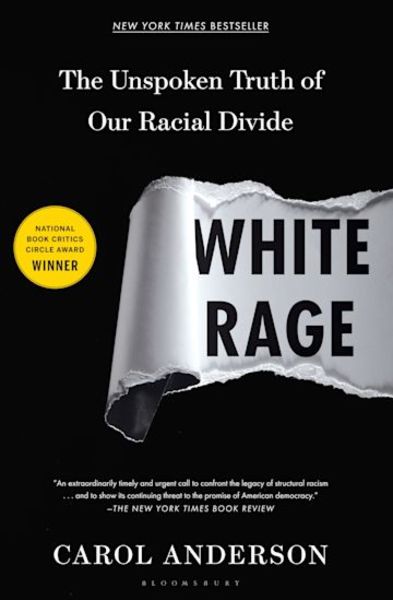
While reading White Rage, The Unspoken Truth of Our Racial Divide, historian Carol Anderson’s well-researched account of foundation rage in the US, I was thinking about my father. I was thinking about his anger, followed by hours of sitting in silence. I was terrified by it, too young to understand that, for the most part, he wanted to vent, and he couldn’t do so with the white man who crushed his dreams.
He went to work, nevertheless, rarely missing a day. In the “freezer,” moving his arms in that repetitive motion necessary to stab at the carcasses of beef, my father would have stood beside co-workers, friends, on the assembly line. His boss sat in the comfort of either a warm or an air conditioned office, ordering the Black men in the freezer to pick up the pace. He needed the Black men to keep his company viable and his family upward bound. He would never have asked these Black men what they wanted. What were their aspirations.
So my father seemed angry some days, gloomy, most days. As a teenager, what did I know about a grown Black man thinking he never left the Jim Crow South, never left the plantation where he picked cotton?
Everyone, writes Anderson, focuses on the “flames,” that is, Black anger. Black anger is put in a spotlight and surrounded by a narrative that speaks of violence. Paint the color of this violence black. Draw attention to the pathology of black people. Note the outrage of predators and rapists, there in the Black community. Who takes note of the “logs, kindling,” writes Anderson, the “invisible violence” that is the white rage, the rage creating such a mythical narrative? How much of the power my father’s boss yield derived from his belief that Black men had to be subdued by working them until they were useless?
This “visible violence,” Anderson explains, “works its way through the courts, the legislatures, and a range of government bureaucracies.” White rage “doesn’t have to wear sheets, burn crosses, or take to the streets.” White rage’s trigger, Anderson argues, is “black advancement.” Desire freedom from tyranny and run afoul of systemic racism.
White rage was visible to my father when he muttered, white folks, white folks.
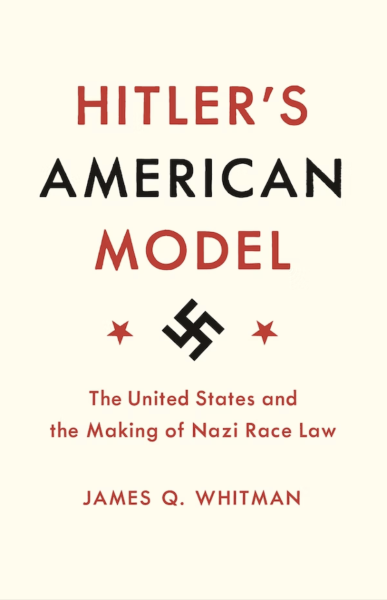
For two days in November, 1938, the Nazis terrorized the Jewish people in Germany. Synagogues and Jewish businesses were set ablaze while SS soldiers looted homes. Kristallnacht was Hitler’s idea, his response to the shooting of a German diplomat by a Jewish student in Paris. As James Q. Whitman explains in Hitler’s American Model: The United States and the Making of Nazi Race Law, the Nazis noted how America, at the “forefront in the creation of forms of de jure and de facto second-class citizenship for blacks, Filipinos, Chinese, and others, was “a beacon of anti-miscegenation law.” Under Nazi rule, Germany, in turn, could begin litigation requiring the separation of Jews from Aryans.
It seemed that only the Jews and other designated “enemies” in Germany noticed let alone experienced the terror.
Hitler wrote, writes Whitman, of that “beacon of anti-miscegenation law,” of white supremacy—”there is currently one state that has made at least the weak beginnings of a better order.”
In his late teens, a “better order” wasn’t evident for my father and other Black people trying to survive white supremacy in the South. In Germany, the Jews were not only assimilated, but made up only five percent of the total population. In the US, Black Americans, the exploited labor of enslaved Black people contributed to the Jeffersonian notion of “an ‘empire for liberty,’” which had embedded in it, writes Walter Johnson in River of Dark Dreams: Slavery and Empire in the Cotton Kingdom, “a theory of space.” Imagine, as Jefferson did, the space for white people to advance in the Americas!
If only…
White rage is triggered not just by the presence of Black people, Anderson argues. Rather, “it is blackness with ambition, with drive, with purpose, with aspirations, and with demands for full and equal citizenship” that becomes contradictory. Noticeably so. That is why the fear of being made to feel uncomfortable is still with us, fueling the banning of books, which speak of the lived experience of Black, Indigenous, other people of color, and LGBTQ today. When Black people challenged this myth of a “whites only” America, they were terrorized with impunity. And what a display of cruelty? “A formidable array of policy assaults and legal contortions has consistently punished black resilience, black resolve,” writes Anderson. “One of the most macabre formats for the murders was a spectacle lynching, which advertised the killing of a black person and provided special promotional trains to bring the audience, including women and children, to the slaughter.”
There were white political leaders along with law enforcement weren’t pleased to see Blacks progress. Black people, in turn, found it difficult to “‘accumulate much,’” when “signs of prosperity could attract night-riders and the bloodletting, torture, and land seizure.” This occurred, writes Anderson, in areas of the South where the plantation economy wasn’t a factor. In these areas, the violence was know as “whitecapping,” bloodletting until anyone could ride for miles and never see a Black person.
Nonetheless, Black Americans still demanded to be recognized as equals. To assimilate would require existing as a zombie, that is, remain invisible in yet another version of those dreams of whiteness. Not living but born only to die! But to demand rights and “appropriate compensation” for work done was “a death sentence,” writes Anderson. Any attempt to address the 200 years of impoverishment or the unequal application of justice was met with resistance. Subject to the lie of “favoritism” that pitted “taxpayers” against “lazy” people, Black Americans hitched rides, jumped trains, rode buses, walked—anything but remain literally in financial debt to the dreamers of whiteness.
It was best to move on. To quote another historian, Isabel Wilkerson, Black Americans “did what human beings looking for freedom, throughout history, have often done. They left.”
Like my father, Black southerners would have read the Chicago Defender’s warnings about the cruelty Blacks face in the North. “Years of closed doors and poverty” could be found in the North too, the paper warned. Join the “freedom movement” north, but don’t expect open arms and room to grow! Whites only ruled in the North too! It settled inside your head, heart, bones so you thought of yourself, more and more, as less than the Man. But I can imagine my father like many other Blacks searching for opportunities, thinking, they’d duck and dodge the Man and slide by…
When it wasn’t warning Blacks of the systemic racism in the North, the Defender “served as one of the primary conduits of information about opportunities up north.” How did Southern elites interpret this effort by the Defender to inform its readership? Southern elites, mayors, governors, business leaders, and police chiefs, looking for “outside agitators” to blame for the mass exodus of the “servant class” taking its first step “without asking,” saw in the northern paper a threat to the “old regime.” Why would Black people, an inferior people, think of leaving the South without the help of northern agitators, out to destroy the Southern economy? Escaping “a racially oppressive system,” writes Anderson, is “displaying intelligence.” The white elite couldn’t grasp the “unimaginable.”
The Chicago Defender did its best to educate the public about that “old regime,” discussing, Anderson explains, not only the Klan but also those political offices “who benefited from a system of oppression that robbed African Americans blind.” The Southern elites took action to ban the paper from circulating in the South. “Like a resistance movement in a totalitarian society, a network of black railroad porters, ministers, and teachers, even under the stress of surveillance, worked to circumvent the ban using the postal system and smuggling the paper in bulk goods.”
During the 1920s, some 1.5 million Blacks had deserted the South anyway, which prompted the elites, writes Anderson, to commence a campaign of arresting Black resisters. The Black exodus continued, despite the threat of arrest.
So stop the trains!
Southern leaders decided to prevent the trains from running! Trains were halted long enough to derail, temporarily, Blacks on their way to the North. At operating bus and train terminals, campaigns attempted to stifle Black progress resorted to tearing up the ticket that indicated a northern destination. I don’t know how many of the frustrated didn’t think of the SS? “When blacks tried to circumvent the dragnet by walking many miles to use another station, they were manhandled by police at the railroad stations and the charged with vagrancy.” Many, Anderson writes, were packed into the jails. Blacks, Anderson continues, more determined than ever, continued to escape the South.
By the 1940s, my father would have known what to expect as he escaped the South.
As Anderson writes, in White Rage, many Black Southerners would have recalled recent months of working on plantations or working in someone’s kitchen or caring for someone’s children. Sacrificing to save the money for a bus or train ticket. Months, maybe longer, saving for to experience a life somewhere as long as it wasn’t in the South. It’s meant borrowing money. Saving for a car. Walking… Whatever it takes to step foot in a northern state.
Despite the obstacles stacked against them, Black Americans weren’t awaiting directions to move forward.
At some point in the late 1970s, while I was away in California, having completed by BA by then, my father became a foreman at the meat packing company. I went to the factory once, when I was a teen. I saw the conditions the men worked in. I’m not sure which set of issues my father presented to the company, but for his troubles, he was fired. He tried to find employment elsewhere, but he wasn’t a young man anymore.
It was the last straw. My father was a broken man. After all he went through while still living in the South. All he endured in the North, working for a white man who had not respect for Black men.
When I returned to my family home in Chicago, I saw a stranger, a casualty of white rage.
Was America really determined to defeat fascism?
