

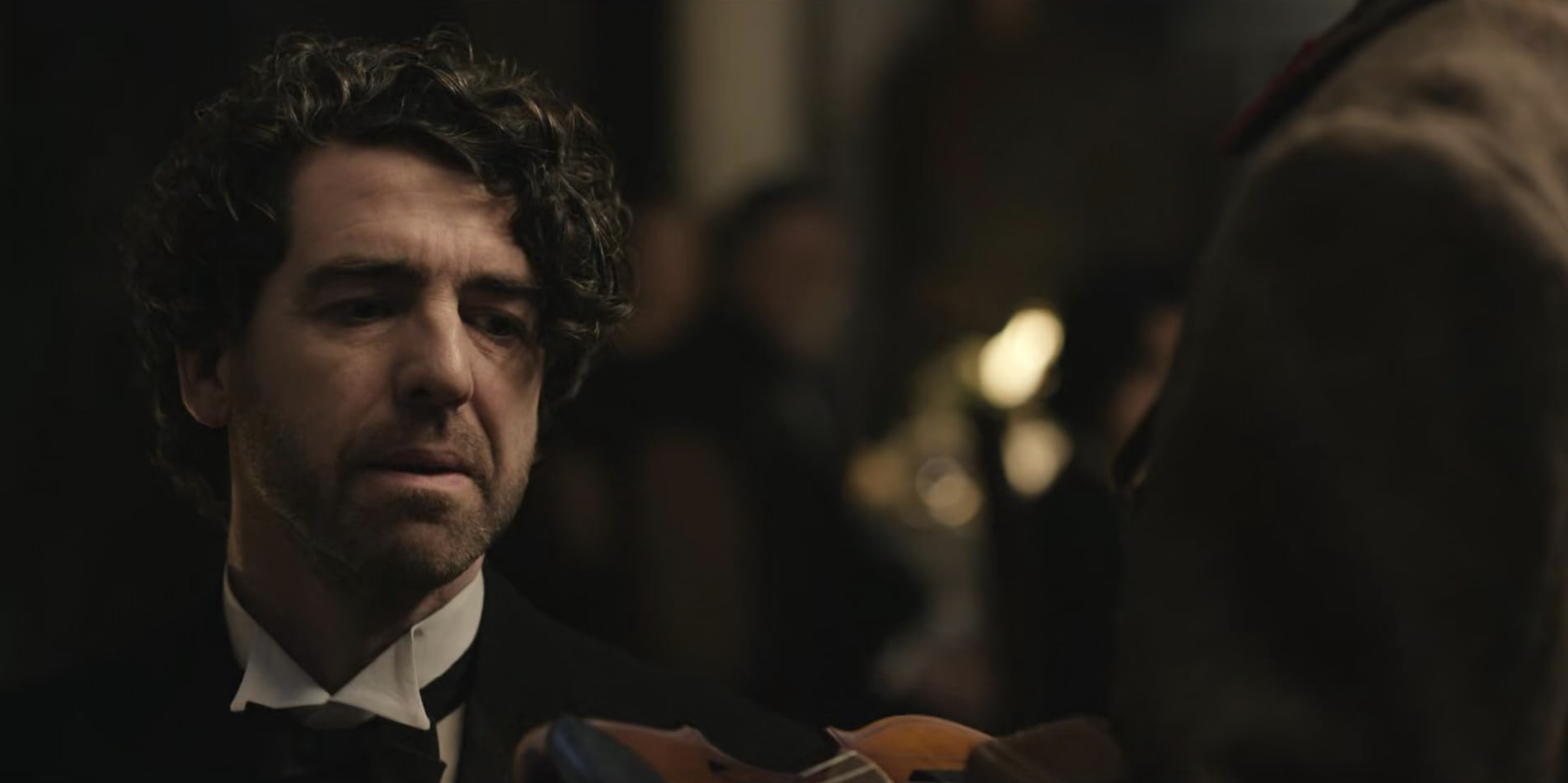

As one reads the novel or watches the Paramount series, one gains the impression that author Towles admires many of the fine qualities of the past Russian nobility.
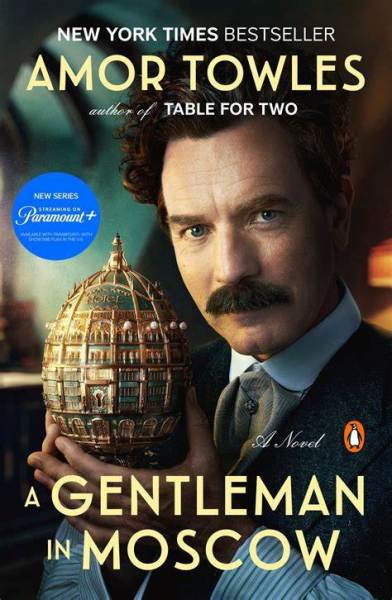
Having recently watched the eight-part Paramount + TV series and also read the novel upon which it is based, a review of both versions of “A Gentleman in Moscow” seems appropriate. The 2016 novel written by Amor Towles and the 2024 series starring Scottish actor Ewan McGregor both feature Count Alexander Rostov (Sasha) as the story’s chief character. From the beginning of it in June 1922, when he is restricted to Moscow’s Hotel Metropol, until late June 1954 when he walks out of it, he remains in that hotel—under threat of death if he leaves—except for one occasion. And that was when, in 1947 he had to rush the teen-aged Sophia to the hospital.
Sophia was a young girl who had been under his care at the hotel since 1938, when her mother, Nina, brought her in and asked the count to care for her while she traveled some 3.5 thousand miles to find a place to reside near her husband, who had been sentenced to forced labor in the Soviet gulag (prison camp system). Nina said it might take a month or two before she returned to fetch Sophia, but Nina never returned. The count, who had known Nina as a child residing in the hotel, was left with raising Sophia from the age of five or six.
In 1947 when Sophia fell on the hotel steps and had to be rushed to the hospital, the count thought it necessary to violate his prohibition from leaving the hotel. Fortunately for him, he was aided not only in finding “the best surgeon in the city,” but in returning to the hotel undetected. (Unless indicated otherwise, quoted material is as in the novel and substantially the same in the series.) His enabler was a high-ranking government security official, Osip Glebnikov (excellent English actor Johnny Harris). Although responsible for overseeing the count’s restriction to the hotel, Glebnikov helps the count out on occasion because he wants something in return.
As he explains it: He wants to learn French and English, but he also wants “to understand those who speak them. And most especially, I would like to understand their privileged classes—for that’s who remains at the helm. I would like to understand how they view the world; what they are likely to count as a moral imperative; what they would be prone to value and what to disdain.” To achieve this aim he proposes that the count “dine with me once a month in this very room. Speak with me in French and English. Share with me your impressions of Western societies. And in exchange”—Glebnikov suggests he will help the count in various ways.
For any Soviet official to help the count, who as part of the former Russian nobility symbolized evil, was unusual; and the story emphasizes more of the Soviet evils than it does of the previous regime. What follows is a brief summary of the highlights of Soviet rule from 1917 until 1954, most of them mentioned in the story.
In 1917 a Marxist-Leninist government under Vladimir Lenin seized power. After several years of civil war, it ruled over most of the former Russian Empire. Despite inaugurating a New Economic Policy (NEP) in 1921, which lessened Communist controls, the Soviet government did not cease repression. Joseph Stalin increased it after gradually emerging as the new Soviet leader following Lenin’s death in 1924. In 1928, Stalin brought NEP to an end and began a “revolution from above.” Tapping both the revolutionary enthusiasm of those tired of NEP’s ideological compromises and the career interests of party members, Stalin collectivized agriculture and established a planned economy.
By the early 1930s, Stalin’s policies were crushing much of the earlier revolutionary utopianism. In various spheres from the economy to family policy and the treatment of women, revolutionary ideas were replaced by policies intended to strengthen Stalin’s rule. Stalin killed many of the earlier ardent communists, replacing them with younger, more career-minded party members who aided him in exploiting the masses’ longtime resentment of the upper classes. The Stalinist regime taught that the Communist Party would lead the fight to overcome class enemies and “capitalist encirclement,” and only later could an idyllic age of communist equality and justice begin.
Stalin created a cult of Lenin and later of himself, and Stalin and his successors attempted to capitalize on the deep emotions generated by the Soviet population’s heroism and suffering during World War II. By words, rituals, and symbols, including innumerable war memorials, the regime stressed its unity with the peoples of the USSR in overcoming the century’s greatest threat to their existence.
After the death of Stalin in 1953, Nikita Khrushchev soon succeeded Stalin as party chief, but by mid 1954, when Count Rostov leaves the Metropol, Khrushchev was not yet the undisputed leader of the Soviet Union.
Among the Soviet evils mentioned in the story are the various measures taken against “class enemies” like the count and other former members of the nobility—roughly 1 percent of the pre-revolutionary population. In Episode 1 a former prince is executed for trying to leave Russia with a false passport. And as with the count, whose living space in the Metropol is reduced in mid 1922—after several years in Paris, he had lived freely at the hotel since mid 1918—most nobles, at a minimum, had their property seized and/or their living space reduced.
The communist regime also had a profound effect on culture. In the story it is treated primarily through depicting some of the happenings of two characters, the movie actress Anna Urbanova (American actress Mary Elizabeth Winstead, who in 2022 married Ewan McGregor) and Mikhail "Mishka" Fyodorovich Mindich (Nigerian-British actor Fehinti Balogun).
Regarding silent film star Anna Urbanova, there is mention of Stalin paying some attention to her movies. In actual fact Lenin declared in 1922 that “the cinema is the most important of all the arts,” and Stalin later personally approved new films before they were shown to the public. But not only were films an important cultural medium in the Soviet Union—the count and security official Osip Glebnikov also sometimes watch and discuss U. S. films—but Anna serves another purpose in “A Gentleman in Moscow.” When she is in Moscow and staying at the Metropol, she is the count’s lover. Although she figures prominently in the novel, including her sexual role with the count, she is featured even more so in the series, where the ups and downs of her career are frequently treated.
As far as Mishka is concerned, he is a long-standing friend of the count, but not of noble background, dating back to their university days. He was also an early enthusiast of the communist revolution, and he wrote poetry and engaged in other literary activity. However, in the late 1930s he gets in trouble when he spews abuse at a Soviet official for censoring a work he is editing on Chekhov’s letters.
Earlier he had been sorry to see Socialist Realism imposed (in 1934) as “the sole artistic style of the entire Russian people.” What, he asked, “has been the fallout of that?” It “all but ruined” Russian literature and some of its better writers. “Bulgakov hadn’t written a word in years. Akhmatova had put down her pen. Mandelstam, having already served his sentence, had apparently been arrested again. And Mayakovsky?” Mishka leaves the question open, but in 1930 the poet Mayakovsky had committed suicide. In total, from 1934 to 1940, more than 1,000 writers were arrested.
For his outburst against the censoring of his work on Chekhov’s letters, Mishka in 1939 was sent to a forced labor camp in Siberia. We have already seen that a year earlier Nina’s husband had also been sent into the Gulag. Thus, at this point, it is fitting to summarize a decade of Stalin’s repressive policies.
At the end of the 1920s, as the novel tells us, “it was deemed necessary to exile a million kulaks—those profiteers and enemies of the common good, who also happened to be the regions’ most capable farmers. The remaining peasants, who viewed newly introduced approaches to agriculture with resentment and suspicion, proved antagonistic to even the smallest efforts at innovation. . . . These challenges were compounded by uncooperative weather resulting in a collapse of agricultural output. But given the imperative of feeding the cities, the precipitous decline in the harvest was met with increased quotas and requisitions enforced at gunpoint. In 1932, the combination of these intractable forces would result in widespread hardship for the agricultural provinces of old Russia, and death by starvation for millions of peasants in Ukraine. In Episode 4, Mishka mentions this famine and the count repeats the fact to a reporter, who refuses to accept such a report which would contradict Soviet propaganda.
By the late 1930s close to 2 million people were in the forced labor camps, and additional millions were exiled in various other parts of the country. Besides so-called “kulaks,” others sent to labor camps or exiled included various other “class enemies,” members of minority nationalities, religious believers of various types, and intellectuals. In the camps, hardened criminals were often mixed in with the prisoners accused of political and economic crimes. Conditions were often unbelievably harsh, and the death rate was high as prisoners often worked in inhospitable environments, such as the Arctic Circle.
Another aspect of Stalinist life was a series of public show trials beginning in 1928. In a note the novel mentions one of them. In 1938, G. Yagoda, earlier head of the secret police (NKVD) “would be tried publicly in the Palace of Unions—right across the square from the Metropol Hotel—found guilty, and summarily shot.” Along with Yagoda, 20 other notables, including former political rivals of Stalin, were tried and most of them shot.
As important as the political background is to “A Gentleman in Moscow,” the story emphasizes the “gentleman” part of the title as much, if not more, than the word “Moscow.” At the very beginning of the story, the count is asked by a government official what his occupation is. His response? “It is not the business of gentlemen to have occupations,” but he admits to spending his time “dining, discussing. Reading, reflecting. The usual rigmarole.”
He reads literature and especially values Tolstoy and Chekhov, but also likes Balzac and Dickens and reads Montaigne. He is knowledgeable about U. S. films, and is a masterful conversationalist. His father was “a student of both the Stoics and Montaigne,” and his son Sasha is somewhat of a Stoic himself. It’s not that he does not have strong opinions—e.g., about the Communist government or about good food and wine—but he believes in adapting and making the best out of any situation in which he finds himself. And so he does, for example, adapting to smaller living quarters, becoming a head waiter (by 1932) at the Metropol, or becoming a surrogate parent to Sophia, to whom he tries to impart various lessons such as “the surest sign of wisdom is constant cheerfulness.”
As one reads the novel or watches the Paramount series, one gains the impression that author Towles admires many of the fine qualities of the past Russian nobility. And indeed they had some, as readers of (Count) Leo Tolstoy’s War and Peace will attest.
When I was a student at Georgetown U. in the 1960s, I knew two members of the Russian Empire’s pre-1917 nobility. I had them as professors and even worked briefly for one of them as a graduate assistant. He was from a princely family, and the other’s father was a count. Like many of the Russian nobility, they ended up in foreign exile sometime after the 1917 communist revolution. They were both fine gentlemen.
But nobles in Russia—and other countries—also had their darker side. Many of them, as did Tolstoy’s family, owned serfs. And serfs often had few rights and could be treated abominably—see, e.g., another work of Russian literature, Gogol’s Dead Souls. (A recent Danish film, The Promised Land, now available on Hulu, also demonstrates in the person of 18th century noble Danish land owner Frederik Schinkel, the dark side of noble landowners in relation to their subordinates.) Even in “A Gentleman in Moscow,” the count ends a romance between Mishka and his sister Helena because of his friend’s lower social class.
Mentioning Mishka again reminds me of one final point about him—in the TV series, but not the novel. As mentioned earlier, in the series he is played by the Nigerian-British actor Fehinti Balogun, who appears as a Black man with dreadlocks. There has been some debate on whether or not such a practice is wise, but there seems little doubt that it reflects the intention of those who produced the Paramount series. Besides Mishka there are at least four other occasions where a Black person plays a part that in Russian real life would have been lived by a White person. Almost a decade ago I criticized the selection of 5’11” actor Maximilian Schell to play Peter the Great, who was about 6’8”. My objection centered on the fact that Peter’s tremendous size (and appetites and energy) was an important part of who he was.
Thus, seeing the actor Balogun playing Mishka was again somewhat disconcerting. Towles’ Mishka, I thought, would not have looked like a dreadlock-sporting Black guy. But I can also see some merits in the argument that Black actors should not be “restricted” to just playing “Black” roles.
One final point about the series. The acting throughout it is top notch, with McGregor and Winstead (real-life husband and wife) being especially excellent, as is Beau Gadsdon as Sophia. Even John Heffernan as later Metropol manager "The Bishop" Leplevsky is convincing as the chief opponent of the count. In summary, the adaptation of the novel to a TV series does the story no major damage—a statement that can’t always be made.
