

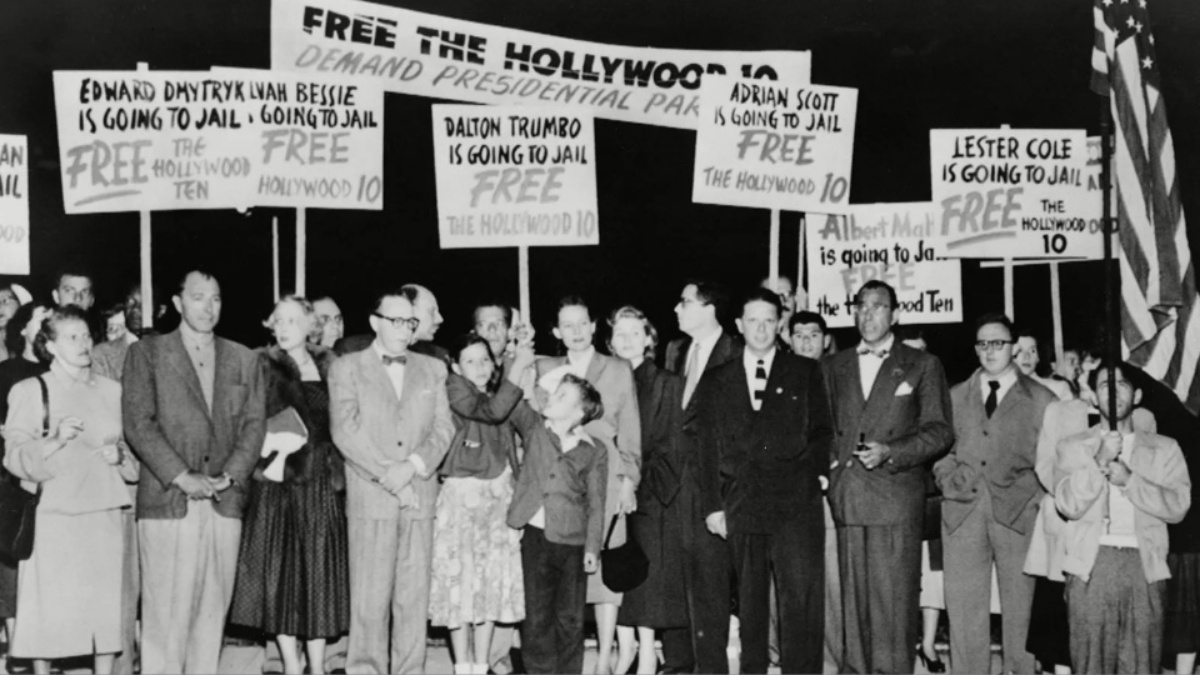


Blacklisted from the film industry in 1947, Maltz was long unable to openly produce screenplays for the industry in which he’d once been a star.
In a cruel irony, Jewish American writer Albert Maltz, one of the most skilled and thoughtful novelists of the twentieth century, is famous mainly for being one of the notorious Hollywood Ten.
Blacklisted from the film industry in 1947, Maltz was long unable to openly produce screenplays for the industry in which he’d once been a star. In hearings before the House Un-American Activities Committee, he, along with nine other “unfriendly” witnesses, cited the First Amendment and refused to answer questions about communist party affiliations. The Ten insisted that HUAC, chaired by the belligerent J. Parnell Thomas, was acting in violation of free speech protections. Charged and convicted with contempt of congress, they were imprisoned in 1950. In another irony, while Maltz was called the “most literary” of the Ten, he ended up spending more time on the blacklist than any other banned writer.
It is well-established that from 1935 to 1956, when Maltz left the CPUSA in the wake of Khrushchev’s revelations about Stalin-era atrocities, he was, in fact, a good Party member, deeply committed to world socialism. Why were his political affiliation so important and contentious? In the fearmongering of the McCarthy era, there was an absolute terror that communists were influencing screenplays, embedding within them dangerous propaganda in a sinister plot against the unsuspecting American public.
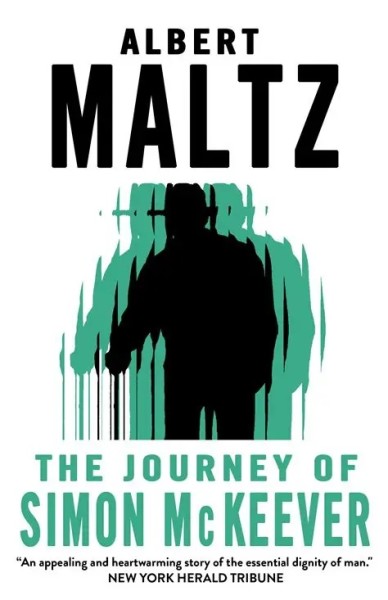
With the onset of the blacklist that barred him from screenwriting credits, Maltz shifted his focus to novels, his life’s true passion and purpose, only to be censored anew. It was Maltz’s 1949 novel The Journey of Simon McKeever that prompted the commercial publishing industry to join the antileft crusade and ban books, not just screenplays. After that, Maltz never placed another novel with a U.S. commercial press.
Even after the end of the blacklist, Maltz was marginalized. His final work, The Eyewitness Report, was rejected by more than a dozen U.S. presses in 1973, even though it called out and criticized the very entity Maltz was long punished for supporting—the Soviet Union. In a recent resurgence of appreciation for Maltz’s oeuvre and the significance of his experience on the blacklist, this novel has just been published for the first time—a half century late.
It has never been more relevant. The Eyewitness Report is a concise, concentrated treatment of life in the Soviet Union under the leadership of General Secretary Leonid Brezhnev. It is a work of historical fiction, inspired by and closely tied to events of August 1968, a moment when KGB abuses of human rights, along with the Soviet-led Warsaw Pact invasion of Czechoslovakia, provoked strong resistance among Soviet citizens.
But the novel also resonates strongly with Maltz’s personal reality, so deeply that it becomes nearly autobiographical. Writers craft from their experiences, using what they’ve lived through to fuel their ideas and breathe life into characters. As Maltz stated in his address to the Thomas committee, he wrote “from the total fabric of his life.”
When Maltz began submitting The Eyewitness Report to U.S. publishers in 1973, editors questioned the authority with which an American could write about life in the USSR; they had forgotten or dismissed as irrelevant Albert Maltz’s traumatic experience with censorship and persecution, beginning in 1947 and spanning almost two decades. Other editors might have interpreted The Eyewitness Report as a strange reversal of Maltz’s politics, a work highly critical of the dream of democratic socialism outright, but that is not the case. It is, instead, a critique of the disfiguration of socialism by the anti-democratic impulses of those in power. This is reflected in the protagonist, whose “humanist,” anti-capitalist beliefs closely align with Maltz’s.
The Eyewitness Report focuses on a well-known and well-loved Soviet author, Daniil Petrovich Barkov. A veteran of WWII, Barkov is, like Maltz, a committed socialist. He is deeply proud of his country for the sweeping changes communism has brought to the Russian people. He sees flaws in his nation’s leadership, but for years he has refrained from political involvement, lest he create undue stress for his ailing wife, Anna.
The novel begins as Barkov is anonymously invited to the Execution Ground monument near Red Square, where he witnesses a protest against the shameful invasion of Czechoslovakia. Eight peaceful protestors are quickly and violently subdued and arrested by the KGB. Barkov, shocked, looks on and determines that he can no longer in good conscience suppress his political dissent. Reflecting on the violent crackdown, he arrives at a searing insight: “There was so much to love about his country that it split a man in half to hate what so needed to be hated.”
Inspired by the protest, Barkov decides to write an eyewitness report in the name of truth and justice. Official reports of the event, he predicts, will undoubtedly alter the details. He reasons that his name and his renown may be strong enough to protect the demonstrators while also affirming the right of the Soviet people to nonviolent protest. With the support of Anna, Barkov begins writing. What follows, however, are three days of unpredictable agony that will forever change the course of his life.
It is no small matter that Maltz chose to make his protagonist a writer. It serves well in the scope of the story: he needed a character who was sensitive, reflective, with the drive and ability to share what he observes. More telling, though, is the fame he chose to give to this character. Maltz could have created Barkov as a journalist, failed novelist, or perhaps an editor. But Albert himself was none of these things. Within Barkov’s career and passion as a writer live Maltz’s own passions. Barkov is a household name in the USSR, a cultural luminary. Maltz never quite reached Barkov’s level of fame, but before the blacklist he was on his way, winning an Oscar and an O. Henry Award. Despite his success, Barkov feels there is something missing from his work. He compares his career to that of Jack London: well known, well loved, but lacking depth. We are told, “Like London’s fiction, his was dramatic, eminently readable, very popular—but it was too limited in scope, too lacking in psychological complexity and philosophic observation, to be of the first rank.” Barkov wants his eyewitness report to “show his growth as a writer.” There is something of Maltz in that; the similarity runs deep.
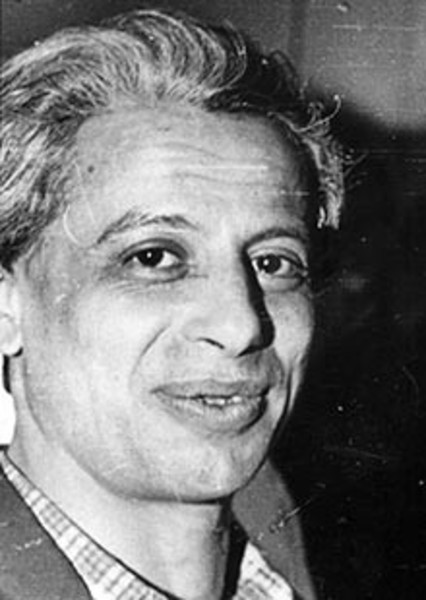
Treatments of antisemitism arise often in Maltz’s body of work. Antisemitism is central to “The House I Live In,” a short film on religious tolerance featuring Frank Sinatra; it appears as well in A Tale of One January, a beautifully crafted Holocaust novel about six Auschwitz survivors. It dominates Maltz’s great anti-Fascist novel of 1944, The Cross and the Arrow; and, of course, it appears in The Eyewitness Report.
One of the book’s named Red Square protestors, Viktor Fainberg, is not a fictional creation but an actual member of the underground Human Rights Movement. The only Jewish participant in the demonstration, Fainberg paid a painful price for expressing his dissent in August 1968: “Was it five or a dozen times they kicked him,” Maltz writes, “before everyone heard the sickening crack as his upper front teeth snapped off at the gum line?” Once the demonstration is quelled and the protestors subdued, Barkov returns to the scene and collects Fainberg’s bloody teeth. He is unable to rationalize this decision, but the teeth, a symbol of Jewish suffering, become Barkov’s talisman, urging our attention throughout the novel.
A second Jewish presence in the novel is Shika, Barkov’s dear friend and comrade from the Great Patriotic War against German fascism. A Polish military officer, Shika has recently been fired without cause from his post in the army. In an urgent letter, he describes to Barkov what is happening in Poland—Jews, being forced out of their positions and persecuted. In a summary of the letter, Barkov states, “Shika’s two boys were expelled from Warsaw University and have already left the country. But Shika won’t sign an emigration application, because he refuses to support the lie that he’s a secret Zionist.” Among Barkov’s political motivations, the ugly presence of antisemitism in Soviet society is no less important than the fight for free expression.
A third Jewish character, and the most notable, is Dr. Rubin, who is enlisted by the KGB to perform a psychological evaluation of Barkov. In a discussion of Shika’s letter, Dr. Rubin categorically denies both Shika’s plight and the very existence of antisemitism in Soviet society, instead implying that Shika should be institutionalized for paranoia: “He is covering up his own failures when he cries anti-Semitism.” At this moment, Barkov identifies Dr. Rubin; he is what Shika has compassionately described as “a lapdog Jew”—meaning that he sublimates his Jewishness and conforms with state propaganda for reasons of self-protection.
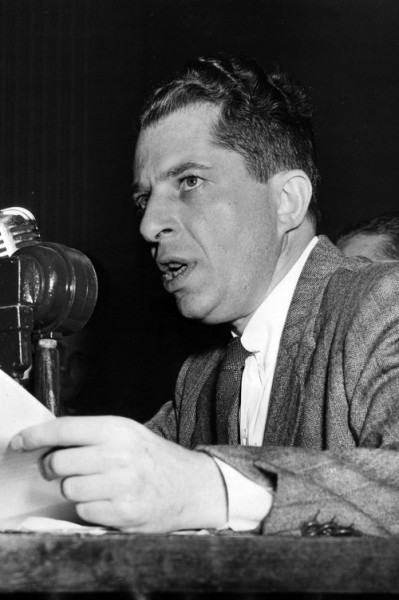
With this description, Maltz masterfully embeds another connection to his own life, and a familiar Jewish plight: “In response to the open and veiled pressures against them in Soviet society,” Barkov understands, Russian Jews “grasped at security by offering fanatical loyalty to every Kremlin policy.” Both Shika and Barkov perceive the rock-and a-hard-place position in which antisemitism places Jews—and the demeaning choices they are left with. Fight and die trying, as Shika chooses, or conform and live to see another day, as Dr. Rubin chooses.
What is the connection to Maltz? Six of the Hollywood Ten were Jewish. Key members of the Thomas committee were known antisemites. Among the first “friendly” witnesses who informed for HUAC in 1947 and spoke in support of the blacklist, were Jewish producers Jack Warner and Louis Mayer, who used their moment in the spotlight to praise the Thomas committee’s inquisition and denounce film industry communists by name. These respected studio heads might have used their power to stand up to antisemitism and refuse HUAC’s reactionary demands for censorship. But they were faced with the same choice Viktor Fainberg, Dr. Rubin and Shika faced: fight and risk all, or accommodate the status quo to prove their “patriotic” credentials.
The autobiographical nature of the novel goes beyond the cultural to impinge on the individual and subjective. Patrick Chura, who wrote the introduction to The Eyewitness Report, had access to Maltz’s archived correspondence and journals. These documents show that throughout Maltz’s twenty-seven-year marriage to writer Margaret Larkin, the two struggled with Margaret’s illnesses and infertility. The strain this put on their marriage, in conjunction with the trauma of the blacklist, ultimately resulted in infidelity and divorce.
Throughout The Eyewitness Report, we are given to understand Barkov as a man who is not without flaws and shortcomings. He is deeply in love with his wife, Anna, but this does not keep him loyal to her. Anna is slowly dying in a hospital bed, her illness the result of liver damage due to malnutrition. The cause of her disease was a great act of selfless charity during the war, when she chose to share her meagre food ration with a small boy and an elderly woman. This is also why she is unable to bear children. As her ailment reaches its end stage, Barkov takes sexual comfort with Lidia Karpova, a younger woman. On this matter, Barkov reflects, “If this was not the nature of all men, it was his,” a phrase that resonates strongly with Maltz’s marriage to Margaret.
The Eyewitness Report is a window into a different time and different culture. But to ignore this novel’s insights into Maltz’s life and personal journey would be a missed opportunity. Maltz was a deeply reflective man, forever evaluating both himself and the turbulent twentieth century. Undeniably, he was a writer who in films and fiction revealed his soul; his works were his spiritual autobiography. As always in Maltz’s art, the personal is political.
In The Eyewitness Report we sense deep truths about the author’s inner world, but also about ourselves and our time. Today, for example, we are challenged to recognize and avoid repeating the horrors of HUAC and McCarthyism. Barkov, the Soviet citizen standing up to the brutality of the KGB, is also Maltz, the Jewish American screenwriter-novelist standing up to HUAC’s demagoguery during the Cold War. And finally he is us—as we face down authoritarianism in the present-day United States. There are messages here, valuable lessons, if we’re willing to look.
