


An effort is underway to ban any literary production that has to do with Black existence in the U.S.
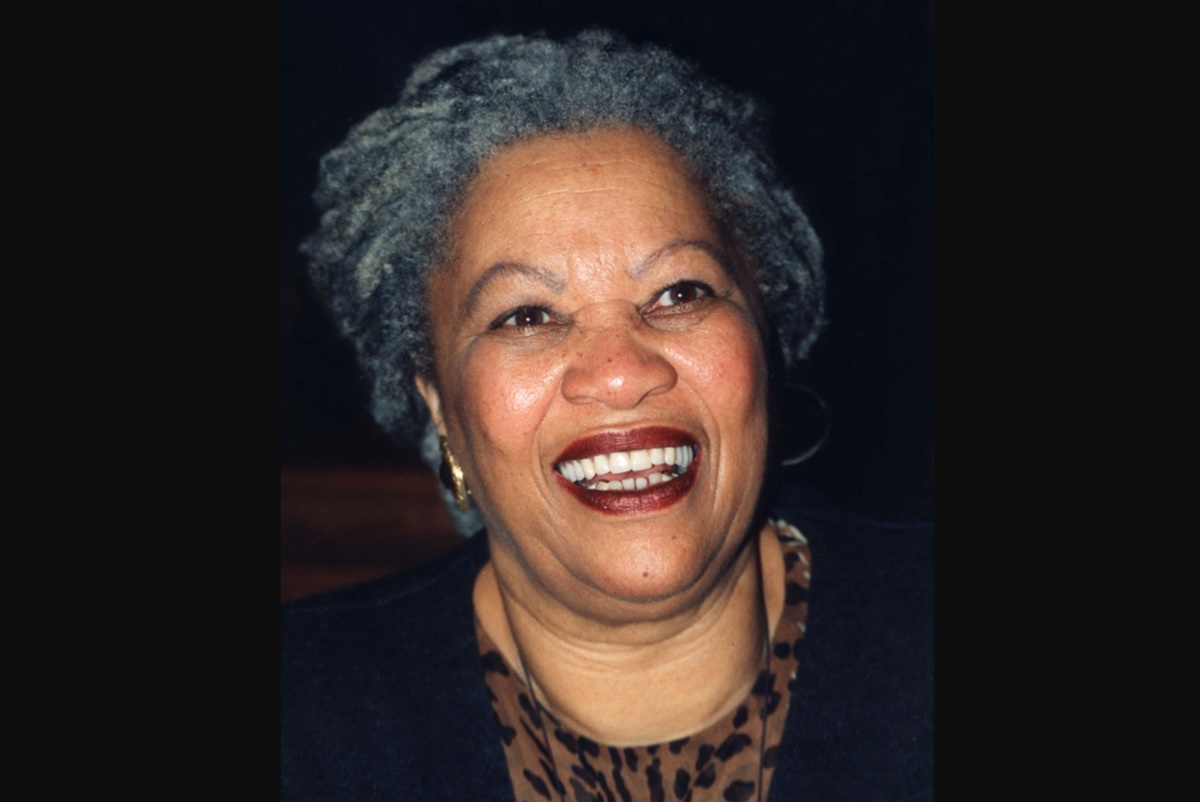
In a series of lectures, the late Pulitzer Prize winner Toni Morrison, speaks of “extending” the American literary canon rather than limiting or omitting literary works written by Black writers.
An effort is underway to ban any literary production that has to do with Black existence in the U.S,, just when more Americans were beginning to read slave narratives, among the first literary production of a nation dependent on the enslavement of Black people, -- other works, including novels and poetry as well as critical theory written by Black Americans are being banned. The proverbial door of opportunity is closing.
Why? Is it, yet again, that when it comes to “Black Matters,” white America should be very afraid? In this nation professing to be a beacon of democracy, the study of American Literature is allowed to be stymied by those intent on realizing a fascist dictatorship here in the US?
I worry that this seemingly “small” population of fascist-minded Americans is more likely a vanguard for a larger percentage of Americans, including liberals who don’t want to see the opportunities of their progeny diminished by the inclusion of Black people. This vanguard has made its presence known in the American literary canon, a literature that has always been about the study of the white self and its encounter with blackness.
In her lecture entitled, “Black Matters,” Morrison begins a discussion on how writers of literature “imagine others.” As an aspect of her task as a writer, she is drawn to the ways “all writers do this,” that is, imagining another human being or another people. Specifically, she asks, “What prompts and makes possible this process of entering what one is estranged from”? What prompts white American writers, if I may speak plainly, to imagine the presence of Blacks in their novels? How much of one’s “social grounding” is transformed “into aspects of language”?
Because there is either a Black presence or an absence, a deliberate, absence. There’s a marginalizing or silencing, a sacrifice of the Black presence for the sake of maintaining the perception of white supremacy. Persevering, in fact, a contradiction rather than a reality that suggests otherwise.
And, yet, thinking about claims by literary historians and critics that the American canon “is free of uninformed, and unshaped by the four-hundred-year-old presence of, first, Africans and then African-Americans in the United States,” she hears something ringing hollow. Africans and then African Americans “shaped the body politics, the Constitution, and the entire history of the culture.” And yet, this presence, according to this hollow claim, has “no significant place or consequence in the origin and development of that culture’s literature”?
If this is the case, then why the fuss today, in 2023? Why all the frenzy to ban as many books as possible, books having anything to do with slavery, Black people, Black trans…” Why all the draconian policies hearkening back to Jim Crow legislation? Why the rush to rid, state by state, school board by school board, “woke” thinking? Why the insinuation that to be “woke” is to be evil?
The contemplation of a Black presence must have touched a nerve!
Morrison wonders whether or not the contemplation about “individualism, masculinity, social engagement versus historical isolation; acute and ambiguous moral problematics; the thematics of innocence coupled with an obsession with figurations of death and hell” isn’t, in fact, a response “to a dark, abiding, signing Africanist [Black] presence.” After all, American necessitates “coded language,” Morrison states, in order “to deal with the racial disingenuousness and moral frailty at its heart.”
Here, in American literature, are the “omissions,” the “heavily nuanced conflicts.” and the “contradictions.” Above all, the contradictions! For a “fabricated” Black presence, Morrison adds,
was crucial” to writers’ “sense of Americanness. And it shows.”
When Morrison refers to the black presence in the literary imagination, she does so to suggest that if this presence receives a closer look, we’ll discover “the nature—even the cause”—of literary “whiteness.” Along side this “whiteness,” it’s not surprising to discover in American Literature, when it comes to “matters of race,” “silence and evasion.” Both “silence and evasion” have “historically ruled literary discourse.”
So why is the “habit” to ignore race not only ingrained in the discipline but also perpetuated in academic studies of American Literature? If the matter of race calls attention to itself, Morrison argues, maybe, holds up a red flag, then it’s receives a send off, labeled, “political.”
Morrison recalls what is familiar to many of us who studied for advanced degrees in American Literature and that is that “nonacademic readers [as well, and most important,] some powerful literary critics have never read, and are proud to say so, any African American text.” Many would consider it a political act. And, as we know, there isn’t anything political in academia! One is reading literature when the writer of the novel is white!
Referring to the way in which Hemingway’s casting of Black men or the way he uses “tropes of darkness, sexuality, and desire,” Morrison states that these “Black men” and the tropes” are written of “as having no meaning.” Most, too, she adds, consider Faulkner’s “major themes” only in terms of “discursive ‘mythologies,’” and his later works on race and class are considered nothing more than “minor, superficial” gibberish by a writer in “decline.”
Even if all books, from slave narratives to contemporary works by Black writers were to be banned, removed from the shelves of commercial and academic bookstores and libraries, work is still possible in unpacking the Black presence in American Literature. American traditional literature—written by white writers. As Morrison suggests, there is to contemplate yet “how the [Black] personae, narrative, and idiom moved and enriched the text in self-conscious ways.” And there is yet “to consider what engagement meant for the work of the writer’s imagination.”
In other words, all of American Literature can’t be banned!
I have noted and tried to bring to the attention of others the presence of a Black man sitting in prison for the brutal murder of his wife, and he sits there in the middle of F. Scott Fitzgerald’s The Great Gatsby. Rarely, if at all, is his presence referred to when there’s a discussion of this text. Such is the case for author, Azar Nafisi.
In her memoir, Reading Lolita in Tehran, she ignores the very visible presence of three Black Americans in F. Scott Fitzgerald’s The Great Gatsby by it’s narrator, Nick Carraway, as “two bucks and a girl.” The two Black men and one woman are passengers in a limousine while Carraway drives Gatsby’s car. “I laughed aloud,” he says, “as the yolks of their eyeballs rolled toward us in haughty rivalry.” He muses, “anything can happen… anything at all.”
How “subversive” is the act of teaching American literature in Tehran to female students if this scene is left “in the dark”? So much for understanding the presence of “Black matters” in American literature!
There are white men described as “evil” who are ultimately set upon and consumed in the whiteness of flames. Such is the case at the end of Faulkner’s Sanctuary, a novel, as I pointed out in my dissertation on Faulkner, that is seemingly devoid of Black people. And yet, there is a white man, wrongly accused and convicted of raping a young white woman. He is dragged out of the town’s jail, and encircled by a white mob, he is set ablaze. What becomes visible to the narrator is the swirling whiteness of the fire.
In Edgar A. Poe’s novel, The Narrative of Arthur Gordon Pym, a boat of white men, including the narrator barely escaped death at the hands of “savages,” that is, Black inhabitants on the island of Tsalal. In the book’s introduction, we are told that Tsalal is a “Hebrew verb” meaning “‘to be dark.’” As the survivors escape the violence of the encounter of whites and Blacks, Pym’s final paragraph records the very last image:
“The darkness had materially increased, relieved only by the glare of the water thrown back from the white curtain before us. Many gigantic and pallidly white birds flew continuously now from beyond the veil…” The boat rushes into a “cataract, where a chasm threw itself open to receive us. But there arose in our pathway a shrouded human figure, very far larger in its proportions than any dweller among men. And the hue of the skin of the figure was of the perfect whiteness of snow.”
Here, in this closing paragraph is what Morrison means when she refers to reading American Literature and often, as a Black American, coming away with a “different” understanding of the text.
Oh, the horror, the horror! The “perfect whiteness of snow,” as fantastical as Snow White, follows the questionable representation of those Blacks on Tsalal Island.
Returning to Playing in the Dark, the fabrication of the Black presence is something to mediate on because it’s a “mediation on the self,” Morrison concludes. Such a mediation would represent “a powerful exploration of the fears and desires that reside in the writerly conscious.” Such a mediation, too, would reveal “longing, “terror,” “perplexity,” “shame,” and “magnanimity.”
This mediation “would require hard work not to see this.” And, yet, this is the work we must pursue if the idea of a democratic society is to prevail.
