

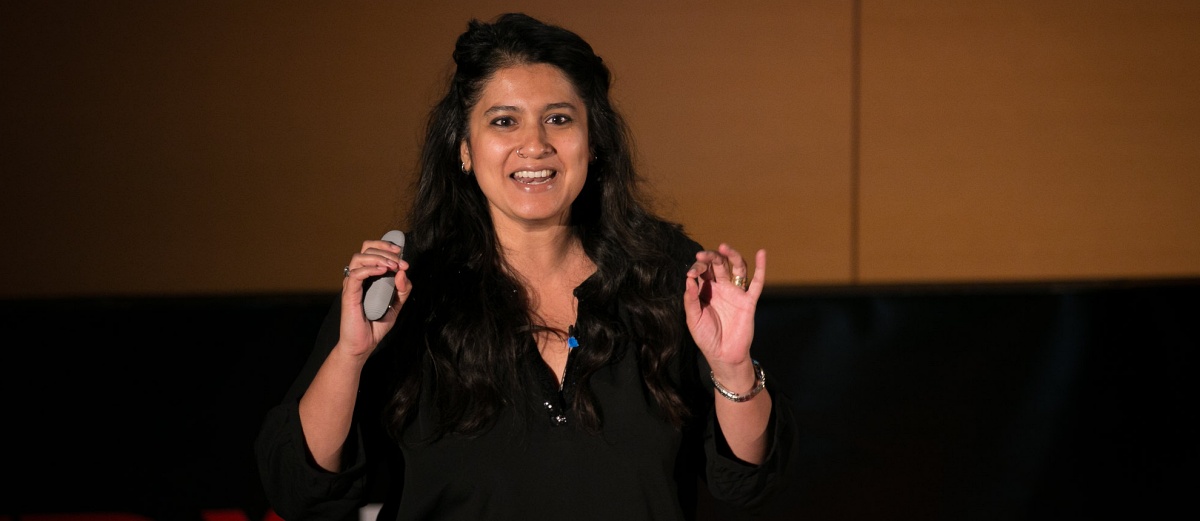

Sonali Kolhatkar explores how progressive racial narratives can break through mainstream media in a variety of forums.
Social and racial justice advocates have always faced the challenge of building support amidst a media environment hostile to progressive change. The rise of social media created opportunities by eliminating news gatekeepers, but navigating social media venues such as the now Elon Musk-owned Twitter has its own hurdles.
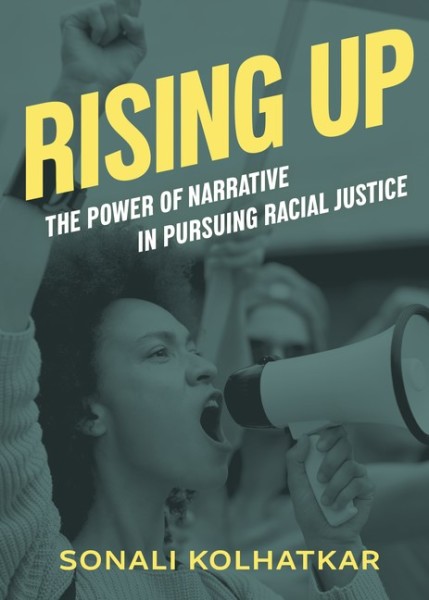
Sonali Kolhatkar spent years covering the news for Pacifica radio. She knows the challenges faced by social and racial justice movements. She offers a keen understanding of the media environment in her insightful new book, Rising Up: The Power of Narrative in Pursuing Racial Justice.
The Power of Narratives
Kolhatkar’s core argument is that racial justice campaigns can effectively use narratives to broaden support.This is more imperative than ever, since “after Trump racial issues are no longer seen as separate from other issues.” Despite this shift, mainstream media “continues to charge those with ‘bias’ if they charge someone with racism.” This is the complex environment racial justice advocates encounter and the core subject of the book.
Kolhatkar’s sees these narratives as taking diverse forms, ranging from Black Twitter to deep canvassing via door to door discussions. Narratives enable racial justice movements to avoid depending on mainstream media to frame their issues.
She recognizes it’s not easy. For example, I asked her whether she thinks Black Twitter can still play a key role in the wake of Elon Musk’s purchase of the forum. She said, “That’s the problem when you don’t own the media. Twitter has already seen a shift that makes it less hospitable to racial justice advocates.”
I was struck from the parallel between the door to door “deep canvassing” that Kolhatkar promotes and the electoral outreach strategy pioneered by the farmworkers movement of the 1960’s and 70’s.
I was struck from the parallel between the door to door “deep canvassing” that Kolhatkar promotes and the electoral outreach strategy pioneered by the farmworkers movement of the 1960’s and 70’s. For all the focus on mailers, television ads and social media, no strategy for changing minds is more impactful than a long personal conversation with the person you are trying to persuade.
From Hollywood to NPR
Kolhatkar explores how progressive racial narratives can break through mainstream media in a variety of forums. This requires her to detail the pervasive racism throughout, which in places like NPR or the New York Times takes the form of denying racist motives.
Her critique can be surprising. For example, I watched the HBO series Watchmen and was amazed that a story line based on the 1921 mass murder of Tulsa blacks reached HBO. But Kolhatkar shows how in making the lead sympathetic character a black woman police officer the series effectively humanizes the police.
It’s understandable to cheer blacks getting key roles in movies or television series. But Kolhatkar points out how often they play police officers using violence or outright criminals. Both contribute to whites’ identification of black people as violent. In contrast, for decades white officers on crime shows like Dragnet were portrayed as honest public servants protecting social morality.
I told Kolhatkar during our interview how growing up I used to watch the television show Adam 12 (it aired from 1968-75). It featured two of the nicest white Los Angeles cops you would ever meet. That the Los Angeles police force was among the nation’s most racist for decades was never part of any episode. Kolhatkar noted that such shows “portrayed the Los Angeles that the directors of the show lived in. Not the city experienced by blacks and other racial minorities victimized by police.”
With the country’s racial backlash in full swing and the Supreme Court set to thrown out affirmative action, changing America’s racial narrative is paramount. By offering innovative strategies, Kolhatkar’s Rising Up could not have come out at a better time.
(Sonali Kolhatkar will be discussing Rising Up on Wednesday, June 28 at 6:30 pm at the North Berkeley Library)
