

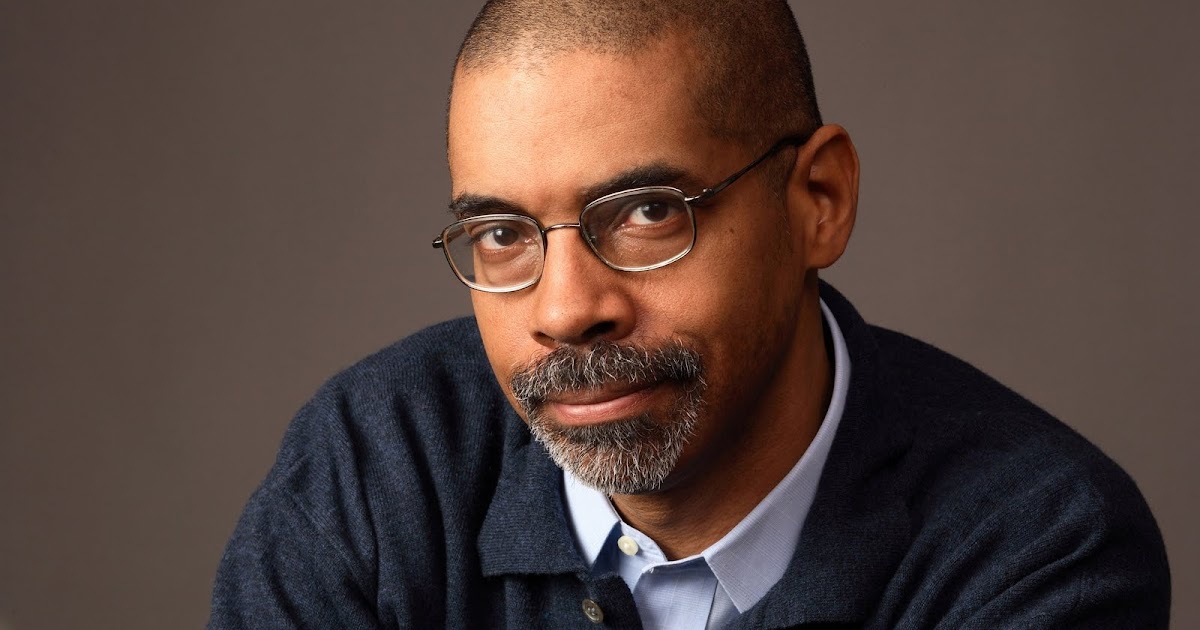

Stephen L. Carter is deeply concerned that American democracy is threatened by the loss of civility in our public life.
The time has come to declare war on the violent metaphors that are besieging our language. We must smash them, crush them, track them to their lairs and eradicate every trace. We must not rest until we have wiped them out. They must be killed before they can multiply. Our strategy must be to slash and burn. (p. 148)
Stephen Carter knows irony.
But this old book (another prize from Mondragón Books) is anything but ironic. Carter is deeply concerned that American democracy is threatened by the loss of civility in our public life. I would be intrigued to learn what he thinks of the state of our public life now, 25 years after the book was published.
He comes at his subject from an explicitly Christian perspective, though he claims that agreeing to his approach does not presuppose being Christian, or even religious. But for him, being civil toward strangers, toward opponents, follows from an acknowledgment that every person is as much God’s creature as we are. We therefore owe it to others, even opponents, to treat them with respect, even awe. We are to love our neighbor.
Here his subtitle does not serve him well: manners and etiquette are scarcely adequate to describe his argument. He is saying, in short, that civility is a moral duty.
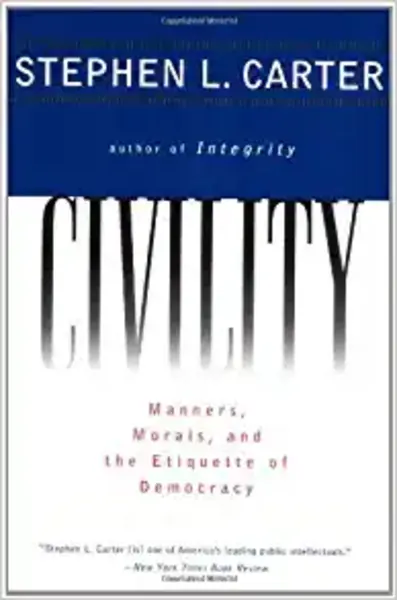
The first part is devoted to exploring the idea of civility in depth: its title is “The Collapse of the Three-Legged Stool,” though he doesn’t actually specify what that means until a later chapter. The three legs supporting civility are the home, the school and the place of worship.
If all three institutions work together, mutually reinforcing the moral understandings that the others are teaching, then the children are likely to learn what they should. If any one of them fails—if even one of the legs should break—then the task is much harder, and perhaps impossible. The metaphorical stool topples. (p. 229)
We can see here that Carter is conservative, but certainly not in the groove of contemporary, aggressively uncivil conservatives (or their predecessor, Newt Gingrich, who was Speaker of the House when Carter was writing). He is conservative in a much older sense, valuing and wanting to conserve the fundamental integrity of society.
The middle chapters explore “Incivility’s Instruments.” Among these are demonizing opponents, not listening to others, fighting words (the introductory quotation is the lead paragraph of that chapter), market language, technologies of incivility (how much worse the internet is 25 years later!), and law. I think it fair to observe that American society is worse off in each respect after two and a half decades.
The corrosive effects of our national political and economic environments make it ever harder to keep on being civil.
The final part, “Civilizing the Twenty-First Century,” is most poignant, because it is clear that we have not, in the intervening years, had any success in following his prescription. Instead of civility in public life, we have two contending camps each accusing the other of being a mortal threat to democracy, each seeing itself as the only true defenders of democracy.
Carter, with the ironic sense displayed in the opening quotation, would certainly see irony in the contemporary efforts of Republican-governed states to take the approach to Christianity of the Evangelical Right as a justification to protect the family by excluding from school curricula and libraries ideas that might make their constituents’ children uncomfortable. Such ideas include our history of racial discrimination, as well as homosexuality and gender identity. Leaders such as Governor DeSantis of Florida are literally enforcing Carter’s “three-legged stool,” by demonizing the people and ideas he wants to suppress. Family, church and school will play in harmony—or else.
Civility still persists in pockets around the country, especially where people in neighborhoods and small towns can know each other as human beings. But the corrosive effects of our national political and economic environments make it ever harder to keep on being civil. Can democracy survive this pathology? It’s hard to see how, when a large part of the public won’t even accept losing an election. If it can survive, it will be because enough people will find the courage to be civil.
