



While On Freedom functions partly as a philosophical essay, it is also a call to invest—literally and figuratively—in the future of democracy.
Yale historian Timothy Snyder has spent much of his career helping us understand the fragility of democracy and the courage it takes to defend it. In his newest book, On Freedom, Snyder continues that mission, asking readers to see freedom not as a slogan or a possession, but as something we do—together, every day.
Best known for On Tyranny, Snyder has become one of our most trusted guides through this uncertain political moment. When he writes about freedom, he isn’t speaking from abstraction but from long study of the rise and fall of democratic movements. He knows how quickly complacency can turn into crisis. What makes On Freedom so compelling is that it offers both a warning and a way forward.
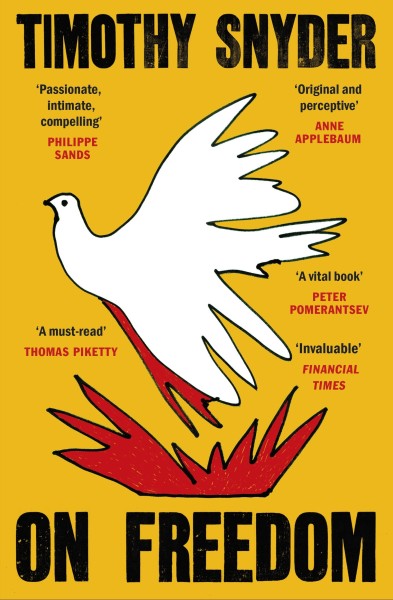
Snyder insists that real freedom is not simply “freedom from”—the right to be left alone—but “freedom to”: to learn, to act, to move, to speak truth, and to build a common life. He outlines five interlocking “pillars” of a free society: sovereignty, unpredictability, mobility, factuality, and solidarity. The words sound lofty, but Snyder grounds them in human experience. A person who cannot act on facts, or who lives trapped in lies, is not free. A society that limits mobility or silences voices cannot call itself democratic.
Readers familiar with On Tyranny will recognize Snyder’s moral clarity and his call for personal responsibility. Freedom, he suggests, is not maintained by institutions alone—it requires citizens willing to do something. We secure liberty by acting on behalf of one another, by refusing to retreat into cynicism or convenience. “Do something and keep doing it,” Snyder has said in many public talks, and that phrase captures the spirit of this new book.
Snyder also reminds us that truth and freedom are inseparable. In an age when falsehoods travel faster than facts, defending factuality becomes an act of courage. Teachers, journalists, parents, and voters all share this responsibility. As he puts it, “Without truth, we have no freedom to speak, no way to choose.” That idea will resonate deeply with educators and activists who see how misinformation corrodes trust and civic life.
One of Snyder’s greatest gifts is his ability to connect personal experience with broad historical insight. He writes about his father’s small-town independence, his own years studying in Central Europe, and the lessons learned from communities that have endured tyranny. These stories make On Freedom both readable and urgent. They remind us that freedom is not a theoretical concept but a daily practice—a habit of engagement, curiosity, and empathy.
The book also carries a spirit of hope. Snyder believes that freedom is renewable. Even after moments of democratic backsliding, societies can rebuild trust and solidarity through action. That message feels especially relevant in this polarized time, when so many people feel powerless. On Freedom offers a gentle but firm reminder: freedom begins with what we do, not just what we say.
While On Freedom functions partly as a philosophical essay, it is also a call to invest—literally and figuratively—in the future of democracy. Snyder has devoted much of his recent work to supporting educational and civic initiatives that strengthen democratic culture. Readers who know his humanitarian projects will see this book as both a reflection and an extension of that work. It’s easy to imagine that one of his goals in publishing On Freedom was to direct attention—and perhaps funding—toward sustaining that mission.
For teachers and community leaders, Snyder’s ideas translate beautifully into practice. The five pillars can shape classroom conversations or neighborhood projects.
For teachers and community leaders, Snyder’s ideas translate beautifully into practice. The five pillars can shape classroom conversations or neighborhood projects. “Sovereignty” invites students to explore self-determination; “factuality” underlines the need for truth in media and politics; “solidarity” calls us to care for one another across difference. Each concept becomes a doorway to civic action.
Reading Snyder is like being reminded of the best version of ourselves—the citizen who still believes that democracy can be strengthened, that words matter, and that collective courage is possible. His writing is never despairing. Even when warning about authoritarian tendencies, he keeps faith in people’s capacity to act.
Those who admired On Tyranny will find On Freedom a natural companion—a meditation on what comes next, once we’ve recognized the danger. It asks: how do we move from resistance to renewal? How do we live freedom, not just defend it?
Snyder doesn’t offer easy answers, but his insistence that freedom depends on action—on persistence, solidarity, and truth—is precisely what this moment demands. He invites readers to see freedom not as a gift handed down but as a muscle we strengthen together.
In that sense, On Freedom is more than a book. It’s a gentle prod to get up, speak out, volunteer, vote, teach, create—to keep doing the work that keeps democracy alive. And that is a message worth reading, sharing, and living.
