




Feudalism collapsed and then capitalism, an improvement, eventually took its place. But now capitalism is collapsing, too, and it’s time to push for something better still.
In years past, gay romance novels used to be about…gay romance. Queer mystery novels used to be about gay men and lesbians…solving mysteries. But lately, more of these “fluff” genre works are also addressing housing shortages, labor issues, and socialism. Mainstream media—especially mainstream news—are still frightened by these ideas and downplay them. That’s largely because they’re corporations themselves and part of the problem. But “the people,” in this case both writers and readers of LGBTQ romance and mystery, are becoming more class conscious all the time. And it’s likely happening in other genres as well.
You might not be surprised that gay miners in 1921 Appalachia talk about forming a union in Logan Sage Adams’s “Our Own Light,” but would you also expect it among Frederick Smith’s gay black characters in present day San Francisco in “One and Done”? In Lee Wind’s “A Different Kind of Brave,” a young homeless teen who has stowed away on a cruise ship and finds himself in Mexico falls in love with a superrich teen from New York, where they end up living Happily Ever After in luxury. And Nicky James in “Symphony of Salvation” has her gay teachers from small town Ontario discuss the importance of good labor contracts.
A young lesbian detective in 1898 Chicago is fully invested in both women’s rights and workers’ rights in Rob Osler’s “The Case of the Missing Maid.” The characters in Lev AC Rosen’s “Lavender House” mystery series, featuring a gay detective and set in San Francisco of the early 1950s, are tuned in to class consciousness, too. As is the lesbian detective in Stephen Spotswood’s series set in 1940s New York.
More and more, writers of LGBTQ romance and mystery are creating characters and scenarios that demand the inclusion of these themes. Because they’re seeing the worlds they create through their own societal experience.
Even the ghosts in Louisa Masters’s series “Ghostly Guardians” insist on unionizing as they help the humans who can see them solve various supernatural conflicts.
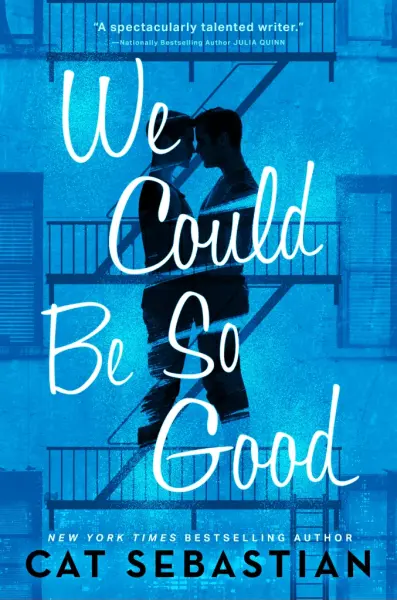
In Cat Sebastian’s “We Could Be So Good,” set in late 1950s New York, the two lovers worry about losing their income and their apartments if anyone discovers they’re gay. But fortunately one of the men has inherited a newspaper along with enough money to buy their entire apartment building. In the author’s follow up novel, “You Should Be So Lucky,” one of the reporters at that newspaper, who falls for a gay baseball player he’s assigned to cover, faces similar problems. But he fortunately inherits a ton of money, too.
We should all be so lucky.
The inheritance gets amped up in “It Takes Three to Tango” by Jem Wendel, the story of three men who fall in love in Spain and form a threesome. One of the men has a fabulously wealthy aunt that no one else in the family likes, so he helps take care of her. She was a famous actress many decades ago and owns possibly the largest house in Barcelona. To be realistic, the author doesn’t have the aunt leave all her wealth to the threesome but enough that they can afford a nice home of their own with a healthy nest egg left over.

Then there’s the romantic suspense novel, “Just My Luck” by Alice Winters, where a man falls in love with his kidnapper. The kidnapped man is the son of a corrupt chief of police, who has become wealthy and powerful through drugs, prostitution, gun running, and killing his opponents. Together, the kidnapper and police chief’s son bring down the corrupt father, so naturally, the son inherits some of the ill-gotten gains. Not all of it, of course. That would be crass. But a quarter of it, enough to buy a home so that the loving couple, both of whom have committed multiple crimes, can live HEA without undue worry. The story is all about moral complexity, and this is just one more aspect. As readers, though, we like these men and understand that in a corrupt, difficult world, if you need to use blood money to find a place to live, so be it.
In whatever country these stories take place, no matter the careers of the main characters, in whatever time period the stories are set, the crisis of housing plays a role time after time. It’s rarely the point of the story, but it’s consistently part of the conclusion. Some of the authors use the term “late-stage capitalism.” Many casually mention the need for socialism. Yet these aren’t political novels or even stories about economics or labor. It’s simply that these issues permeate every other as our current system falls apart around us.
While the deus ex machina solutions can sometimes be eyeroll inducing, it’s nevertheless encouraging to know that everyday readers are internalizing these messages, that a societal shift is taking place where our collective consciousness is recognizing the need for a systemic change. It’s one of those things that once you see, you can’t unsee. Feudalism collapsed and then capitalism, an improvement, eventually took its place. But now capitalism is collapsing, too, and it’s time to push for something better still.
Socialism, anyone? Let me pick up another gay mystery novel and find out.
