


The instant recognition and respect the Pulitzer brought to Momaday also helped create publishing opportunities for fellow Native/Indigenous writers, as well.
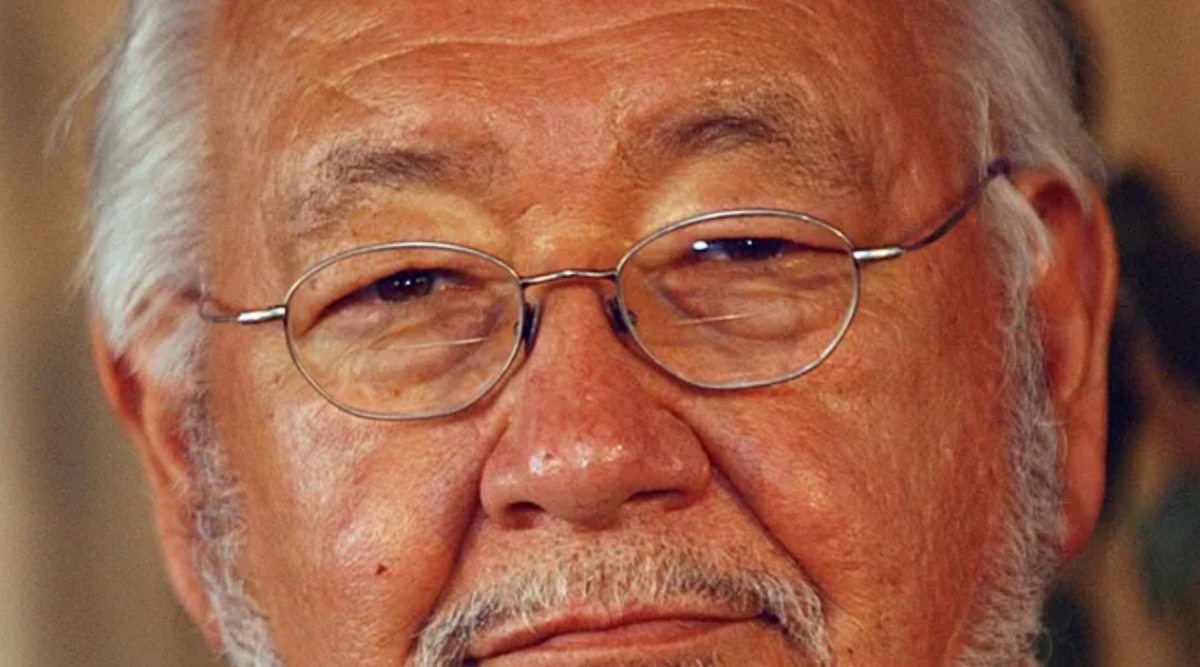
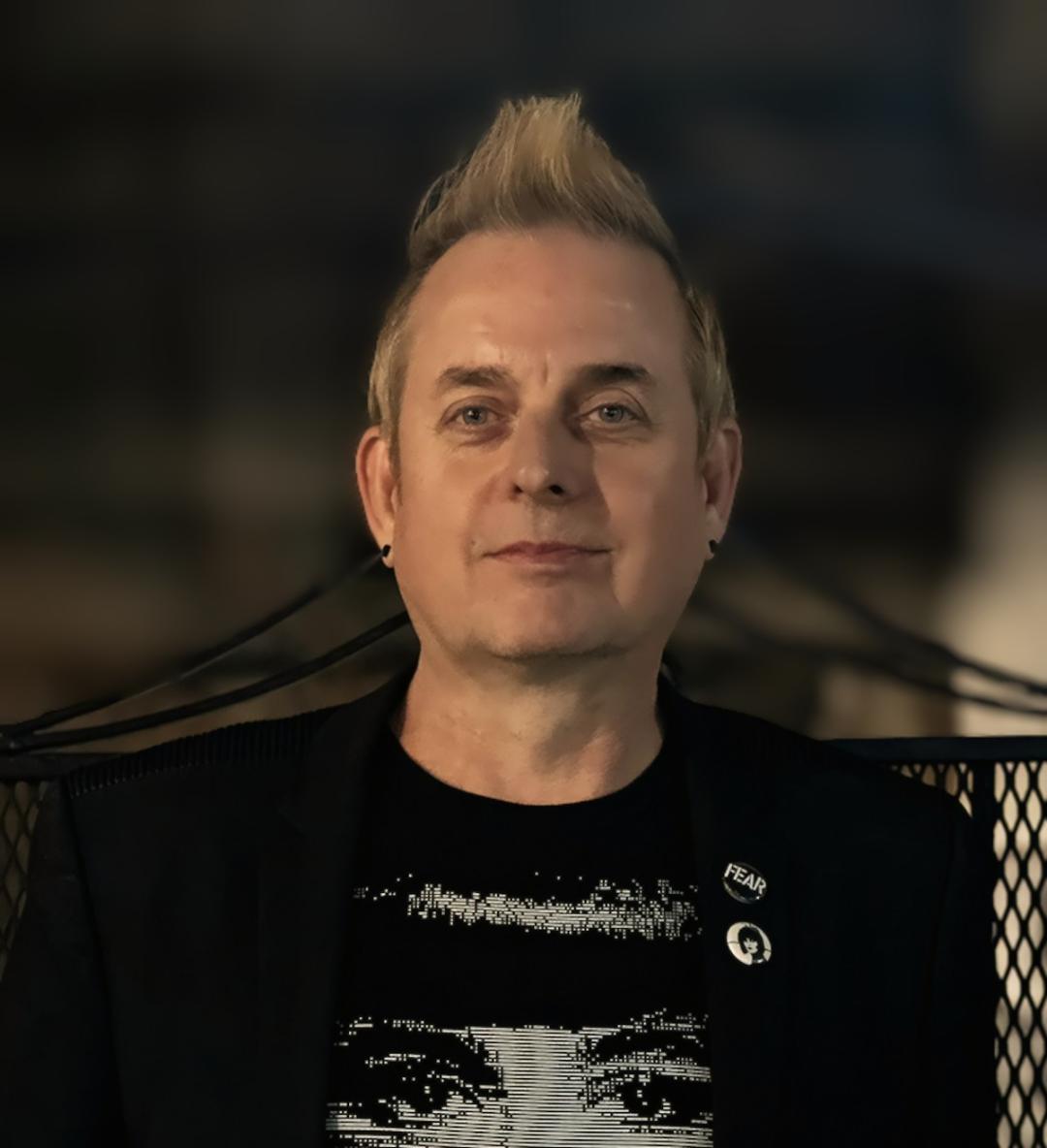
N Scott Momaday, the Kiowa-Cherokee writer and one of the foremost figures of Native American literature and storytelling who maintained that “the greatest tragedy that can befall us is to go unimagined”, passed beyond the “range of time” on January 24. In the days and weeks since, memorials and eulogies in celebration of his enduring legacy as a writer and “man made of words” appeared in the national media, along with an outpouring of gratitude from fellow Native and Indigenous writers for the influence he had on their work and lives.
Momaday achieved literary renown in 1969 when his first novel, House Made of Dawn, was awarded the Pulitzer Prize in fiction, which the selection committee praised for its eloquence and intensity of feeling, its freshness of vision and subject, its immediacy of theme.” Edging out fiction by the likes of Louis Auchincloss and John O’Hara, the committee also showed rare insight and courage in the fulfillment of their responsibility in such a tumultuous moment in American history, further stating that their recommendation of Momaday for the award was also in recognition of “the arrival on the American literary scene of a matured, sophisticated literary artist from the original Americas.”
House Made of Dawn’s selection for the Pulitzer from amongst 31,420 American novels published in 1968 (by the count of Derwent May of The Times in case you’re wondering ) marked the first major acknowledgement of the literary value of Native writing to that point. It was an honor that would not be given to another Native/Indigenous writer until the selection of Louise Erdrich’s The Night Watchman in 2021, a span of 52 years that speaks volumes.
Despite the historic selection of Momaday’s novel for the honor, the choice provoked the usual elitist gatekeepers, with one alluding to Momaday as among undeserving “mediocrities just starting out.” While House Made of Dawn was, indeed, his first work of fiction, Momaday was far from a novice. He had already distinguished himself as an emerging Native poet and critic on the strength of a series of works published over the previous five years in The Southern Review that would be included in his chapbook, Angel of Geese (1974). Aside from the Pulitzer's most immediate personal benefits, the honor also thrust Momaday into the position as one of the most prominent Indigenous voices of the United States—a role Momaday knew came with great responsibility.
Following the ceremony, Norman Mailer, winner of the non-fiction award for Armies of the Night, announced he was using his $3000 prize money to support his campaign to become mayor of New York City. As Momaday’s maturation as a writer and thinker came about during a period of intensive acculturation and forced assimilation, the Native struggle to assert cultural sovereignty and social freedom was one he knew well. These are issues that House Made of Dawn directly confronted through the experiences of a diverse cast of Native characters subjected to the double-bind of cultural eradication at the core of the policies of termination and relocation. Such a narrative of cultural survivance gains greater potency against the longstanding characterization of Native people as members of a “vanishing race,” which the US government seemed intent to bring to realization, making Momaday’s literary intervention even more daunting and urgent.
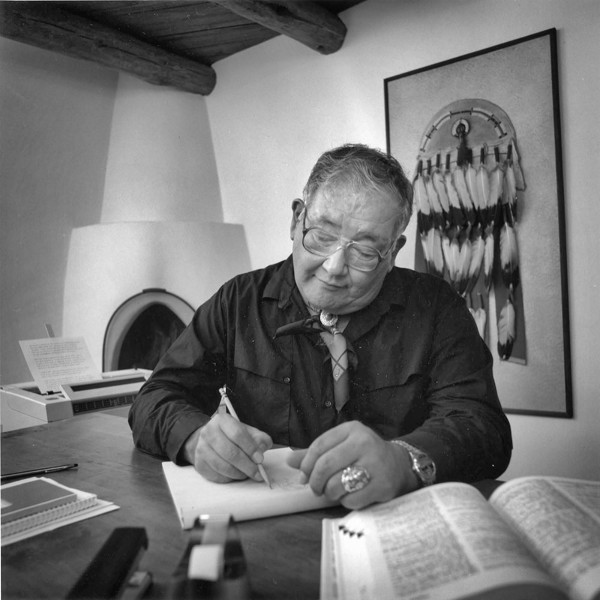
Aside from the colonial milieu that formed Momaday’s social context, like almost all Americans, he had been educated and socialized in a system in which the voices of Native peoples had been systematically marginalized and excluded. During his time as a student at the University of New Mexico and then in the English graduate program at Stanford, courses involving Native literature were simply non-existent with such opportunities remaining scarce well into the twenty-first century.
As Momaday later shared in an interview with the Cherokee-Choctaw writer and scholar, Louis Owens, when asked about his literary influences he said, “when my literary intelligence was being formed I wasn’t reading Indian writers. I just didn’t know about them.” Deprived of the opportunity to study the limited number of literary works by writers such as Christine Quintasket (Mourning Dove), Zitkala-Ša, John Joseph Mathews, or D’Arcy McNickle, Momaday focused his attention on American literature.
Among Momaday’s first publications is an edited collection of Frederick Goddard Tuckerman's complete poems, of whose “particular genius,” he says, called out to him through Edmund Wilson’s study of American Civil War literature, Patriotic Gore. Momaday’s other scholarly interests included the writings of the Puritan minister, Cotton Mather, who celebrated the genocidal violence perpetrated against Native people in the so-called Pequot War, while he presented a paper on Mather’s biography of John Eliot at the 1968 MLA conference.
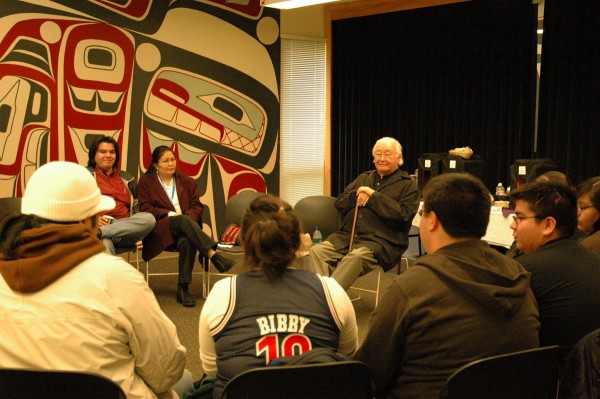
The record of his early career as a writer and scholar illustrates the keen awareness Momaday had that his success in the academy, to a large extent, would be predicated on the necessity to master the literature of the dominant culture. Given his university experience, such an insight was ironically framed within an academic culture in which he had been made to know that his own Kiowa literature was seen as having little literary or historical value, and that his colleagues and students needn’t make any effort to engage a single work of Native literature to achieve the same.
These early scholarly pursuits are most clearly articulated in an essay originally published in Ramparts Magazine and republished in The Man Made of Words, “The Morality of Indian Hating.” Writing to a non-Native audience with the kind of impartiality and incisiveness that became a signature of Momaday’s work, he reflects profoundly on the status of Native peoples and cultures affected the violence justified by Providential design and Manifest Destiny: “to the public mind, that lonely specter who stood for two hundred years in the way of civilization, who was removed time and again by force, and who was given in defeat that compensation we call savage nobility after the example of Rousseau.” Such examples show that even within such an intellectually hostile environment, Momaday was ever intent on exposing and challenging the racism and violence that so much of colonial history was founded upon.
Working with of the modernist poet, Yvor Winters, at Stanford, Momaday also developed an appreciation for the poetry of Emily Dickinson. Karen Blixen, who wrote under the pen name of Isak Dinesen, was another of Momaday’s favorites for her memoir Out of Africa, which he called “one of the great books of our time.” His admiration extended to her short stories, as well, which he described as “marvelously intricate fantasies that are as rare, faceted, and gleaming as gems.” Such influences are reflected in a writing style that Edward Abbey praised as “formal, symbolic, and precise” in a review of Momaday’s memoir, The Names, published as part of the University of Arizona’s groundbreaking American Indian Literary Series, Sun Tracks.
The instant recognition and respect the Pulitzer brought also helped create publishing opportunities for fellow Native/Indigenous writers, as well. The critical mass of Native storiers that Momaday was instrumental in building signaled the dawning of an exciting new period of Native literary production, which Kenneth Lincoln would later term, the “Native American Renaissance.” The movement to which this phrase referred encapsulated the collective body of Native fiction, poetry, and drama that emerged in the aftermath of House Made of Dawn, which was also adapted to film in 1972, from the late 60s into the 80s.
Instrumental in the articulation of this revolutionary literary movement along with Momaday, were writers such as Gerald Vizenor (Anishinaabe), already an accomplished haiku poet and influential journalist in his own right, who published his first work of fiction in Darkness in St. Louis Bearheart 1978.
Others include Duane Niatum (S'Klallam), author of After the Death of an Elder Klallam (1970) and Taos Pueblo and Other Poems (1973); James Welch(Blackfeet-Gros Ventre), author of the sublime poetic work, Riding the Earthboy 40 released in 1971, followed by his first novel, Winter In the Blood (1974); Joy Harjo (Mvskoke/Creek), named the first Native Poet Laureate of the United States in 2019 whose The Last Song published in 1975 was drawn from work started while an undergrad at the University of New Mexico; Simon J. Ortiz (Acoma Pueblo), author of From Sand Creek (1981) with several others between his first book of poetry, Going For the Rain, published in 1975, Leslie Marmon Silko (Laguna Pueblo), the first Native MacArthur Fellowship recipient in 1981, author of Laguna Woman: Poems (1975) and Ceremony (1977), and Luci Tapahonso (Diné) who began writing with the encouragement of Silko in the mid-70s, publishing One More Shiprock Night in 1981 and becoming the inaugural Poet Laureate of the Navajo Nation in 2013.
The infusion of such a diverse array of literary works was a breath of fresh air within the American literary scene, carrying with it a challenge to a space dominated since its inception by white male authors whose ignorant and often demeaning representations of Native/Indigenous peoples had long maintained an almost unquestioned authority. The contributions of such a talented, courageous, and generous group of Native writers would be vital in building a strong foundation for the development of a modern conception of Native literature, while helping to diversify our national literature.
Among the most urgent goals of these writers was the effort to free Native peoples and cultures from the stagnant binary representations and imagery of a tragic colonial past characterized by savagery and romanticism. For Momaday’s generation of writers, it was imperative to reclaim the authority of self-representation in order to emphasize the enduring presence of Native peoples and cultures in the face of a 500-year history of empire war, land theft, assimilation, and genocide.
Refusing to allow the events of this traumatic past to define their present or futures, the works produced by these writers explored issues of pressing interest to Native communities. Prevalent among these was an assertion of tribal sovereignty and land rights, cultural preservation, and the centrality of Indigenous knowledge and spirituality. These are all concerns, of course, that would become the inspiration and drive of decolonization.
Another challenge Momaday and his fellow Indigenous writers had to overcome was the persistent lack of seriousness and outright disrespect displayed for Native literature and storytelling within a dominant, and often hostile, literary establishment that valued convention and tradition over adaptation, change, inclusivity, and progress. Far from discouraging their efforts, the exclusionary nature of American literary culture that this new generation of Native writers encountered created a strong impetus to produce more sensitive and realistic depictions of Native peoples and culture for the reading public.
In addition to the inspirational role Momaday played for younger Indigenous writers, he also embraced the role as a Native public intellectual. He further distinguished himself in this capacity as an astute critic and steadfast champion of works that sought to respond to Native issues long subsumed under the weight of colonial ideologies and systems of othering. What Vizenor would term as “the literature of dominance.”
Commencing in the late 60s, Momaday became a frequent contributor to several high-profile journals and newspapers including The Southern Review, The New York Times, The New York Review of Books, and The Los Angeles Times. In sharing his poetry and literary criticism in these venues, he also fulfilled the role of book reviewer and cultural critic. Among the books he publicized during this period were studies of Navajo and Nez Perce culture and history, in which he invoked the countervailing term, “Nonvanishing Americans.” In other reviews, he offered thoughtful and rigorous assessments on a range of influential social and historical texts of the day, from Dee Brown’s Bury My Heart at Wounded Knee, Stan Steiner’s The New Indians, to Vine Deloria’s We Talk, You Listen.
Aside from the thoughtful commentaries he offered on these influential texts, Momaday seemed most at home when engaging with art and works of fiction. The former among these include reviews on a volume containing the collected journals and drawings of the Jesuit Priest, Father Nicolas Point, produced on Native life while living amongst the Coeur D’Alene and Blackfeet (1967), Dorothy Dunn’s volume on Native art of the Southwest and Great Plains (1968), as well as Shirley Blubok’s The Art of the Southeastern Indians (1978).
His interest in art was only natural as Momaday was a practicing artist himself. He was also an enthusiastic admirer of Georgia O’Keeffe with whom he struck up a friendship and conversed with on their shared love of New Mexico, while also dedicating his poem, “Forms of the Earth at Abiquiu” to her memory. Of even great significance, of course, was the influence of his father, Alfred Momaday, an accomplished artist in his own right whose drawings adorn his son’s exquisite book of Kiowa stories, The Way to Rainy Mountain.
Moreover, Momaday’s writings on art anticipated reflections he'd make in his exquisite prose collection, The Man Made of Words (1997), on some of the most ancient sites of human artistry and storytelling at Barrier Canyon, Utah, Altamira, Lascaux, and Chauvet. For Momaday, places such as these were sacred, and like the stories of his own ancestors, the images of animals—bison, boar, horse, deer, goat . . . inspired wonder and awe and reverence.”
On a more personal level, the paleolithic paintings of Altamira and other sites can also be seen as provocations for the drawings, sketches, and paintings Momaday created and included as illustrations in so many of his own works from The Journey of Tai-me (1967), The Names (1976), The Ancient Child (1989), In the Presence of the Sun (1992), to In The Bear’s House (1999) and The Death of Sitting Bear (2020).
In response to literary works, we find amongst Momaday’s reviews generous and reassuring commentaries on a diverse array of books starting with Emerson Blackhorse Mitchell’s Miracle Hill (1967). It’s an extraordinary story that follows a young Diné boy’s tireless pursuit of self-improvement that led him to the Institute of American Indian Arts in Santa Fe where, in Momaday’s words, he was given the opportunity to “grow and prosper in the presence of words.” Other literary works that earned Momaday’s praise include Willie Morris’ Yazoo (1971) and two of John Bierhorst’s collections, American Indian Poems and Ritual Orations (1971) and The Girl Who Married a Ghost (1978), along with Arthur Kopit’s play, Indians, in which he perceived “a sensitivity of tragic proportions” (1971).
The note of a few additional reviews highlights the depth of Momaday’s dedication to literature. These include V.S. Pritchett’s collection, The Camberwell Beauty and Other Stories (1974) that, in Momaday’s view, carries “a discrete compassion that bears both subtlety and force.” Then we come to a review of James Welch’s Winter in the Blood. Rendered with equal measures of harsh violence and irreverent humor, the story of an anonymous young Native man tangled in a complex web of trauma and guilt would eventually assume its place as a masterwork of Native fiction. This is something Momaday, of course, recognized from the start as he commended Welch for a “vision . . . of the eye and the mind’s eye,” which he called “extraordinarily sharp and integrated, aligned so closely as to be remarkable in itself.”
Although just a sampling, these reviews testify to the extraordinary generosity of time and attention Momaday so graciously gave to his fellow writers in reading and commenting upon their works. What’s more, the way Momaday expressed his ideas as a being “made of words” reflect the exuberance and esteem he held for what he called the “magical” nature of language that made it possible for him to see “the place of words in a state of grace.”
Writings such as these reveals, in almost equal measure to Momaday’s own carefully crafted fiction and poetry, an abiding devotion to the “sacred matter” of language, literature, and story. Viewed with an awareness of the richness of spirit that can grow from a mutually supportive community, rather than the privation and anomie that is born of isolation and exclusion, Momaday's body of work appears most clearly as a profound “celebration of words,” that as he reiterated in his final published work, Dream Drawings, exist in their purest turn “for their own sake.”
Momaday’s acts of writing in celebration of the words and stories of others are reflective of the abiding respect he had for the power of words to “bring forth the harvest, ward off evil, rid the body of sickness and pain, subdue an enemy, capture the heart of a lover, live in the proper way, and venture beyond death.” And, so too, an expression of his deep wisdom. This from a writer, poet, and storier who secured, through his life’s work, a revered place amongst the greatest American writers—and not just of the last century.
Bold words, perhaps, but literature and storytelling are not science, nor does it aspire to be. In place of anything that may be equated with empirical methods or the precision of a controlled experiment, I simply offer another kind of substantiation. Words.
For in all my reading, I can’t conceive of any writing that could surpass the sublimity of Momaday’s description of those high desert lands surrounding Jemez Pueblo that he made immortal in House Made of Dawn: “And the town lies out like a scattering of bones in the heart of the land, low in the valley, where the earth is a kiln and the soil is carried here and there in the wind and all harvests are a poor survival of the seed.”
Nor can anything conveyed in a character’s inner dialogue express such a profound sense of heartbreak and human pain as issuing from the character, Benally, when saying his final goodbye to Abel from atop that lonely hill overlooking Los Angeles, “we were going to sing about the way it always was. And it was going to be right and beautiful. It was going to be the last time. And he was going home”.
There are countless other examples I could cite from Momaday’s writing to illustrate his mastery, while further testifying to the power of words. Yet, as I celebrate Momaday’s legacy and the inspiration it has provided to me and so many other writers and scholars, I am also cognizant of the reproach the Reverend John ‘Big Bluff” Tosamah articulated about another preacher named John who tried to make the word, “bigger and better than it was.”
And so instead of marshaling another example, I’ll conclude these admittedly insufficient words in honor of N. Scott Momaday with a few lines of verse. They reflect on the first encounter I had with him as a student in one of his classes at the University of Arizona, in which, yes, Dinesen’s work was included on his syllabus.
“A Poem for The Bear”
In Modern Languages,
I fell quickly
under the thrall
of ordinary words,
stories of the earth,
humbly pronounced
as being matter’s
truest substance.
Your voice vibrant,
profound, booming,
in your telling
of snorting buffalo
and roan horses,
an ancient rock
tree called Tsoai,
“I am the Bear.”
